
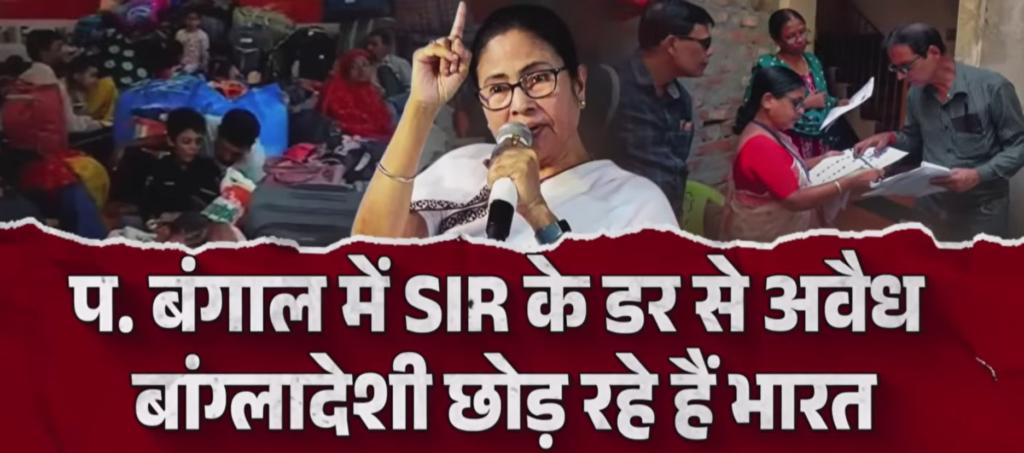
EC’s Special Intensive Revision flags millions of names, TMC raises alarm over fairness
The Election Commission of India’s (EC) ongoing Special Intensive Revision (SIR) of electoral rolls in West Bengal has triggered a heated political debate, with millions of voter names flagged for deletion and opposition parties accusing the process of bias. What was intended as a technical exercise to clean and modernize voter lists has quickly become a flashpoint in the state’s political landscape.
What is the SIR?
The SIR is a large-scale verification drive undertaken by the EC to ensure the accuracy of electoral rolls ahead of upcoming elections. The process involves:
- Digitization and self-mapping of voter data
- Identification of duplicate, deceased, or absent voters
- Re-verification by Booth Level Officers (BLOs)
The EC argues that such revisions are essential to maintain the integrity of India’s democratic process, preventing fraudulent voting and ensuring that only eligible citizens remain on the rolls.
Scale of Deletions
According to reports, the EC has flagged over 47 lakh voter names for potential deletion in West Bengal. Officials noted anomalies such as villages with “zero self-mapping,” a scenario considered highly improbable. Despite progress, nearly 28 lakh voters remain unmapped, raising fears that genuine voters could be disenfranchised if the process is not carefully monitored.
The EC has set a deadline of December 11, 2025 for BLOs to complete re-verification and remove names of deceased or absent voters. This timeline has added urgency to the exercise, but also heightened political tensions.
Political Reactions
The ruling Trinamool Congress (TMC) has strongly opposed the SIR, alleging that the EC’s actions disproportionately target voters in areas considered TMC strongholds. Chief Minister Mamata Banerjee led a protest rally in Malda, accusing the EC of attempting to manipulate the voter list ahead of crucial elections. The party has vowed to raise the issue in Parliament’s Winter Session, framing the revision as an attack on democratic rights.
Opposition parties, meanwhile, have adopted a mixed stance. Some support the EC’s effort to sanitize voter rolls, while others echo concerns about transparency and fairness.
Why It Matters
The controversy highlights the delicate balance between administrative efficiency and political trust. On one hand, the EC’s mandate is to ensure clean and credible elections. On the other, mass deletions—especially in the tens of lakhs—risk undermining confidence in the electoral process if citizens feel unfairly excluded.
For West Bengal, a state with a history of intense electoral battles, the stakes are particularly high. The outcome of the SIR could influence not just voter participation but also the broader perception of electoral legitimacy.
Conclusion
The Bengal SIR is more than a bureaucratic exercise—it is a test of India’s democratic resilience. Whether the EC can complete the revision without eroding public trust will determine if the process strengthens electoral credibility or deepens political mistrust. As deadlines approach and protests intensify, the eyes of the nation remain fixed on West Bengal’s voter rolls.