
Introduction
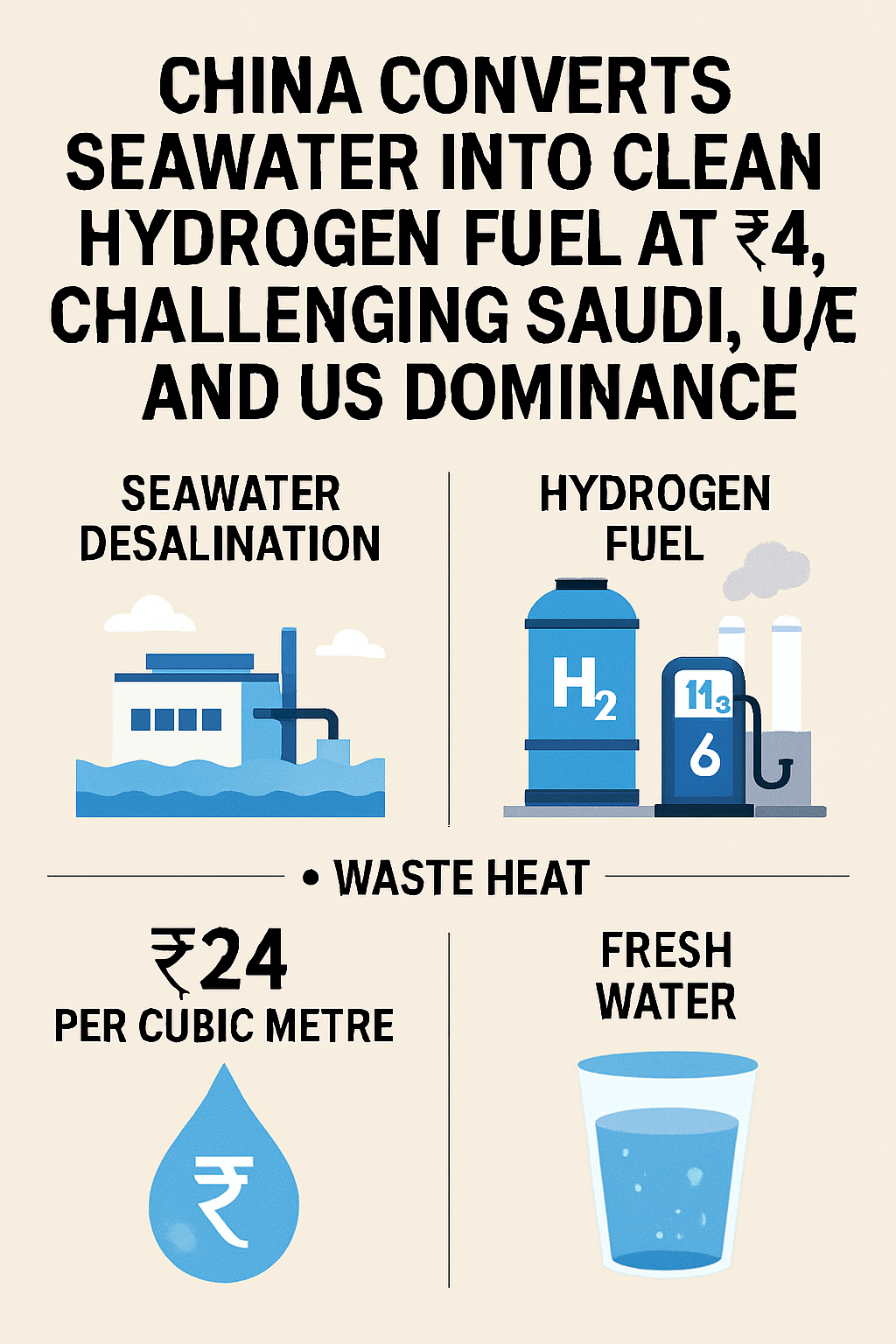
China converts seawater into clean hydrogen fuel at ₹24, challenging Saudi, UAE, and US dominance.
China has achieved a major milestone in sustainable technology with the discovery of a low-cost integrated system that produces clean water and green hydrogen simultaneously. This innovation, developed in Shandong province, is being hailed as a game-changer for water security and renewable energy, offering ultra-cheap desalinated water and hydrogen fuel at unprecedented efficiency.
The Discovery
China’s innovation transforms seawater into clean hydrogen fuel at just ₹24, delivering cheap energy and fresh water while challenging Saudi, UAE, and US dominance in global energy markets.
The facility in Rizhao, Shandong, uses seawater desalination powered by waste heat from nearby industries. Instead of relying on expensive electricity or advanced membranes, the system harnesses otherwise wasted thermal energy to produce:
- Ultra-pure clean water at just two yuan (US$0.28) per cubic metre.
- Green hydrogen fuel without fossil fuels.
- Mineral-rich brine for industrial applications.
This “one-in, three-out” model maximizes efficiency and minimizes waste, embodying a circular economy approach.
How the System Works
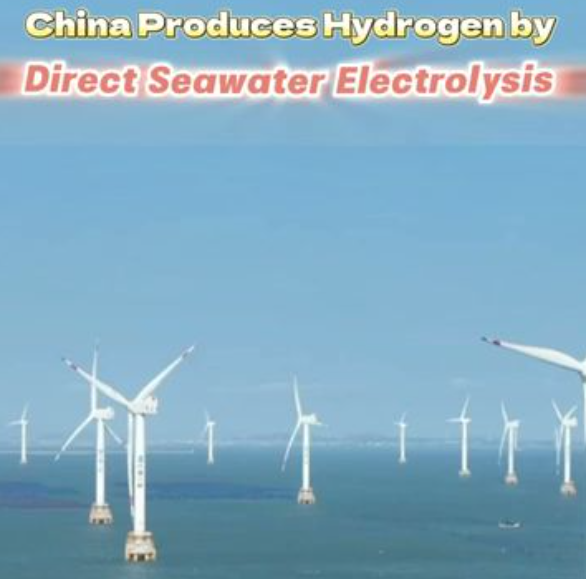
- Seawater intake → desalination produces ultra-pure water.
- Electrolysis powered by waste heat → generates hydrogen fuel.
- Brine output → supplies minerals for manufacturing.
By integrating desalination and hydrogen production, the facility reduces costs dramatically while avoiding the heavy carbon footprint of conventional methods.
Economic Benefits
China’s Clean Water and Green Hydrogen Breakthrough at Ultra-Low Cost
- Affordable water: Two yuan per cubic metre is cheaper than many municipal supplies.
- Low-cost hydrogen: Waste heat reduces electrolysis expenses.
- Industrial synergy: Brine supports local industries, creating new revenue streams.
This model demonstrates how resource efficiency drives economic competitiveness, especially in regions facing water scarcity and energy transition challenges.
Environmental Impact
China’s breakthrough supports its carbon neutrality by 2060 goal. Key benefits include:
- Reduced reliance on fossil fuels.
- Lower carbon emissions through waste heat utilization.
- Minimized waste thanks to brine reuse.
- Enhanced water security in coastal regions.
By combining clean water and clean energy, the project addresses two critical sustainability pillars simultaneously.
Global Implications
China converts seawater into clean hydrogen fuel at ₹24, challenging Saudi, UAE, and US dominance.
- Scalability: Similar facilities could provide affordable water and hydrogen in coastal cities worldwide.
- Energy transition: Green hydrogen is vital for decarbonizing industries like steel, cement, and transport.
- Geopolitical influence: China strengthens its position in the global clean energy race.
For developing nations with abundant coastlines but limited freshwater, this model offers a blueprint for sustainable growth.
Future Outlook
Experts believe this is only the beginning. With further scaling:
China’s Clean Water and Green Hydrogen Breakthrough at Ultra-Low Cost
- Costs could drop even lower.
- Integration with renewable energy (solar, wind) could enhance sustainability.
- Export of technology could accelerate global adoption.
Conclusion
China’s discovery in clean water and low-cost green hydrogen is more than a technological achievement—it is a visionary model of circular economy and sustainable innovation. By producing clean water, green hydrogen, and industrial brine at low cost, it addresses water scarcity, energy transition, and industrial demand in one integrated system. If scaled globally, this breakthrough could redefine how nations secure resources in the 21st century.