
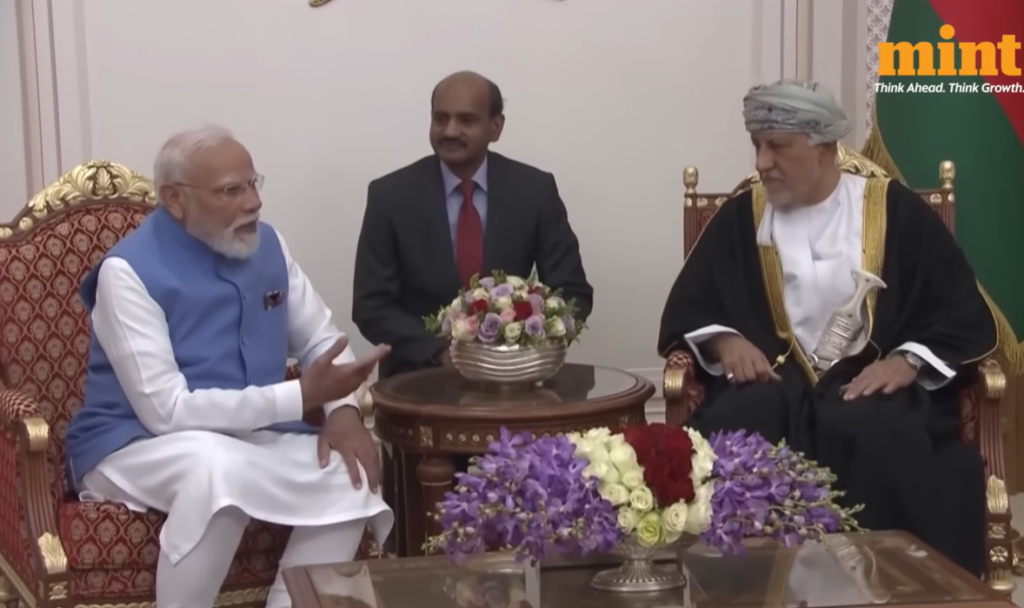
India–Oman FTA
India and Oman have entered a landmark Free Trade Agreement (FTA), formally signed in December 2025. This Comprehensive Economic Partnership Agreement (CEPA) is designed to boost bilateral trade, enhance services, and deepen India’s strategic footprint in the Gulf region. With zero-duty access for nearly all Indian exports, expanded services liberalization, and improved mobility for professionals, the deal is expected to reshape economic relations for decades.
Key Highlights of the India–Oman FTA
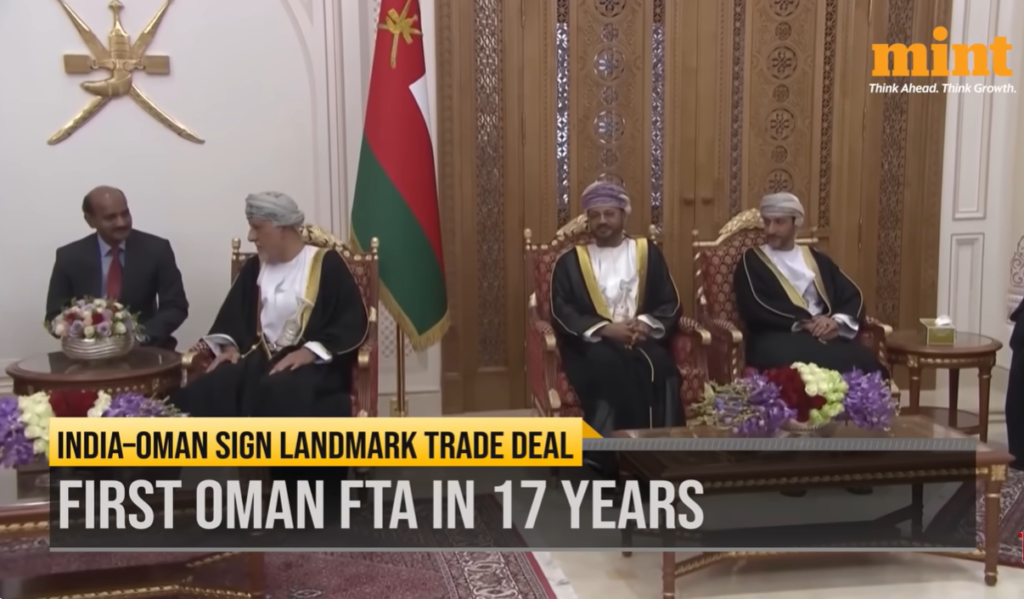
- Tariff Liberalization: Oman has granted duty-free access to 98.08% of tariff lines, covering 99.38% of Indian exports. India reciprocated by liberalizing 77.79% of tariff lines, covering 94.81% of imports from Oman.
- Services Sector Expansion: The agreement covers 127 service sectors, including IT, finance, healthcare, education, and traditional medicine. Oman has allowed 100% Foreign Direct Investment (FDI) for Indian firms in services.
- Professional Mobility: Indian professionals—accountants, architects, doctors, engineers—will benefit from simplified visa and work permit processes, strengthening India’s skilled workforce presence in Oman.
- Sectoral Gains: Indian industries such as electronics, textiles, chemicals, auto, and engineering goods will enjoy zero-duty access. Oman gains tariff concessions on dates, marbles, and petrochemicals.
Trade Impact and Economic Outlook
| Indicator | Pre-FTA (2024–25) | Post-FTA Projection |
|---|---|---|
| India’s exports to Oman | $4.06 billion | Significant surge with 99% duty-free access |
| India’s imports from Oman | $6.5 billion | Increase in petrochemicals, marble, dates |
| Services coverage | Limited | 127 sectors, full FDI allowed |
| Tariff coverage | 98.08% (Oman to India) | 77.79% (India to Oman) |
This agreement is projected to add $6 billion in new trade flows within the next few years, with services—particularly IT, healthcare, and education—emerging as major growth drivers.
Strategic Significance of India–Oman FTA
- Geopolitical: Strengthens India’s presence in the Gulf Cooperation Council (GCC) region, complementing FTAs with the UAE and Saudi Arabia.
- Economic Diversification: Reduces dependence on China by opening new supply chains in West Asia.
- Diplomatic Relations: Prime Minister Narendra Modi received the Order of Oman, the nation’s highest civilian honor, underscoring the depth of bilateral ties.
Challenges and Considerations In India–Oman FTA
- Domestic Competition: Indian marble and petrochemical industries may face pressure due to tariff concessions.
- Implementation: Smooth customs procedures and regulatory alignment will be critical.
- Labor Concerns: While professional mobility is liberalized, ensuring worker rights and protections remains essential.
Conclusion
The India–Oman FTA is more than a trade pact—it is a strategic partnership that positions India as a stronger player in the Gulf while giving Oman access to India’s vast market and skilled workforce. By combining tariff liberalization, services expansion, and professional mobility, the agreement is set to energize bilateral trade and foster long-term economic integration.