
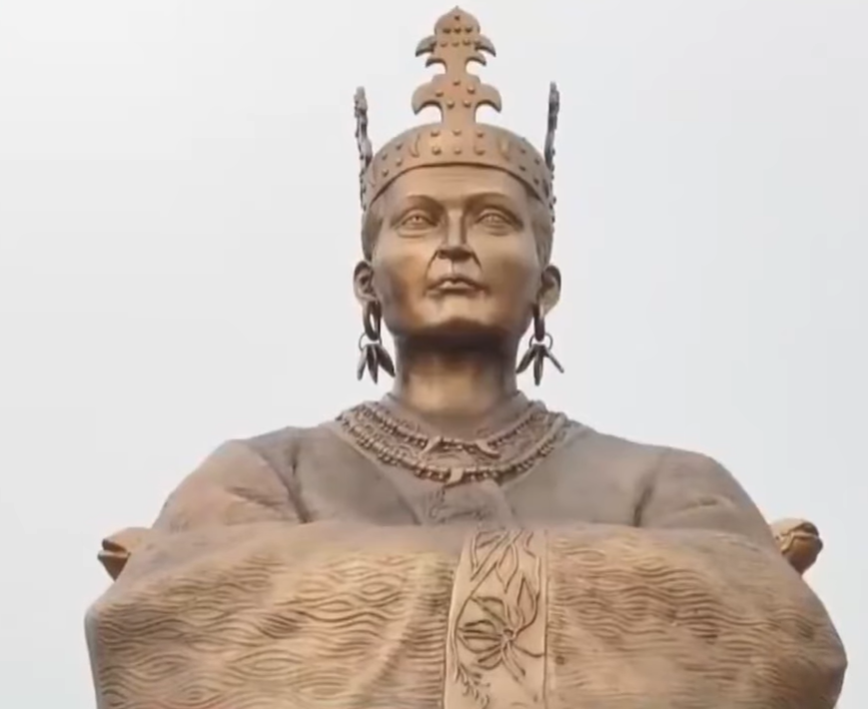
Queen Heo Hwang‑Ok – Princess Suriratna from Ayodhya
The legend of Queen Heo Hwang‑Ok, also known as Princess Suriratna, is one of the most fascinating cultural bridges between India and Korea. Historical accounts suggest that around 48 AD, Suriratna, a princess from Ayodhya, traveled across the seas to Korea. She married King Kim Suro, the founder of the Gaya Kingdom, becoming its first queen.
This story, preserved in Korean chronicles such as the Samguk Yusa, highlights how Ayodhya’s heritage extended beyond South Asia, influencing East Asian culture. For Koreans, Queen Heo is revered as an ancestral figure, with millions tracing their lineage back to her and King Suro.
Ayodhya Bronze Statue – Symbol of Indo‑Korean Friendship
The unveiling of the bronze statue of Queen Heo Hwang‑Ok in Ayodhya is a landmark event in cultural diplomacy. Located at the Queen Heo Hwang‑Ok Memorial Park, the statue honors the princess’s journey and her role in shaping Indo‑Korean ties.
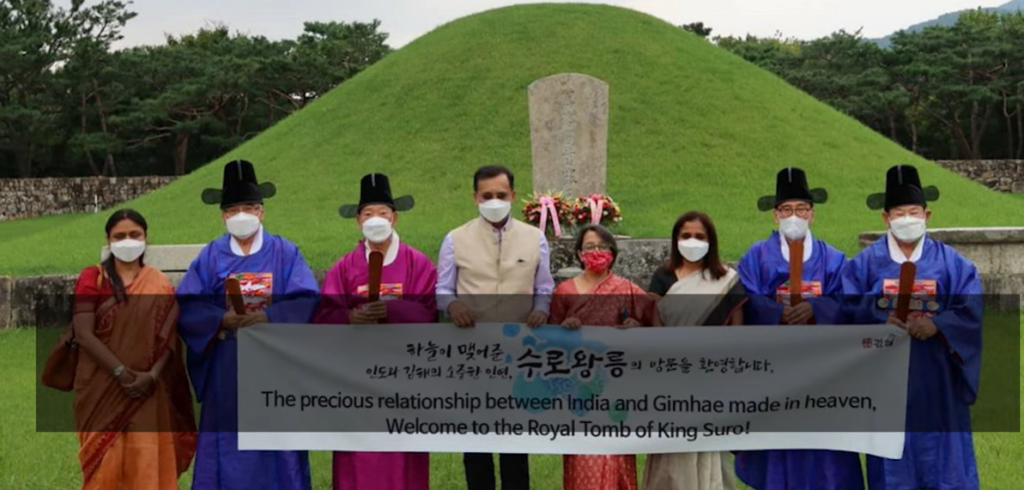
This memorial park has become a site of pilgrimage for many South Koreans, who visit Ayodhya to pay homage to their ancestral queen. The statue not only strengthens India‑Korea relations but also boosts cultural tourism, positioning Ayodhya as a global heritage hub.
Historical Context – Princess Suriratna and the Gaya Kingdom
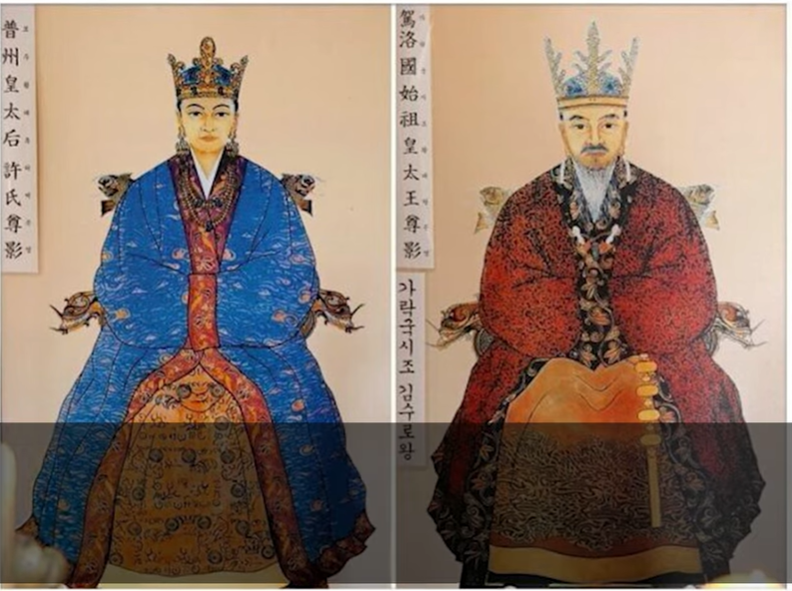
The marriage of Princess Suriratna to King Kim Suro is more than a romantic legend—it represents early maritime connections between South Asia and East Asia. Scholars believe that “Ayuta,” mentioned in ancient texts, refers to Ayodhya, linking the Indian city to Korea’s royal lineage.
Through this union, Suriratna is said to have introduced Indian cultural practices, spiritual values, and possibly Buddhist influences to Korea. Her legacy underscores the shared heritage of India and Korea, reminding us that cultural exchange has always been a cornerstone of civilization.
Cultural Diplomacy – India and Korea’s Shared Heritage
The statue unveiling is part of a broader effort to strengthen Indo‑Korean cultural ties. Both nations recognize the importance of this legend in fostering goodwill and mutual respect. For India, it highlights Ayodhya’s global cultural footprint; for Korea, it reinforces ancestral pride and historical continuity.
Such initiatives serve as soft power tools, enhancing bilateral relations beyond trade and politics. They also encourage academic research, tourism, and cultural exchange programs, ensuring that the story of Queen Heo Hwang‑Ok continues to inspire future generations.
Modern Implications – Tourism, Identity, and Diplomacy
- Tourism boost: The memorial attracts thousands of Korean visitors annually, strengthening Ayodhya’s global profile.
- Identity and heritage: For Koreans, Queen Heo is a symbol of ancestral pride; for Indians, she represents Ayodhya’s global legacy.
- Diplomatic ties: The statue reinforces India‑Korea relations, showcasing cultural diplomacy as a bridge between nations.
- Global narrative: The story positions India as a historical hub of cultural exchange, enhancing its international image.
Challenges – Myth vs. History
While the legend of Queen Heo Hwang‑Ok is celebrated, historians caution against blurring myth and history. The lack of conclusive evidence means the narrative remains largely symbolic. However, its cultural significance cannot be denied.
Respecting both Indian and Korean traditions is crucial. Over‑politicization or misinterpretation could undermine the cultural sensitivity of this shared heritage.
Conclusion – A Living Symbol of Friendship
The unveiling of the bronze statue of Queen Heo Hwang‑Ok in Ayodhya is more than a tribute to a legendary princess—it is a living symbol of Indo‑Korean friendship. Whether viewed as history or folklore, the story of Princess Suriratna embodies cultural exchange, spiritual values, and shared heritage.
By honoring her legacy, India and Korea reaffirm their commitment to pluralism, diplomacy, and cultural freedom. The statue stands as a reminder that ancient connections continue to shape modern identities, proving that Ayodhya’s heritage resonates far beyond its borders.