
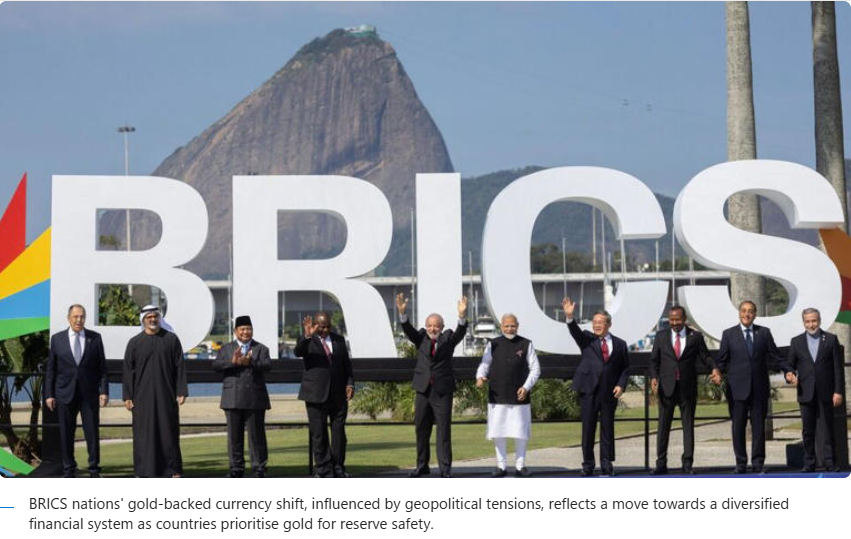
BRICS Controls 50% of Global Gold Reserves, Challenging US Dollar Dominance:
BRICS Gold Strategy Reshapes Global Economy
BRICS nations — Brazil, Russia, India, China, and South Africa — along with their allies, now control nearly 50% of global gold reserves. This unprecedented milestone signals a dramatic shift in economic power, challenging the dominance of the US dollar and reshaping the foundations of international trade and finance.
Gold has long been considered the ultimate safe-haven asset. By consolidating half of the world’s reserves, BRICS is positioning itself as a counterweight to Western financial systems and building resilience against sanctions, inflation, and currency volatility.
Why BRICS is Banking on Gold
The BRICS gold accumulation strategy is deliberate and multi-layered:
- Reducing Dollar Dependence: The US dollar has dominated global trade for decades, but BRICS nations are actively diversifying reserves to reduce vulnerability.
- Geopolitical Shielding: Russia and China, facing Western sanctions, have accelerated gold purchases to secure financial independence.
- Currency Stability: Gold-backed reserves strengthen credibility for a potential BRICS currency.
- Inflation Hedge: With global inflationary pressures, gold remains a trusted store of value.
Impact on the US Dollar and Global Trade
The US dollar’s supremacy is not immediately at risk, but BRICS’ control of half the world’s gold reserves is a direct challenge.
- Trade Settlements: Countries may increasingly settle trade in local currencies or gold-backed instruments, bypassing the dollar.
- Reserve Diversification: Central banks worldwide could follow BRICS’ lead, reducing dollar holdings in favor of gold.
- Financial Fragmentation: A multipolar reserve system may emerge, with gold playing a central role.
Global Reactions to BRICS Gold Dominance
Western economies view BRICS’ gold strategy with concern. The US and Europe rely heavily on the dollar’s global dominance to maintain financial leverage. A shift toward gold-backed systems could erode that influence.
Emerging economies in Africa, the Middle East, and Latin America — many resource-rich and dollar-dependent — may align with BRICS, further strengthening the bloc’s position.
Challenges Facing BRICS Gold Strategy
Despite the impressive milestone, risks remain:
- Liquidity Issues: Gold is less liquid than fiat currencies for large-scale trade.
- Coordination Problems: BRICS nations must align policies to make gold-backed systems viable.
- Market Volatility: Heavy reliance on gold exposes economies to price swings.
- Western Pushback: The US and allies may respond with financial innovations or sanctions.
The Road Ahead: Gold as the Backbone of BRICS
The symbolism of BRICS controlling 50% of global gold reserves cannot be overstated. It represents a shift in economic gravity from West to East and South, and a reimagining of how nations secure financial independence.
If BRICS successfully leverages its gold reserves to launch a credible alternative to the dollar, the global financial system could enter a new era — one where gold regains its historic role as the backbone of international trade and reserves.
Conclusion
BRICS Controls 50% of Global Gold Reserves, Challenging US Dollar Dominance:
BRICS’ growing gold reserves strengthen its financial position and support efforts to diversify global reserves, potentially reducing reliance on the US dollar in international trade.