
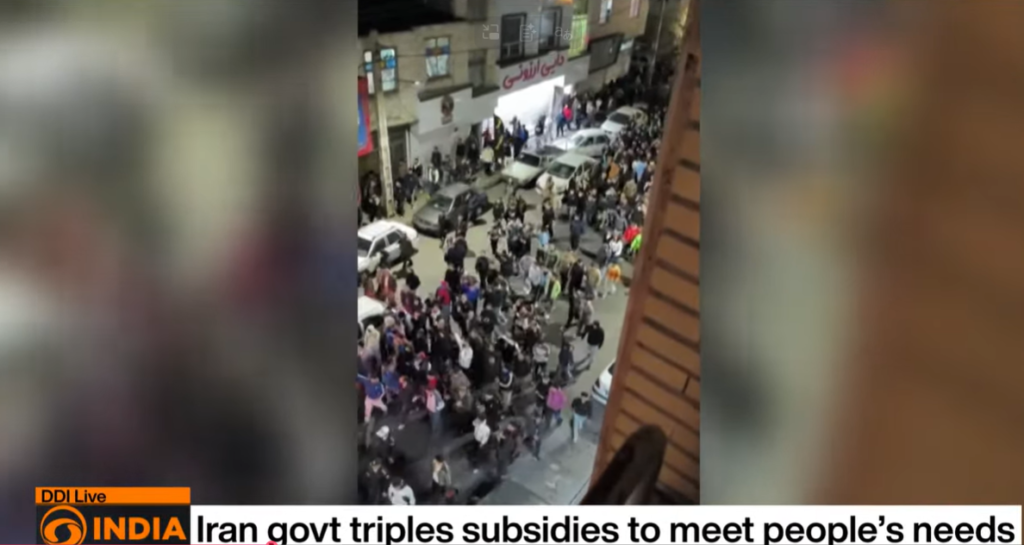

Iran hikes subsidies on essential goods and services as economic protests spread nationwide, triggered by inflation, currency collapse, and rising living costs. The government’s move highlights its struggle to balance fiscal pressures with mounting social unrest.
Iran Hikes Subsidies to Ease Inflation
Iran hikes subsidies in response to soaring inflation that has crossed 42%. The subsidy increase covers food staples, fuel, and healthcare.
- Food subsidies expanded for bread, rice, and cooking oil.
- Fuel subsidies adjusted to reduce transport costs.
- Healthcare subsidies increased for medicine and hospital services.
Officials argue that subsidy hikes are necessary to stabilize households, but economists warn they may worsen fiscal strain.
Economic Protests Spread Across Iran
Economic protests spread from Tehran’s bazaars to provinces including Isfahan, Lorestan, and Fars. Demonstrators demand relief from skyrocketing prices and collapsing currency.
- The Iranian rial has plunged to over 1.4 million per US dollar.
- Shopkeepers, students, and workers joined protests against subsidy cuts.
- Social media shows crowds facing tear gas and paramilitary forces.
Despite subsidy hikes, protests continue, reflecting deep frustration with governance and accountability.
Iran’s Currency Collapse and Subsidy Crisis
Iran’s currency collapse has intensified the subsidy crisis. The rial’s sharp depreciation has made imports costlier, driving food and medicine prices higher.
- Subsidy cuts in late 2025 worsened household burdens.
- Price shocks triggered unrest in Tehran and provincial cities.
- Protesters argue subsidies are insufficient to offset inflation.
The currency collapse underscores structural weaknesses in Iran’s economy, including sanctions and mismanagement.
Risks of Iran’s Subsidy Hike
Iran hikes subsidies but faces risks that could undermine stability:
- Fiscal strain from increased government spending.
- Inflationary pressure if subsidies fuel demand.
- Political credibility at risk if relief fails.
- Security risks as protests escalate despite subsidy measures.
Economists stress that subsidies alone cannot resolve Iran’s economic crisis without reforms in currency stabilization and governance.
Investor and Regional Impact of Iran’s Subsidy Policy
Iran hikes subsidies with implications for investors and regional markets:
- Oil prices remain stable due to global supply buffers, but prolonged unrest could disrupt exports.
- Foreign investors view Iran as high‑risk amid sanctions and instability.
- Domestic businesses face shutdowns, strikes, and uncertainty.
Neighboring countries monitor Iran’s unrest closely, fearing spillover effects on trade and security.
Expert Views on Iran’s Subsidy Hike
Experts argue that Iran hikes subsidies as a short‑term fix but lacks structural reforms.
- Economists highlight the need for transparency and anti‑corruption measures.
- Policy analysts warn subsidies may deepen fiscal deficits.
- Fund managers advise caution, noting cyclical FDI inflows and high volatility.
Experts agree that without reforms, subsidy hikes will not restore long‑term stability.
Conclusion: Iran Hikes Subsidies Amid Protests
Iran hikes subsidies to calm economic protests, but demonstrations continue across the country. The move underscores the government’s attempt to ease inflation and currency collapse, yet risks remain high.
Unless Iran pursues comprehensive reforms alongside subsidy relief, protests are likely to persist, keeping the nation on edge as 2026 unfolds.