
Tejas Lessons Empower Gaganyaan Mission
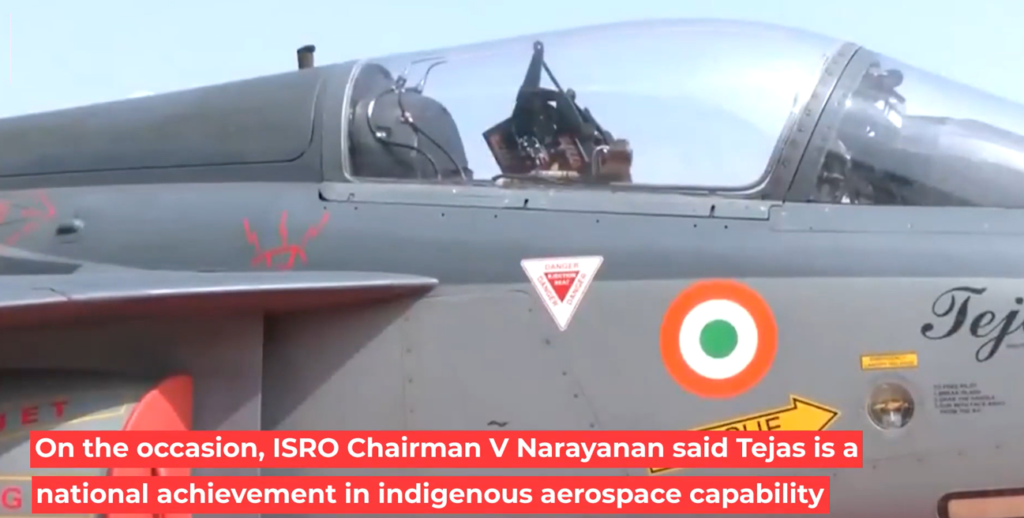
At the Tejas‑25 seminar in Bengaluru, ISRO chief V. Narayanan emphasized how Tejas lessons from India’s indigenous fighter jet program are directly strengthening the Gaganyaan mission. He described Gaganyaan as a national mission, integrating expertise from ISRO, DRDO, and the Indian Army to ensure India’s first human spaceflight succeeds.
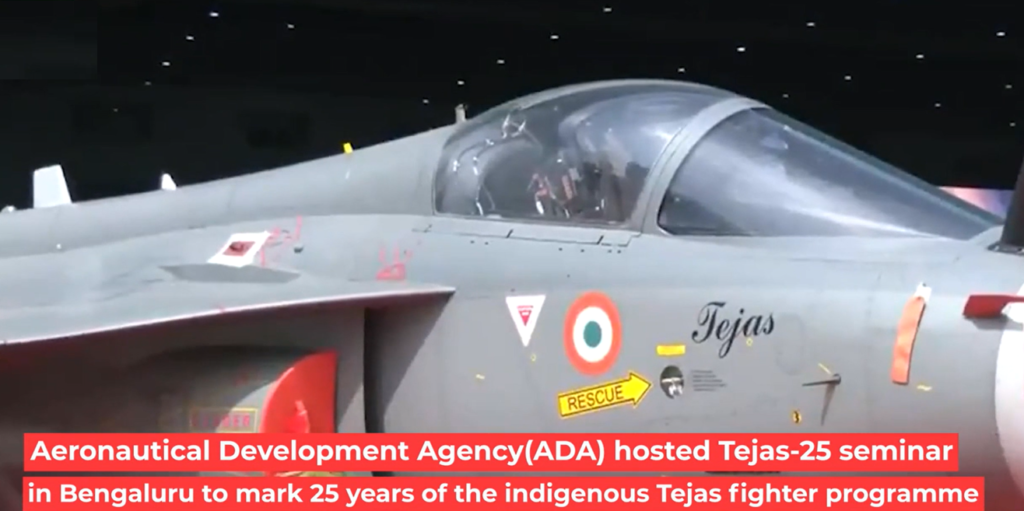
Narayanan noted that the Tejas program taught India critical lessons in avionics, materials, safety, and systems integration—skills now being applied to astronaut training, crew module design, and mission safety protocols.
ISRO Chief on National Collaboration
The ISRO chief highlighted that Gaganyaan is not just a space project but a national mission requiring collaboration across defence, aerospace, and industry. He praised the DRDO support in developing life‑support systems and emergency recovery technologies, while acknowledging the Indian Army’s role in astronaut survival training and operational preparedness.
This synergy, Narayanan explained, ensures that India’s astronauts—Vyomnauts—will be equipped with the resilience and safety standards needed for space travel.
Tejas Lessons Applied to Human Spaceflight
The Tejas fighter jet program has been India’s flagship in indigenous defence technology. According to Narayanan, its development challenges mirror those of human spaceflight.
Key Tejas lessons applied to Gaganyaan include:
- Avionics and control systems → informing spacecraft guidance and navigation.
- Composite materials → lightweight yet durable, adapted for crew modules.
- Safety protocols → redundancy and rigorous testing for astronaut protection.
- Systems integration → coordinating propulsion, life‑support, and communication systems.
By leveraging these lessons, ISRO ensures that Gaganyaan mission is built on proven expertise.
DRDO Support for Gaganyaan
The DRDO support is crucial for astronaut safety. Contributions include:
- Life‑support systems for oxygen supply and cabin environment.
- Emergency recovery technologies for crew escape.
- Protective gear for astronauts in extreme conditions.
This partnership reflects India’s integrated approach, where defence research strengthens civilian space exploration.
Indian Army’s Role in Astronaut Training
The Indian Army is providing survival training and operational support for astronauts. This includes:
- High‑stress environment training to prepare astronauts for emergencies.
- Survival exercises in deserts, mountains, and oceans.
- Rapid response protocols for recovery missions.
Such training ensures that astronauts are physically and mentally prepared for the challenges of human spaceflight.
Gaganyaan Mission: India’s Human Spaceflight Program
The Gaganyaan mission aims to send Indian astronauts into low‑Earth orbit by the end of this decade. Key components include:
- Crew module development with advanced safety features.
- Launch vehicle integration using the GSLV Mk III (LVM3).
- Uncrewed test flights before the final human mission.
- International cooperation, including Russian support in astronaut training.
Narayanan confirmed that abort tests have already been conducted, with further trials planned before the crewed launch.
Atmanirbhar Bharat in Aerospace
The ISRO chief linked Gaganyaan to Atmanirbhar Bharat, India’s vision of self‑reliance. Just as Tejas symbolizes indigenous defence capability, Gaganyaan mission represents India’s ability to undertake complex space projects without foreign dependence.
He emphasized that the mission is about building a long‑term aerospace ecosystem, involving academia, industry, and defence.
Challenges and Opportunities
Despite optimism, challenges remain:
- Crew safety → ensuring reliability in life‑support and escape systems.
- Technology integration → coordinating multiple agencies.
- Timeline pressures → meeting deadlines without compromising safety.
- Global competition → positioning India alongside the U.S., Russia, and China.
Opportunities include:
- National pride through a landmark achievement.
- Defence‑space synergy for future missions.
- Spin‑off technologies in materials and electronics.
- Youth inspiration to pursue science and engineering.
Conclusion
The Tejas lessons have provided India with a foundation of resilience and innovation. By applying these lessons to the Gaganyaan mission, ISRO, with DRDO support and Indian Army collaboration, is ensuring that India’s first human spaceflight is a success.
As Narayanan emphasized, Gaganyaan is more than a scientific milestone—it is a national mission showcasing India’s ability to unite defence, industry, and space research under the vision of Atmanirbhar Bharat.