
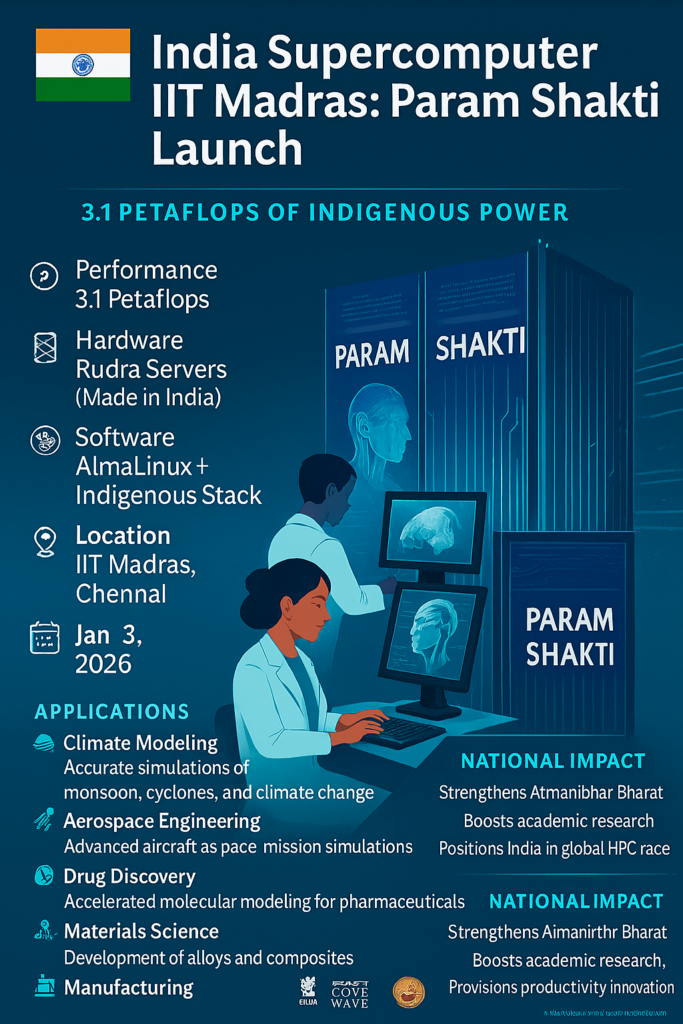
India Supercomputer IIT Madras Launch
The India supercomputer IIT Madras launch of Param Shakti marks a historic milestone in the country’s technological journey. Inaugurated on January 3, 2026, the system delivers 3.1 petaflops of computing power, capable of executing over 3.1 quadrillion calculations per second.
Developed under the National Supercomputing Mission (NSM), Param Shakti is powered by C-DAC’s Rudra series servers and runs on AlmaLinux with an indigenous software stack. This achievement reflects India’s commitment to Atmanirbhar Bharat, showcasing self-reliance in advanced computing infrastructure.
Param Shakti Supercomputer Features
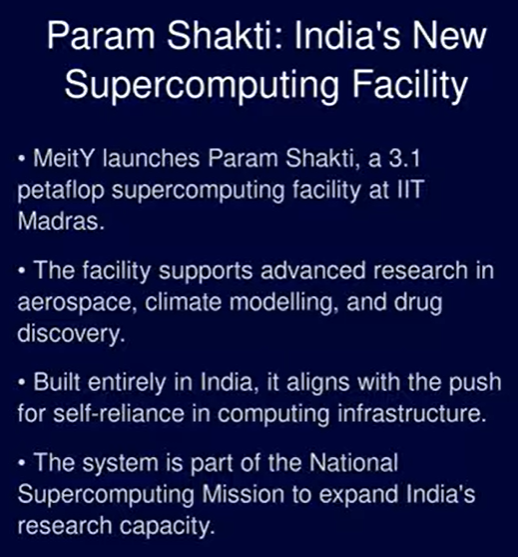
The Param Shakti supercomputer at IIT Madras is designed to support cutting-edge research and innovation.
- Performance: 3.1 petaflops peak computing speed.
- Hardware: Built on indigenously developed Rudra servers.
- Software: Runs on open-source AlmaLinux with C-DAC’s indigenous stack.
- Mission: Part of the National Supercomputing Mission (NSM).
- Location: Installed at IIT Madras, Chennai.
National Supercomputing Mission Impact
The National Supercomputing Mission impact is far-reaching, empowering India’s research ecosystem:
- Climate Modeling: Accurate simulations of monsoon, cyclones, and climate change.
- Aerospace Engineering: Advanced aircraft and space mission simulations.
- Drug Discovery: Accelerated molecular modeling for pharmaceuticals.
- Materials Science: Development of alloys and composites.
- Artificial Intelligence: Large-scale AI training and machine learning applications.
- Manufacturing: Optimization in robotics and industrial automation.
India Supercomputer IIT Madras Applications
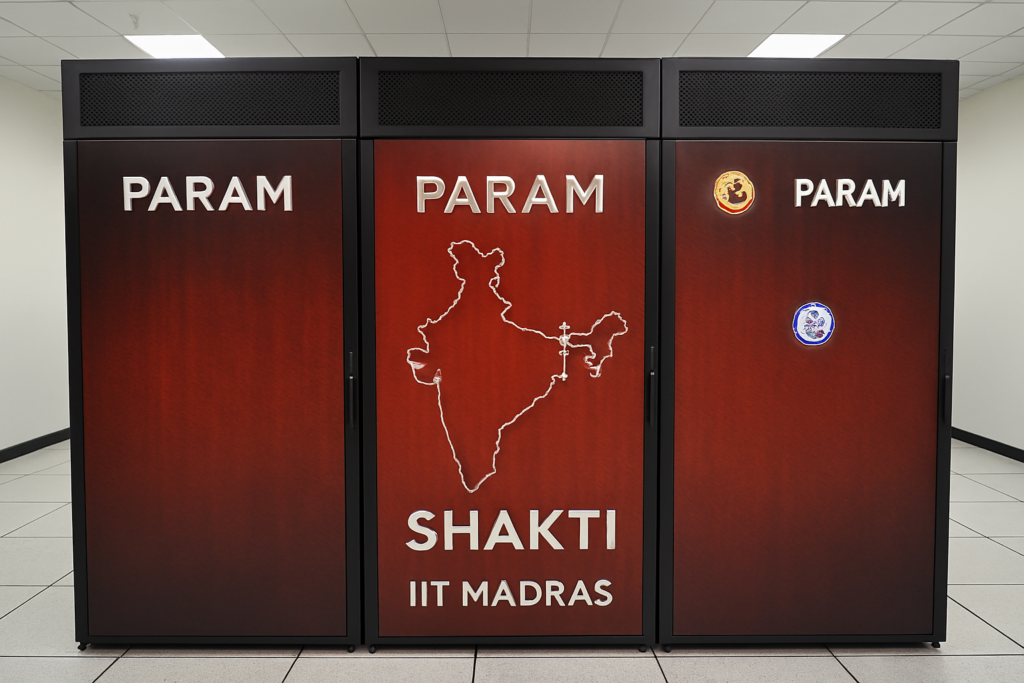
The India supercomputer IIT Madras applications extend across academia, industry, and national policy:
- Academic Empowerment: Provides IIT Madras and other institutions access to world-class computing.
- Industrial Growth: Supports aerospace, pharma, and manufacturing sectors.
- Global Competitiveness: Positions India among nations with advanced supercomputing capabilities.
- Policy Alignment: Strengthens Atmanirbhar Bharat by reducing reliance on foreign technology.
Table: Param Shakti Supercomputer Highlights
| Feature | Details |
|---|---|
| Peak Performance | 3.1 petaflops (3.1 quadrillion calculations per second) |
| Developer | Centre for Development of Advanced Computing (C-DAC) |
| Hardware | Rudra series servers (indigenously built) |
| Software | AlmaLinux + C-DAC’s indigenous stack |
| Mission | National Supercomputing Mission (NSM) |
| Location | IIT Madras, Chennai |
| Launch Date | January 3, 2026 |
| Inaugurated By | MeitY Secretary S. Krishnan |
India Supercomputer Challenges
Despite the success, the India supercomputer challenges remain:
- Energy Demand: Supercomputers require massive power and cooling infrastructure.
- Global Race: Competitors are already advancing toward exascale computing (1,000+ petaflops).
- Talent Development: India must train researchers to fully leverage HPC systems.
- Accessibility: Ensuring equitable access for universities and industries nationwide.
Conclusion: India Supercomputer IIT Madras Future
The India supercomputer IIT Madras future looks promising with the launch of Param Shakti. Delivering 3.1 petaflops, built indigenously, and supporting diverse applications, it strengthens India’s scientific ecosystem and global standing.
As the world moves toward exascale computing, Param Shakti represents India’s bold step into the future—combining self-reliance, innovation, and national progress under the National Supercomputing Mission.