
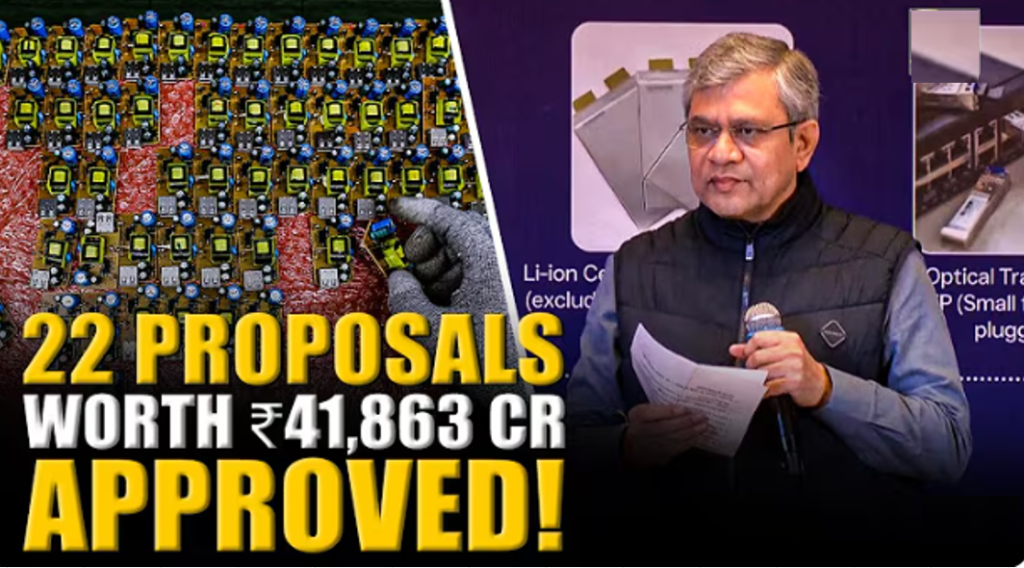
MeitY Clears 22 Electronics PLI Projects Worth ₹41,863 Crore to Boost Supply Chain Self‑Reliance:
MeitY Clears 22 Electronics PLI Projects in 2026
In January 2026, MeitY clears 22 electronics PLI projects worth ₹41,863 crore, marking a major milestone in India’s electronics manufacturing journey. The Production‑Linked Incentive (PLI) approvals are expected to generate ₹2.58 lakh crore in production output and create nearly 37,000 jobs, including 33,791 direct employment opportunities.
This decision highlights India’s push for supply chain self‑reliance and positions the country as a global hub for electronics manufacturing.
₹41,863 Crore Investment Across 11 Product Categories

The ₹41,863 crore investment spans 11 product categories, including:
- Smartphones and mobile components
- Telecom equipment
- Consumer electronics
- Automotive electronics
- IT hardware
- Strategic electronics
Leading companies such as Dixon Technologies, Samsung Display Noida Pvt Ltd, Foxconn (Yuzhan Technology India Pvt Ltd), and Hindalco Industries are among the approved beneficiaries.
Supply Chain Self‑Reliance Through Electronics PLI Projects
The fact that MeitY clears 22 electronics PLI projects reflects India’s determination to achieve supply chain self‑reliance:
- Reducing Import Dependence: India currently imports semiconductors, displays, and critical components. These projects aim to localize production.
- Employment Generation: Nearly 37,000 jobs will be created directly, with thousands more indirectly.
- Geographic Diversification: Manufacturing will be spread across eight states, reducing vulnerability to global supply disruptions.
- Global Partnerships: The inclusion of Foxconn and Samsung underscores India’s growing role in global supply chains.
Comparative Analysis of Electronics PLI Projects
| Tranche | Projects Approved | Investment (₹ crore) | Jobs Created |
|---|---|---|---|
| First (Oct 2025) | 7 | 5,532 | ~10,000 |
| Second (Nov 2025) | 17 | 7,172 | ~15,000 |
| Third (Jan 2026) | 22 | 41,863 | ~37,000 |
With MeitY clearing 22 electronics PLI projects in 2026, the total approved projects now stand at 46, with cumulative investments exceeding ₹54,500 crore.
Strategic Implications for India Electronics Manufacturing 2026
The ₹41,863 crore electronics PLI projects carry strategic implications:
- National Security: Localizing strategic electronics reduces reliance on imports for defense and critical infrastructure.
- Economic Growth: The projected output of ₹2.58 lakh crore will contribute significantly to GDP.
- Export Potential: India aims to rival Vietnam and China as a global electronics export hub.
- Innovation Ecosystem: With global players investing, India’s R&D and design capabilities will expand.
Challenges in Achieving Supply Chain Self‑Reliance
Despite the optimism, challenges remain:
- Semiconductor Fabs: India still lacks large‑scale semiconductor manufacturing facilities.
- Infrastructure Gaps: Power, logistics, and skilled labor must scale up to meet demand.
- Global Competition: China, South Korea, and Taiwan continue to dominate electronics manufacturing.
- Policy Continuity: Long‑term success depends on consistent government support and regulatory clarity.
MeitY Clears 22 Electronics PLI Projects Worth ₹41,863 Crore to Boost Supply Chain Self‑Reliance:-
Conclusion: MeitY Clears 22 Electronics PLI Projects Worth ₹41,863 Crore
The announcement that MeitY clears 22 electronics PLI projects worth ₹41,863 crore in 2026 is a landmark in India’s journey toward supply chain self‑reliance. By attracting global giants and empowering domestic champions, India is laying the foundation for a robust electronics ecosystem.
With projected production of ₹2.58 lakh crore and nearly 37,000 jobs, these projects strengthen India’s position in global supply chains while reducing dependence on imports. The road ahead requires sustained policy support, infrastructure development, and innovation, but the trajectory is clear: India electronics manufacturing in 2026 is on the path to becoming a global powerhouse.