
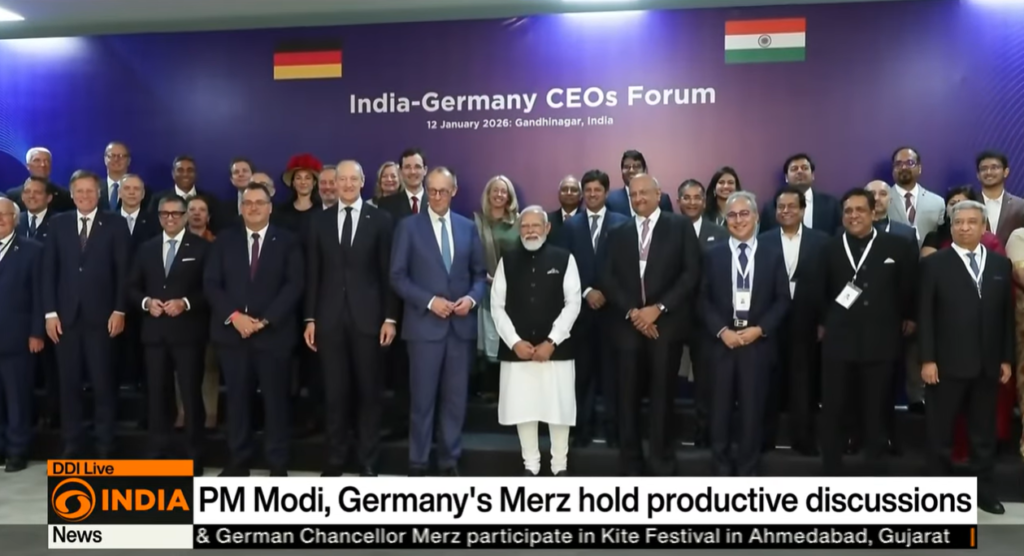
India–Germany MoU 2026: Modi and Merz Strengthen Strategic Partnership:
Introduction: India–Germany MoU Marks a Milestone
The recently signed India–Germany MoU 2026, discussed between Prime Minister Narendra Modi and German Chancellor Friedrich Merz, represents a landmark in bilateral relations. Covering areas such as defence, technology, energy, sustainability, and critical minerals, the agreements highlight the growing depth of the India–Germany strategic partnership. With this MoU, both nations are not only strengthening their bilateral ties but also positioning themselves as global leaders in innovation, security, and climate action.
India–Germany MoU on Defence and Security
Defence cooperation was a central pillar of the India–Germany MoU 2026.
- The MoU emphasizes joint defence manufacturing, technology transfer, and maritime security collaboration.
- Germany’s advanced defence expertise complements India’s Atmanirbhar Bharat initiative, which seeks to boost indigenous defence production.
- Both nations reaffirmed their commitment to Indo-Pacific security, ensuring safe trade routes and regional stability.
This defence partnership is strategically significant as India continues to modernize its armed forces, while Germany seeks to expand its role in global security frameworks.
India–Germany MoU on Technology and Innovation
Technology and innovation form another cornerstone of the India–Germany MoU 2026.
- Agreements focus on semiconductors, artificial intelligence, quantum computing, and cybersecurity.
- India’s ambition to become a global semiconductor hub gains momentum with German support in advanced manufacturing.
- Collaboration in AI and quantum technologies positions both countries at the forefront of digital transformation.
By combining India’s growing digital ecosystem with Germany’s engineering expertise, the MoU creates opportunities for cutting-edge innovation and resilient digital infrastructure.
India–Germany MoU on Energy and Sustainability

Energy transition and climate action are vital components of the India–Germany MoU 2026.
- The MoU highlights cooperation in green hydrogen, renewable energy, and sustainable mobility solutions.
- India and Germany pledged to accelerate the shift from fossil fuels to clean energy sources.
- Joint projects in solar, wind, and electric mobility align with global climate goals and the Paris Agreement.
This collaboration strengthens both nations’ commitment to sustainability, while also opening new avenues for investment in green technologies.
India–Germany MoU on Critical Minerals and Healthcare
The India–Germany MoU 2026 also addresses critical supply chains and healthcare innovation.
- Agreements on critical minerals ensure resilience for industries such as semiconductors, batteries, and renewable technologies.
- Healthcare cooperation includes medical research, innovation in pharmaceuticals, and skill development programs.
These initiatives reflect a holistic approach to partnership, extending beyond defence and technology into areas that directly impact human development.
Economic Impact of India–Germany MoU
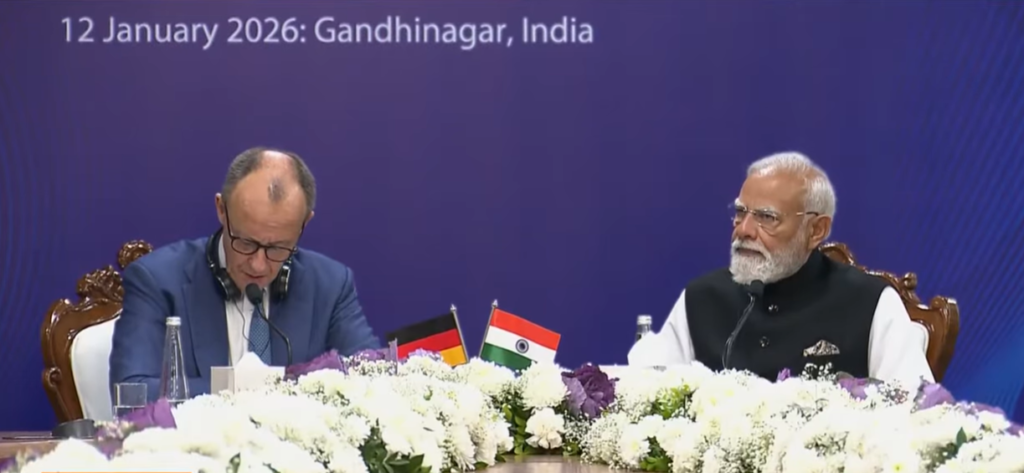
The economic dimension of the India–Germany MoU 2026 is equally significant.
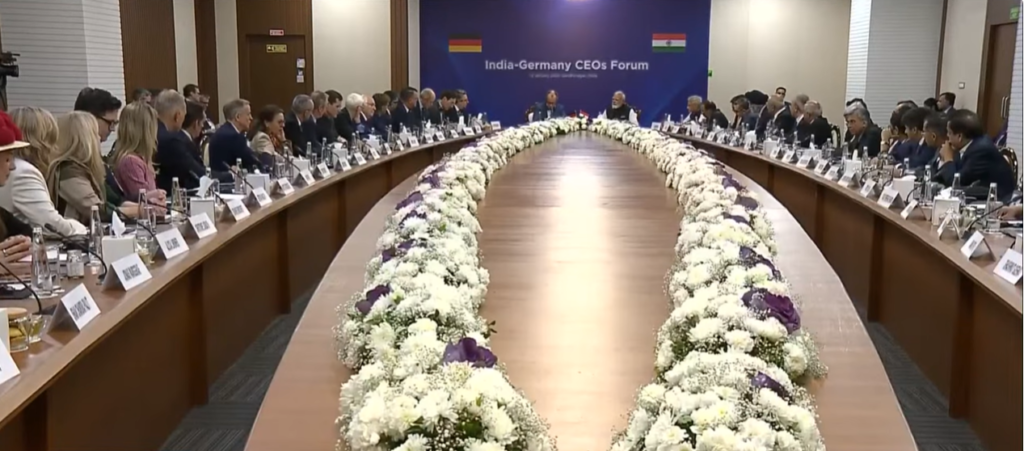
- The India–Germany CEOs Forum, held in Gandhinagar, Gujarat, brought together 23 German CEOs and Indian industry leaders.
- Discussions focused on investment opportunities, supply chain resilience, and innovation partnerships.
- With bilateral trade already crossing €30 billion annually, the MoU is expected to boost trade in high-tech goods, renewable energy equipment, and defence systems.
Germany remains India’s largest trading partner in Europe, and this MoU is set to deepen economic integration between the two nations.
India–Germany MoU 2026: Modi and Merz Strengthen Strategic Partnership:
Geopolitical Significance of India–Germany MoU
The India–Germany MoU 2026 carries important geopolitical implications.
- It reflects Germany’s Indo-Pacific strategy, recognizing India as a pivotal partner in the region.
- Both nations emphasized shared values of democracy, rule of law, and multilateralism.
- Cooperation in forums such as the United Nations, G20, and COP climate summits strengthens global governance.
By aligning their strategic priorities, India and Germany are contributing to a more balanced and multipolar world order.
Challenges and Opportunities Ahead
Challenges
- Aligning regulatory frameworks for defence and technology cooperation.
- Ensuring smooth transfer of sensitive technologies while safeguarding national interests.
- Addressing trade imbalances and ensuring equitable market access.
Opportunities
- India’s growing market offers vast opportunities for German firms in manufacturing, infrastructure, and digital services.
- Germany’s expertise in engineering and sustainability complements India’s innovation-driven growth.
- Joint leadership in climate action and technology governance could shape global standards.
India–Germany MoU 2026 deepens the India-Germany strategic partnership as Modi and Merz boost trade, technology, defence and economic cooperation.
Conclusion:
India–Germany MoU 2026: Modi and Merz Strengthen Strategic Partnership
India–Germany MoU 2026 Sets the Stage for the Future
The India–Germany MoU 2026, signed during Modi–Merz talks, is a transformative milestone in bilateral relations. By deepening cooperation in defence, technology, energy, sustainability, critical minerals, and healthcare, India and Germany are not only strengthening their partnership but also positioning themselves as global leaders in innovation and climate action.
As India celebrates 25 years of strategic partnership with Germany, these agreements lay the foundation for the next phase of collaboration—one that promises to be more comprehensive, future-oriented, and globally impactful.