
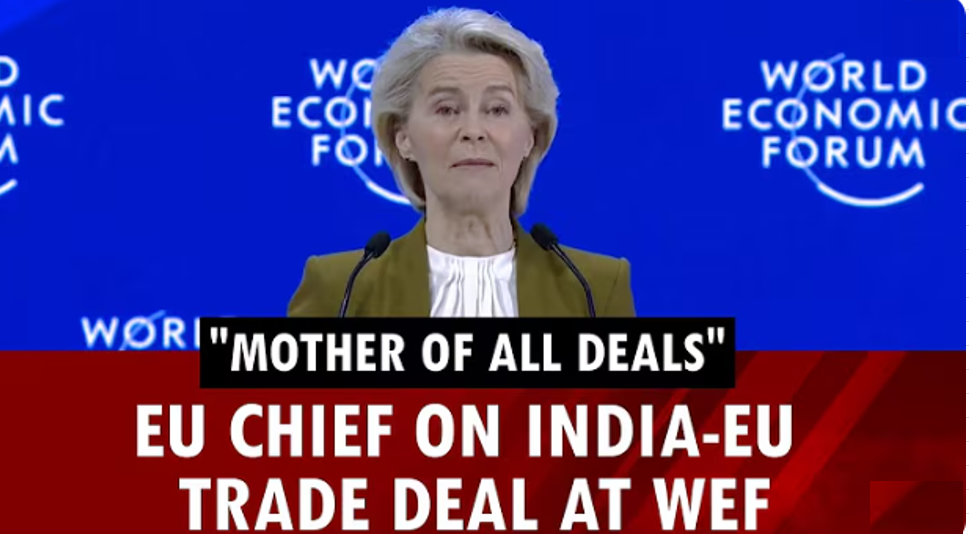
India–EU trade Mother of all deals is emerging as one of the most significant global economic developments of 2026. The long‑awaited Free Trade Agreement (FTA) between India and the European Union, described by European Commission President Ursula von der Leyen as the “Mother of all deals”, is expected to reshape commerce, investment, and strategic cooperation. With nearly two billion consumers and almost a quarter of global GDP under its umbrella, this pact could redefine the future of international trade.
India–EU Trade Mother of All Deals: Why It Matters
The India–EU trade Mother of all deals is not just another agreement; it is a transformative partnership.
- Scale of Impact: Covers goods, services, investments, and sustainability.
- Market Size: India’s 1.4 billion people combined with the EU’s 450 million consumers.
- Global GDP Share: Together, India and the EU represent nearly 25% of world GDP.
- Strategic Diversification: For the EU, it reduces reliance on China and the US. For India, it opens high‑value European markets.
Current Trade Snapshot
- EU as India’s Largest Trading Partner: Bilateral trade in goods reached $135 billion in FY 2023–24.
- India’s Key Exports: Pharmaceuticals, textiles, IT services, and agricultural products.
- EU’s Key Exports: Automobiles, machinery, chemicals, and luxury goods.
- Investment Flows: The EU remains a top source of foreign direct investment (FDI) into India.
This existing relationship sets the stage for the India–EU trade Mother of all deals to expand opportunities further.
Negotiation Journey
The India–EU trade Mother of all deals has been in discussion since 2007. Progress stalled due to disagreements over:
- Automobile Tariffs: EU sought lower duties on cars and auto parts.
- Agricultural Trade: India resisted opening sensitive sectors like dairy and wine.
- Digital Trade & Data Protection: EU’s GDPR standards posed challenges for India’s IT industry.
- Sustainability & Labor Standards: EU demanded stronger commitments on environment and labor rights.
Renewed momentum in 2025–26, driven by geopolitical shifts and supply chain diversification, has brought both sides closer to resolution.
Strategic Benefits for India
- Export Boost: Greater access to EU markets for textiles, IT, and pharmaceuticals.
- Technology Transfer: Collaboration in renewable energy, AI, and advanced manufacturing.
- Job Creation: Expansion of industries catering to European demand.
- Global Positioning: Strengthens India’s role as a reliable partner in global supply chains.
Strategic Benefits for the EU
- Diversification: Reduces reliance on China amid rising trade tensions.
- Access to Growth: India is one of the fastest‑growing major economies.
- Energy Security: Collaboration on green hydrogen and renewable projects.
- Geopolitical Alignment: Strengthens EU’s Indo‑Pacific strategy.
Challenges Ahead
Despite optimism, hurdles remain in finalizing the India–EU trade Mother of all deals:
- Tariff Reductions: India’s reluctance to cut tariffs on automobiles and wines.
- Agricultural Sensitivities: EU’s push for dairy and meat exports faces resistance.
- Digital Trade Rules: Reconciling EU’s GDPR with India’s data protection framework.
- Implementation: Ensuring commitments translate into real market access.
Broader Implications
The India–EU trade Mother of all deals carries global significance:
- Supply Chain Realignment: Reduces dependence on China and strengthens India’s role in global manufacturing.
- Geopolitical Impact: Reinforces India–EU strategic partnership amid shifting alliances.
- Sustainability: Integrates climate commitments, making this a “green FTA.”
- Investor Confidence: Signals India’s openness and stability to global investors.
India–EU Trade Mother of All Deals: A Vision for the Future
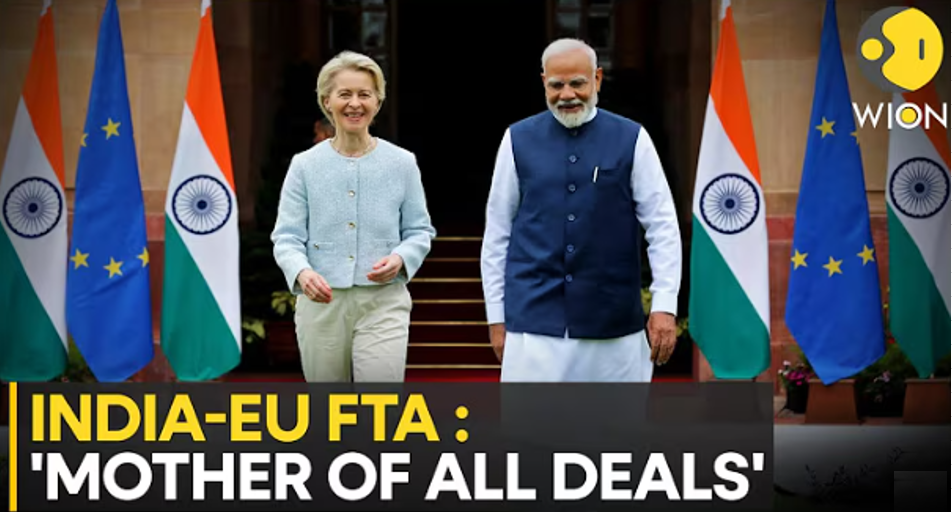
The agreement aligns with India’s ambition to become a $5 trillion economy by 2027 and the EU’s Indo‑Pacific strategy. Key areas of focus include:
- Renewable energy and green hydrogen collaboration.
- Digital innovation and AI partnerships.
- Infrastructure development and smart manufacturing.
- Inclusive growth and job creation across sectors.
India–EU Trade Mother of All Deals: A Landmark Free Trade Agreement:
Conclusion
The India–EU trade Mother of all deals is poised to become one of the most consequential trade agreements in modern history. By linking two billion consumers and nearly a quarter of global GDP, it promises to boost exports, create jobs, and diversify supply chains. While challenges remain, the political will on both sides suggests that 2026 could mark the beginning of a new era in India–EU relations.
This agreement is not just about trade—it is about strategic alignment, sustainability, and global leadership. If successfully concluded, it will redefine India’s economic trajectory and cement the EU’s role as a trusted partner in the Indo‑Pacific.