
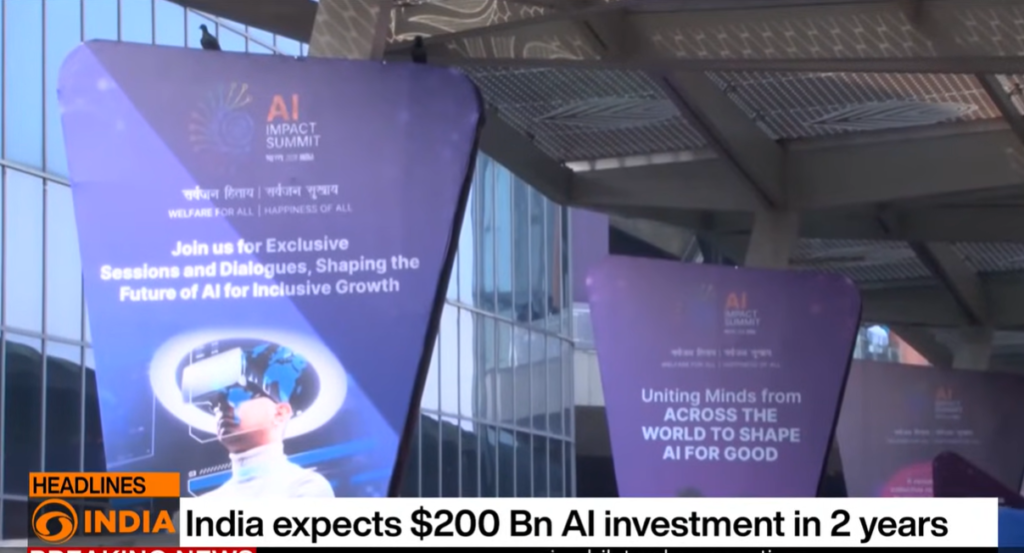
India’s $200B AI Investment by 2028
India is setting its sights on becoming a global artificial intelligence hub with a bold plan to attract $200 billion in AI investment by 2028. This initiative, announced at the AI Impact Summit in New Delhi, reflects the country’s determination to leverage its talent, infrastructure, and policy support to compete with global leaders in the AI race.
India’s $200 Billion AI Investment: A Strategic Vision

Artificial intelligence is now considered a strategic asset, shaping economies, national security, and innovation. India’s government views AI as critical infrastructure, comparable to energy or defense. The $200 billion investment target is designed to build sovereign AI models, expand computing capacity, and foster innovation across industries.
Policy Support for India’s AI Investment by 2028

India’s $200 Billion AI Investment by 2028
To attract global investors and technology firms, India is offering a mix of incentives:
- Tax breaks for AI infrastructure projects.
- Government‑backed venture capital for startups and research.
- Simplified approvals to reduce bureaucratic hurdles.
- Expansion of data centers and cloud infrastructure to support AI growth.
These measures aim to position India as a competitive alternative to established AI hubs like the U.S. and China.
India’s $200 Billion AI Investment by 2028:
Global Tech Giants Eye India’s Artificial Intelligence Hub
Executives from OpenAI, Google, Anthropic, and other global firms attended the AI Impact Summit, signaling strong interest in India’s AI ecosystem. With its vast pool of engineers and data scientists, India offers both talent and cost advantages. The country is evolving from an outsourcing destination into a strategic partner for AI innovation.
Workforce Reskilling for India’s AI Future
A cornerstone of India’s AI strategy is reskilling millions of workers to prepare for the AI economy. Training programs will focus on:
- AI in healthcare for rural populations.
- AI in agriculture to boost productivity.
- AI solutions for language diversity across India’s regions.
This inclusive approach ensures that AI benefits are widely shared, minimizing job displacement while maximizing new opportunities.
India’s $200 Billion AI Investment by 2028:
Challenges in Achieving $200 Billion AI Investment
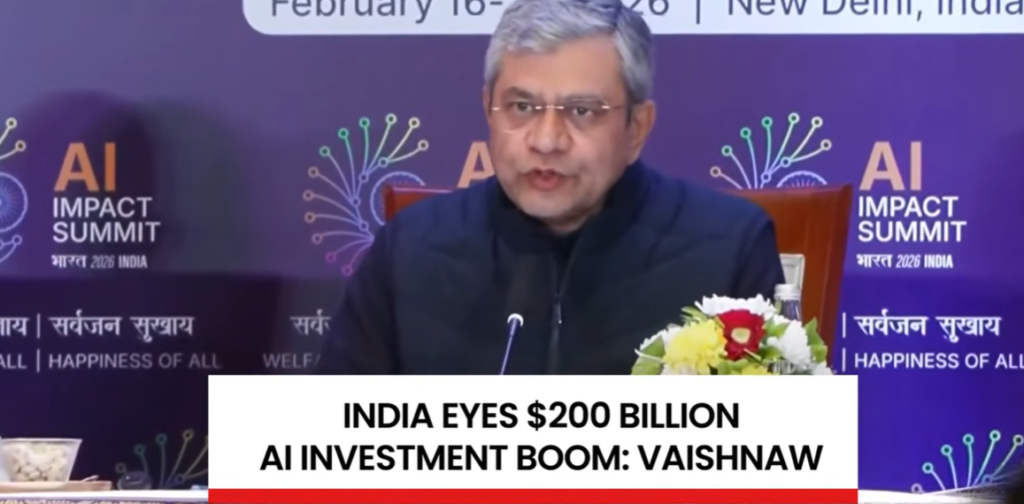
India’s AI investment plan is ambitious, but challenges remain:
- Infrastructure readiness: Building $200 billion worth of AI infrastructure requires energy, land, and logistics.
- Regulatory balance: Policies must encourage innovation while addressing privacy, bias, and ethical concerns.
- Global competition: The U.S. and China are far ahead in AI research and funding.
- Capital mobilization: Attracting such massive investment in a short timeframe demands strong investor confidence.
India’s $200 Billion AI Investment by 2028:
Strategic Importance of India’s AI Investment by 2028
If successful, India’s AI push could reshape its economic and geopolitical standing. Benefits include:
- Enhanced GDP growth through AI‑driven productivity.
- Greater sovereign control over AI models and data.
- Attraction of global talent and research collaborations.
- Empowerment of citizens with AI‑enabled public services.
This initiative could mark India’s transition from a digital economy participant to a global artificial intelligence leader.
India’s $200 Billion AI Investment by 2028:
Conclusion: India’s Defining AI Moment
India’s $200 billion AI investment by 2028 represents a defining moment in its technological journey. The country is no longer content with being a service provider—it wants to lead in artificial intelligence innovation. Execution, regulatory foresight, and global partnerships will determine success. If India can overcome challenges, it may well emerge as one of the world’s most influential AI powers in the next decade.