
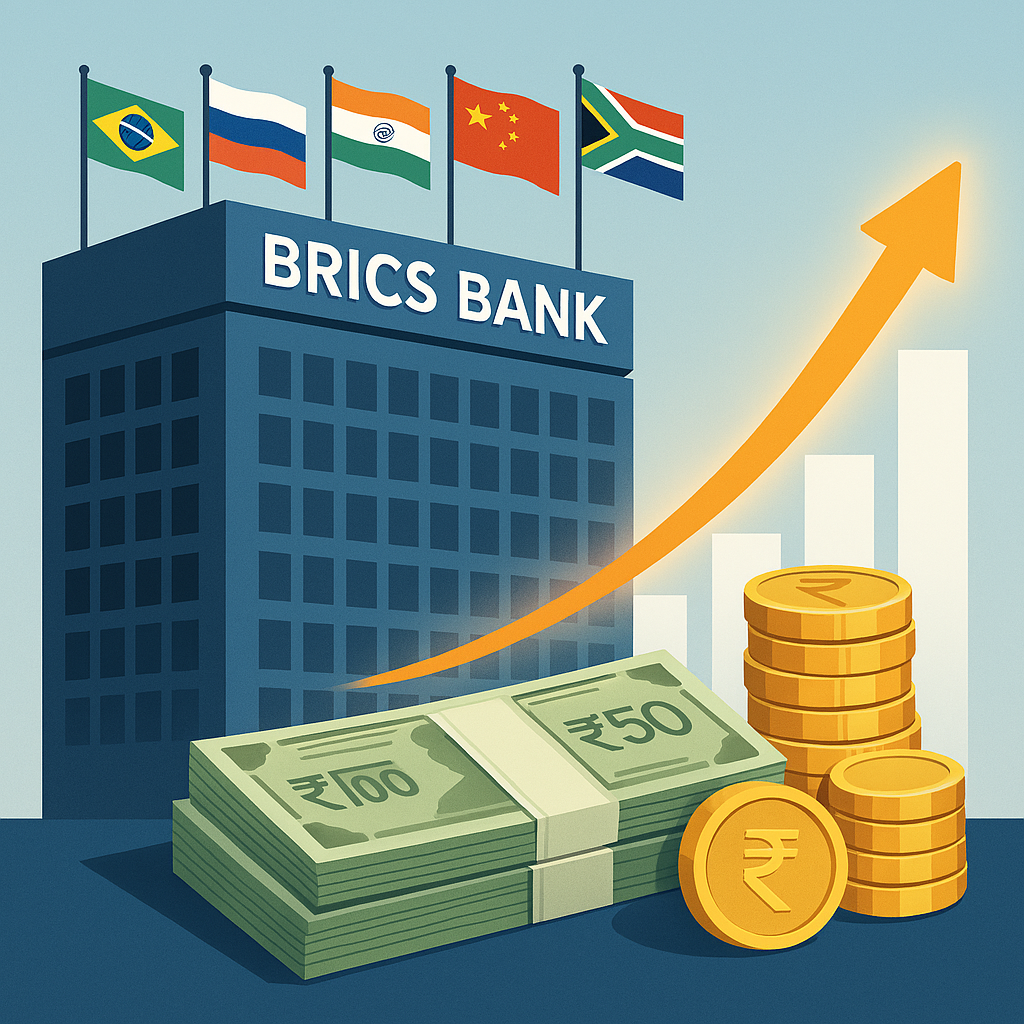
BRICS Bank to Launch First Rupee-Denominated Bond, Raising $500M
BRICS Bank to Launch First Rupee-Denominated Bond, Raising $500M — this historic announcement marks a turning point in India’s financial landscape. The New Development Bank (NDB), popularly known as the BRICS Bank, is set to issue its first-ever rupee-denominated bond in March 2026, valued at $500 million (₹4,500 crore). This move aligns with the Reserve Bank of India’s (RBI) smart currency strategy, aimed at strengthening the rupee’s global standing and reducing dependence on the US dollar.
BRICS Bank to Launch First Rupee-Denominated Bond, Raising $500M – A Landmark Step
The NDB was established in 2015 by Brazil, Russia, India, China, and South Africa to finance infrastructure and sustainable development projects. Unlike traditional lenders, the BRICS Bank emphasizes raising funds in local currencies.
- Previously, the bank issued bonds in Chinese yuan and South African rand.
- The rupee bond marks India’s entry into this framework, reinforcing the country’s ambition to internationalize its currency.
- The NDB’s 2022–2026 strategy commits to raising 30% of financing in member-country currencies, making this issuance a critical milestone.
RBI’s Smart Currency Strategy and the Rupee Bond
The RBI has been steadily working to elevate the rupee’s role in global trade and finance. The launch of the rupee-denominated bond is a practical demonstration of this vision.
Strengthening Rupee Internationalization
By issuing bonds in rupees, the BRICS Bank validates India’s currency as a credible instrument for global investors. This enhances the rupee’s reputation and supports India’s long-term goal of becoming a trade-settlement currency.
Reducing Dollar Dependence
The $500M rupee bond reduces reliance on the US dollar, aligning with the broader dedollarization trend among emerging economies. It positions India as a leader in financial sovereignty.
Who Will Invest in the Rupee-Denominated Bond?
The bond is expected to attract a diverse set of investors:
- Global institutional investors seeking exposure to India’s growth story.
- Domestic investors looking for stable rupee-based returns.
- Sovereign wealth funds and pension funds diversifying away from dollar assets.
This mix of investors will enhance liquidity in India’s debt market and strengthen confidence in rupee-denominated instruments.
Benefits of BRICS Bank’s $500M Rupee Bond
- Direct funding for infrastructure: Proceeds will be reinvested in Indian projects, reducing currency risk.
- Boost to domestic capital markets: Encourages more rupee-based issuances.
- Global visibility: Positions India as a credible player in international bond markets.
Challenges Ahead for the Rupee Bond
While the issuance is groundbreaking, challenges remain:
- Market depth: India’s rupee bond market must expand to absorb large-scale issuances.
- Currency volatility: Fluctuations in the rupee against the dollar could affect investor appetite.
- Global competition: India must position its bonds competitively against established markets like China’s yuan bonds.
BRICS Bank to Launch First Rupee-Denominated Bond, Raising $500M – The Bigger Picture
This bond is part of a larger BRICS strategy to reduce reliance on the US dollar in trade and finance. With China pushing the yuan and Russia exploring alternatives, India’s rupee bond strengthens the bloc’s collective effort toward financial multipolarity.
It also signals India’s growing influence within BRICS, positioning the rupee as a credible alternative currency for development finance.
Conclusion
The announcement that the BRICS Bank will launch its first rupee-denominated bond, raising $500M, is a watershed moment for India’s financial sector. It supports RBI’s smart currency strategy, boosts rupee internationalization, and reduces dollar dependence.
As India continues to assert itself in global finance, this bond could mark the beginning of a new era—where the rupee plays a central role in shaping the future of emerging market economies.