
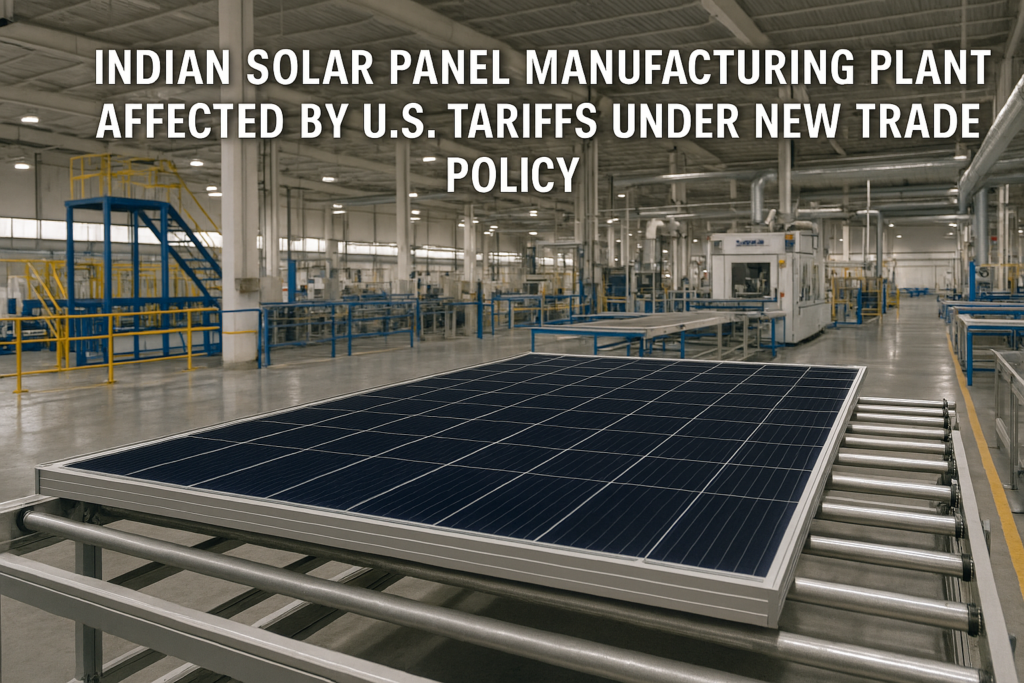
Trump Imposes 126% Tariffs on Indian Solar Imports, Threatening India-US Trade Deal in a dramatic escalation of trade tensions that could ripple across global renewable energy markets. In a move that has stunned policymakers and industry leaders alike, former U.S. President Donald Trump announced steep tariffs targeting Indian solar panel and module exports to the United States.
The 126% tariff rate represents one of the toughest trade measures imposed on India’s clean energy sector. Industry insiders warn that this step could derail ongoing negotiations aimed at strengthening economic cooperation between India and United States.
Trump Imposes 126% Tariffs on Indian Solar Imports, Threatening India-US Trade Deal: What Triggered the Move?
The decision reportedly stems from allegations of unfair subsidies and pricing advantages enjoyed by Indian solar manufacturers. U.S. trade authorities argue that the influx of competitively priced Indian solar panels has disrupted domestic producers.
However, Indian trade officials have strongly contested these claims, stating that the country’s renewable energy sector operates within global trade norms. New Delhi is expected to explore dispute resolution mechanisms, potentially through the World Trade Organization framework.
The timing of the tariffs is particularly sensitive, as both nations were engaged in discussions to finalize components of a broader trade deal covering technology, pharmaceuticals, and clean energy cooperation.
Trump Imposes 126% Tariffs on Indian Solar Imports, Threatening India-US Trade Deal: Impact on Solar Industry
The immediate impact is likely to be felt by Indian exporters who rely heavily on the U.S. market. The United States remains one of the largest importers of solar modules globally, making it a critical revenue stream for Indian manufacturers.
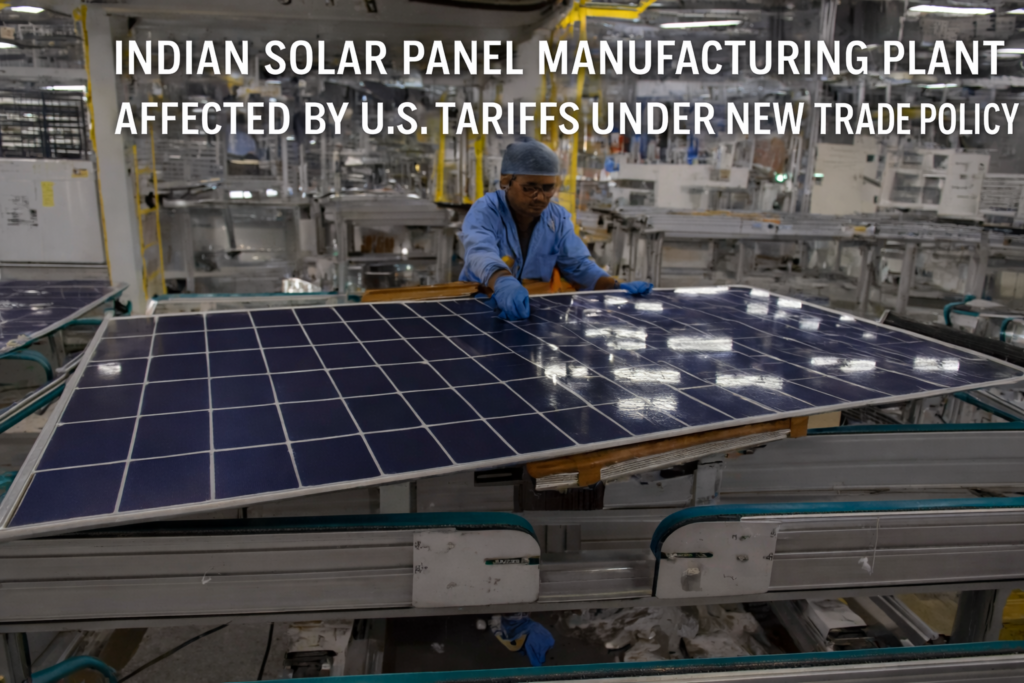
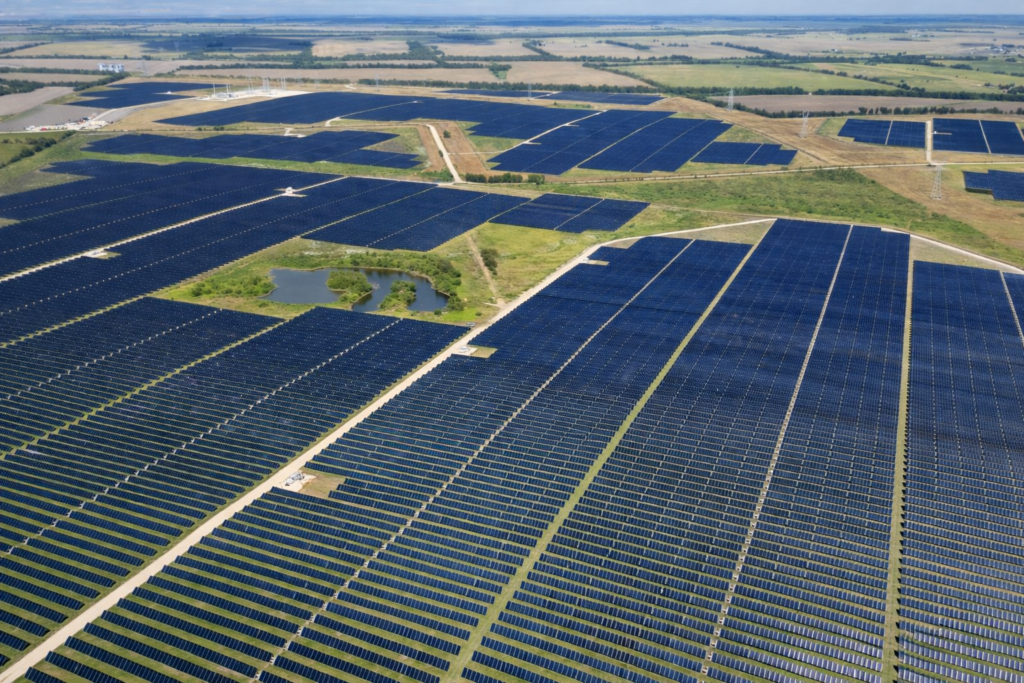
The new tariff structure could significantly reduce Indian solar exports to the U.S., one of the world’s largest renewable energy markets. For Indian manufacturers, the American market represents a major revenue stream. A sudden barrier of this scale may redirect exports toward Europe or emerging Asian markets.
Higher tariffs could increase solar installation costs in the U.S., potentially slowing renewable adoption goals. American developers dependent on affordable imports may also face financial strain.
Diplomatic Fallout Between India and the United States
Trade tensions rarely remain confined to a single sector. Observers caution that the tariff decision could spill over into other areas of economic cooperation. Over the past decade, India and the United States have strengthened defense, digital, and infrastructure partnerships.
If retaliatory tariffs are imposed, it could complicate negotiations on broader trade frameworks. Market sentiment in both countries has already shown signs of volatility, particularly in renewable energy stocks.
Economic analysts note that while protective tariffs may offer short-term relief to domestic producers, long-term impacts often include higher consumer prices and reduced global competitiveness
A trade confrontation over solar imports risks undermining confidence just as both countries seek to counterbalance global supply chain disruptions. Officials in New Delhi are reportedly weighing retaliatory tariffs or negotiation-based solutions.
Market Reaction and Investor Sentiment
Markets responded cautiously to the announcement. Renewable energy stocks in India saw volatility, while U.S.-based solar manufacturers witnessed short-term gains on expectations of reduced competition.
Economists warn that prolonged trade tensions could discourage foreign investment and slow clean energy expansion in both nations. With climate commitments under global scrutiny, the tariff decision adds complexity to renewable energy diplomacy.
Conclusion: A Turning Point in Clean Energy Trade?
Trump Imposes 126% Tariffs on Indian Solar Imports, Threatening India-US Trade Deal marks a pivotal moment in bilateral trade relations. While the move may offer temporary protection to U.S. manufacturers, it risks escalating tensions and disrupting supply chains.
As negotiations unfold, stakeholders across the renewable sector will watch closely. The coming weeks could determine whether this tariff dispute becomes a prolonged trade battle—or a catalyst for renewed dialogue.