
India Tests First Autonomous Swarm Interceptor for Counter-Drone Warfare | Flying Wedge Defence Breakthrough marks a major milestone in the country’s rapidly evolving defence technology ecosystem. In a significant step toward modern battlefield readiness, India has successfully tested an autonomous swarm interceptor system designed to detect, track, and neutralize hostile drones using artificial intelligence and coordinated drone swarms.
The breakthrough comes from Flying Wedge Defence, a Bengaluru-based defence startup focused on next-generation aerial security systems. With drone warfare increasingly shaping global conflicts—from Eastern Europe to the Middle East—India’s push toward indigenous counter-drone solutions highlights the growing importance of autonomous defence systems.
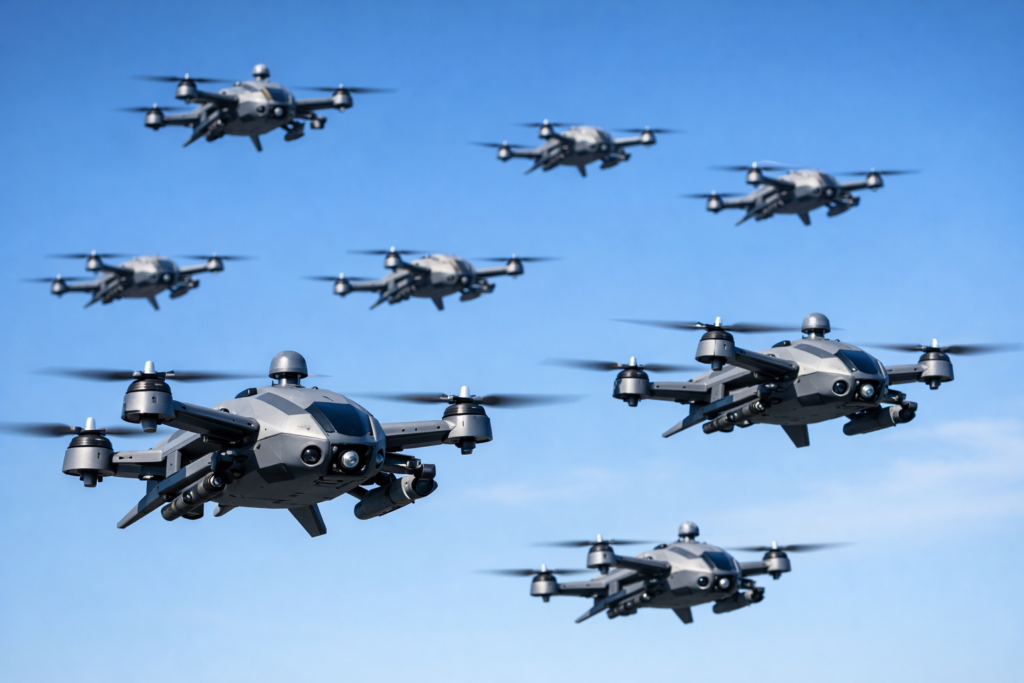
India Tests First Autonomous Swarm Interceptor for Counter-Drone Warfare: Why It Matters
The successful trial of the autonomous swarm interceptor represents a critical step in protecting sensitive installations such as military bases, airports, and strategic infrastructure.
Modern battlefields increasingly feature drone swarms capable of overwhelming traditional air defence systems. A single interceptor drone may struggle against dozens of incoming threats. However, an autonomous swarm interceptor uses coordinated drones that communicate with each other in real time, enabling them to intercept multiple targets simultaneously.
Key capabilities of the system include:
- AI-based target identification
- Real-time swarm coordination
- Autonomous decision-making
- Rapid response to multiple aerial threats
This approach allows the interceptor swarm to neutralize enemy drones faster than traditional defence systems.

How the Flying Wedge Defence Breakthrough Works
AI-Driven Swarm Intelligence
The Flying Wedge Defence breakthrough relies heavily on artificial intelligence and distributed computing. Each interceptor drone operates as part of a networked swarm, sharing data with others to create a collective intelligence system.
This swarm intelligence allows drones to:
- Divide targets among themselves
- Predict enemy drone movement
- Adjust flight paths autonomously
- Maintain formation even if some drones are lost
Such resilience makes swarm interceptors particularly effective against coordinated drone attacks.
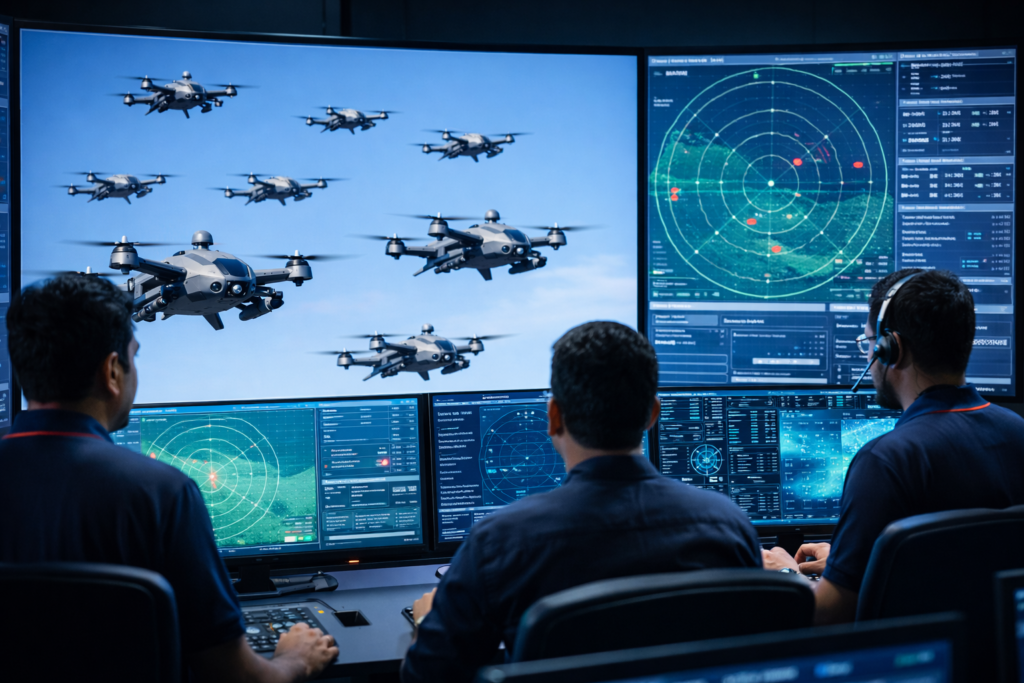
Speed and Interception Mechanism
The interceptor drones are designed to rapidly launch and engage hostile UAVs detected by radar or optical sensors. Once airborne, they form a defensive grid and move toward the incoming drone swarm.
Possible neutralization methods include:
- Physical collision interception
- Electronic jamming
- Net-based capture systems
These options allow the swarm to disable drones without causing large explosions, which is critical when defending urban or civilian areas.
India Tests First Autonomous Swarm Interceptor for Counter-Drone Warfare: Strategic Importance
India’s defence planners have increasingly emphasized counter-drone warfare, particularly after repeated incidents of drones being used for surveillance, smuggling, and potential terror operations near border regions.
The India Tests First Autonomous Swarm Interceptor for Counter-Drone Warfare initiative aligns with broader national goals such as:
- Strengthening indigenous defence technology
- Reducing reliance on foreign military systems
- Enhancing border and infrastructure security
If successfully deployed, the technology could be integrated into military bases, air defence networks, and critical infrastructure protection systems.

Future Applications of Autonomous Swarm Interceptors
Military Deployment
The technology could be used across several defence scenarios:
- Border surveillance and air defence
- Naval ship protection from drone attacks
- Battlefield counter-UAV operations
Autonomous swarm interceptors could become a key component of next-generation air defence systems.
Civilian Infrastructure Protection
Beyond military use, swarm interceptors may protect:
- Airports
- Nuclear power plants
- Government buildings
- Major public events
As drone usage continues to expand worldwide, the need for intelligent anti-drone systems will grow rapidly.
Conclusion
The India Tests First Autonomous Swarm Interceptor for Counter-Drone Warfare | Flying Wedge Defence Breakthrough represents a pivotal moment for India’s defence innovation landscape. By combining artificial intelligence, swarm robotics, and advanced interception strategies, the system demonstrates how modern warfare is rapidly shifting toward autonomous technologies.
If further trials and deployments prove successful, India could soon join the small group of nations capable of deploying AI-powered swarm defence systems, strengthening national security and positioning the country as a global leader in counter-drone technology