
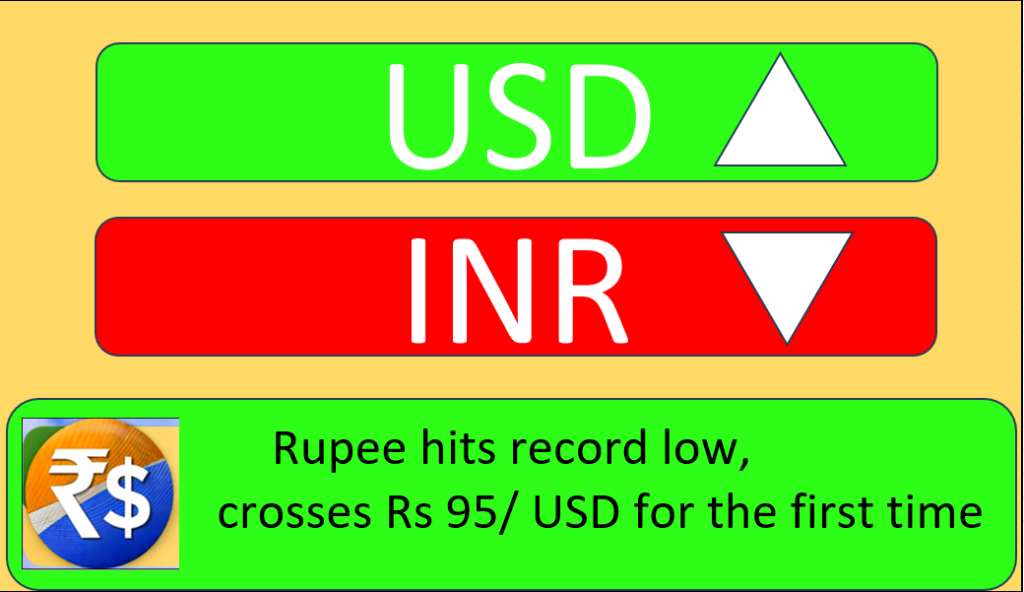
India’s currency market witnessed a historic shock as the Rupee Crashes to Record ₹95/USD: RBI Intervenes Amid Global Turmoil, sending ripples across financial markets, import costs, and investor sentiment. The sharp depreciation has triggered immediate action from the Reserve Bank of India (RBI), which stepped in to stabilize the falling rupee amid escalating global economic uncertainty.
Key Highlights of the Rupee’s Fall
- Historic Low: The Indian rupee plunged to an unprecedented intraday low of ₹95.22 against the US dollar, before recovering slightly to close at ₹94.78.
- RBI’s Tactical Move: In a bid to curb speculative trading, the Reserve Bank of India imposed a cap of $100 million on banks’ Net Open Position (NOP-INR), effective April 10.
- Global Shockwaves: The ongoing conflict in Iran, surging crude oil prices, and heightened demand for the US dollar have collectively intensified downward pressure on the rupee.
- Domestic Market Strain: Early gains were erased as importer hedging and arbitrage activity triggered volatility, exposing the rupee’s vulnerability to both global and internal market forces.
Rupee Crashes to Record ₹95/USD: RBI Intervenes Amid Global Turmoil – What Triggered the Fall?
The sudden slide of the rupee to an unprecedented ₹95 per US dollar is being attributed to a combination of global and domestic factors:
- Strengthening of the US Dollar amid aggressive monetary tightening by the Federal Reserve
- Rising crude oil prices increasing India’s import bill
- Heightened geopolitical tensions impacting global trade flows
- Massive foreign institutional investor (FII) outflows from Indian equities
These elements collectively created intense pressure on the Indian currency, accelerating its fall to record lows.
Rupee Crashes to Record ₹95/USD: RBI Intervenes Amid Global Turmoil – RBI’s Emergency Measures
In response to the crisis, the Reserve Bank of India initiated multiple interventions:
- Dollar Selling: RBI reportedly sold billions of dollars from its forex reserves
- Liquidity Tightening: Measures to curb speculative currency trading
- Policy Signaling: Strong communication to reassure markets
Such steps aim to prevent excessive volatility rather than defend a specific exchange rate level.
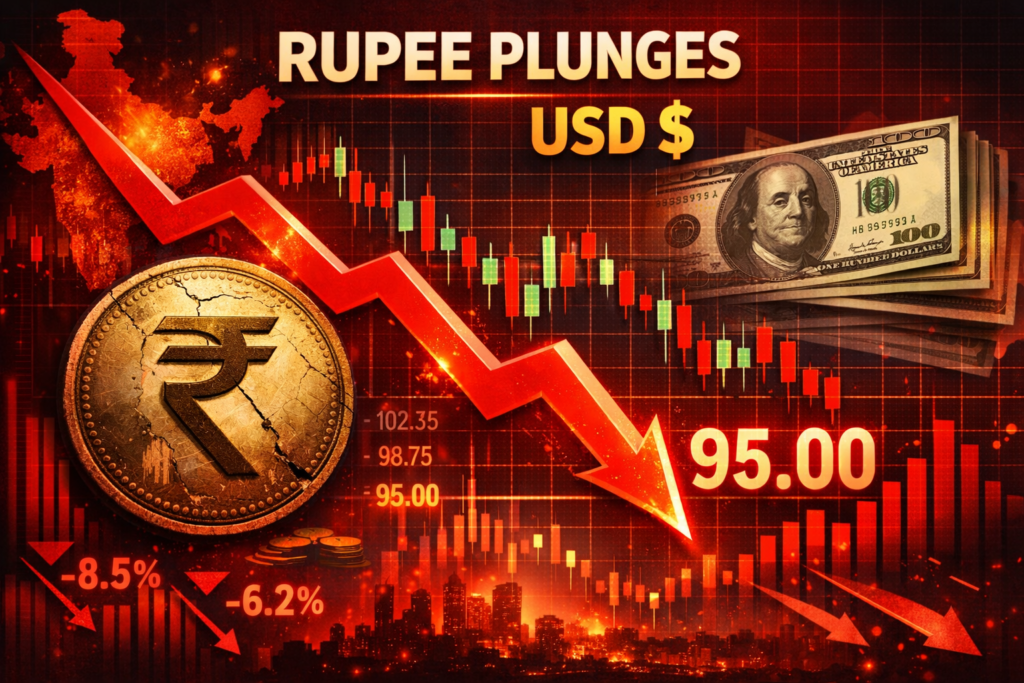
Impact of Rupee Depreciation on the Indian Economy
1. Rising Import Costs
A weaker rupee drives up the cost of imports—especially crude oil—making fuel and energy significantly more expensive for the Indian economy, faces higher fuel costs, which may fuel inflation.
2. Inflationary Pressures
Imported inflation is expected to rise, affecting consumer goods, electronics, and energy prices.
3. Stock Market Volatility
Benchmark indices like BSE Sensex and Nifty 50 experienced heightened volatility as foreign investors pulled out funds.
4. Export Sector Gains
On the positive side, exporters—especially IT and pharma companies—may benefit from a weaker rupee as their overseas earnings increase in value.

Rupee Crashes to Record ₹95/USD: RBI Intervenes Amid Global Turmoil – Global Context
The currency crash is not an isolated event. Emerging market currencies worldwide are under pressure due to:
- High US interest rates
- Slowing global growth
- Risk-off sentiment among investors
Countries with large import dependencies and current account deficits, like India, are particularly vulnerable.
What Lies Ahead for the Rupee?
Market experts believe the rupee may remain volatile in the near term. Key factors to watch include:
- Future rate decisions by the Federal Reserve
- Crude oil price trajectory
- RBI’s continued intervention strategy
- Capital inflows into Indian markets
While the Rupee Crashes to Record ₹95/USD: RBI Intervenes Amid Global Turmoil scenario has raised concerns, India’s strong forex reserves and macroeconomic fundamentals provide a buffer against prolonged instability.
Conclusion
The Rupee Crashes to Record ₹95/USD: RBI Intervenes Amid Global Turmoil marks a critical moment for India’s financial landscape. While short-term volatility is inevitable, the swift response from the Reserve Bank of India reflects the central bank’s commitment to maintaining stability.
For businesses, investors, and policymakers, this development serves as a reminder of the interconnected nature of global finance and the importance of proactive economic management.