
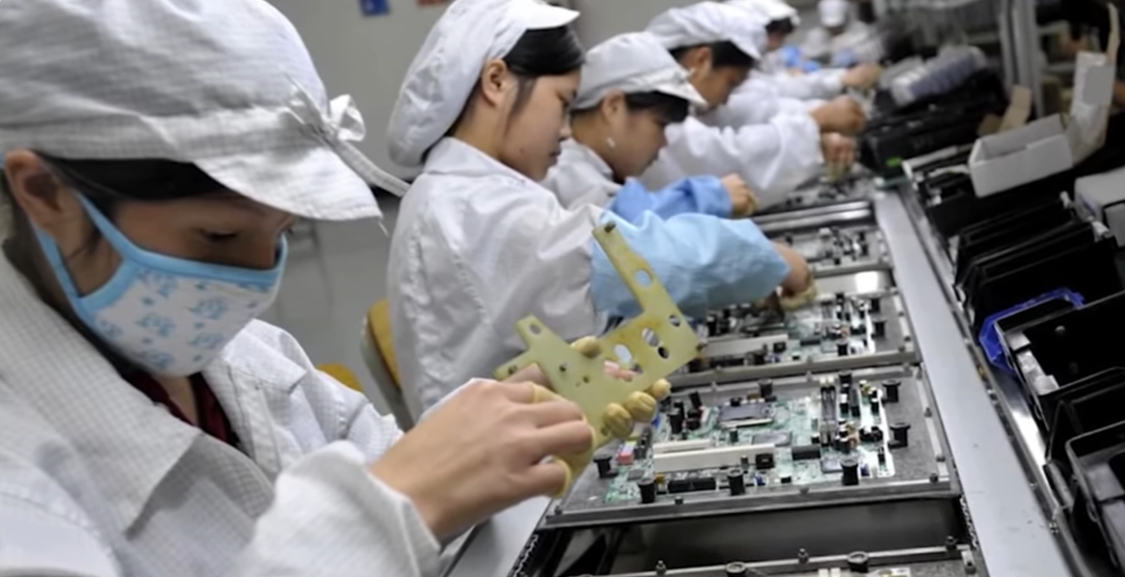
India Powers Apple Supply Chain Shift Surge with Record Exports — this headline is no longer just a trend, but a defining moment in global manufacturing. As geopolitical tensions, diversification strategies, and cost efficiencies reshape production hubs, Apple Inc. is accelerating its pivot toward India. The result: record-breaking export numbers, a rapidly expanding electronics ecosystem, and a major recalibration of the global supply chain.
From iPhones rolling out of Indian factories to exports touching unprecedented highs, India is emerging as a cornerstone of Apple’s long-term strategy.
India Powers Apple Supply Chain Shift with Record Exports: A Historic Turning Point
India’s electronics exports, particularly smartphones, have surged dramatically in recent years. The phrase India Powers Apple Supply Chain Shift with Record Exports reflects a structural transformation driven by policy support, global demand, and strategic diversification.
Apple’s contract manufacturers — including Foxconn, Pegatron, and Tata Electronics — have significantly scaled up operations across Indian states like Tamil Nadu and Karnataka. These facilities are now producing some of the latest iPhone models, not just for domestic consumption but primarily for export.
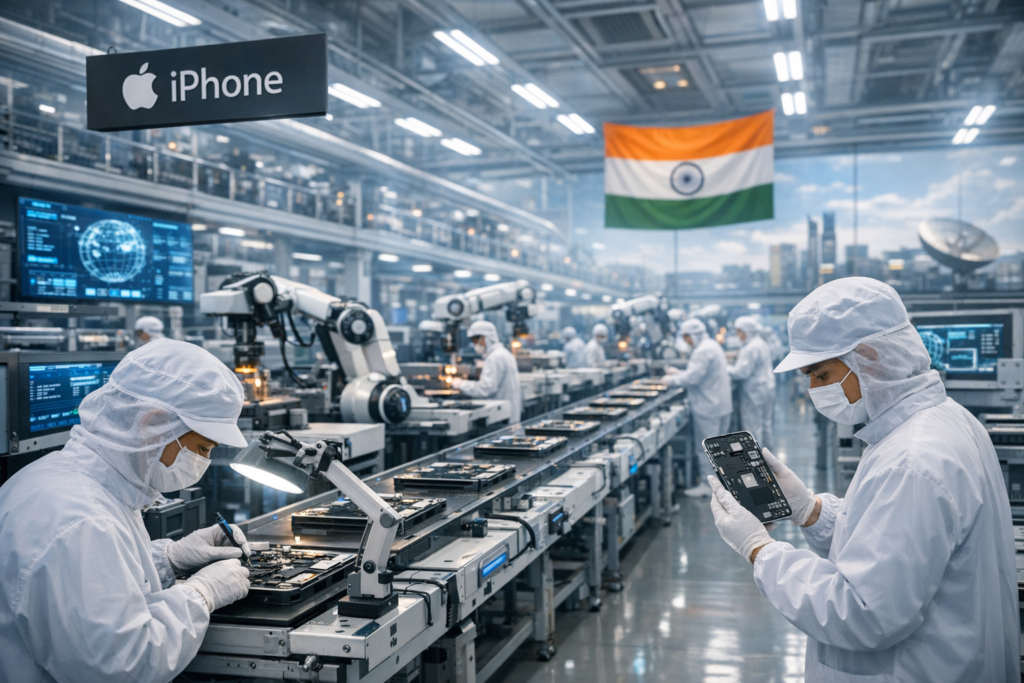
Why Apple is Shifting Production to India
1. Diversification Beyond China
Apple’s dependence on China is gradually reducing. Supply chain disruptions, trade tensions, and pandemic-related shutdowns exposed vulnerabilities. India offers a stable alternative with growing infrastructure and policy backing.
2. Government Incentives
The Indian government’s Production-Linked Incentive (PLI) scheme has played a pivotal role. By offering financial incentives for local manufacturing, India has attracted billions in investment.
3. Cost Competitiveness
Labor costs in India remain competitive compared to China, making large-scale production economically viable for Apple and its partners.
India Powers Apple Supply Chain Shift with Record Exports: The Numbers Behind the Boom
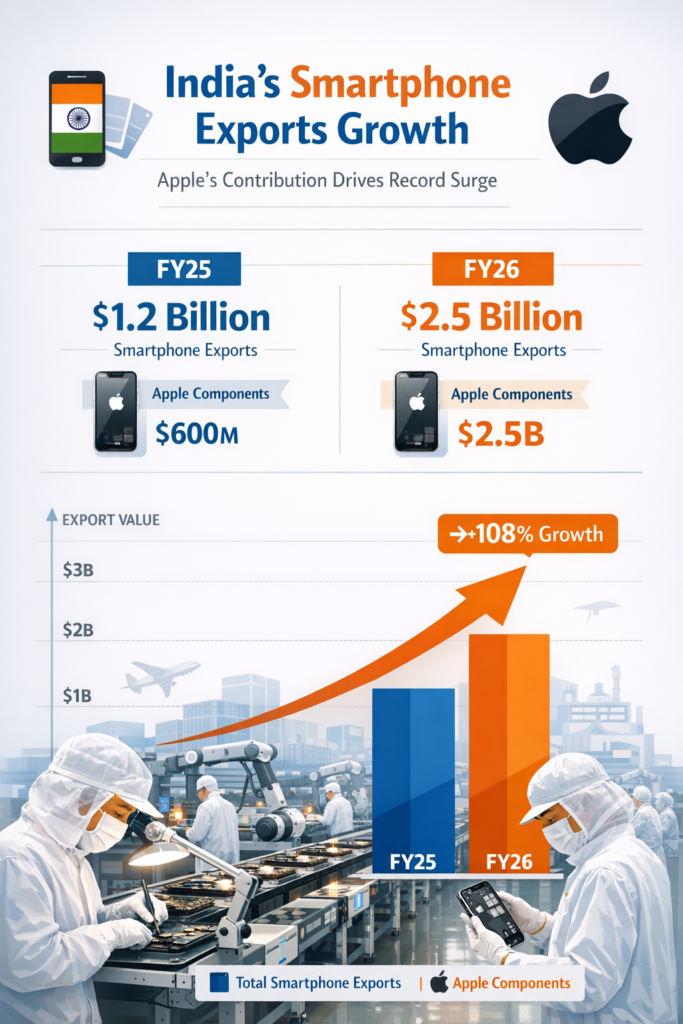
India’s smartphone exports have seen exponential growth, largely fueled by Apple’s expansion. Industry estimates suggest that Apple now accounts for a significant share of India’s total electronics exports.
- iPhone exports from India have crossed tens of billions of dollars annually
- Double-digit growth rates year-on-year
- India contributing an increasing share of Apple’s global production
This surge reinforces how India Powers Apple Supply Chain Shift with Record Exports is not just a narrative but a measurable economic milestone.
Role of Indian Companies in Apple’s Supply Chain
A notable development is the entry of Indian conglomerates into Apple’s ecosystem. Tata Group has emerged as a key player after acquiring and expanding manufacturing operations.
This marks a shift from foreign-dominated assembly to increasing domestic participation. It also signals Apple’s confidence in India’s long-term capabilities.
Infrastructure and Ecosystem Development
India Powers Apple Supply Chain Shift with Record Exports Through Strong Ecosystem
India’s rise is not limited to assembly lines. The ecosystem now includes:
- Component suppliers
- Logistics networks
- Skilled workforce training programs
- Semiconductor ambitions
Government initiatives like “Make in India” and investments in industrial corridors are further strengthening the manufacturing backbone.

Employment and Economic Impact
The expansion of Apple’s supply chain in India has created thousands of jobs, both directly and indirectly.
Key Benefits:
- Employment generation in manufacturing hubs
- Skill development in advanced electronics
- Boost to local economies
- Increased foreign direct investment (FDI)
As India Powers Apple Supply Chain Shift with Record Exports, the ripple effects are visible across multiple sectors, from logistics to retail.
Challenges India Must Overcome
While the growth story is impressive, challenges remain:
1. Supply Chain Depth
India still imports a significant portion of components. Building a deeper local supply chain is critical.
2. Infrastructure Gaps
Despite improvements, logistics and infrastructure need further enhancement to match global standards.
3. Policy Consistency
Long-term policy stability is essential to maintain investor confidence.
India vs China: A Strategic Comparison
India is not replacing China overnight but is becoming a crucial complementary hub.
| Factor | India | China |
|---|---|---|
| Labor Cost | Lower | Higher |
| Supply Chain Depth | Growing | Highly mature |
| Government Support | Strong (PLI schemes) | Established industrial policy |
| Export Growth | Rapid | Stable |
This comparison highlights why India Powers Apple Supply Chain Shift with Record Exports is part of a broader global diversification strategy.
Future Outlook: What Lies Ahead
Apple aims to significantly increase its production share in India over the next few years. Analysts predict that India could account for a substantial portion of global iPhone production.
Key future trends include:
- Expansion of manufacturing facilities
- Increased local sourcing of components
- Growth in high-value electronics exports
- Potential entry into semiconductor manufacturing
Conclusion
India Powers Apple Supply Chain Shift with Record Exports is more than a headline—it’s a transformative shift in global manufacturing dynamics. With strong policy support, rising investor confidence, and expanding capabilities, India is positioning itself as a global electronics powerhouse.
Apple’s growing footprint is both a validation of India’s potential and a catalyst for further growth. As exports continue to rise and the ecosystem matures, India is set to play an even more central role in shaping the future of global supply chains.
The momentum is clear, the trajectory is strong, and the world is watching as India cements its place in Apple’s global strategy.