
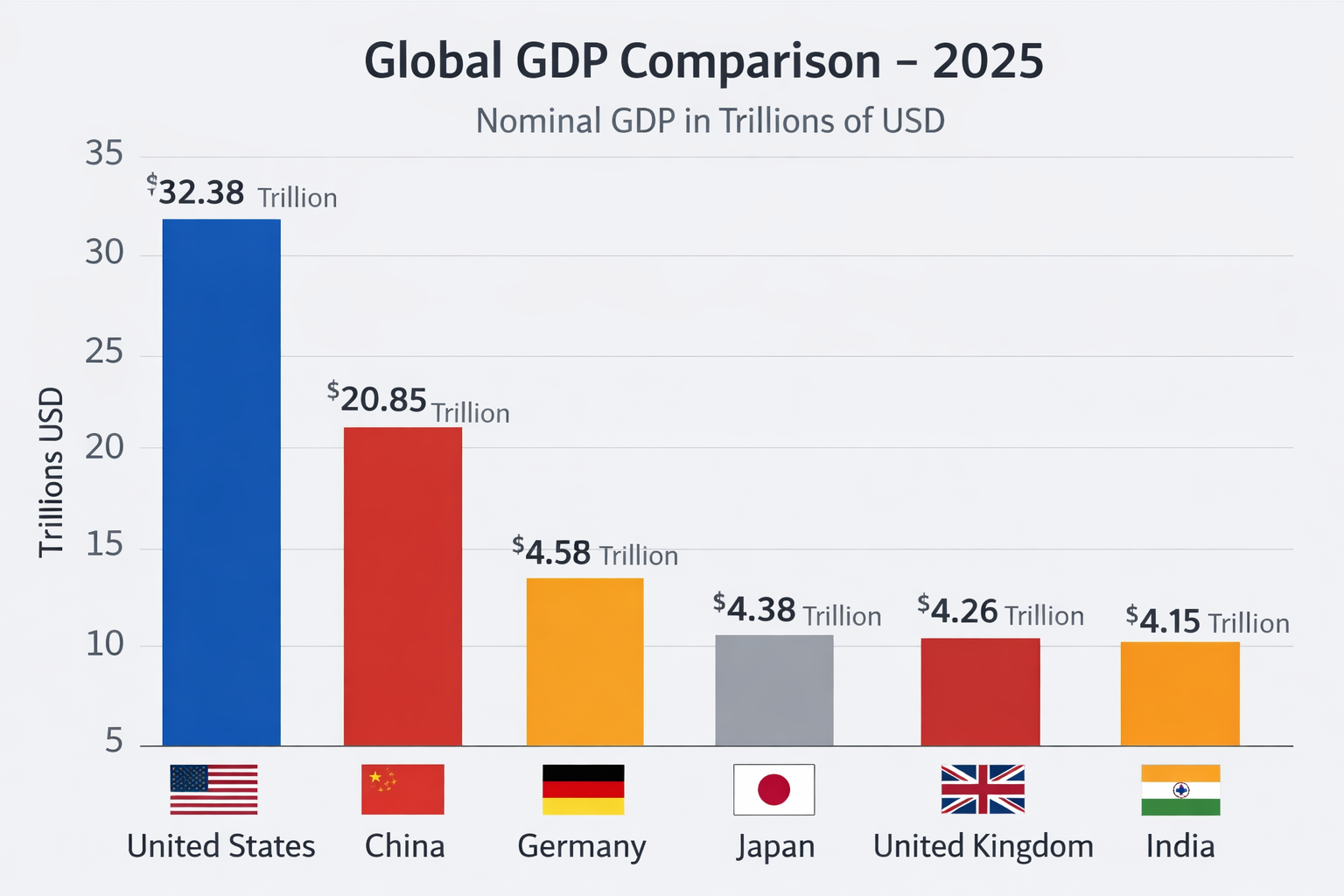
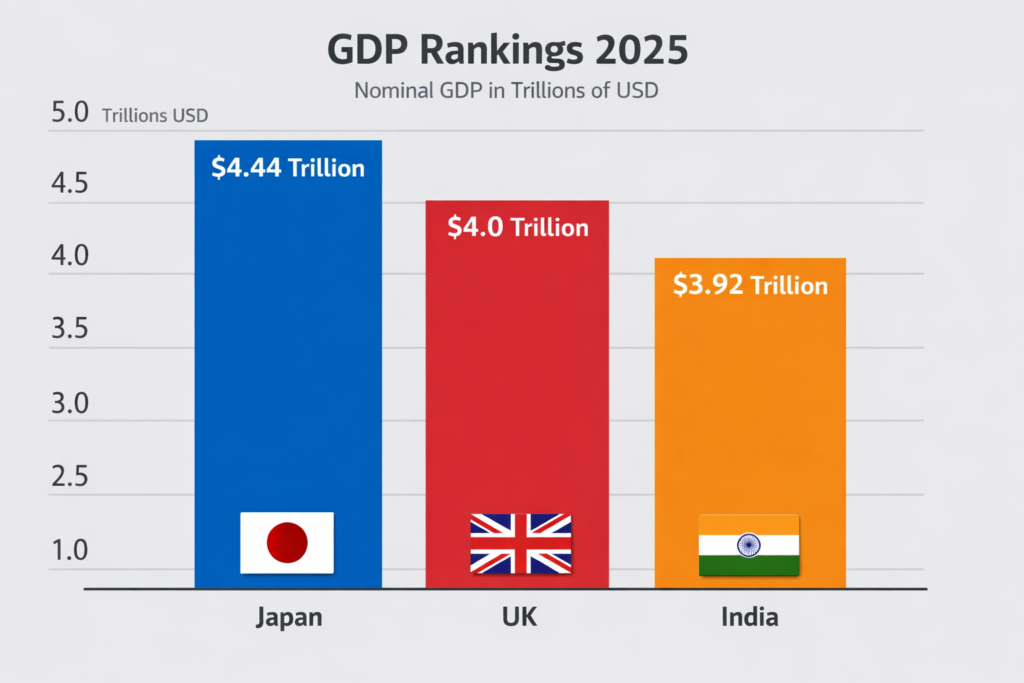
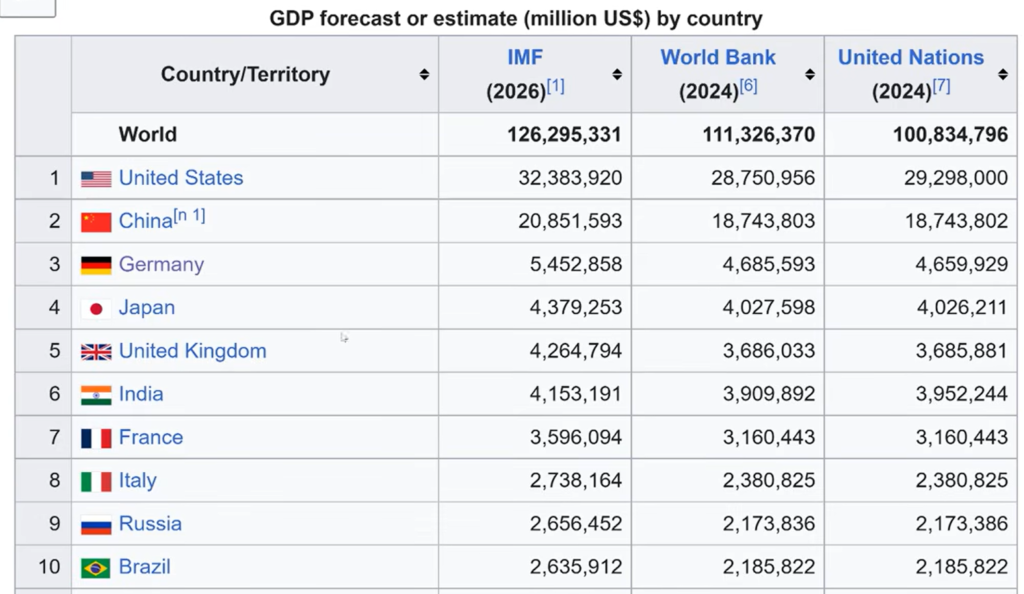
India Slips to 6th in Global GDP Rankings — a headline that has stirred debate across economic circles worldwide. According to the latest IMF estimates, India’s nominal GDP in 2025 stands at $3.92 trillion, placing it behind the United Kingdom at $4 trillion and Japan at $4.44 trillion.
This development is significant because India had previously overtaken the UK to claim the 5th spot. The slip back to 6th position is not due to weak fundamentals but rather the impact of currency depreciation and nominal dollar-based calculations.
India Slips to 6th in Global GDP Rankings: Key Figures
- India’s GDP (2025): $3.92 trillion
- UK’s GDP (2025): $4 trillion
- Japan’s GDP (2025): $4.44 trillion
India’s economy continues to grow at one of the fastest rates globally, yet nominal rankings in dollar terms have shifted.
Why India Slips to 6th in Global GDP Rankings
1. Currency Depreciation
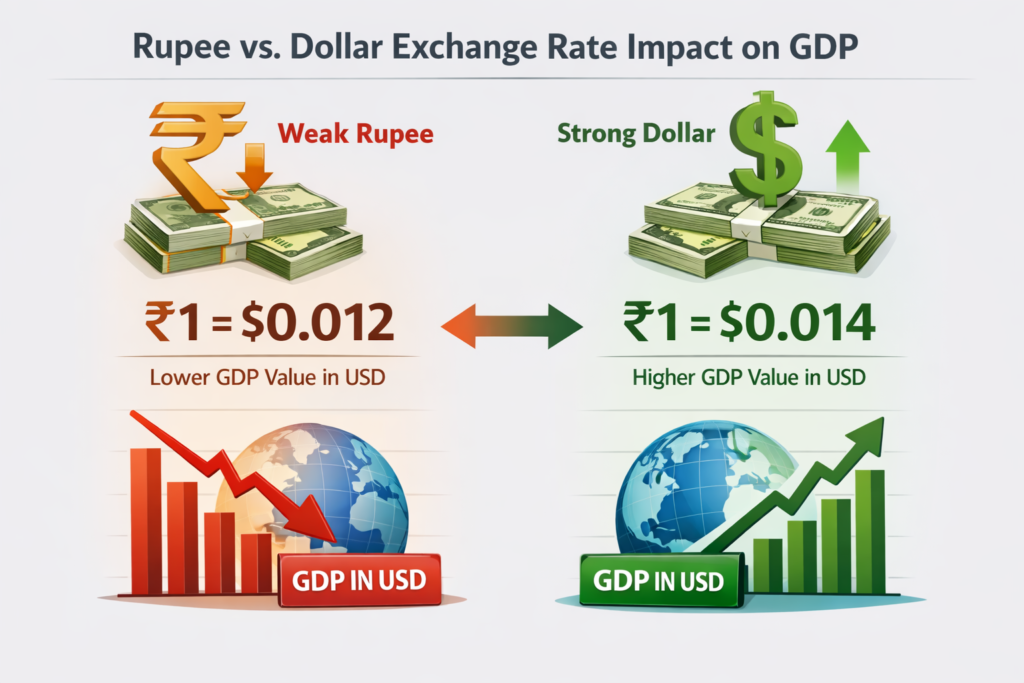
India Slips to 6th in Global GDP Rankings largely because of the rupee’s weakness against the US dollar. Since global GDP rankings are calculated in dollar terms, even strong domestic growth appears smaller when converted.
2. Nominal vs Real Growth
India’s real GDP growth remains robust at 6.5% projected for 2026, but nominal GDP in dollar terms is affected by inflation and exchange rates.
3. Relative Growth Rates
The UK’s economy grew modestly at 0.8%, yet its stronger currency allowed it to surpass India in nominal rankings.
India’s Strengths Despite the Slip
India Slips to 6th in Global GDP Rankings, but the fundamentals remain strong:
- Fastest-growing major economy with consistent growth above 6%.
- Demographic dividend: A young workforce and expanding middle class drive consumption.
- Digital transformation: Initiatives like Digital India and UPI boost productivity.
- Infrastructure push: Investments in roads, ports, and renewable energy strengthen long-term growth.
Challenges Highlighted by India Slips to 6th in Global GDP Rankings
- Currency volatility: Persistent rupee weakness could keep India behind in nominal terms.
- Inflationary pressures: Rising oil prices and supply chain disruptions affect stability.
- Structural reforms: Labor, land, and taxation reforms are needed to sustain competitiveness.
- Global headwinds: Slowdowns in the US, EU, and China may impact trade flows.
Comparative Snapshot
| Country | Nominal GDP (2025) | Growth (2026) | Key Challenge |
|---|---|---|---|
| Japan | $4.44 trillion | ~1% | Aging population |
| UK | $4 trillion | 0.8% | Post-Brexit stagnation |
| India | $3.92 trillion | 6.5% | Currency depreciation |
Outlook: Can India Regain 5th Place?
India Slips to 6th in Global GDP Rankings, but experts believe this is temporary. With strong fundamentals and rapid growth, India is expected to reclaim the 5th spot within the next 2–3 years.
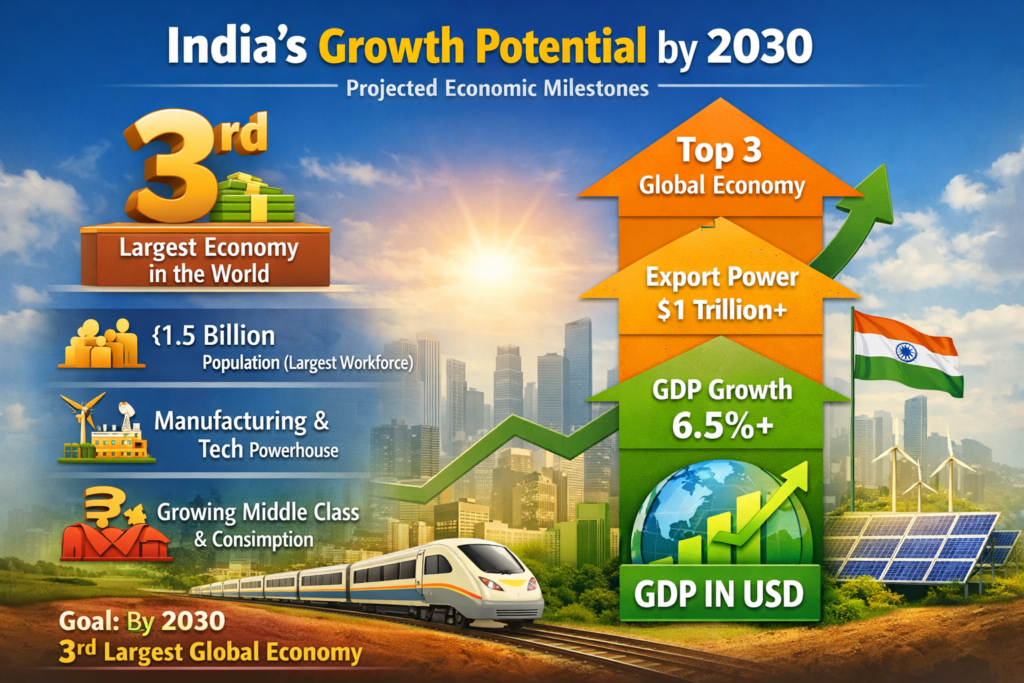
Long-term projections suggest India could become the third-largest economy by 2030, behind only the US and China.
Base Rate Calculation
A base rate calculation helps understand how GDP growth works relative to the previous year’s output.
Formula:
GDP Growth Rate=Previous GDPCurrent GDP−Previous GDP×100
Example Calculation:
Suppose:
- Previous GDP = $4.50 Trillion
- Current GDP = $4.59 Trillion
Then:4.504.59−4.50×100=2.0%
Now assume another country grows from $4.55 trillion to $4.70 trillion:4.554.70−4.55×100=3.29%
That country can move ahead despite starting from a similar base.
Why Base Effect Matters
If one year had unusually high growth, the next year appears slower because the comparison base is larger.
To understand the slip, let’s calculate India’s GDP base rate in dollar terms:
- India’s GDP in rupees (approx): ₹325 trillion
- Average exchange rate (2025): ₹83 per USD
- Nominal GDP in USD = ₹325 trillion ÷ 83 ≈ $3.92 trillion
This calculation shows how currency depreciation directly impacts India’s global ranking, despite strong real growth.
Conclusion
India Slips to 6th in Global GDP Rankings is a reminder of how currency dynamics can overshadow real economic strength. Despite the setback, India’s growth trajectory remains unmatched among major economies. With reforms, stability in the rupee, and continued investment in infrastructure and technology, India is poised to regain its position and climb higher in the global economic hierarchy.