
India’s Bold Shift: 85% Ethanol Fuel Rule in 2026
India’s Bold Shift: 85% Ethanol Fuel Rule 2026 represents a significant advancement in the nation’s energy and environmental strategy. By introducing draft rules for E85 fuel (85% ethanol, 15% petrol), India positions itself as a global leader in renewable energy adoption, reducing oil dependence, and providing farmers with new income opportunities. This initiative is a key part of India’s Bold Shift: 85% Ethanol Fuel Rule 2026, underlining the country’s dedication to sustainable energy solutions.

Why India is Moving Toward E85 Fuel
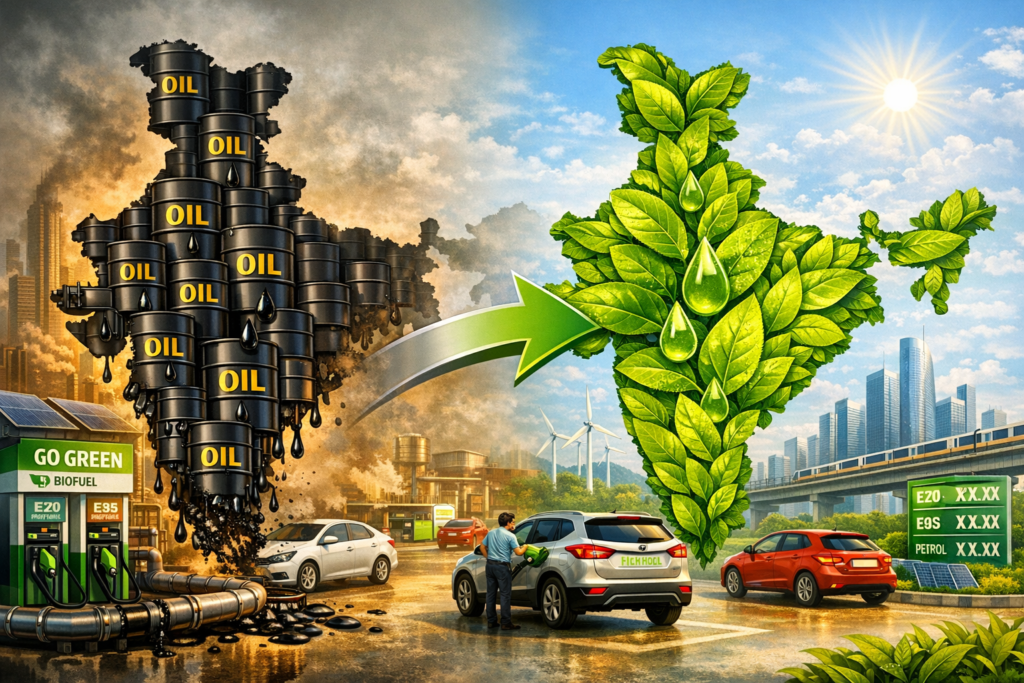
- Energy Security: India imports nearly 90% of its crude oil. Transitioning to ethanol blends reduces vulnerability to global oil price shocks.
- Environmental Goals: Ethanol burns cleaner than petrol, lowering carbon emissions and improving urban air quality.
- Economic Boost for Farmers: Ethanol is produced from sugarcane, maize, and grains, creating new demand for agricultural produce.
- Global Alignment: Countries like Brazil and the U.S. already use E85 fuel widely. India’s adoption signals readiness to join this league.
What is E85 Fuel?
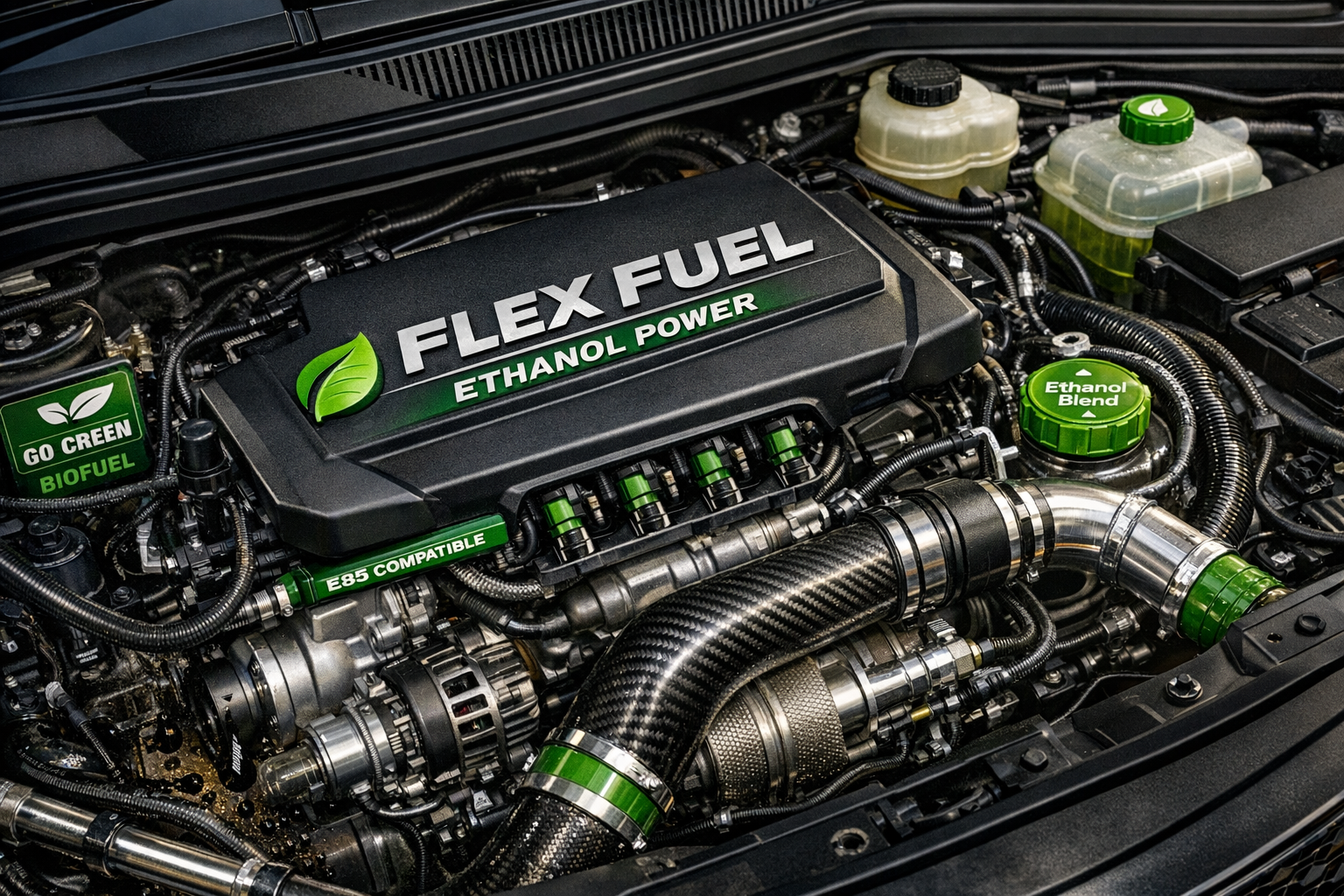
India’s Bold Shift: 85% Ethanol Fuel Rule in 2026 introduces E85 fuel, a blend of 85% ethanol and 15% petrol. Unlike E20 (20% ethanol blend) currently mandated, E85 requires flex-fuel engines capable of handling higher ethanol content.
- Flexibility: Vehicles can run on varying ethanol blends, from E20 to E85.
- Cleaner Combustion: Ethanol reduces greenhouse gas emissions compared to petrol.
- Global Precedent: Brazil’s auto industry thrives on flex-fuel vehicles, offering India a proven model.
Benefits of India’s Bold Shift: 85% Ethanol Fuel Rule in 2026
- Reduced Oil Imports – Strengthens India’s energy independence.
- Cleaner Environment – Cuts vehicular emissions, improving air quality.
- Farmer Empowerment – Expands demand for sugarcane and grain, boosting rural incomes
- Climate Commitment – Supports India’s pledge to achieve net-zero carbon emissions by 2070..
Key Benefits for Farmers
- Better crop pricing due to industrial demand
- Faster payments through ethanol procurement channels
- Diversification beyond traditional food markets
- Rural employment through biofuel plants
With India focusing on farmer income growth, the India’s Bold Shift: 85% Ethanol Fuel Rule in 2026 may become a major rural economic driver.
Challenges in Implementing E85 Fuel
While India’s Bold Shift: 85% Ethanol Fuel Rule in 2026 is ambitious, several hurdles remain:
- Vehicle Compatibility: Current cars cannot run on E85. Automakers must introduce flex-fuel engines.
- Fuel Infrastructure: Petrol pumps need separate dispensing systems for E85.
- Supply Chain Management: Ethanol production must balance transport, aviation, and industrial demand.
- Cost Considerations: Ethanol pricing, subsidies, and consumer affordability will determine adoption speed.
Likely Changes in Auto Industry
- New flex-fuel car launches
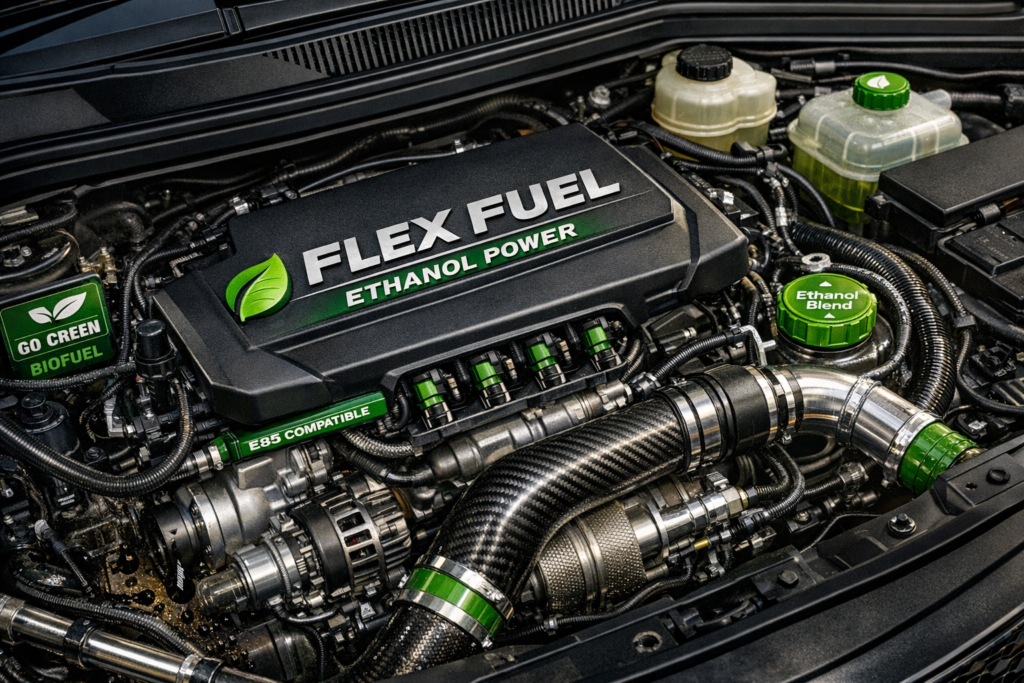
- Engine redesign for corrosion resistance
- Improved fuel injection systems
- Higher mileage optimization on ethanol blends
- More affordable eco-friendly vehicles
Car manufacturers that adapt early could benefit immensely from India’s Bold Shift: 85% Ethanol Fuel Rule in 2026.
Comparative Snapshot: E20 vs E85
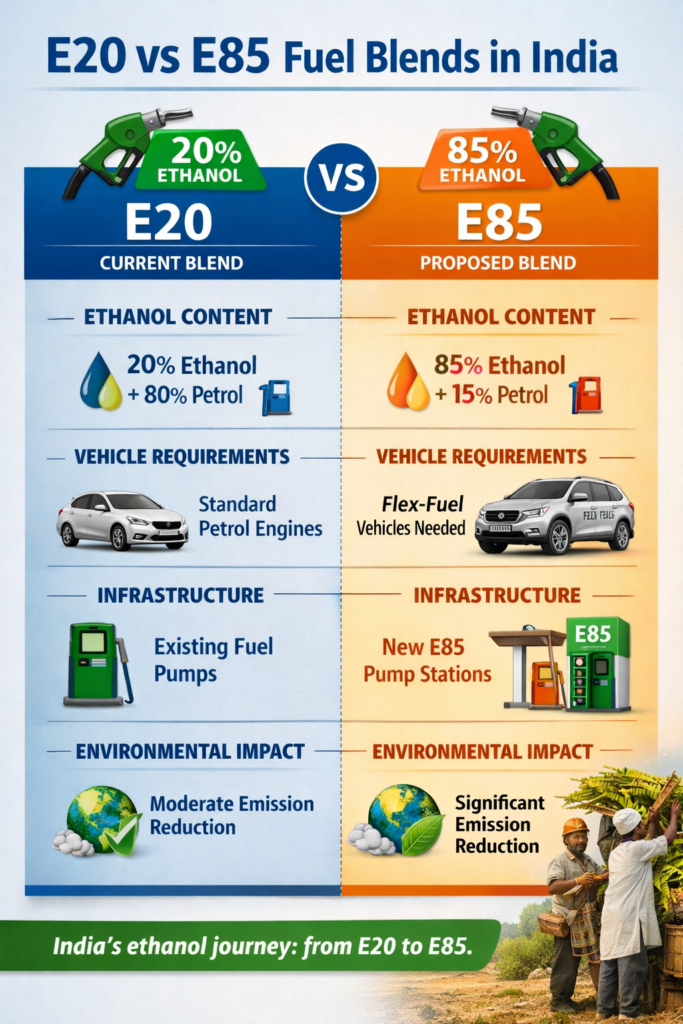
| Feature | E20 (Current) | E85 (Proposed) |
|---|---|---|
| Ethanol content | 20% | 85% |
| Rollout | April 2026 | Draft rules in 2026, rollout in 2–3 years |
| Vehicle requirement | Standard petrol engines (minor tuning) | Flex-fuel engines required |
| Infrastructure need | Existing pumps | New dispensing systems |
| Environmental impact | Moderate reduction | Significant reduction |
Impact on Industry and Farmers
- Automobile Industry: Carmakers must adapt quickly, introducing flex-fuel models.
- Agriculture: Farmers benefit from increased demand for ethanol crops.
- Energy Sector: Oil companies diversify into ethanol production and distribution.
Timeline of India’s Bold Shift: 85% Ethanol Fuel Rule in 2026
- Draft Rules: Expected in 2026.
- Implementation: Rollout likely within 2–3 years.
- Testing: Preliminary trials already conducted by government agencies.
Environmental and Social Impact
Environmental Gains
- Cleaner Cities: Reduced vehicular pollution improves public health.
- Rural Prosperity: Ethanol demand strengthens farmer incomes.
- Global Leadership: India positions itself as a renewable energy innovator.
Possible Consumer Benefits
- Lower fuel cost if ethanol pricing remains attractive
- More fuel choices at pumps
- Cleaner engine emissions
- Support for domestic economy
Possible Concerns
- Slightly lower mileage in some engines
- Need for compatible vehicles
- Limited rollout initially
Conclusion
India’s Bold Shift: 85% Ethanol Fuel Rule in 2026 is more than a fuel policy — it’s a national transformation. By reducing oil dependence, empowering farmers, and cutting emissions, India is charting a bold path toward sustainable growth. The success of this initiative will depend on vehicle technology, infrastructure investment, and ethanol supply management, but if executed well, India could emerge as a global leader in renewable transport fuels.