
Rupee Internationalisation: RBI Reports 41% Surge in INR Trade
Introduction
India’s financial landscape is undergoing a historic transformation. The latest development attracting global attention is the remarkable rise in cross-border transactions settled in Indian Rupees. According to recent Reserve Bank of India updates, Rupee Internationalisation: RBI Reports 41% Surge in INR Trade has emerged as one of the strongest indicators of India’s growing influence in the global economy.
For decades, international trade has been dominated by the US dollar. However, changing geopolitical dynamics, rising economic nationalism, diversification of reserve currencies, and India’s rapidly expanding economy are now reshaping global payment systems. The fact that Rupee Internationalisation: RBI Reports 41% Surge in INR Trade signals a strategic shift that could redefine India’s economic standing over the next decade.
As someone who has closely tracked global currencies, trade flows, and RBI policies for years, I believe this development is far more than a temporary statistical jump. It reflects a deeper structural shift toward making the Indian Rupee a globally accepted settlement currency.

What Is Rupee Internationalisation?
Rupee internationalisation refers to the process of increasing the use of the Indian Rupee in global trade, investments, reserves, and cross-border transactions. Traditionally, most international payments involving India were settled in US dollars or other major currencies.
Key Highlights from RBI Report
The latest data strongly supports the growing momentum behind Rupee Internationalisation: RBI Reports 41% Surge in INR Trade, with both invoicing and settlement figures showing major progress in global INR adoption.
INR Invoicing Growth
- Export invoicing in INR rose 6.5% year-on-year, reflecting steady expansion in rupee internationalisation and stronger acceptance of INR trade among global buyers.
- Import invoicing in INR increased 9.5% year-on-year, highlighting rising confidence in rupee internationalisation and the growing use of INR trade mechanisms in cross-border commerce.
INR Settlement Growth
- Export settlements in INR climbed 2.7%, indicating gradual but consistent progress in rupee internationalisation across India’s outward trade ecosystem.
- Import settlements in INR surged 41.2%, marking the biggest breakthrough in rupee internationalisation and reinforcing the RBI’s aggressive push toward wider INR trade adoption worldwide.
Absolute INR Trade Values
- Import invoicing touched ₹2.85 lakh crore, up from ₹2.60 lakh crore in 2024–25, strengthening the pace of rupee internationalisation and expanding INR trade participation.
- Export invoicing reached ₹3.27 lakh crore, compared to ₹3.07 lakh crore in 2024–25, further accelerating rupee internationalisation and global INR trade usage.
- Import settlements jumped to ₹1.60 lakh crore, versus ₹1.13 lakh crore in 2024–25, representing a massive 41% surge in rupee internationalisation and INR trade settlements.
- Export settlements rose to ₹1.72 lakh crore, up from ₹1.67 lakh crore in 2024–25, consolidating India’s progress in rupee internationalisation and strengthening INR trade networks globally.
Now, with Rupee Internationalisation: RBI Reports 41% Surge in INR Trade, India is actively promoting direct INR settlements with trading partners.
This means:
- Importers can pay in Indian Rupees
- Exporters can receive payments in INR
- Foreign countries can hold Rupee reserves
- Bilateral trade dependence on the US dollar reduces
The RBI’s initiatives are helping Indian businesses reduce currency conversion costs while improving payment efficiency.
Why the 41% Surge in INR Trade Matters
The biggest takeaway from Rupee Internationalisation: RBI Reports 41% Surge in INR Trade is the speed of adoption. A 41% increase in INR-based trade settlements demonstrates growing confidence among global partners.
Several factors are driving this rise:
1. Geopolitical Realignment
Global economies are increasingly seeking alternatives to dollar dependency. Trade sanctions, currency volatility, and rising geopolitical tensions have encouraged nations to diversify payment systems.
India has strategically positioned the Rupee as a reliable settlement alternative.
2. RBI’s Special Rupee Vostro Accounts
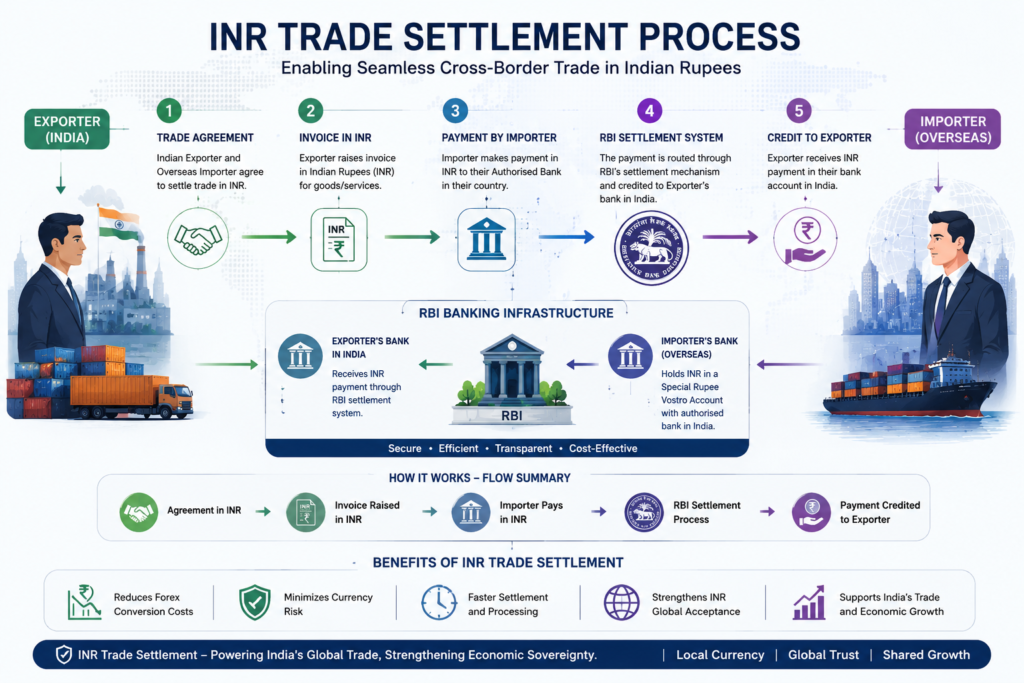
The RBI introduced a framework allowing foreign banks to open Special Rupee Vostro Accounts (SRVAs). These accounts enable trade settlements directly in INR.
This mechanism has become a major catalyst behind Rupee Internationalisation: RBI Reports 41% Surge in INR Trade.
3. India’s Rising Economic Power
India is now among the world’s fastest-growing major economies. Its expanding manufacturing base, digital infrastructure, and export growth make the Rupee increasingly relevant.
4. Stable Financial System
Compared to many emerging markets, India’s banking system and forex reserves have remained relatively resilient. This stability boosts confidence in INR-based transactions.
How INR Trade Settlement Works
To understand why Rupee Internationalisation: RBI Reports 41% Surge in INR Trade is important, it helps to understand the settlement mechanism.
Example:
- India imports crude oil from another country
- Instead of paying in US dollars, payment is made in INR
- The exporting country uses those Rupees to:
- Buy Indian goods
- Invest in Indian assets
- Hold INR reserves
This reduces dependence on intermediary currencies and lowers forex risk.
RBI’s Strategic Push Toward Global INR Usage
The RBI has played a central role in promoting Rupee internationalisation. The central bank’s strategy includes regulatory reforms, banking integration, and diplomatic financial cooperation.
Key initiatives include:
Allowing International Trade Settlement in INR
The RBI formally permitted invoicing and settlement of international trade in Indian Rupees. This policy laid the foundation for the current growth trend.
Expansion of Vostro Accounts
Multiple countries have now opened Rupee Vostro Accounts with Indian banks, enabling smoother bilateral trade.
Integration with Digital Payment Systems
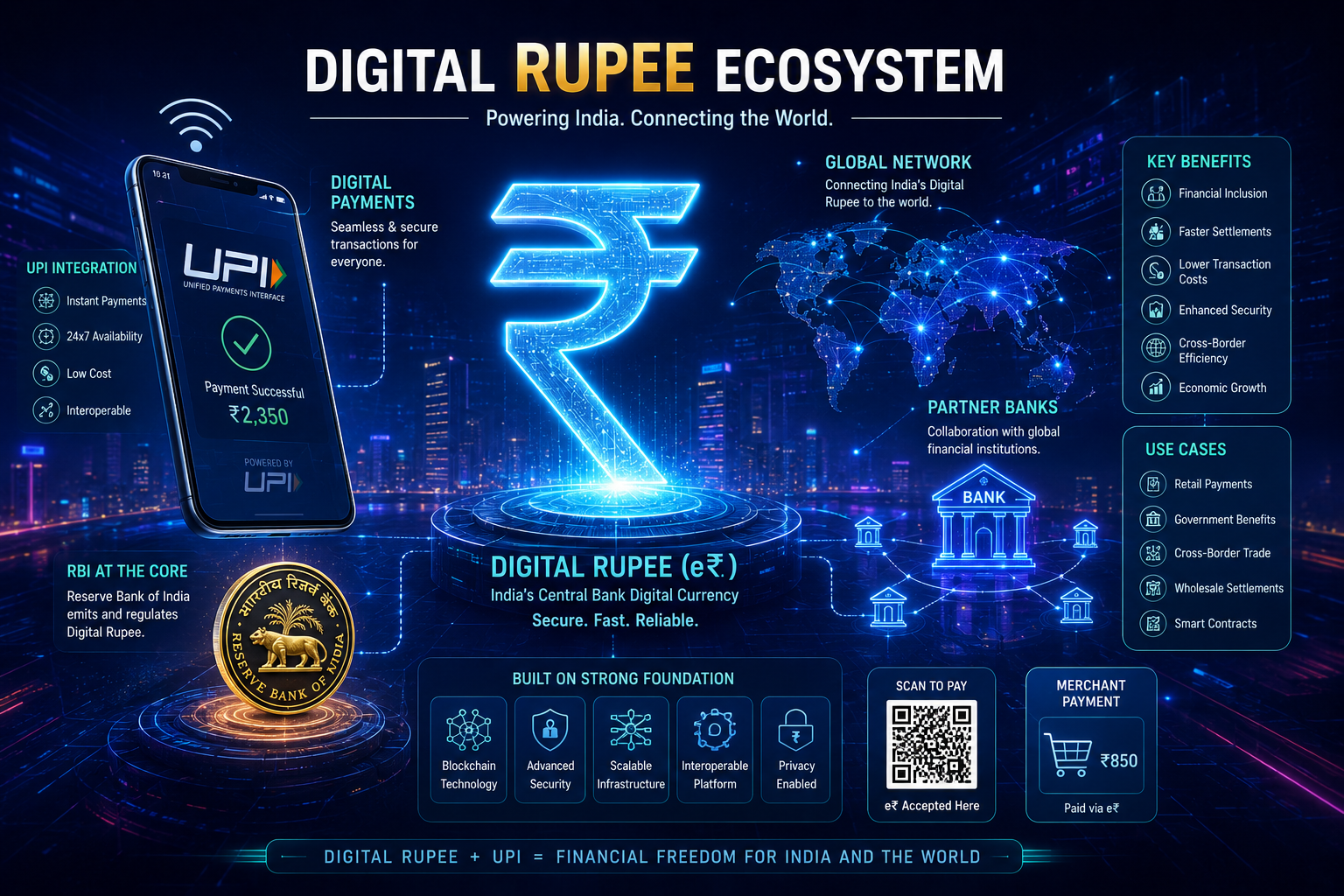
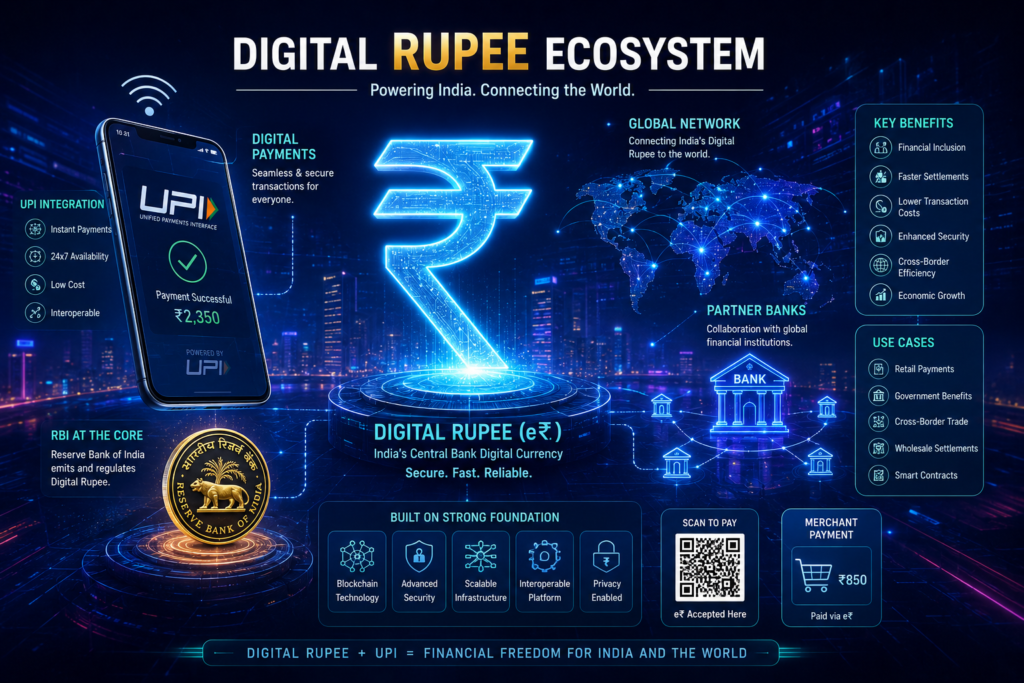
India’s advanced digital payment ecosystem, especially UPI and fintech innovation, could eventually support global Rupee settlements.
Encouraging INR Investments
Foreign investors are being given easier access to Indian debt markets and financial assets.
All these measures collectively support the momentum behind Rupee Internationalisation: RBI Reports 41% Surge in INR Trade.
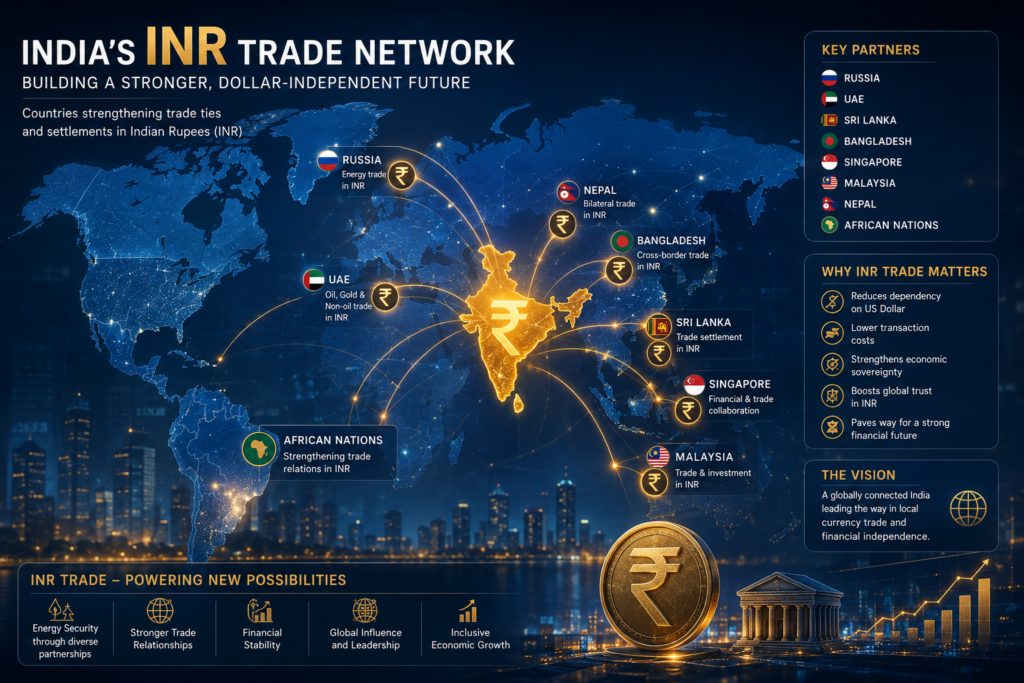
Countries Supporting INR-Based Trade
Several nations are increasingly exploring Rupee trade arrangements with India.
These include:
- Russia
- UAE
- Sri Lanka
- Bangladesh
- Mauritius
- Singapore
- African economies
- Southeast Asian trade partners
The UAE agreement is particularly significant because it strengthens local currency settlement frameworks between two major trade partners.
Benefits of Rupee Internationalisation
The growing momentum behind Rupee Internationalisation: RBI Reports 41% Surge in INR Trade offers substantial economic advantages.
1. Reduced Dollar Dependence
India imports large quantities of crude oil and commodities. Dollar appreciation often increases import costs.
Using INR for trade can reduce vulnerability to dollar fluctuations.
2. Lower Transaction Costs
Currency conversion fees reduce profitability for exporters and importers. INR settlements eliminate multiple currency conversions.
3. Improved Forex Stability
If more global transactions occur in INR, pressure on India’s foreign exchange reserves may decrease over time.
4. Stronger Global Influence
Reserve currencies often reflect geopolitical influence. Greater INR acceptance boosts India’s strategic economic standing.
5. Better Trade Competitiveness
Indian exporters may gain pricing advantages due to simplified settlement systems.
Challenges Facing Rupee Internationalisation
Despite the optimism surrounding Rupee Internationalisation: RBI Reports 41% Surge in INR Trade, several challenges remain.
Limited Convertibility
The Indian Rupee is not fully convertible on the capital account. This restricts its broader international acceptance.
Trade Imbalance Issues
Some countries exporting to India may accumulate Rupees without sufficient opportunities to spend them.
Dollar Dominance
The US dollar still dominates global trade and reserves. Replacing or even reducing this dominance will take years.
Currency Volatility Concerns
Foreign businesses prefer stable currencies. The RBI must maintain confidence in INR stability.
Deep Financial Market Requirement
Global reserve currencies typically require highly liquid bond markets and strong financial infrastructure.
India is progressing, but further reforms are necessary.
Impact on Indian Businesses
The trend highlighted by Rupee Internationalisation: RBI Reports 41% Surge in INR Trade could significantly benefit Indian companies.
Exporters Gain Predictability
Exporters can avoid exchange-rate losses and better manage cash flows.
MSMEs Benefit
Smaller businesses often struggle with forex volatility. INR trade can simplify operations.
Reduced Hedging Costs
Companies spend heavily on currency hedging. Direct INR settlements lower these expenses.
Faster Trade Processing
Simplified settlement systems can improve transaction speed.
From my experience analyzing trade policy shifts, these operational improvements often create long-term export competitiveness.
Impact on Indian Economy
The broader macroeconomic implications of Rupee Internationalisation: RBI Reports 41% Surge in INR Trade are substantial.
Stronger Currency Position
Greater international demand for INR can support currency stability.
Enhanced Financial Sovereignty
Reduced dependence on foreign currencies gives India more economic flexibility.
Long-Term Reserve Currency Potential
While still distant, growing INR adoption could eventually position the Rupee as a regional reserve currency.
Increased Foreign Investment
Confidence in INR settlements may encourage deeper investment into Indian markets.
Role of Digital India in Rupee Internationalisation
India’s digital payment revolution is strengthening its financial credibility globally.
UPI, fintech innovation, Aadhaar integration, and real-time payment systems demonstrate India’s capability to manage high-volume digital transactions efficiently.
Future possibilities include:
- Cross-border UPI settlements
- CBDC-based trade settlement
- Digital Rupee integration
- Real-time international INR payments
These innovations may accelerate the trend reflected in Rupee Internationalisation: RBI Reports 41% Surge in INR Trade.
Can the Rupee Challenge the US Dollar?
This is the biggest question surrounding Rupee Internationalisation: RBI Reports 41% Surge in INR Trade.
Realistically, the Rupee is unlikely to replace the US dollar anytime soon. However, that does not mean the initiative lacks significance.
Instead, India’s goal appears to be:
- Expanding bilateral INR trade
- Reducing forex vulnerability
- Increasing regional influence
- Building long-term currency credibility
Even partial success can significantly strengthen India’s economic resilience.
Expert Perspective: Why This Shift Is Historic
Having observed central banking and global trade trends for years, I see this development as one of the most important structural shifts in India’s financial journey.
The significance of Rupee Internationalisation: RBI Reports 41% Surge in INR Trade lies not only in numbers but in strategic intent.
India is gradually building:
- Financial independence
- Trade flexibility
- Currency confidence
- Geopolitical leverage
The process will take time, but the foundation is clearly being laid.
Future Outlook for INR Trade
The future trajectory of Rupee Internationalisation: RBI Reports 41% Surge in INR Trade depends on several factors.
Key Growth Drivers
- Expansion of bilateral trade agreements
- Strong GDP growth
- Stable inflation
- RBI credibility
- Deeper financial markets
- Wider global acceptance
Areas to Watch
- More countries joining INR trade systems
- Digital Rupee expansion
- Crude oil settlements in INR
- Reserve diversification trends
- International bond market reforms
If India continues economic reforms and financial modernization, the Rupee could emerge as one of Asia’s most influential trade currencies.
Conclusion
The rise of INR-based trade settlement marks a transformative moment for India’s economic future. The fact that Rupee Internationalisation: RBI Reports 41% Surge in INR Trade highlights growing global trust in India’s financial ecosystem.
While challenges remain, the direction is clear. India is steadily positioning the Rupee as a stronger international currency through regulatory reforms, digital innovation, and strategic trade partnerships.
For businesses, investors, policymakers, and global markets, this development deserves close attention. It represents not just a currency shift, but a broader evolution of India’s global economic identity.
As the global financial system becomes increasingly multipolar, India’s Rupee may play a far bigger role than many currently expect.
FAQs
What is Rupee internationalisation?
Rupee internationalisation is the process of increasing the use of the Indian Rupee in international trade, investments, and financial transactions.
Why is INR trade growing rapidly?
The growth is driven by RBI reforms, geopolitical diversification, bilateral trade agreements, and reduced dependence on the US dollar.
What does the RBI’s 41% surge in INR trade indicate?
It indicates rising global adoption of INR-based trade settlements and growing confidence in India’s financial system.
Which countries are using INR trade settlements?
Countries including Russia, UAE, Sri Lanka, Bangladesh, and several Asian and African nations are exploring or using INR settlement mechanisms.
How does Rupee internationalisation benefit India?
It reduces dollar dependency, lowers forex risk, improves trade efficiency, and strengthens India’s economic influence globally.
Can the Indian Rupee become a global reserve currency?
While it may take years, increasing international trade settlement in INR could gradually improve the Rupee’s global reserve currency status.