
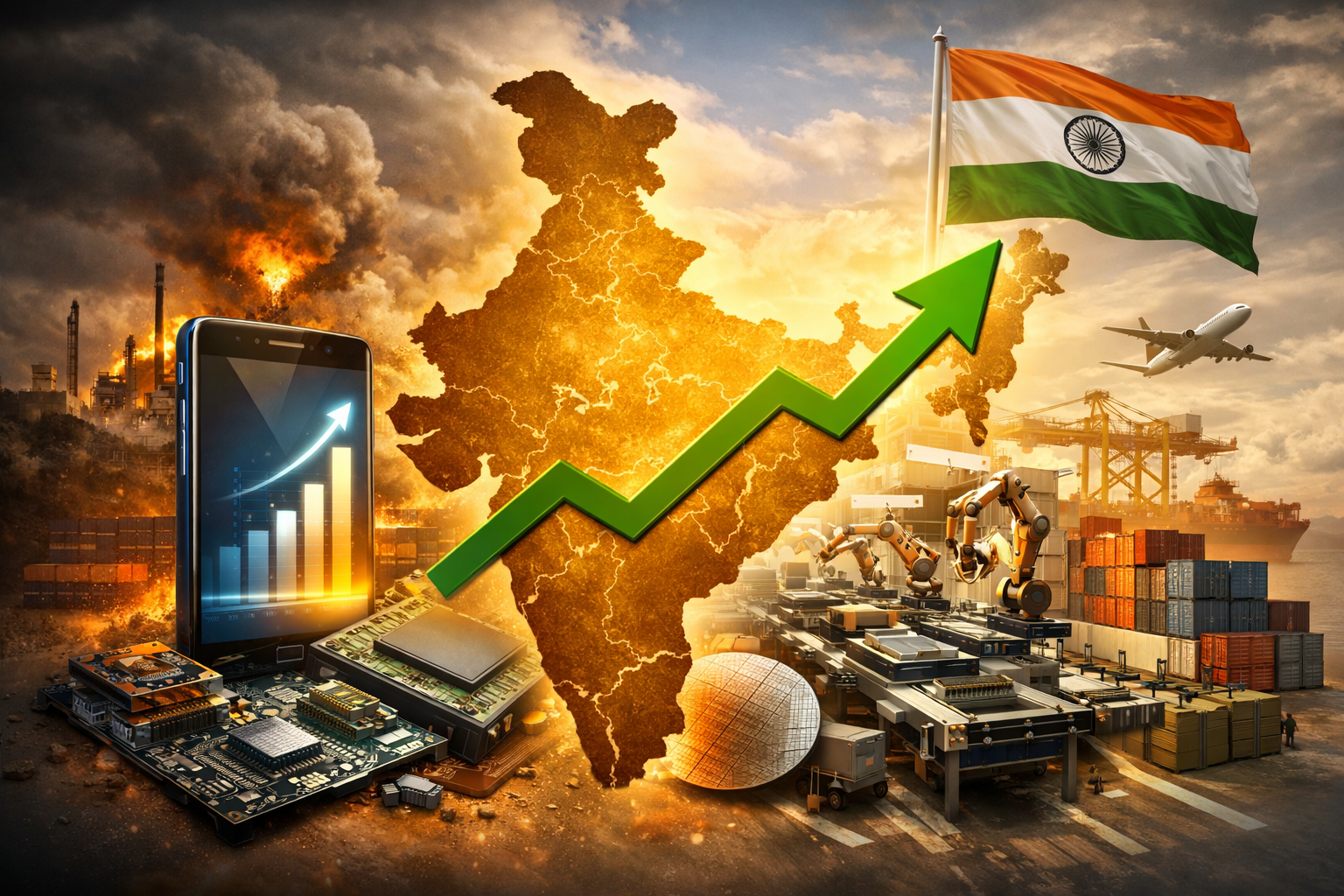
India’s Electronics Boom: ₹11 Lakh Cr Resilience
India is witnessing a remarkable transformation in its manufacturing landscape, and nowhere is this more evident than in the electronics sector. India’s Electronics Boom: ₹11 Lakh Cr Resilience reflects the country’s growing ability to build a strong, diversified, and globally competitive electronics ecosystem. From smartphones and semiconductors to consumer electronics and industrial equipment, India is rapidly emerging as a preferred destination for global manufacturing.
The story behind India’s Electronics Boom: ₹11 Lakh Cr Resilience is not merely about production numbers. It is about strategic policy reforms, supply chain diversification, rising exports, foreign investments, innovation, and millions of employment opportunities. The sector has become a cornerstone of India’s ambition to become a global manufacturing powerhouse.
As someone who has closely followed India’s industrial evolution for years, I believe the current phase represents one of the most significant shifts in the country’s economic history. The resilience displayed by the electronics sector, especially amid global uncertainties, demonstrates how India is building long-term economic strength.
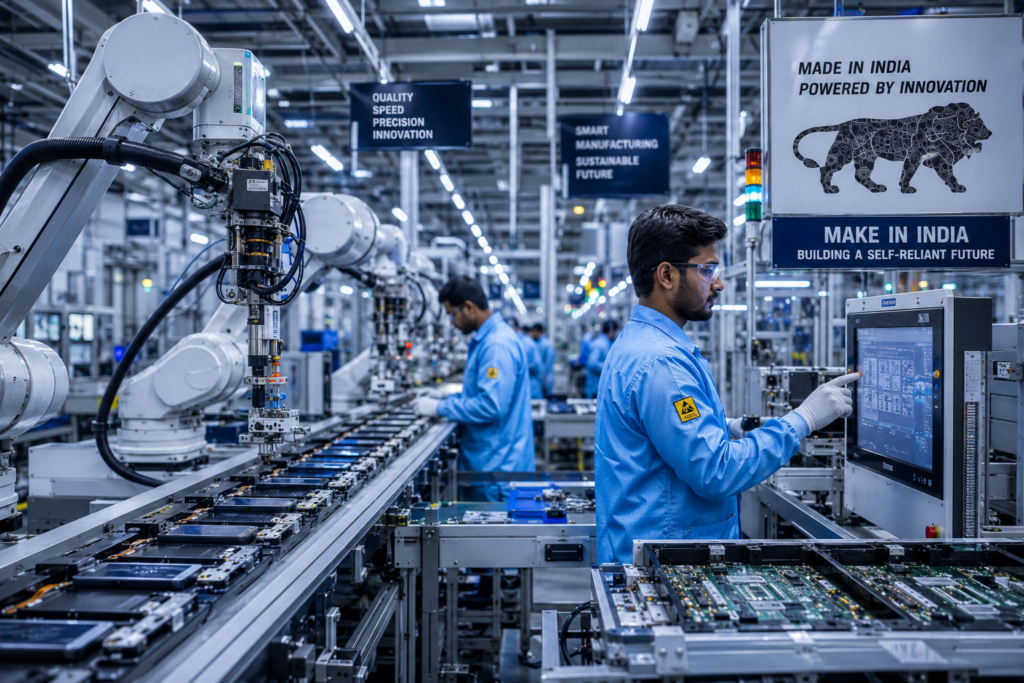
Understanding India’s Electronics Boom: ₹11 Lakh Cr Resilience
The phrase India’s Electronics Boom: ₹11 Lakh Cr Resilience captures the extraordinary growth of India’s electronics manufacturing industry, which has crossed major production milestones and established itself as a critical pillar of economic development.
Over the past decade, India has transformed from a large importer of electronics into a major manufacturing hub. Government initiatives, supportive policies, and increasing investor confidence have accelerated this journey.
Today, electronics manufacturing is among the fastest-growing sectors in the country. Smartphones, laptops, televisions, networking equipment, wearable devices, and electronic components are increasingly being produced domestically.
The significance of India’s Electronics Boom: ₹11 Lakh Cr Resilience lies in its ability to create sustainable growth while reducing import dependence.
The Rise of Electronics Manufacturing in India
Several factors have contributed to India’s Electronics Boom: ₹11 Lakh Cr Resilience.
1. Production Linked Incentive (PLI) Scheme
The Production Linked Incentive scheme has emerged as a game changer.
The program rewards manufacturers based on incremental production, encouraging global companies to establish manufacturing facilities in India.
Major multinational corporations and their suppliers have expanded operations significantly under this initiative.
Benefits include:
- Increased domestic production
- Higher exports
- Foreign direct investment inflows
- Technology transfer
- Job creation
The PLI scheme has become one of the strongest drivers behind India’s Electronics Boom: ₹11 Lakh Cr Resilience.
2. Global Supply Chain Diversification
Many multinational companies are seeking alternatives to concentrated manufacturing hubs.
India has benefited from this trend by positioning itself as a reliable production destination.
Key advantages include:
- Large domestic market
- Skilled workforce
- Competitive labor costs
- Policy support
- Expanding infrastructure
As global firms diversify production networks, India’s Electronics Boom: ₹11 Lakh Cr Resilience continues gaining momentum.
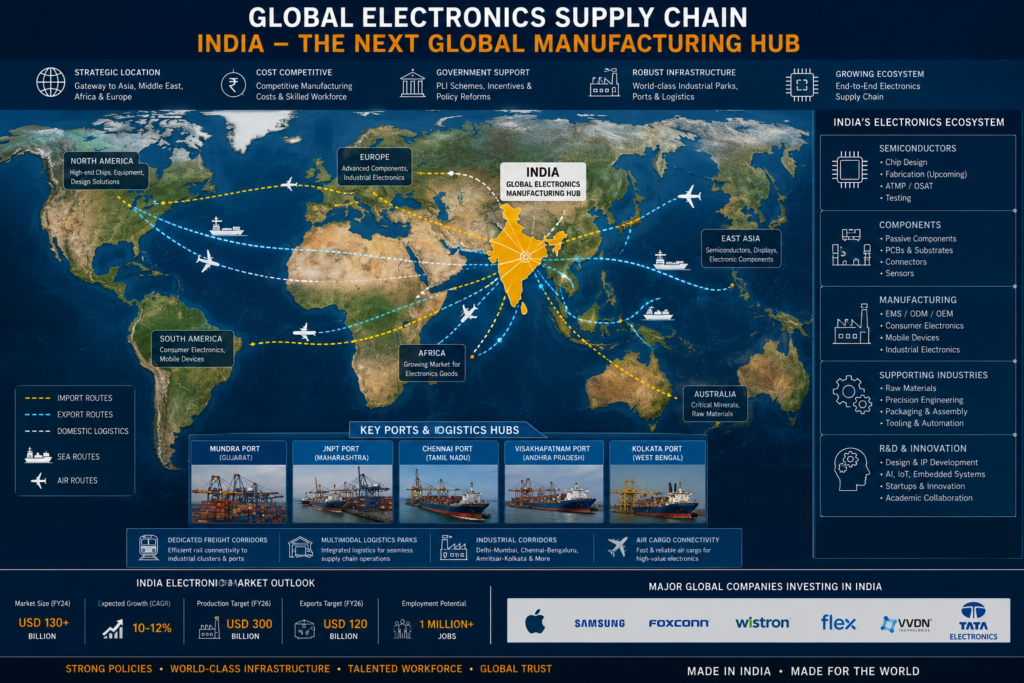
Smartphone Manufacturing Leads the Revolution
One of the strongest pillars supporting India’s Electronics Boom: ₹11 Lakh Cr Resilience is smartphone manufacturing.
India has become one of the world’s largest smartphone producers.
Leading brands now manufacture a significant portion of their devices within the country.
Key developments include:
- Expansion of assembly facilities
- Localization of components
- Export growth
- Increased supplier ecosystem development
- Higher value addition
Smartphones account for a substantial share of electronics production and exports, making them central to India’s Electronics Boom: ₹11 Lakh Cr Resilience.
Electronics Exports Reach New Heights
Exports have become a defining feature of India’s Electronics Boom: ₹11 Lakh Cr Resilience.
A few years ago, electronics exports were relatively modest. Today, India is exporting products to major global markets including:
- United States
- Europe
- Middle East
- Africa
- Southeast Asia
Export growth strengthens:
- Foreign exchange earnings
- Manufacturing competitiveness
- Global brand confidence
- Employment generation
The export-oriented approach ensures that India’s Electronics Boom: ₹11 Lakh Cr Resilience contributes directly to economic expansion.
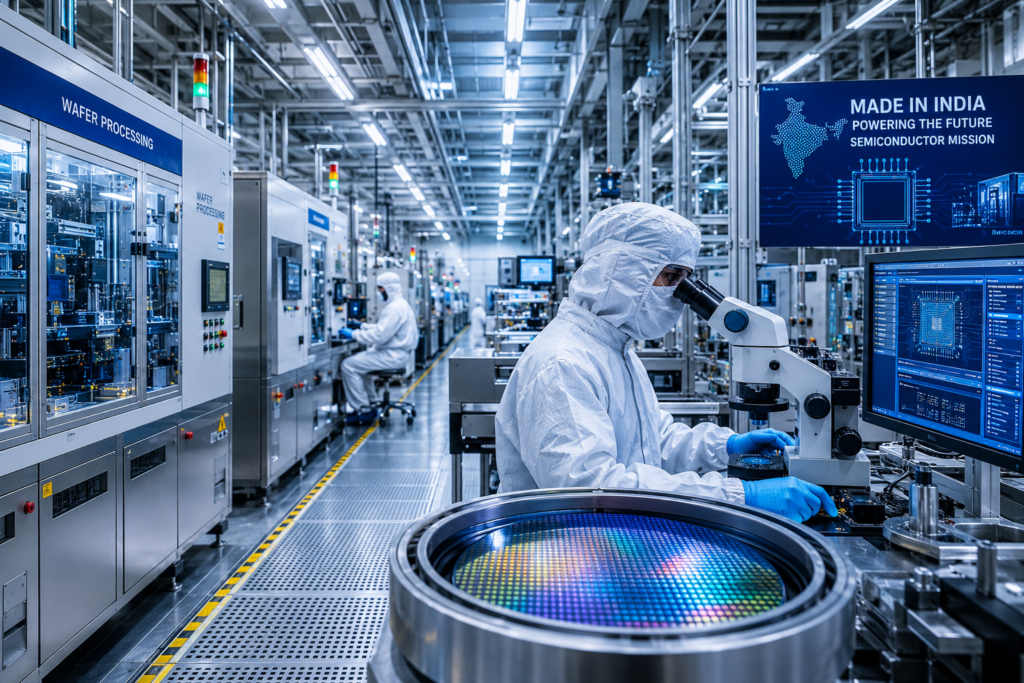
Semiconductor Mission Strengthens Resilience
No discussion about India’s Electronics Boom: ₹11 Lakh Cr Resilience is complete without mentioning semiconductors.
Semiconductors are the foundation of modern electronics.
India has launched ambitious programs to develop:
- Chip fabrication facilities
- Semiconductor packaging units
- Testing facilities
- Design ecosystems
- Research and development centers
The global chip shortage highlighted the importance of domestic semiconductor capabilities.
Building semiconductor infrastructure enhances national resilience and supports the long-term vision behind India’s Electronics Boom: ₹11 Lakh Cr Resilience.
Employment Generation Across India
Another major achievement of India’s Electronics Boom: ₹11 Lakh Cr Resilience is job creation.
The electronics industry generates employment across multiple levels:
Direct Jobs
- Assembly line workers
- Engineers
- Technicians
- Quality control specialists
- Plant managers
Indirect Jobs
- Logistics
- Warehousing
- Packaging
- Retail
- Maintenance services
High-Skilled Opportunities
- Semiconductor design
- Artificial intelligence hardware
- Embedded systems
- Research and development
As manufacturing expands, India’s Electronics Boom: ₹11 Lakh Cr Resilience continues creating opportunities for India’s young workforce.
Make in India Driving Transformation
The Make in India initiative has played a critical role in India’s Electronics Boom: ₹11 Lakh Cr Resilience.
The campaign has encouraged companies to manufacture locally while improving the business environment.
Major outcomes include:
- Simplified regulations
- Faster approvals
- Improved infrastructure
- Investment attraction
- Industrial corridor development
The initiative has transformed India into a serious contender in global manufacturing.
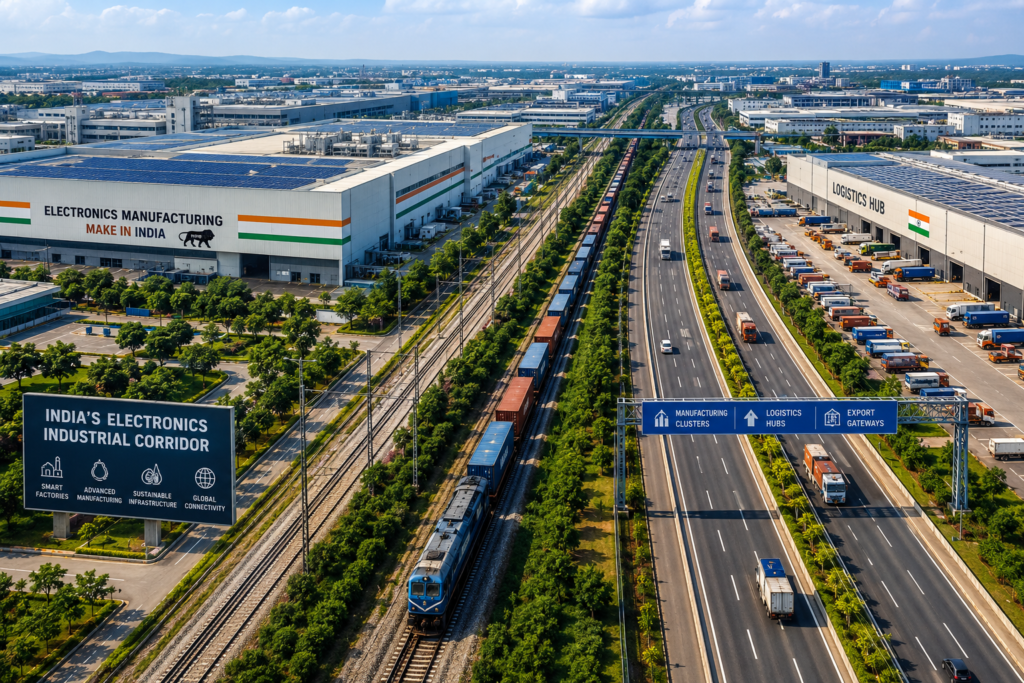
Infrastructure Development Supports Growth
Strong infrastructure is essential for sustaining India’s Electronics Boom: ₹11 Lakh Cr Resilience.
India has invested heavily in:
- Industrial parks
- Dedicated freight corridors
- Ports
- Airports
- Logistics networks
- Digital infrastructure
Improved connectivity reduces costs and increases manufacturing efficiency.
This infrastructure foundation ensures that India’s Electronics Boom: ₹11 Lakh Cr Resilience remains sustainable over the long term.
Growing Domestic Demand Fuels Expansion
India is one of the world’s largest consumer markets.
The growing middle class continues driving demand for:
- Smartphones
- Smart televisions
- Laptops
- Wearables
- Home appliances
- Networking devices
This domestic demand provides a stable foundation for India’s Electronics Boom: ₹11 Lakh Cr Resilience.
Manufacturers benefit from both local consumption and export opportunities.
The combination creates a powerful growth engine.
Innovation and Research Becoming Key Strengths
The next phase of India’s Electronics Boom: ₹11 Lakh Cr Resilience will depend heavily on innovation.
India is increasingly focusing on:
- Product design
- Chip design
- Embedded software
- Artificial intelligence hardware
- Advanced manufacturing technologies
Research centers and startups are becoming important contributors to the electronics ecosystem.
As innovation grows, India can move beyond assembly toward higher-value manufacturing.
Challenges Facing the Sector
While India’s Electronics Boom: ₹11 Lakh Cr Resilience is impressive, some challenges remain.
Component Import Dependence
Many electronic components are still imported.
Increasing local manufacturing of components remains a priority.
Semiconductor Ecosystem Development
Building a complete semiconductor supply chain requires substantial investment and time.
Skill Development
The industry needs highly trained workers to support advanced manufacturing.
Global Competition
India competes with established manufacturing nations that possess mature ecosystems.
Addressing these challenges will strengthen India’s Electronics Boom: ₹11 Lakh Cr Resilience further.
Why Investors Are Optimistic
Global investors view India’s Electronics Boom: ₹11 Lakh Cr Resilience as a long-term opportunity.
Key reasons include:
- Stable economic growth
- Large consumer base
- Policy support
- Expanding exports
- Infrastructure improvements
- Strong talent pool
Investment announcements across electronics manufacturing continue to reinforce confidence in India’s future.
The Road to Global Electronics Leadership
The future of India’s Electronics Boom: ₹11 Lakh Cr Resilience appears exceptionally promising.
Several trends are expected to drive growth:
Expansion of Smartphone Exports
India is likely to become one of the world’s leading smartphone export hubs.
Semiconductor Manufacturing
Domestic chip production can transform the industry.
Electronics Component Localization
Higher local value addition will improve competitiveness.
Emerging Technologies
Growth in:
- Artificial Intelligence
- Internet of Things (IoT)
- Electric Vehicles
- Smart Devices
- Advanced Computing
will create new opportunities.
These developments will further strengthen India’s Electronics Boom: ₹11 Lakh Cr Resilience.
Expert Perspective: Why This Growth Matters
Having observed India’s economic transformation over the years, I believe India’s Electronics Boom: ₹11 Lakh Cr Resilience is more than an industrial success story.
It represents:
- Economic self-reliance
- Global competitiveness
- Technological advancement
- Employment generation
- Export growth
- Supply chain security
Unlike temporary growth cycles, the electronics sector is benefiting from structural changes that can sustain expansion for decades.
The combination of policy support, private investment, skilled talent, and growing demand creates a unique opportunity that few countries possess today.
Conclusion
India’s Electronics Boom: ₹11 Lakh Cr Resilience symbolizes a new chapter in India’s manufacturing journey. The sector has evolved from import dependence to becoming a major production and export hub. Government initiatives, semiconductor ambitions, infrastructure development, and strong domestic demand are all contributing to this remarkable transformation.
As India continues strengthening its electronics ecosystem, the country is well-positioned to emerge as one of the world’s leading technology manufacturing destinations. The resilience demonstrated by the sector offers confidence that future growth will be both sustainable and globally competitive.
For investors, businesses, policymakers, and citizens alike, India’s Electronics Boom: ₹11 Lakh Cr Resilience represents one of the most promising economic stories of the decade.
Frequently Asked Questions (FAQs)
What does India’s Electronics Boom: ₹11 Lakh Cr Resilience mean?
It refers to the rapid growth and strengthening of India’s electronics manufacturing sector, which has achieved significant production milestones while improving supply chain resilience and export competitiveness.
What is driving India’s Electronics Boom: ₹11 Lakh Cr Resilience?
Major drivers include the PLI scheme, Make in India initiative, foreign investments, smartphone manufacturing growth, rising exports, and infrastructure development.
Why are electronics exports important for India?
Electronics exports increase foreign exchange earnings, create jobs, improve manufacturing competitiveness, and strengthen India’s position in global supply chains.
How does semiconductor manufacturing support India’s Electronics Boom: ₹11 Lakh Cr Resilience?
Semiconductor production reduces dependence on imports, enhances technological capabilities, and strengthens supply chain security.
Which products are contributing most to India’s electronics growth?
Smartphones, consumer electronics, networking equipment, wearables, laptops, and electronic components are among the leading contributors.
What challenges remain for the electronics industry?
Challenges include component import dependence, semiconductor ecosystem development, workforce skill enhancement, and global competition.
What is the future outlook for India’s Electronics Boom: ₹11 Lakh Cr Resilience?
The outlook remains highly positive, supported by growing exports, semiconductor investments, localization efforts, emerging technologies, and strong policy backing.