

India Rewrites Oil Destiny: From Risk to Leverage
For decades, India’s economic growth story carried a significant vulnerability—its dependence on imported crude oil. As one of the world’s largest energy consumers, India has traditionally faced substantial risks from oil price volatility, geopolitical conflicts, supply disruptions, and currency fluctuations. However, the narrative is rapidly changing. Today, India Rewrites Oil Destiny: From Risk to Leverage by transforming its position in global energy markets through strategic policies, diversified sourcing, refining strength, and growing geopolitical influence.
The transformation is not merely about securing energy supplies. It is about turning a long-standing economic risk into a strategic advantage. As global energy dynamics evolve amid geopolitical tensions, energy transitions, and changing trade routes, India is emerging as a key player capable of influencing oil flows rather than simply reacting to them.
This article explores how India Rewrites Oil Destiny: From Risk to Leverage, the factors driving this transformation, and what it means for India’s economy, energy security, and global standing.
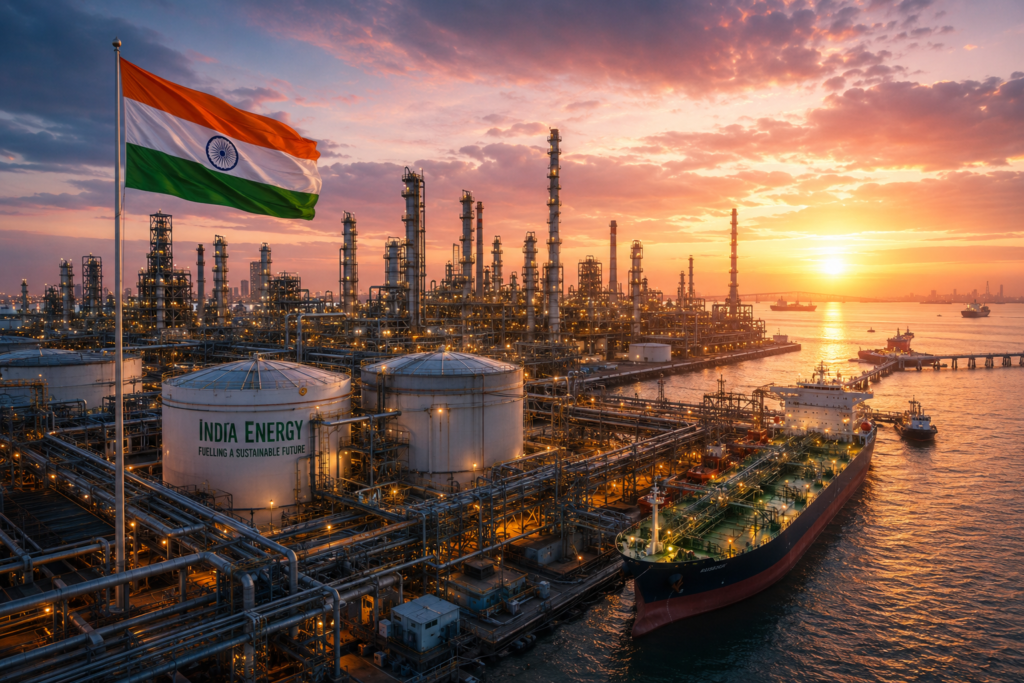
India’s Historical Oil Challenge
For much of its post-independence history, India has been heavily dependent on imported crude oil. Domestic production has remained insufficient to meet the demands of a rapidly growing economy.
Key challenges included:
- Dependence on imports for over 85% of crude oil needs
- Exposure to global oil price shocks
- Vulnerability to Middle East geopolitical tensions
- Pressure on foreign exchange reserves
- Impact on inflation and fiscal stability
Whenever global crude prices surged, India’s import bill increased significantly. This often led to higher inflation, a widening trade deficit, and pressure on the Indian rupee.
For years, policymakers viewed oil dependency as a strategic weakness. Today, however, India Rewrites Oil Destiny: From Risk to Leverage through a combination of economic foresight and geopolitical agility.
The Turning Point in Global Energy Markets
The global energy landscape has undergone dramatic changes over the past decade.
Several factors contributed to this shift:
- Rising geopolitical tensions
- New oil trade routes
- Increased competition among oil exporters
- Expansion of refining capacities
- Growth of Asian energy demand
India recognized these developments as opportunities rather than threats.
Instead of relying on traditional suppliers alone, the country diversified its import sources and negotiated favorable purchasing arrangements. This strategic flexibility became a cornerstone of how India Rewrites Oil Destiny: From Risk to Leverage.
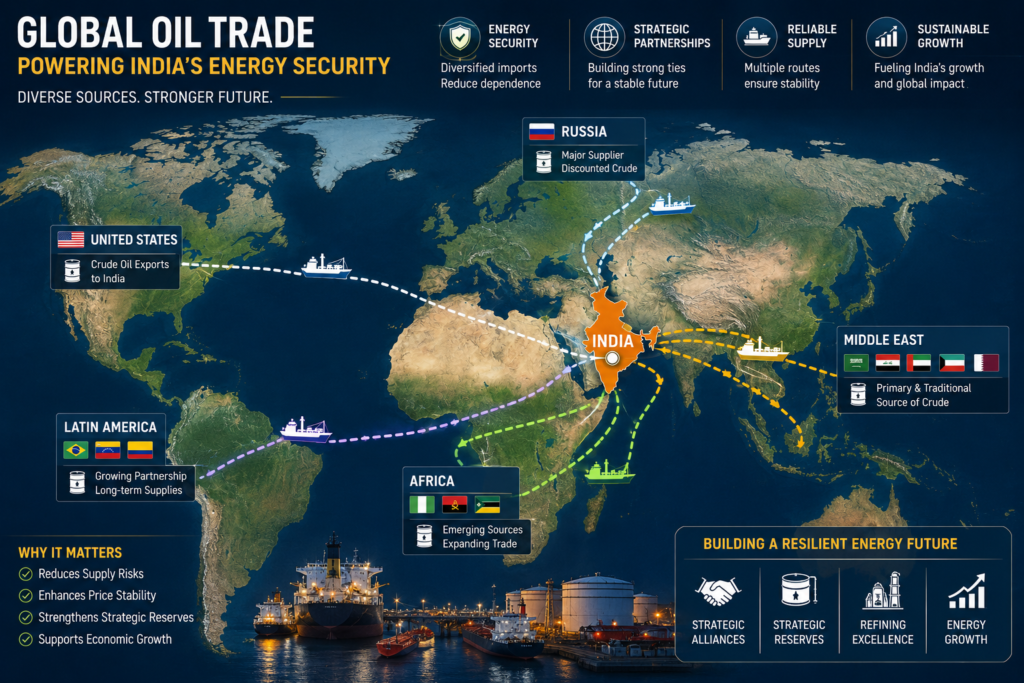
Diversification of Oil Imports
One of the most important developments has been India’s success in diversifying crude oil imports.
Historically, the Middle East dominated India’s energy supply. While Gulf nations remain important partners, India has significantly expanded sourcing from:
- Russia
- United States
- Brazil
- West African nations
- Latin American producers
This diversification reduces supply risks and improves bargaining power.
By purchasing crude from multiple regions, India gains flexibility in pricing and logistics. This strategy has enabled the country to secure competitive rates even during periods of global uncertainty.
As a result, India Rewrites Oil Destiny: From Risk to Leverage by reducing dependence on any single supplier.
India’s Refining Strength Becomes a Global Asset
India is not just a major oil importer. It is also one of the world’s largest refining centers.
The country possesses some of the most advanced and efficient refineries globally.
Major advantages include:
- Large refining capacity
- Ability to process multiple crude grades
- High export competitiveness
- Strategic coastal locations
- Modern technology infrastructure
Indian refineries import crude, process it into petroleum products, and export fuels to international markets.
This refining capability transforms imported oil into a value-added economic opportunity.
The evolution of India’s refining sector is another reason why India Rewrites Oil Destiny: From Risk to Leverage.
Strategic Petroleum Reserves Strengthen Energy Security
Energy security requires preparation for unexpected disruptions.
India has steadily expanded its Strategic Petroleum Reserves (SPR) to provide emergency supplies during crises.
Benefits include:
- Protection against supply interruptions
- Buffer against geopolitical shocks
- Greater negotiating leverage
- Improved national preparedness
Strategic reserves function as an insurance mechanism for the economy.
As reserve capacity grows, India’s ability to withstand market disruptions improves significantly.
This preparedness is a critical pillar of how India Rewrites Oil Destiny: From Risk to Leverage.
Russia-India Energy Cooperation Changes the Equation
One of the most significant developments in recent years has been India’s ability to purchase discounted crude oil from Russia.
These imports have generated several advantages:
- Lower import costs
- Improved refining margins
- Enhanced fuel exports
- Reduced inflationary pressures
- Greater supply diversification
India’s pragmatic approach demonstrated its commitment to national interests while maintaining balanced international relationships.
The outcome has been a stronger energy position and increased economic resilience.
This strategic move further illustrates how India Rewrites Oil Destiny: From Risk to Leverage in a rapidly changing global environment.
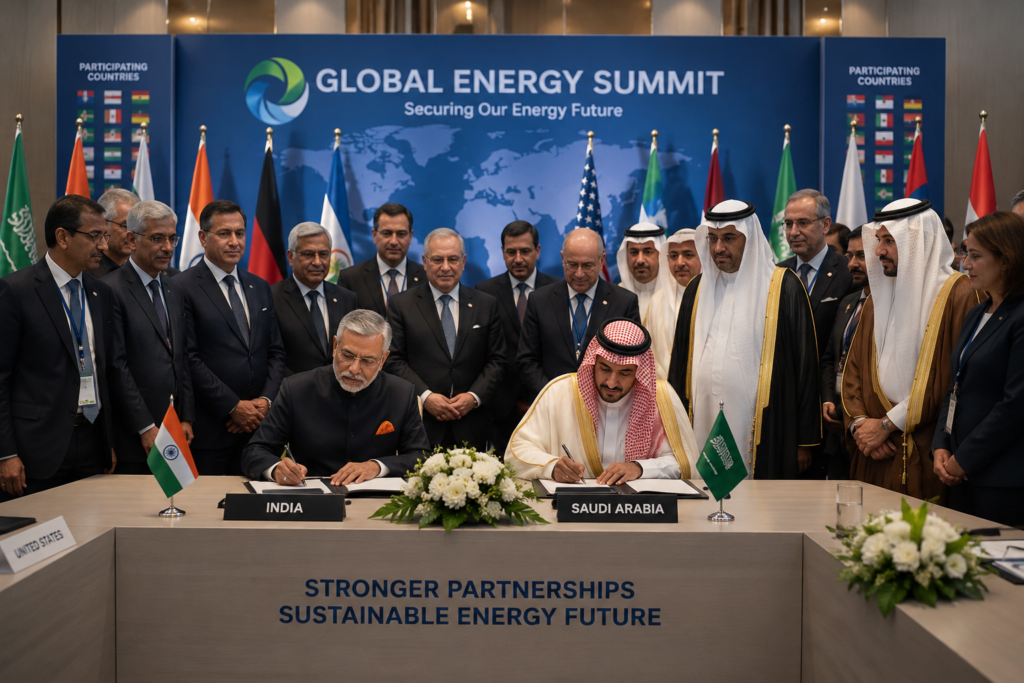
Energy Diplomacy Expands India’s Influence
Energy is increasingly becoming a tool of diplomacy.
India has strengthened relationships with oil-producing nations across multiple regions.
Key partnerships include:
- Gulf Cooperation Council nations
- Russia
- United States
- African producers
- South American exporters
These relationships go beyond oil purchases.
They include:
- Investment cooperation
- Infrastructure development
- Technology partnerships
- Supply chain integration
- Long-term contracts
Through active diplomacy, India Rewrites Oil Destiny: From Risk to Leverage by securing both energy supplies and geopolitical influence.
Growing Demand Gives India Negotiating Power
India’s economy continues to grow at one of the fastest rates among major nations.
This growth translates into increasing energy demand.
Global oil producers recognize that India represents one of the most important future markets.
As demand rises:
- Exporters compete for market access
- India gains pricing leverage
- Long-term contracts become more favorable
- Investment opportunities increase
Rather than being a passive buyer, India is becoming a market that suppliers actively seek to serve.
This shift in market dynamics helps explain why India Rewrites Oil Destiny: From Risk to Leverage.
Infrastructure Expansion Supports Energy Leadership
India has invested heavily in energy infrastructure.
Major developments include:
- New pipelines
- Expanded ports
- Refinery upgrades
- Storage facilities
- Logistics modernization
Infrastructure improvements reduce transportation costs and improve supply chain efficiency.
They also support India’s ambition to become a global refining and energy hub.
The modernization of infrastructure is another important reason why India Rewrites Oil Destiny: From Risk to Leverage.
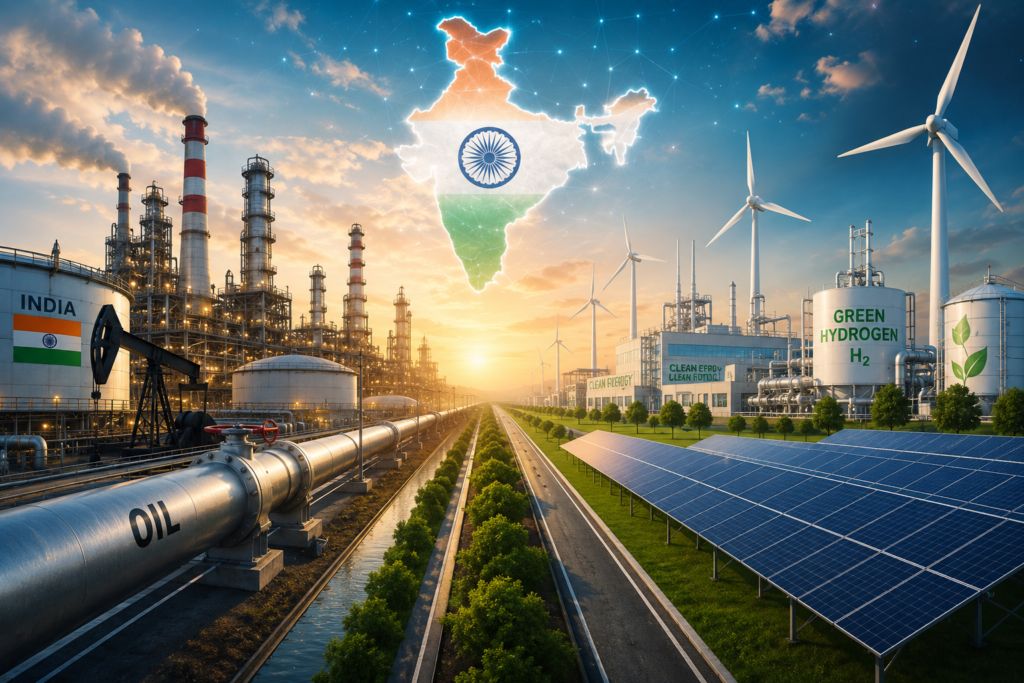
Balancing Oil Security with Green Energy Ambitions
India’s energy strategy is not limited to fossil fuels.
The country is simultaneously pursuing:
- Solar power expansion
- Wind energy development
- Green hydrogen projects
- Biofuel adoption
- Electric mobility
This dual-track approach ensures energy security while supporting sustainability goals.
Oil remains critical for economic growth today, but renewable energy investments prepare India for the future.
By balancing traditional and clean energy sources, India Rewrites Oil Destiny: From Risk to Leverage while building long-term resilience.
Economic Benefits of India’s Oil Strategy
The economic advantages are substantial.
Reduced Import Vulnerability
Diversified sourcing lowers exposure to supply disruptions.
Stronger Refining Margins
Access to competitive crude improves profitability.
Export Revenue Growth
Refined petroleum exports generate foreign exchange earnings.
Inflation Management
Affordable energy supplies help stabilize domestic prices.
Enhanced Energy Security
Strategic reserves and diversified imports reduce risk.
Collectively, these benefits demonstrate how India Rewrites Oil Destiny: From Risk to Leverage and strengthens its economic foundation.
Challenges That Still Remain
Despite significant progress, challenges persist.
Global Price Volatility
Oil markets remain susceptible to sudden shocks.
Geopolitical Risks
Conflicts and sanctions can impact supply chains.
Currency Fluctuations
A weaker rupee increases import costs.
Energy Transition Pressures
Long-term shifts toward renewables require careful planning.
Infrastructure Requirements
Continuous investment is needed to maintain competitiveness.
Addressing these challenges will be essential as India Rewrites Oil Destiny: From Risk to Leverage over the coming decades.
The Future Outlook
The future appears increasingly favorable for India’s energy position.
Several trends support this outlook:
- Continued economic growth
- Rising refining exports
- Expanded strategic reserves
- Strong international partnerships
- Increased energy diversification
India is moving from being a vulnerable energy importer to becoming a major energy market influencer.
As global demand patterns evolve, India’s strategic importance is expected to increase further.
The country’s ability to secure supplies, process crude efficiently, and maintain diplomatic flexibility positions it for long-term success.
These developments reinforce the broader narrative that India Rewrites Oil Destiny: From Risk to Leverage in a manner that could reshape global energy markets.
Conclusion
India’s energy journey represents one of the most remarkable strategic transformations of the modern era. What was once viewed as a major economic vulnerability is increasingly becoming a source of strength and influence.
Through diversified imports, advanced refining capabilities, strategic petroleum reserves, infrastructure investments, and proactive diplomacy, India has significantly improved its energy security.
At the same time, the nation continues investing in renewable energy and future technologies, ensuring a balanced and resilient energy strategy.
As global markets become more complex, the evidence is clear: India Rewrites Oil Destiny: From Risk to Leverage by converting dependence into opportunity, risk into resilience, and energy demand into geopolitical influence.
Frequently Asked Questions (FAQs)
What does “India Rewrites Oil Destiny: From Risk to Leverage” mean?
It refers to India’s transformation from being highly vulnerable to oil import risks into a country that uses strategic sourcing, refining capacity, and diplomacy to gain economic and geopolitical advantages.
Why is India dependent on oil imports?
India’s domestic crude oil production meets only a small portion of national demand, making imports necessary to support economic growth and industrial activity.
How has India improved energy security?
India has diversified crude imports, expanded strategic petroleum reserves, strengthened refining capacity, and invested in energy infrastructure.
Why are Indian refineries important globally?
Indian refineries are among the world’s most advanced and process large volumes of crude oil into petroleum products for both domestic use and exports.
How does renewable energy fit into India’s oil strategy?
India is simultaneously expanding solar, wind, green hydrogen, biofuels, and electric mobility while maintaining oil security to ensure a balanced energy transition.
What are the biggest future opportunities for India in oil markets?
Growing energy demand, refining exports, stronger global partnerships, strategic reserves, and infrastructure development provide significant opportunities for long-term growth.