
Pakistan’s War Warning: Indus Treaty Clash 2026
Introduction
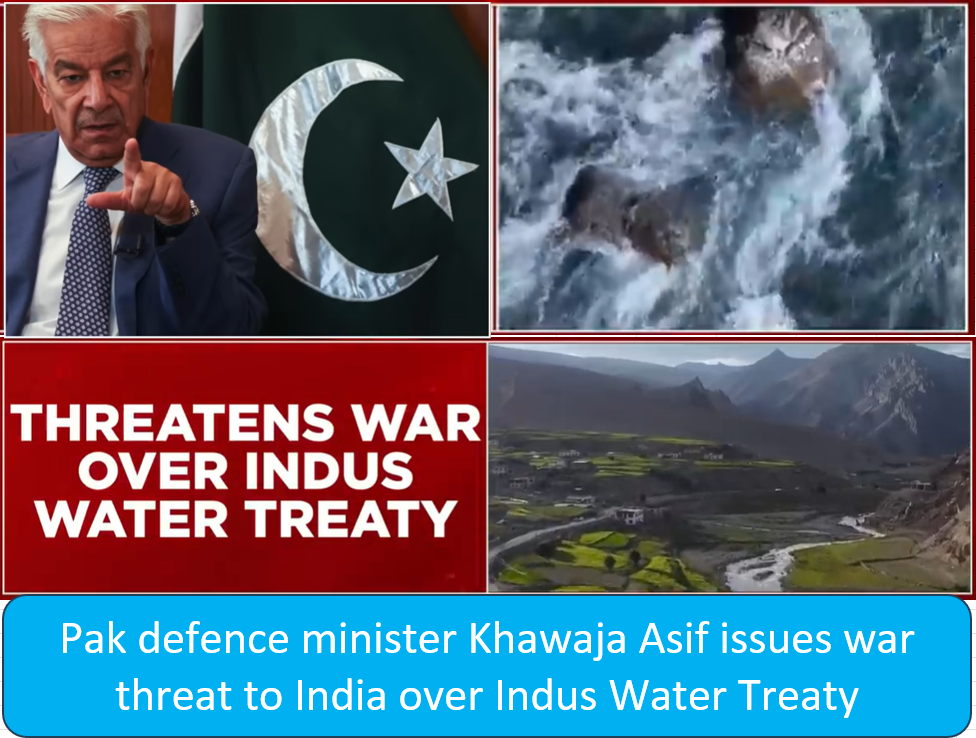
The phrase “Pakistan’s War Warning: Indus Treaty Clash 2026” has rapidly emerged as one of the most discussed geopolitical topics in South Asia. As tensions between India and Pakistan continue to evolve, concerns surrounding the future of the Indus Waters Treaty have become increasingly significant. Water security, regional diplomacy, climate change, and national interests now intersect in a complex strategic environment.
The growing debate over Pakistan’s War Warning: Indus Treaty Clash 2026 reflects deeper anxieties about resource management and geopolitical competition in one of the world’s most sensitive regions. While military conflict remains a scenario both nations publicly seek to avoid, strong statements from political leaders and analysts have intensified discussions regarding the future of bilateral relations.
Understanding the Indus Waters Treaty
To understand Pakistan’s War Warning: Indus Treaty Clash 2026, it is essential to examine the foundation of the dispute—the Indus Waters Treaty.
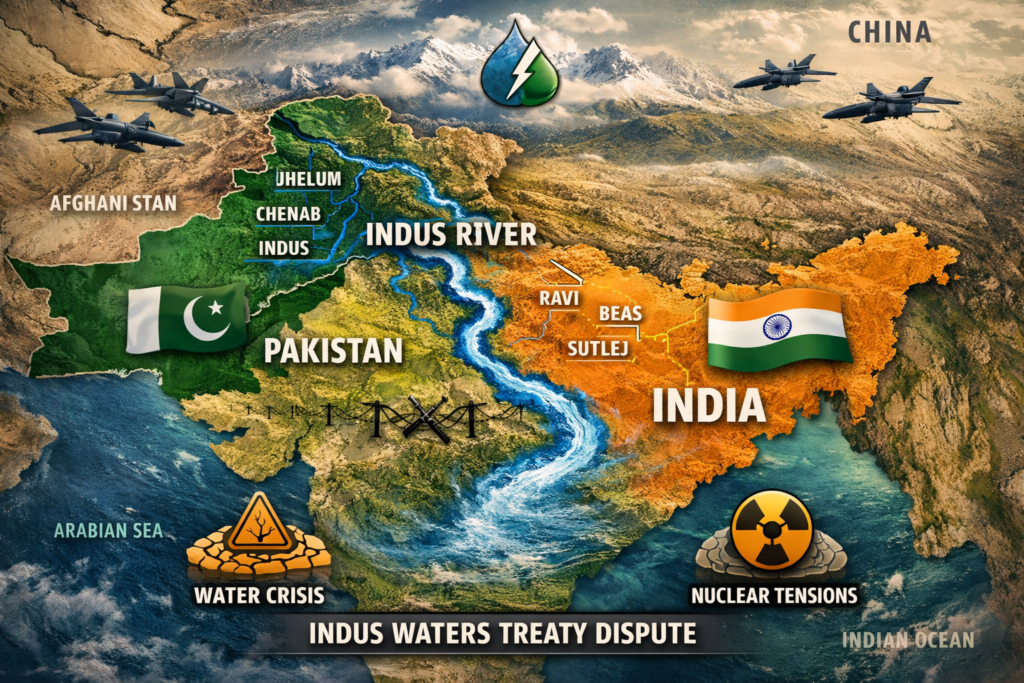
Signed in 1960 with the assistance of the World Bank, the treaty divided the waters of the Indus River system between India and Pakistan.
Key Provisions
- India received control over:
- Ravi River
- Beas River
- Sutlej River
- Pakistan received primary rights over:
- Indus River
- Jhelum River
- Chenab River
The treaty has long been considered one of the world’s most successful water-sharing agreements. Remarkably, it survived multiple wars and decades of political hostility.
However, changing realities have brought new pressures to the agreement.
Why Is the Treaty Under Pressure in 2026?
The debate surrounding Pakistan’s War Warning: Indus Treaty Clash 2026 stems from several converging factors.
1. Growing Water Scarcity
South Asia faces increasing water stress due to:
- Population growth
- Urbanization
- Agricultural demand
- Climate change
Pakistan’s economy relies heavily on irrigation from the Indus River system. Any perceived reduction in water availability immediately becomes a national security issue.
2. Infrastructure Development
India has continued developing hydroelectric projects permitted under treaty provisions.
Pakistan has frequently raised concerns that some projects could affect water flow patterns, particularly during critical agricultural seasons.
3. Climate Change Effects
Glacier melting in the Himalayas has introduced uncertainty regarding long-term river flows.
Experts warn that changing precipitation patterns could increase competition over water resources in the coming decades.
4. Strategic Rivalry
The broader geopolitical rivalry between India and Pakistan often influences discussions about water sharing.
As diplomatic tensions rise, water issues become increasingly politicized.
The Origins of Pakistan’s War Warning
The phrase Pakistan’s War Warning: Indus Treaty Clash 2026 gained prominence after strong political statements suggesting that any major disruption to water access could be viewed as a serious national security threat.
Pakistani officials have repeatedly emphasized that water is an existential issue for the country.
Several strategic analysts within Pakistan argue that:
- Agriculture depends heavily on Indus waters.
- Food security is directly linked to river flows.
- Economic stability requires predictable water access.
- Population growth increases future demand.
Consequently, rhetoric surrounding treaty disputes has become more intense.
India’s Position on the Treaty
India maintains that its projects remain within the framework of the treaty.
Indian policymakers argue that:
- Hydropower projects comply with treaty guidelines.
- Water usage remains consistent with legal rights.
- Modern infrastructure supports energy security.
- Existing agreements continue to provide a framework for cooperation.
Indian experts also point out that many disputes can be resolved through technical mechanisms established within the treaty itself.
From New Delhi’s perspective, modernization of water infrastructure is essential for development and energy needs.
Strategic Importance of the Indus Basin
The significance of Pakistan’s War Warning: Indus Treaty Clash 2026 cannot be understood without appreciating the importance of the Indus Basin.
Agricultural Backbone
The basin supports millions of farmers.
Major crops include:
- Wheat
- Rice
- Cotton
- Sugarcane
Any disruption could affect food production across large areas.
Economic Significance
Water resources contribute to:
- Agriculture
- Industry
- Hydropower generation
- Urban consumption
Human Security
More than 300 million people across the region depend directly or indirectly on the Indus River system.
The stakes are therefore extraordinarily high.
Could Water Become a Security Flashpoint?
One reason Pakistan’s War Warning: Indus Treaty Clash 2026 has attracted international attention is the possibility that water disputes could become security flashpoints.
Several factors increase this risk:
Nationalist Politics
Political leaders often face domestic pressure to take strong positions.
Resource Competition
As resources become scarcer, disputes become more politically sensitive.
Information Warfare
Social media amplifies narratives and sometimes spreads misinformation regarding water management.
Regional Instability
Broader regional tensions can spill over into water diplomacy.
However, many experts believe institutional mechanisms still provide important safeguards.
Role of International Mediation
Historically, the World Bank played a central role in establishing the treaty.
Today, international stakeholders continue monitoring developments.
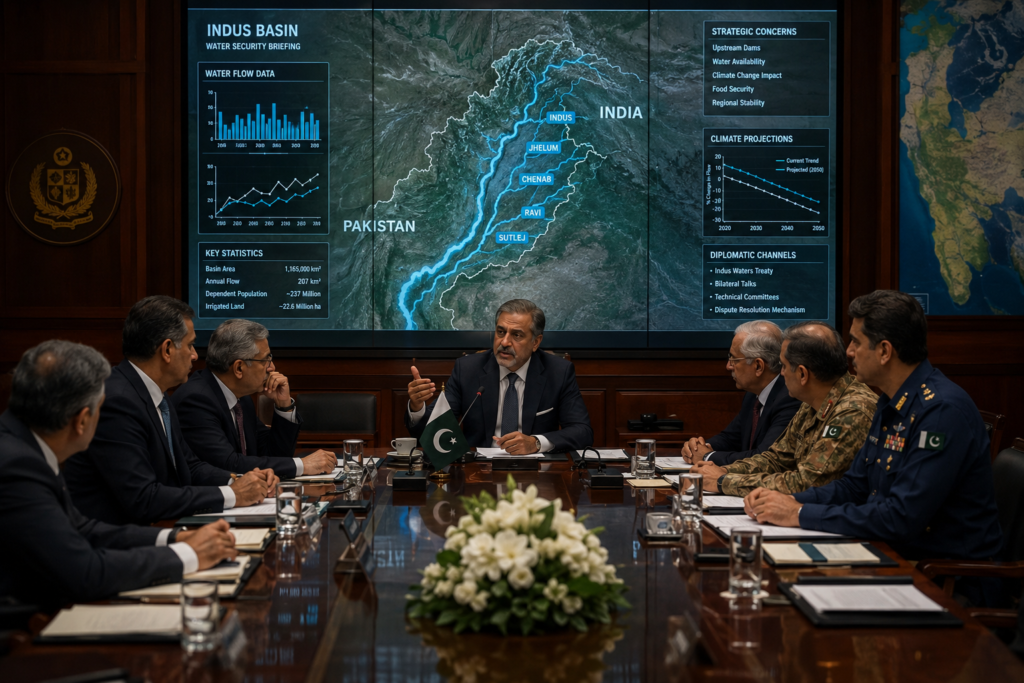
Potential diplomatic channels include:
- Bilateral negotiations
- Technical expert panels
- Arbitration mechanisms
- International legal frameworks
The global community generally supports peaceful resolution of water disputes.
Climate Change and Future Water Conflicts
Climate change may become the defining factor behind Pakistan’s War Warning: Indus Treaty Clash 2026.
Glacier Retreat
Many rivers originate from Himalayan glaciers.
Accelerated melting creates uncertainty regarding future flows.
Extreme Weather Events
The region faces:
- Floods
- Droughts
- Heatwaves
Water Demand Growth
Rising populations increase pressure on already stressed resources.
Experts increasingly argue that cooperation—not confrontation—offers the most sustainable path forward.

Economic Consequences of Escalation
If tensions surrounding Pakistan’s War Warning: Indus Treaty Clash 2026 intensify, economic consequences could be substantial.
Impact on Agriculture
Reduced confidence in water availability may affect:
- Crop planning
- Investment decisions
- Food production
Investor Sentiment
Regional instability often discourages foreign investment.
Trade Disruptions
Cross-border tensions can affect transportation and commerce.
Infrastructure Costs
Governments may divert resources toward security measures instead of development projects.
These economic risks highlight the importance of diplomatic engagement.
Military Implications
Although water disputes rarely cause wars directly, they can contribute to broader tensions.
Military planners in both countries closely monitor developments involving strategic resources.
Potential concerns include:
- Border security
- Critical infrastructure protection
- Cybersecurity threats
- Strategic deterrence considerations
Most security experts continue to emphasize diplomacy as the preferred solution.
Diplomatic Pathways Forward
The future of Pakistan’s War Warning: Indus Treaty Clash 2026 will likely depend on diplomatic choices made by both governments.
Strengthening Technical Dialogue
Regular communication can reduce misunderstandings.
Data Sharing
Transparent hydrological data can build trust.
Joint Research
Collaborative climate research could improve planning.
Modernizing Treaty Mechanisms
Updating procedures may help address contemporary challenges.
Regional Cooperation
Water management increasingly requires cooperative approaches.
Lessons from Global Water Agreements
Other international river systems provide useful lessons.
Examples include:
- Nile Basin initiatives
- Mekong River cooperation
- Danube River agreements
Successful water diplomacy generally relies on:
- Transparency
- Scientific cooperation
- Legal clarity
- Political commitment
These principles could prove valuable in addressing concerns linked to Pakistan’s War Warning: Indus Treaty Clash 2026.
Expert Analysis: Is War Likely?
Despite dramatic headlines surrounding Pakistan’s War Warning: Indus Treaty Clash 2026, many analysts remain cautious about predicting military conflict.
Several reasons support this assessment:
- Nuclear deterrence encourages restraint.
- Economic priorities favor stability.
- International pressure discourages escalation.
- Existing treaty mechanisms remain operational.
Nevertheless, persistent tensions underscore the importance of proactive diplomacy.
The Future of the Indus Waters Treaty
The treaty has survived for more than six decades.
Its resilience demonstrates that cooperation is possible even amid political rivalry.
The future may involve:
- Enhanced monitoring systems
- Improved dispute resolution procedures
- Climate adaptation strategies
- Greater technological collaboration
Whether Pakistan’s War Warning: Indus Treaty Clash 2026 becomes a turning point or merely another chapter in a long-running dispute will depend largely on political leadership and diplomatic engagement.
Conclusion
The growing attention surrounding Pakistan’s War Warning: Indus Treaty Clash 2026 highlights the increasing importance of water security in modern geopolitics. While strong rhetoric has fueled concerns, the reality remains complex. The Indus Waters Treaty continues to provide an established framework for managing disputes, even under challenging circumstances.
Climate change, population growth, infrastructure development, and regional competition are reshaping the strategic landscape. Yet history demonstrates that cooperation over shared resources remains possible.
Ultimately, the future of South Asian stability may depend not only on military strength or political negotiations but also on effective water diplomacy. As the region navigates unprecedented environmental and geopolitical challenges, constructive engagement will remain essential for ensuring long-term peace and prosperity.
Frequently Asked Questions (FAQs)
What is Pakistan’s War Warning: Indus Treaty Clash 2026?
It refers to growing concerns and strong political rhetoric surrounding disputes related to the Indus Waters Treaty and water security issues between India and Pakistan in 2026.
Why is the Indus Waters Treaty important?
The treaty governs the sharing of water from the Indus River system between India and Pakistan and has remained in force since 1960.
Could the treaty collapse?
While tensions exist, most experts believe the treaty still provides important dispute-resolution mechanisms that can help prevent a complete breakdown.
How does climate change affect the dispute?
Climate change impacts glacier melt, river flows, drought frequency, and water availability, increasing pressure on existing water-sharing arrangements.
Is military conflict likely?
Most analysts consider large-scale conflict unlikely, although continued tensions emphasize the importance of diplomacy and dialogue.
What role does the World Bank play?
The World Bank helped facilitate the original treaty and remains associated with certain procedural and dispute-resolution aspects.
How important is the Indus River system to Pakistan?
The river system is critical for agriculture, food security, industry, and the livelihoods of millions of people.
What is the best solution moving forward?
Experts generally recommend enhanced cooperation, transparent data sharing, climate adaptation strategies, and continued diplomatic engagement.