
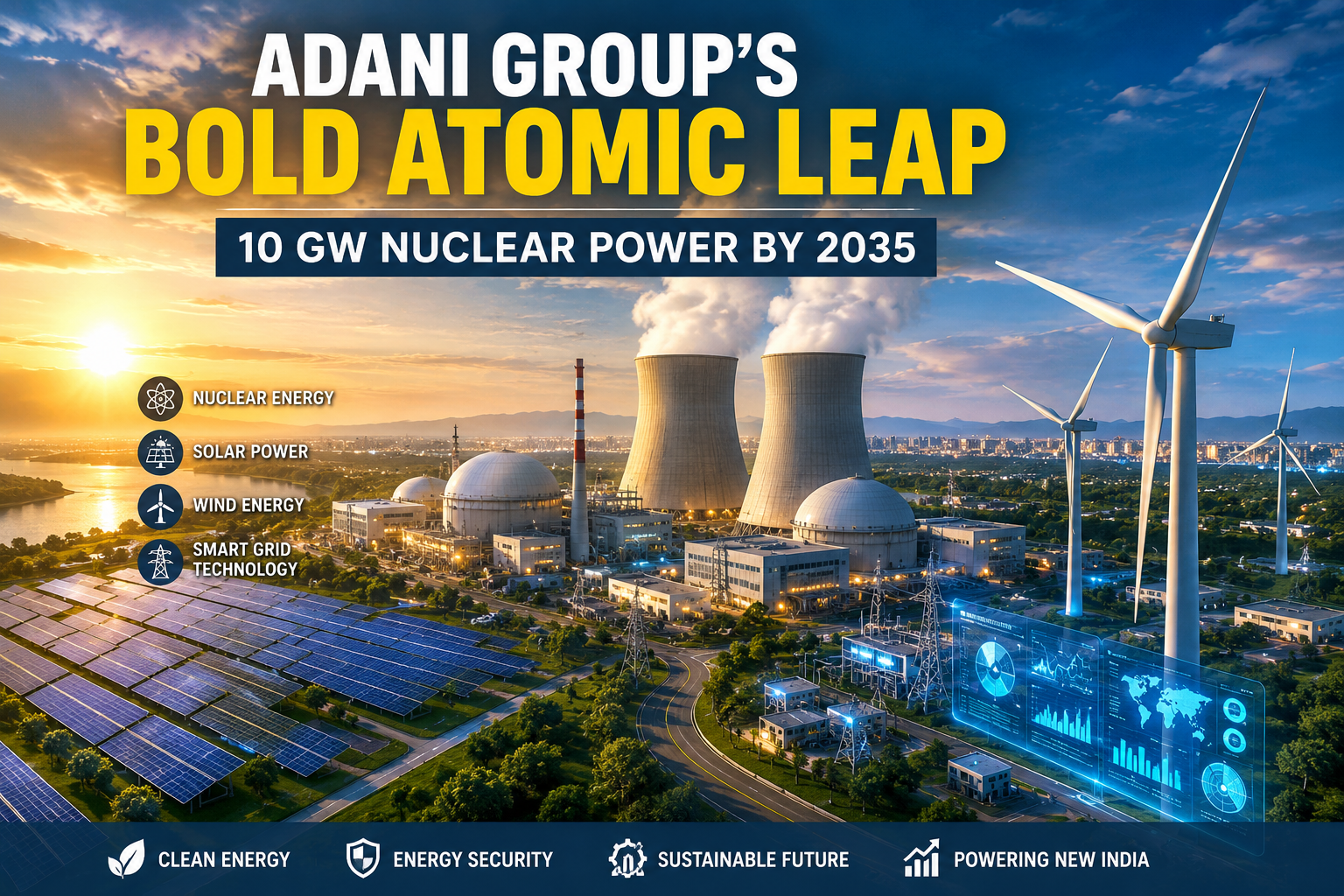
Adani Group’s Bold Atomic Leap: 10 GW Nuclear Power by 2035
Introduction
India’s energy landscape is undergoing a historic transformation. As the nation races toward becoming a developed economy while simultaneously pursuing ambitious climate goals, the demand for reliable, clean, and large-scale electricity generation has never been greater. Against this backdrop, Adani Group’s Bold Atomic Leap: 10 GW Nuclear Power by 2035 has emerged as one of the most significant developments in India’s power sector.
The proposed nuclear power expansion represents more than just an investment opportunity. It symbolizes a strategic shift in India’s energy mix, aimed at reducing dependence on fossil fuels while ensuring round-the-clock power availability for industries, cities, and emerging technologies such as artificial intelligence, semiconductor manufacturing, and electric mobility.
If successfully implemented, Adani Group’s Bold Atomic Leap: 10 GW Nuclear Power by 2035 could position the conglomerate as a major player in India’s nuclear energy sector and contribute substantially to the country’s long-term energy security.
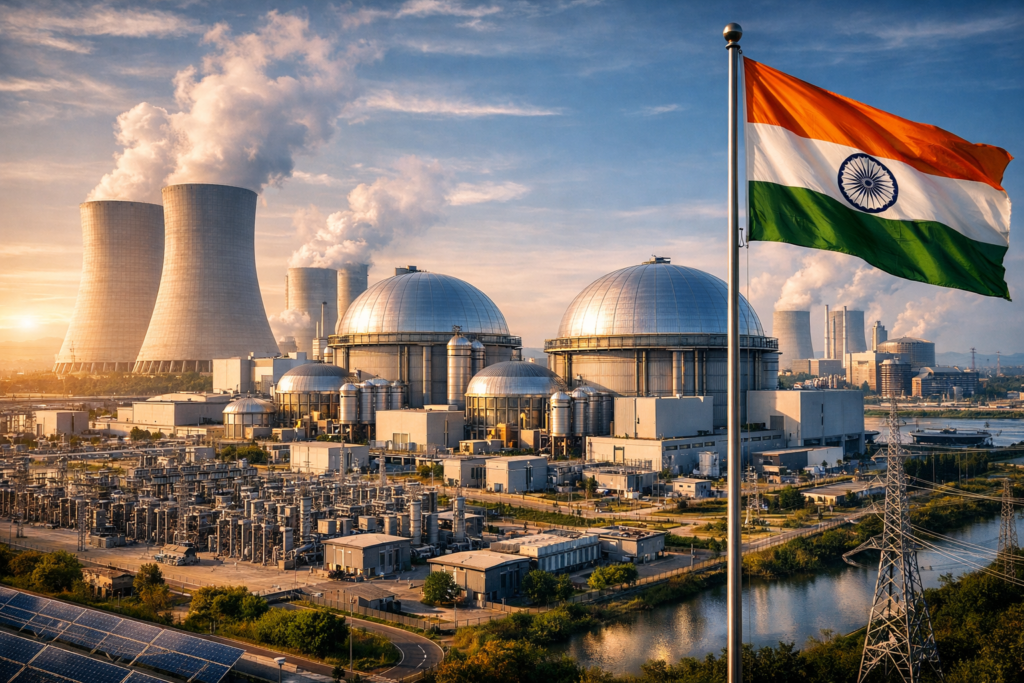
Understanding Adani Group’s Nuclear Ambitions
For decades, India’s nuclear energy sector has largely remained under government control through entities such as the Nuclear Power Corporation of India Limited (NPCIL). However, recent policy discussions and regulatory reforms have opened possibilities for greater private-sector participation.
This evolving landscape has created opportunities for major infrastructure players, and Adani Group’s Bold Atomic Leap: 10 GW Nuclear Power by 2035 reflects the company’s willingness to invest heavily in next-generation energy systems.
The Adani Group already operates across:
- Power generation
- Transmission networks
- Renewable energy projects
- Green hydrogen initiatives
- Ports and logistics
- Industrial infrastructure
Adding nuclear energy to this portfolio would create a diversified energy ecosystem capable of supplying stable electricity across multiple sectors.
Why Nuclear Power Matters for India
The significance of Adani Group’s Bold Atomic Leap: 10 GW Nuclear Power by 2035 becomes clearer when viewed through the lens of India’s future electricity requirements.
India is expected to witness:
- Rapid industrialization
- Expanding urban populations
- Electrification of transportation
- Growth of data centers
- Rising manufacturing output
These trends are projected to significantly increase electricity consumption over the coming decades.
While solar and wind energy have grown rapidly, they face challenges such as:
- Intermittency
- Weather dependence
- Storage limitations
- Grid balancing issues
Nuclear power offers a solution by providing:
1. Reliable Baseload Power
Nuclear reactors operate continuously and generate electricity around the clock.
2. Low Carbon Emissions
Nuclear energy produces minimal greenhouse gas emissions during operation.
3. High Energy Density
Small amounts of nuclear fuel can generate massive amounts of electricity.
4. Energy Security
Reduced dependence on imported fossil fuels enhances national security.
These advantages explain why Adani Group’s Bold Atomic Leap: 10 GW Nuclear Power by 2035 has attracted significant attention among policymakers and energy experts.
The Scale of the 10 GW Target
A 10-gigawatt nuclear portfolio would be transformational.
To put the figure into perspective:
| Capacity | Approximate Impact |
|---|---|
| 1 GW | Powers millions of homes |
| 5 GW | Major regional electricity supply |
| 10 GW | National-scale energy contribution |
A 10 GW nuclear fleet could potentially generate enough electricity to support:
- Large industrial clusters
- Metropolitan cities
- High-tech manufacturing hubs
- AI-driven data centers
This makes Adani Group’s Bold Atomic Leap: 10 GW Nuclear Power by 2035 one of the most ambitious private-sector energy initiatives ever proposed in India.
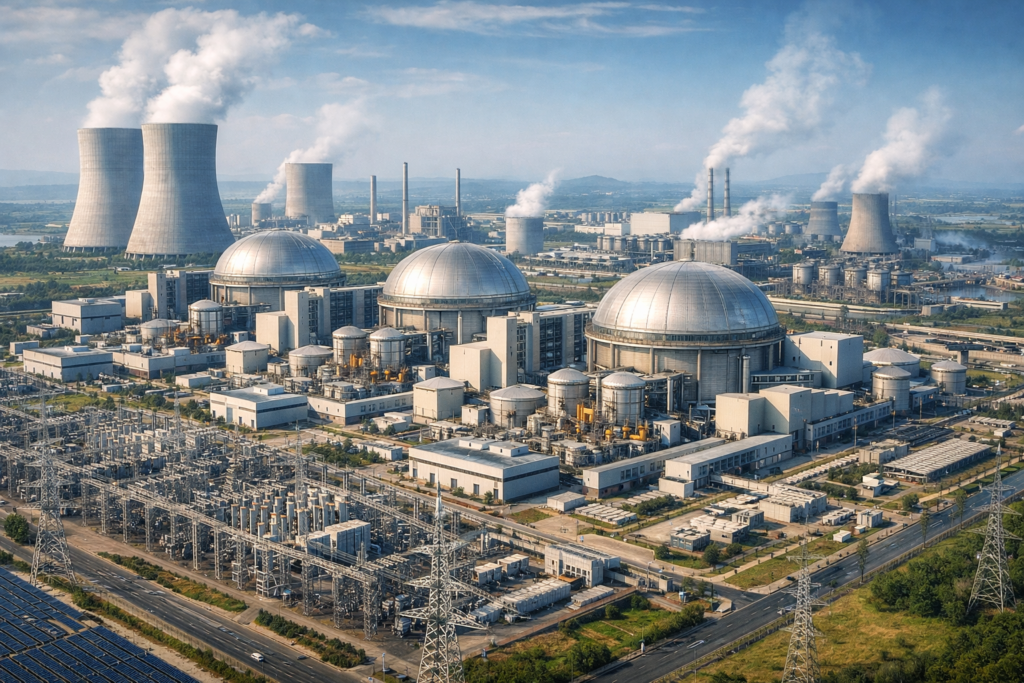
Strategic Benefits for Adani Group
Portfolio Diversification
Adani Group has invested heavily in renewable energy.
However, renewables alone cannot guarantee uninterrupted electricity supply.
Nuclear power complements:
- Solar farms
- Wind projects
- Battery storage systems
- Green hydrogen production
This creates a balanced energy portfolio.
Long-Term Revenue Stability
Unlike commodity-driven businesses, nuclear power plants can operate for decades.
Many reactors worldwide function for:
- 40 years
- 60 years
- Even 80 years with upgrades
Such longevity can provide predictable cash flows.
Supporting Industrial Expansion
Adani’s infrastructure businesses consume significant amounts of electricity.
Nuclear generation could support:
- Ports
- Airports
- Industrial parks
- Data centers
- Manufacturing zones
This integration is one of the strongest business cases behind Adani Group’s Bold Atomic Leap: 10 GW Nuclear Power by 2035.
Alignment with India’s Net-Zero Goals
India has pledged ambitious climate targets and seeks to achieve net-zero emissions by 2070.
Meeting these goals requires a dramatic shift away from carbon-intensive energy sources.
Nuclear power is increasingly being recognized globally as a clean-energy solution.
Countries investing in nuclear expansion include:
- United States
- France
- United Kingdom
- China
- South Korea
- United Arab Emirates
In this context, Adani Group’s Bold Atomic Leap: 10 GW Nuclear Power by 2035 aligns with broader national efforts to reduce emissions while sustaining economic growth.
Economic Impact of the Initiative
The economic implications are enormous.
Job Creation
Construction and operation of nuclear facilities create thousands of jobs.
Potential employment categories include:
- Engineers
- Scientists
- Technicians
- Construction workers
- Safety specialists
- Environmental experts
Manufacturing Growth
Large-scale nuclear projects stimulate demand for:
- Heavy engineering equipment
- Steel
- Cement
- Electrical systems
- Precision components
This boosts domestic manufacturing capabilities.
Regional Development
Nuclear power projects often lead to:
- Improved roads
- Better connectivity
- Educational facilities
- Healthcare infrastructure
As a result, Adani Group’s Bold Atomic Leap: 10 GW Nuclear Power by 2035 could generate substantial regional economic benefits.

Challenges Facing Nuclear Expansion
While the opportunity is immense, challenges remain.
Regulatory Approvals
Nuclear projects require extensive oversight and compliance.
Approval processes typically involve:
- Environmental assessments
- Safety reviews
- Technical evaluations
- Government clearances
High Capital Costs
Nuclear facilities are among the most expensive energy assets to build.
Major expenditures include:
- Reactor construction
- Safety systems
- Fuel management
- Security infrastructure
Long Development Timelines
Large nuclear projects often require years of planning and construction before commercial operation begins.
Public Perception
Public acceptance remains important.
Stakeholders typically seek assurances regarding:
- Safety standards
- Environmental protection
- Emergency preparedness
Successfully addressing these concerns will be critical for Adani Group’s Bold Atomic Leap: 10 GW Nuclear Power by 2035.
Nuclear Power and India’s Energy Security
India imports significant quantities of:
- Crude oil
- Natural gas
- Coal
This exposes the economy to global price fluctuations and geopolitical disruptions.
Nuclear power offers a pathway toward:
- Stable electricity costs
- Reduced fuel dependence
- Greater energy independence
As energy demand rises, Adani Group’s Bold Atomic Leap: 10 GW Nuclear Power by 2035 could strengthen India’s long-term strategic resilience.
The Technology Behind Modern Nuclear Plants
Today’s nuclear reactors are far more advanced than earlier generations.
Modern systems incorporate:
Passive Safety Features
These systems can maintain reactor safety even without external power.
Advanced Monitoring
Artificial intelligence and digital sensors continuously track performance.
Improved Fuel Efficiency
New reactor designs maximize energy extraction from nuclear fuel.
Enhanced Containment Systems
Multiple layers of protection reduce operational risks.
These technological advancements make projects such as Adani Group’s Bold Atomic Leap: 10 GW Nuclear Power by 2035 more feasible and attractive than ever before.
Synergy with Renewable Energy
Contrary to common assumptions, nuclear power and renewable energy are complementary.
Solar and wind provide:
- Low-cost clean energy
- Flexible deployment
Nuclear power provides:
- Reliability
- Grid stability
- Continuous generation
Together, they can form a resilient low-carbon electricity system.
For Adani Group, integrating nuclear assets with existing renewable infrastructure could create one of the world’s most diversified clean-energy portfolios.
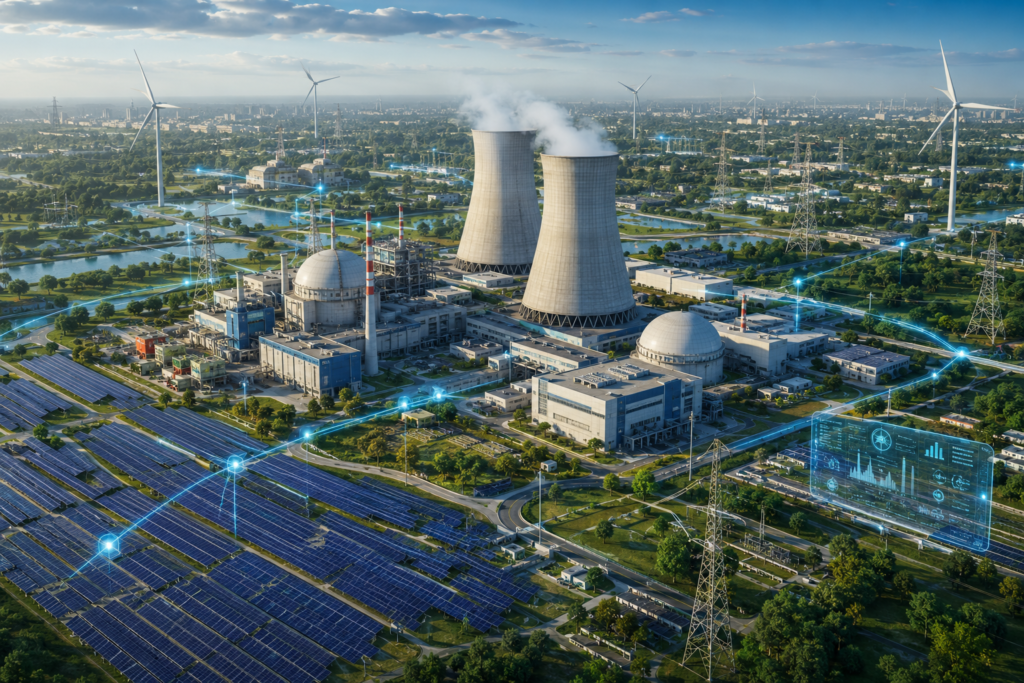
Global Significance of the Project
The international energy community is closely watching large-scale nuclear developments.
If achieved, Adani Group’s Bold Atomic Leap: 10 GW Nuclear Power by 2035 would:
- Demonstrate private-sector participation in nuclear energy
- Accelerate India’s clean-energy transition
- Attract global technology partnerships
- Strengthen investor confidence
It could also encourage further investments in advanced energy technologies across emerging markets.
Potential Impact on Electricity Prices
A larger supply of stable electricity can contribute to improved energy market efficiency.
Benefits may include:
- Reduced dependence on expensive fuel imports
- Better grid reliability
- Improved industrial competitiveness
- Long-term pricing stability
Although nuclear projects require substantial upfront investment, their operational lifespan often supports cost recovery over many decades.
What Success Could Look Like by 2035
If the vision is fully realized, India by 2035 could witness:
- Significant nuclear capacity expansion
- Stronger energy security
- Lower carbon emissions
- Enhanced industrial growth
- Greater grid stability
Under such a scenario, Adani Group’s Bold Atomic Leap: 10 GW Nuclear Power by 2035 may be remembered as a defining milestone in India’s energy transformation journey.
Future Outlook
The coming decade will be crucial for India’s power sector.
As electricity demand surges and climate commitments become more pressing, policymakers and corporations alike are exploring every viable clean-energy solution.
Nuclear power appears increasingly likely to play a larger role.
Whether through partnerships, policy reforms, technology advancements, or infrastructure investments, the momentum behind Adani Group’s Bold Atomic Leap: 10 GW Nuclear Power by 2035 reflects a broader shift toward diversified, reliable, and sustainable energy generation.
If successfully implemented, the initiative could redefine not only the Adani Group’s energy portfolio but also India’s position in the global clean-energy landscape.
Conclusion
Adani Group’s Bold Atomic Leap: 10 GW Nuclear Power by 2035 represents a potentially transformative chapter in India’s energy story. The initiative combines economic ambition, technological innovation, energy security, and climate responsibility into a single strategic vision.
As India continues its rise as a global economic powerhouse, dependable electricity generation will be essential. Nuclear energy, with its reliability and low-carbon profile, offers a compelling solution.
While challenges related to regulation, financing, and execution remain, the long-term benefits could be substantial. From industrial growth and job creation to cleaner energy and enhanced national resilience, the project has the potential to leave a lasting impact on India’s future.
Frequently Asked Questions (FAQs)
What is Adani Group’s Bold Atomic Leap: 10 GW Nuclear Power by 2035?
It refers to the ambitious plan involving a potential 10-gigawatt nuclear energy capacity target by 2035, aimed at supporting India’s growing electricity needs and clean-energy goals.
Why is nuclear power important for India?
Nuclear power provides reliable, low-carbon electricity and helps improve energy security while supporting economic growth.
How much electricity can 10 GW of nuclear capacity generate?
A 10 GW nuclear portfolio can produce enough electricity to support millions of homes, industries, and large urban centers.
How does nuclear energy support climate goals?
Nuclear reactors generate electricity with very low greenhouse gas emissions, making them an important tool for reducing carbon output.
What challenges could affect the project?
Key challenges include regulatory approvals, financing requirements, construction timelines, safety compliance, and public acceptance.
Can nuclear energy work alongside solar and wind power?
Yes. Nuclear energy provides continuous power while solar and wind contribute additional clean electricity, creating a balanced and reliable energy mix.
What economic benefits could arise from the initiative?
Potential benefits include job creation, infrastructure development, manufacturing growth, technology advancement, and increased investment across multiple sectors.
How could this project affect India’s energy future?
If successful, it could strengthen energy security, reduce emissions, support industrial expansion, and accelerate India’s transition toward a cleaner and more resilient power system.