

India-US Trade Deal: 7 Power Moves in Final Stretch
Introduction
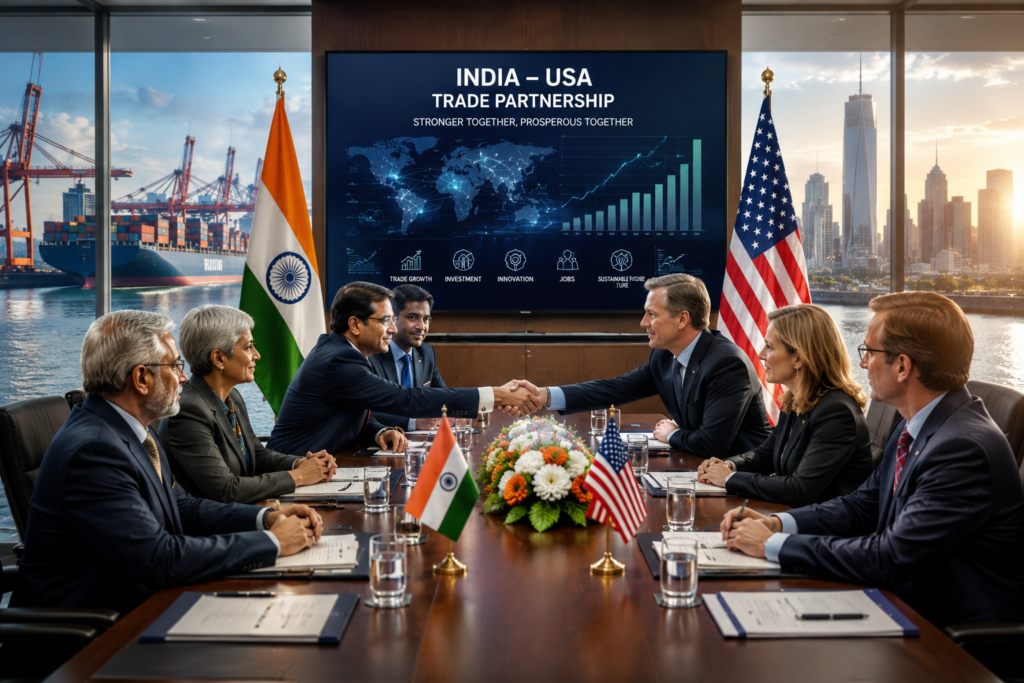
The India-US Trade Deal: 7 Power Moves in Final Stretch has emerged as one of the most closely watched developments in global commerce. As negotiations enter their decisive phase, businesses, investors, exporters, manufacturers, and policymakers are eagerly awaiting the outcome of an agreement that could redefine economic ties between two of the world’s largest democracies.
India and the United States already enjoy a robust strategic partnership spanning defense, technology, energy, education, healthcare, and digital innovation. However, trade has become the cornerstone of this relationship. Bilateral trade has crossed historic milestones in recent years, making the United States one of India’s largest trading partners.
Background of the Deal
The India-US Trade Deal: 7 Power Moves in Final Stretch has reached a decisive phase after approximately 18 months of intensive negotiations, making it one of the fastest-moving bilateral trade discussions compared to similar agreements. For comparison, negotiations on the EU–India trade agreement have taken decades, highlighting the strong commitment from both New Delhi and Washington to conclude the India-US trade pact.
The negotiations are being led by key policymakers from both countries. On the Indian side, Piyush Goyal, India’s Commerce and Industry Minister, has played a central role in advancing discussions. Representing the United States is Jamieson Greer, the US Trade Representative, while Sergio Gor, the US Ambassador to India, has been instrumental in strengthening diplomatic and economic engagement throughout the negotiation process.
Political momentum behind the India-US Trade Deal: 7 Power Moves in Final Stretch has been reinforced by strong leadership from President Donald Trump and Prime Minister Narendra Modi. Both leaders have endorsed the ambitious “Mission 500” initiative, which aims to double bilateral trade to US$500 billion over the coming years. This shared vision reflects the growing strategic partnership between the two nations and underscores their commitment to expanding trade, investment, technology cooperation, manufacturing, and resilient global supply chains.
As the India-US Trade Deal: 7 Power Moves in Final Stretch enters its final stage, businesses, exporters, manufacturers, and investors worldwide are closely watching the outcome, which could reshape one of the world’s most important economic partnerships.
The ongoing negotiations are not simply about reducing tariffs. They encompass market access, digital trade, supply chain resilience, critical minerals, pharmaceuticals, agricultural products, intellectual property rights, semiconductor cooperation, and investment facilitation.
If successfully concluded, the India-US Trade Deal: 7 Power Moves in Final Stretch could significantly boost exports, attract billions of dollars in investment, create new employment opportunities, strengthen manufacturing under Make in India, and enhance strategic cooperation in emerging industries.
In this detailed analysis, we examine the seven major developments shaping the final phase of negotiations and explore what they mean for India, the United States, global markets, and businesses.
Why This Trade Deal Matters
The India-US trade relationship has expanded rapidly over the past decade.
Current cooperation includes:
- Information Technology
- Pharmaceuticals
- Engineering goods
- Electronics
- Defense manufacturing
- Energy trade
- Renewable energy
- Agricultural products
- Digital services
- Critical minerals
The proposed agreement aims to remove trade bottlenecks while encouraging greater investment across these sectors.
The Current State of India-US Trade
Bilateral Trade Keeps Growing
Trade between India and the United States has witnessed remarkable expansion over recent years.
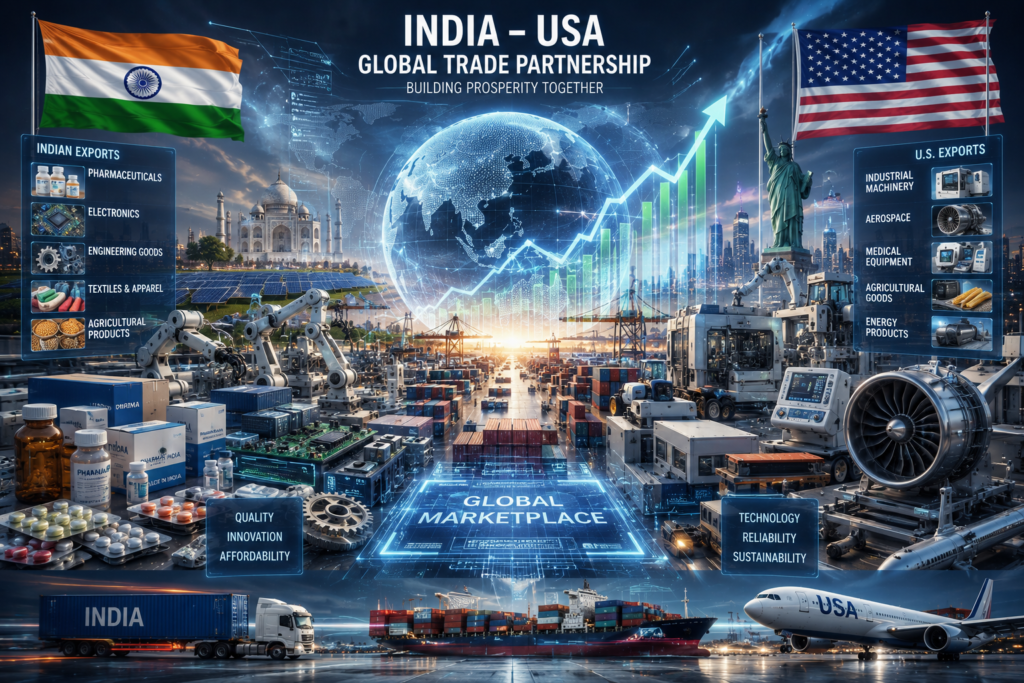
Major Indian exports include:
- Pharmaceuticals
- Gems and jewelry
- Engineering goods
- Textiles
- Chemicals
- IT services
- Petroleum products
Major US exports to India include:
- Aircraft
- Energy products
- Medical equipment
- Defense systems
- Agricultural commodities
- Machinery
- Electronics
Both governments now seek to further increase trade volumes through a comprehensive agreement.
India-US Trade Deal: 7 Power Moves in Final Stretch
Let’s examine the seven defining developments driving negotiations.
1. Tariff Reductions on Key Products
One of the biggest issues under discussion is tariff reduction.
Negotiators are exploring lower duties on:
- Industrial products
- Electronics
- Medical devices
- Agricultural goods
- Automobile components
- Machinery
Reduced tariffs would make products more competitive in both markets.
Benefits
For India:
- Higher exports
- Improved manufacturing competitiveness
- Better market access
For the United States:
- Increased exports
- Lower import costs
- Expanded consumer choices
2. Greater Market Access
Another crucial objective is expanding market access.
Both countries seek easier entry for businesses across sectors.
Important industries include:
- Pharmaceuticals
- Healthcare
- Agriculture
- Food processing
- Technology
- Renewable energy
Indian pharmaceutical companies may receive faster approvals, while American firms could gain broader opportunities in India’s expanding consumer market.
3. Strengthening Supply Chains
The COVID-19 pandemic exposed weaknesses in global supply chains.
The new trade framework focuses on:
- Diversifying manufacturing
- Reducing dependence on single-country sourcing
- Building resilient production networks
- Enhancing logistics infrastructure
India has emerged as a preferred manufacturing destination under the China Plus One strategy.
The agreement could accelerate investments into:
- Electronics manufacturing
- Semiconductor packaging
- Renewable energy
- Electric vehicles
- Industrial machinery
4. Technology and Digital Trade
Technology cooperation has become central to negotiations.
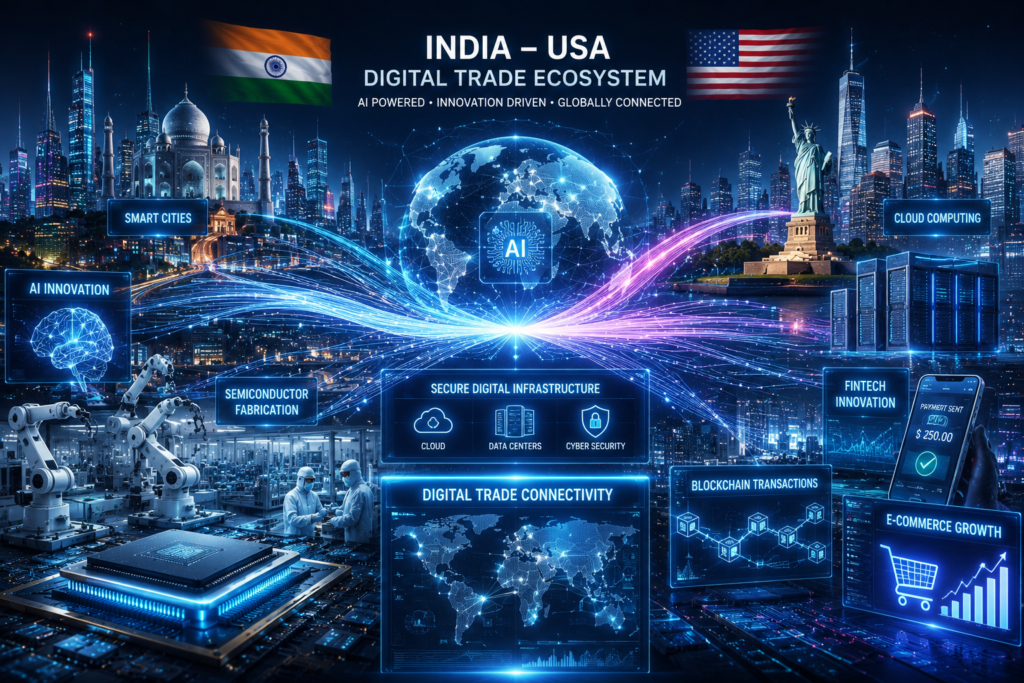
Discussions include:
- Artificial Intelligence
- Cloud computing
- Data infrastructure
- Cybersecurity
- Semiconductor manufacturing
- Digital payments
Technology companies from both nations stand to benefit through simplified regulations and stronger investment protections.
Digital trade represents one of the fastest-growing segments of bilateral commerce.
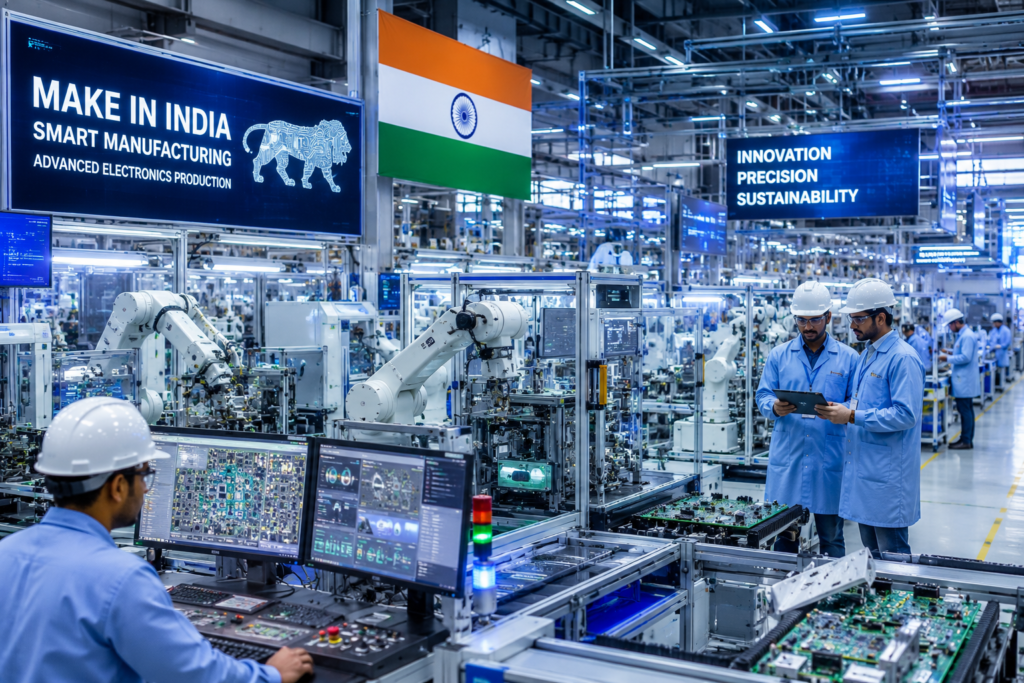
5. Boosting Manufacturing Investments
India continues positioning itself as a global manufacturing hub.
The trade agreement could encourage investment in:
- Electronics
- Defense production
- Medical equipment
- Aerospace
- Renewable energy
- Battery manufacturing
- Electric vehicles
American companies seeking diversified supply chains may increasingly invest in Indian manufacturing facilities.
This aligns closely with initiatives such as:
- Make in India
- Production Linked Incentive (PLI)
- Digital India
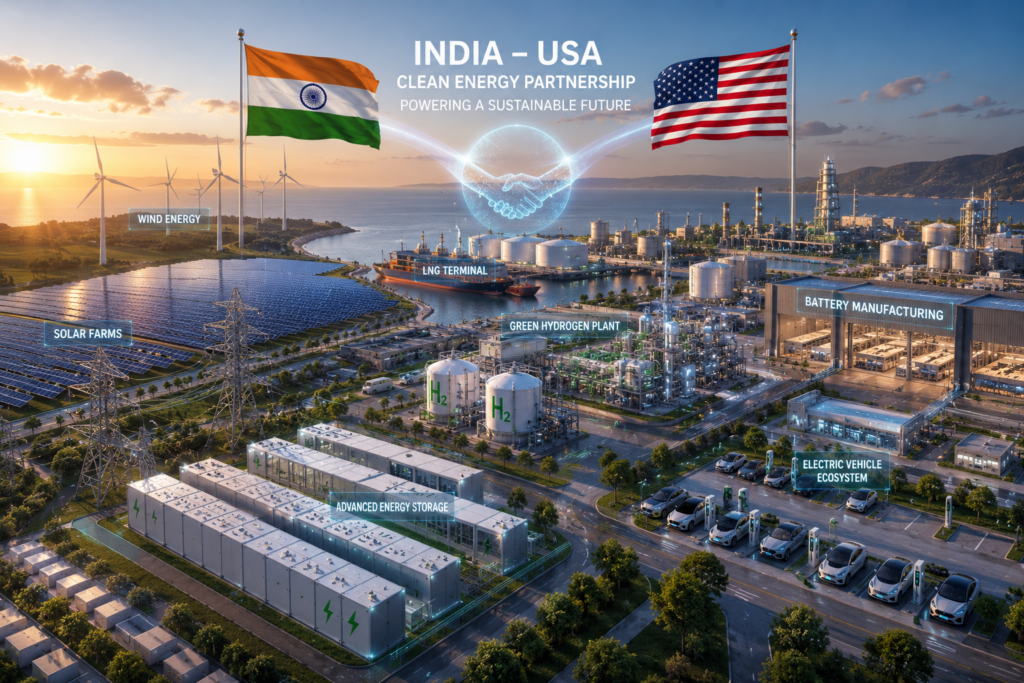
6. Energy and Critical Minerals Partnership
Energy security remains a major pillar of negotiations.
Areas of cooperation include:
- LNG imports
- Clean energy
- Solar manufacturing
- Hydrogen
- Battery supply chains
- Rare earth minerals
Critical minerals have become essential for:
- Electric vehicles
- Defense equipment
- Renewable energy
- Electronics
A stronger partnership could reduce supply risks while supporting energy transition goals.
7. Strategic Economic Partnership
Beyond commerce, the agreement strengthens geopolitical cooperation.
Shared priorities include:
- Indo-Pacific stability
- Trusted supply chains
- Advanced manufacturing
- Critical technologies
- Defense collaboration
- Climate initiatives
Economic partnerships increasingly influence geopolitical strategy.
A successful agreement would reinforce both countries’ long-term strategic interests.
Major Sectors That Could Benefit
Information Technology
India’s IT sector may witness:
- Increased outsourcing
- Higher digital exports
- AI collaboration
- Cloud services expansion
Pharmaceuticals
Indian pharmaceutical manufacturers could gain:
- Better regulatory cooperation
- Faster approvals
- Expanded exports
- Increased R&D partnerships
Agriculture
Potential gains include:
- Better export opportunities
- Food processing collaboration
- Agricultural technology exchange
Electronics
India’s electronics industry could experience:
- More manufacturing investments
- Higher exports
- Supply chain diversification
Renewable Energy
Joint initiatives may accelerate:
- Solar manufacturing
- Green hydrogen
- Battery production
- Wind energy
- Smart grids
Challenges Still Remaining
Despite significant progress, several issues require careful negotiation.
These include:
Agricultural Policies
Agricultural imports remain politically sensitive in both countries.
Intellectual Property
Innovation-driven industries seek stronger protection of intellectual property rights.
Digital Regulations
Both nations continue discussions regarding:
- Cross-border data flows
- Privacy
- Cybersecurity
- Digital taxation
Tariff Disagreements
Some product categories still face differing tariff expectations.
Negotiators continue working toward mutually acceptable solutions.
Impact on Indian Businesses
If finalized successfully, Indian companies may experience:
- Larger export markets
- Reduced trade barriers
- Better investment climate
- Enhanced technology partnerships
- Increased manufacturing demand
Small and medium enterprises may also gain access to larger international markets.
Impact on American Companies
US businesses could benefit through:
- Easier access to India’s growing consumer market
- Manufacturing partnerships
- Lower tariffs
- Supply chain diversification
- Higher investment opportunities
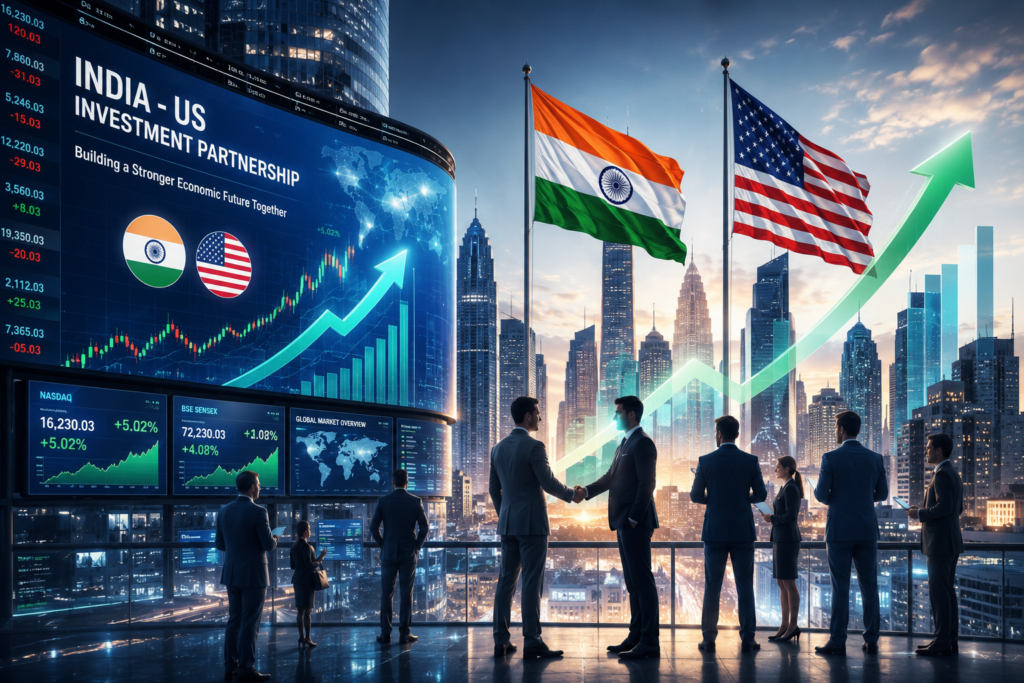
Opportunities for Investors
Investors should closely monitor sectors likely to benefit.
These include:
- Semiconductor manufacturing
- Renewable energy
- Logistics
- Pharmaceuticals
- Defense
- Infrastructure
- AI
- Data centers
- Electronics
- Industrial manufacturing
Many analysts believe successful completion of negotiations could improve long-term investor confidence.
What Experts Are Watching
Economists are paying close attention to:
- Final tariff schedules
- Rules of origin
- Digital trade provisions
- Market access commitments
- Investment protection mechanisms
- Supply chain initiatives
- Semiconductor cooperation
These provisions will determine the long-term economic impact of the agreement.
Possible Timeline
Negotiations have accelerated considerably.
The final phase typically involves:
- Ministerial meetings
- Technical discussions
- Legal review
- Final approvals
- Official signing
While exact timelines depend on negotiations, both governments have indicated a strong commitment to concluding the agreement at the earliest feasible opportunity.
Long-Term Economic Outlook
The India-US Trade Deal: 7 Power Moves in Final Stretch represents far more than another trade agreement.
Its long-term impact could include:
- Higher bilateral trade
- Expanded manufacturing
- Stronger exports
- Technology leadership
- Clean energy cooperation
- Employment generation
- Enhanced global competitiveness
India’s growing economy, combined with America’s technological leadership, creates a partnership capable of shaping global trade patterns for decades.
Conclusion
The India-US Trade Deal: 7 Power Moves in Final Stretch marks a defining moment in the evolving partnership between India and the United States. As negotiations approach completion, the agreement promises to unlock new opportunities across manufacturing, technology, energy, agriculture, healthcare, digital commerce, and strategic investments.
While a few complex issues remain under discussion, the momentum toward a mutually beneficial agreement has strengthened considerably. Businesses, exporters, investors, and policymakers are watching closely because the final outcome could significantly influence bilateral trade flows, global supply chains, and economic growth over the coming decade.
For India, the agreement could reinforce its ambitions of becoming a global manufacturing and export powerhouse. For the United States, it offers a trusted economic partnership with one of the world’s fastest-growing major economies. Together, these seven power moves have the potential to redefine not only bilateral commerce but also the broader geopolitical and economic landscape.
Frequently Asked Questions (FAQs)
1. What is the India-US Trade Deal?
The India-US Trade Deal is a proposed bilateral trade agreement aimed at improving market access, reducing tariffs, increasing investments, strengthening supply chains, and expanding economic cooperation.
2. Why is the trade deal important?
It can increase exports, attract foreign investment, create jobs, improve manufacturing competitiveness, strengthen technology collaboration, and enhance strategic economic ties between India and the United States.
3. Which sectors are expected to benefit the most?
Major beneficiaries include:
- Information Technology
- Pharmaceuticals
- Electronics
- Renewable Energy
- Defense Manufacturing
- Agriculture
- Logistics
- Semiconductor Manufacturing
4. Will tariffs be reduced?
Negotiators are discussing tariff reductions on several industrial, agricultural, medical, and technology products, although the final structure will depend on the completed agreement.
5. How could Indian exporters benefit?
Indian exporters may gain improved access to the US market, lower trade barriers, greater investment opportunities, stronger supply chains, and expanded demand across multiple industries.
6. What challenges remain?
Key issues include agricultural market access, digital trade rules, intellectual property protection, tariff structures, and regulatory harmonization.
7. When is the agreement expected to be finalized?
Both governments have accelerated negotiations, but the exact timeline depends on the successful resolution of remaining technical and policy issues before official approval and signing.