
Honda 10-Model India Portfolio: 7 New Bikes & Scooters Sets a New Direction.
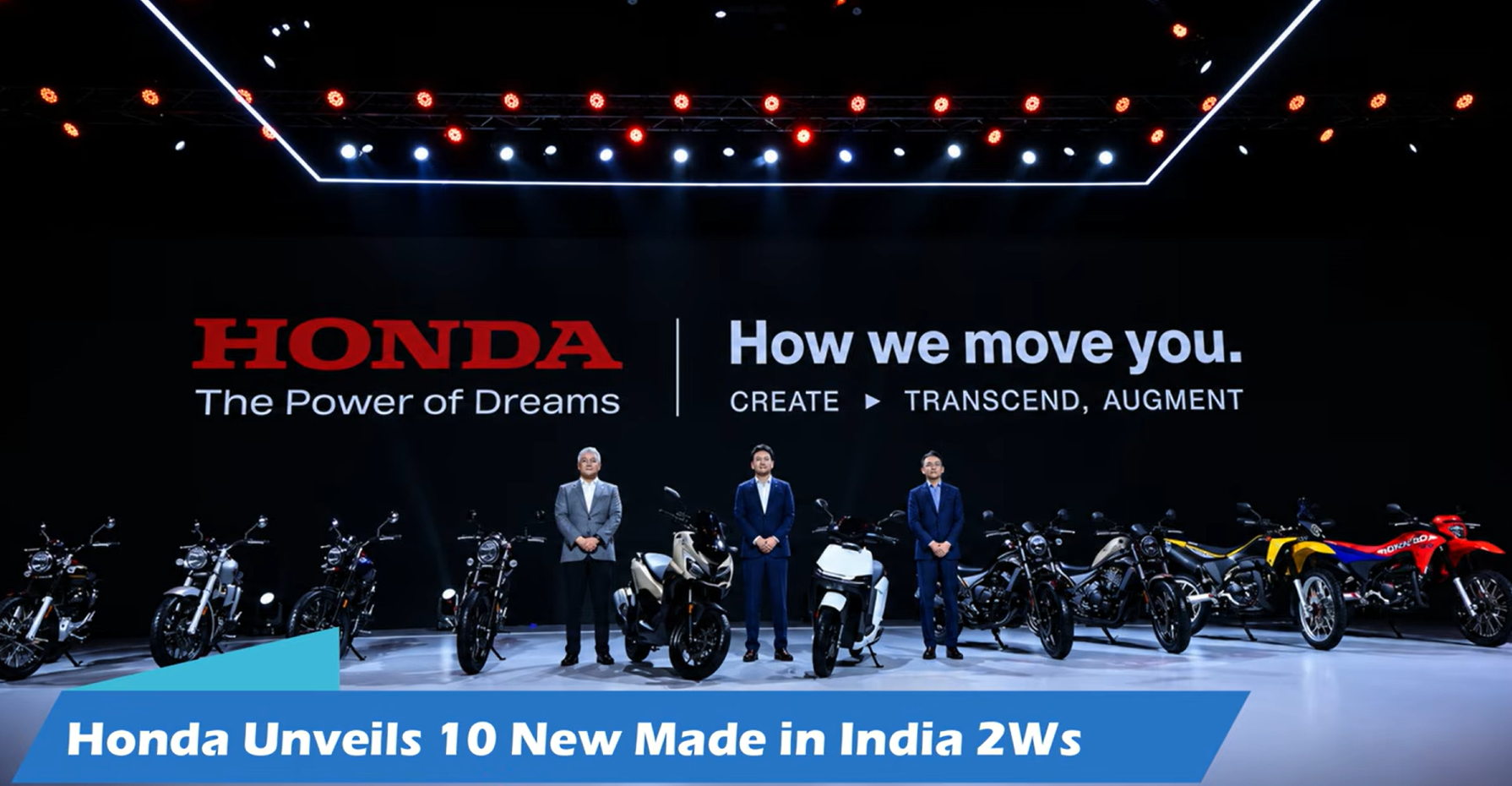
The Honda 10-Model India Portfolio: 7 New Bikes & Scooters marks one of the Japanese manufacturer’s most significant product expansion moves in the Indian two-wheeler market in recent years. Honda Motorcycle & Scooter India (HMSI) has unveiled an ambitious 10-model product strategy spanning motorcycles, scooters, electric vehicles, flex-fuel technology and a range of premium segments, highlighting its broader vision for India’s evolving two-wheeler market.
The most important part of the announcement is that the portfolio includes seven all-new products, supported by three refreshed models. Instead of concentrating on just one category, Honda is attempting to cover a much wider range of Indian riding requirements—from urban commuting and adventure scooters to retro roadsters, cruisers, dual-purpose motorcycles and electric mobility.
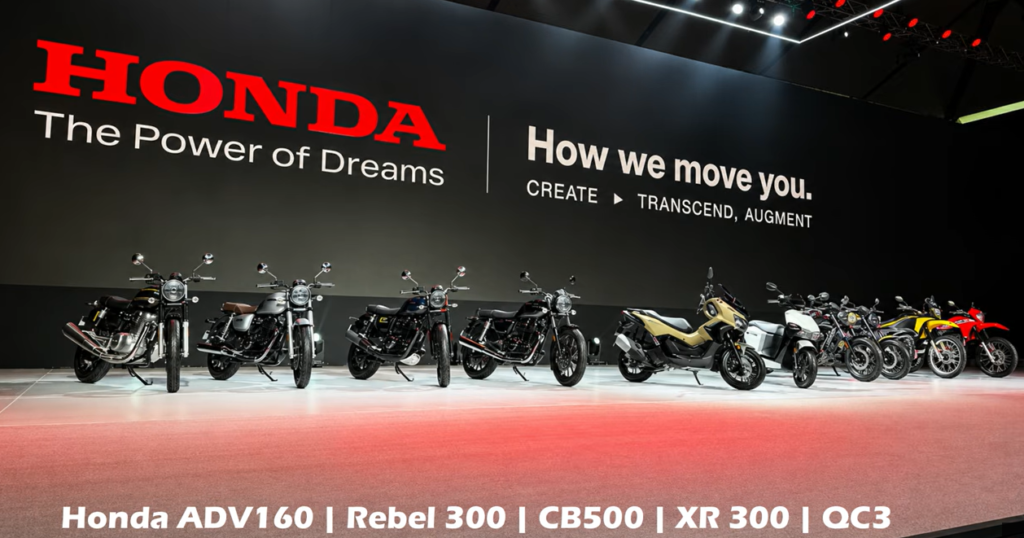
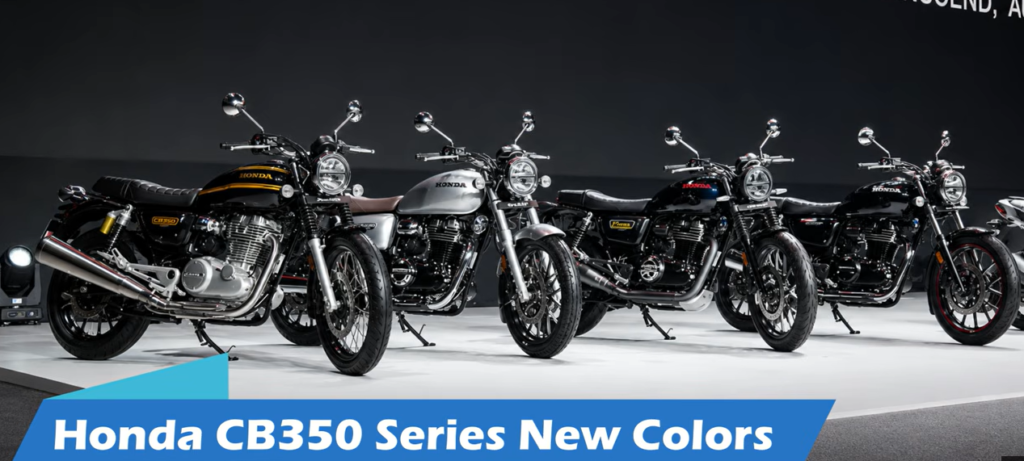
The seven new products highlighted in the unveiling include the Honda ADV160, Honda CB500, Honda Rebel 300, Honda Rebel 500, Honda XR300L, Honda XR300 Rally and Honda QC3 electric scooter. The three refreshed products are associated with the CB350 family and receive updates including new colour options.
This is also significant because Honda is pursuing what it describes as a multi-pathway strategy. Rather than betting exclusively on petrol motorcycles or electric vehicles, the company is preparing products around conventional internal-combustion technology, electric powertrains and flex-fuel capability.
Honda 10-Model India Portfolio: What Has Honda Unveiled?
The scale of the announcement is best understood by separating the portfolio into its major categories.
| Model | Category | Major Highlight |
|---|---|---|
| Honda ADV160 | Adventure scooter | 160cc city-adventure concept, flex-fuel capability |
| Honda CB500 | Retro roadster | 501cc single-cylinder motorcycle |
| Honda Rebel 300 | Cruiser | Premium cruiser with E-Clutch technology |
| Honda Rebel 500 | Cruiser | Larger-displacement cruiser with E-Clutch |
| Honda XR300L | Dual-purpose motorcycle | Adventure and off-road-oriented design |
| Honda XR300 Rally | Rally-style motorcycle | Long-distance adventure and rally focus |
| Honda QC3 | Electric scooter | New electric mobility product |
| CB350 family | Refreshed motorcycles | Updated versions with new colours |
| CB350 family | Refreshed motorcycles | Portfolio refresh |
| CB350 family | Refreshed motorcycles | Portfolio refresh |
The exact positioning of each model will become clearer as Honda announces launch schedules, prices, variant details and market availability. However, the product mix already reveals the company’s broader strategy.
The portfolio is not simply about adding more motorcycles. It is about giving Honda a presence in several fast-growing or strategically important segments.
The ADV160 can strengthen Honda’s position in premium scooters. The CB500 gives the brand a new roadster option. The Rebel 300 and Rebel 500 cater to cruiser motorcycle enthusiasts, while the XR300L and XR300 Rally strengthen Honda’s presence in the adventure and dual-purpose motorcycle segments.
At the other end of the technology spectrum, the QC3 gives Honda another electric scooter offering as it expands its EV strategy in India.
Honda 10-Model India Portfolio: 7 New Bikes & Scooters
1. Honda ADV160: A New Adventure Scooter for India
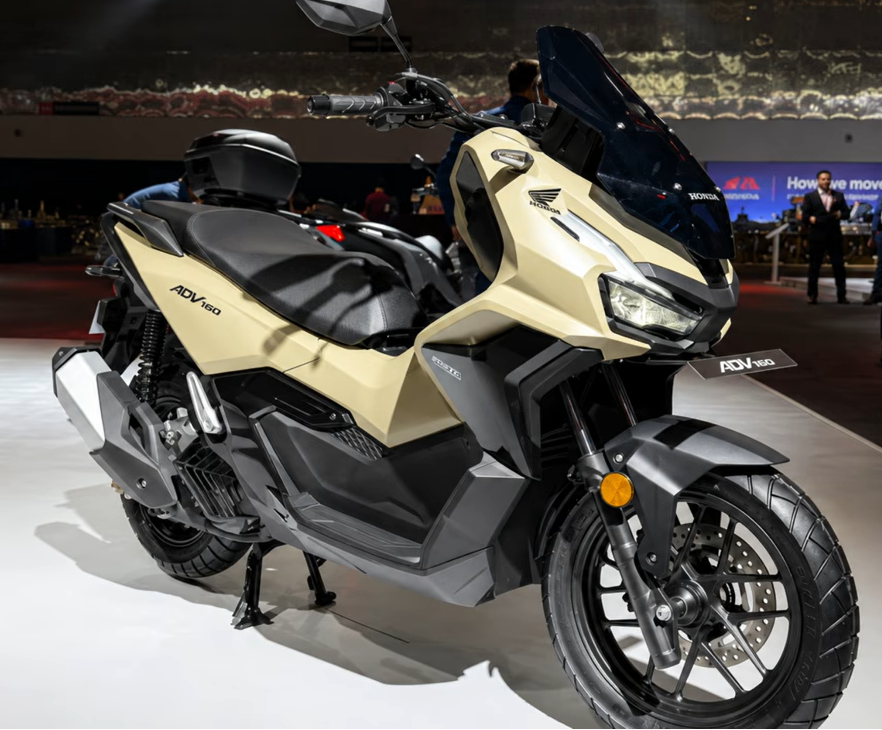
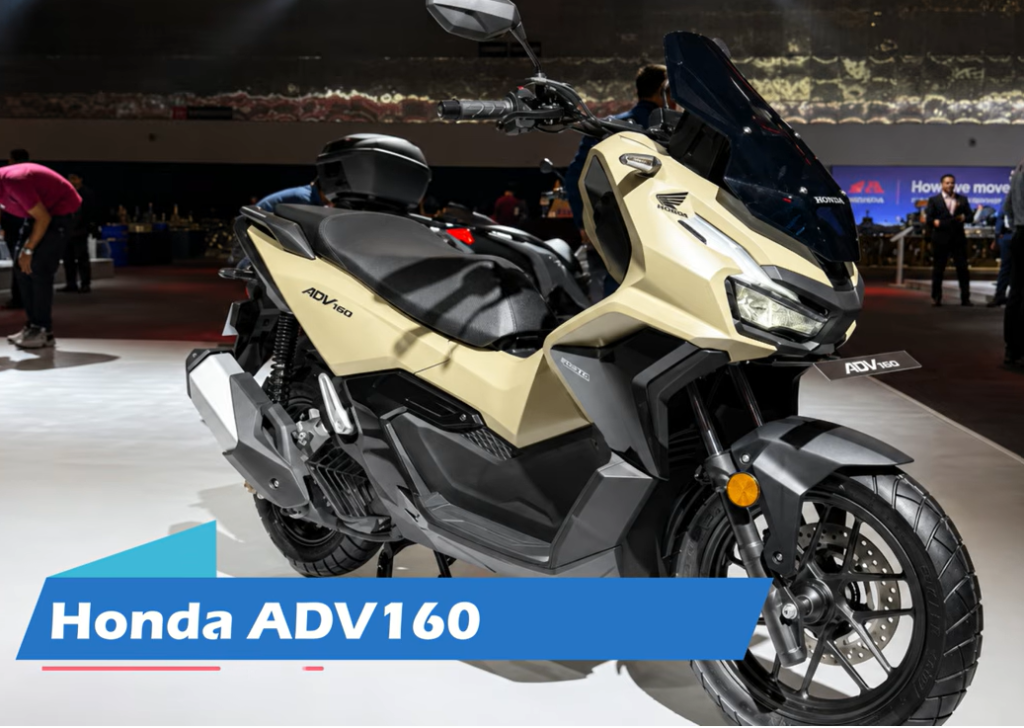
Among the seven new products, the Honda ADV160 could become one of the most interesting models for India’s growing premium scooter market.
The ADV160 is designed around the concept of an adventure-oriented scooter. Unlike conventional urban scooters that focus primarily on commuting, the ADV160 combines scooter practicality with a more rugged adventure-inspired design.
According to reports surrounding the unveiling, the model features a 160cc engine and is associated with E85 flex-fuel capability, making it particularly relevant to Honda’s multi-pathway technology strategy.
The importance of the ADV160 goes beyond its engine size. India has traditionally been a strong scooter market, with buyers increasingly looking for products that provide more style, technology and versatility.
A city-adventure scooter can potentially appeal to:
- Daily urban commuters
- Young professionals
- Weekend riders
- Long-distance scooter enthusiasts
- Buyers seeking premium styling
- Consumers interested in alternative fuel technology
The ADV160’s design philosophy could also help Honda create a stronger bridge between traditional scooters and premium lifestyle products.
Why the ADV160 Matters
The biggest opportunity for the ADV160 is differentiation.
India already has numerous commuter scooters, but the adventure-scooter category remains comparatively niche. A well-positioned Honda ADV160 could attract riders who want the convenience of an automatic transmission but also prefer a more rugged design.
The E85 angle is equally important. If Honda successfully develops a market around flex-fuel scooters, the ADV160 could become an important showcase for the company’s alternative-fuel strategy.
However, the success of the model will ultimately depend on pricing, fuel compatibility infrastructure, real-world performance and availability.
2. Honda CB500: A New Retro Roadster Challenger
The Honda CB500 is another major highlight of the new portfolio.
Reports from the unveiling describe the motorcycle as a retro-styled roadster powered by a 501cc single-cylinder engine. This places the motorcycle in an interesting space within India’s premium middleweight market.
The Indian motorcycle market has witnessed significant growth in the modern-retro segment. Riders increasingly want motorcycles that combine classic styling with contemporary engineering.
Honda’s CB500 could therefore become a strategic product for riders who want:
- A premium retro design
- A larger engine
- Comfortable highway capability
- A motorcycle suitable for weekend touring
- Strong brand recognition
- A balance between everyday usability and performance
The model could potentially attract buyers who have moved beyond 250cc or 350cc motorcycles but do not necessarily want an extremely aggressive performance motorcycle.
The introduction of a 501cc single-cylinder platform is also notable because it could offer a different ownership proposition from twin-cylinder motorcycles.
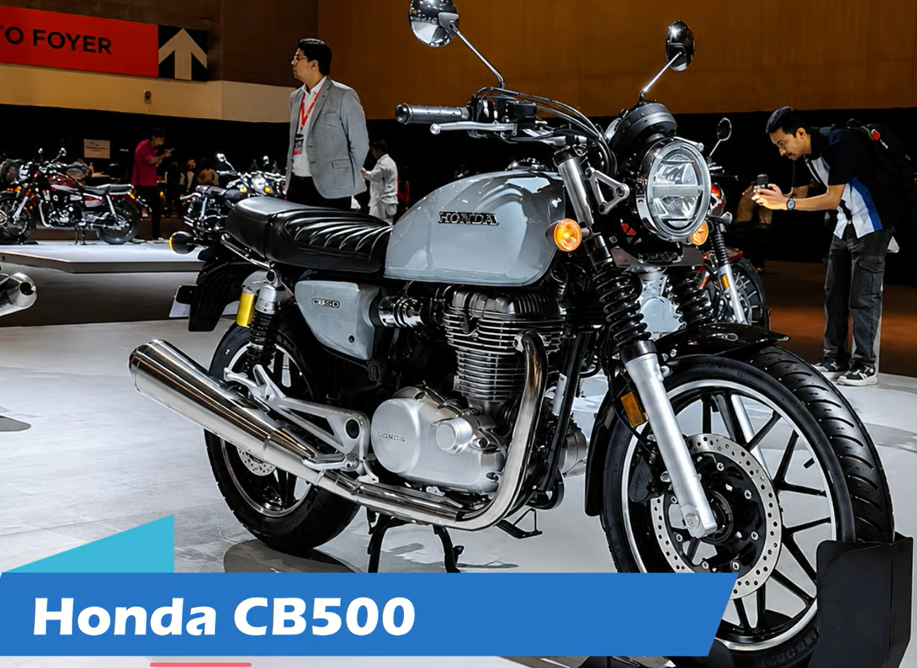
Honda CB500 and the Premium Motorcycle Battle
The CB500 enters a market where brand heritage and design have become increasingly important.
Indian buyers in the premium motorcycle segment are no longer choosing solely on engine capacity. Styling, road presence, technology, comfort, reliability and ownership experience are all important.
Honda’s challenge will be to position the CB500 with a compelling combination of performance and value.
If the pricing is competitive, the CB500 could become one of the most closely watched motorcycles in the new Honda portfolio.
3. Honda Rebel 300: A Cruiser With a Different Personality
The Honda Rebel 300 adds a cruiser dimension to the new portfolio.
The Rebel family has an international reputation for its low-slung design, relaxed riding position and minimalist styling. For India, the Rebel 300 could provide Honda with a product that targets younger riders seeking a premium lifestyle motorcycle.
The model is also reported to feature Honda’s E-Clutch technology, adding an important technology angle to the cruiser experience.
E-Clutch is particularly interesting because it aims to make clutch operation easier without eliminating the involvement of a conventional manual gearbox.
For riders, that could mean:
- Easier starts
- Reduced clutch fatigue
- More convenient urban riding
- Greater confidence for newer riders
- Retaining a manual riding experience
The Rebel 300 could therefore appeal to a wide range of customers.
A rider may want the control of a manual motorcycle but find frequent clutch operation tiring in heavy traffic. E-Clutch could potentially address that problem.
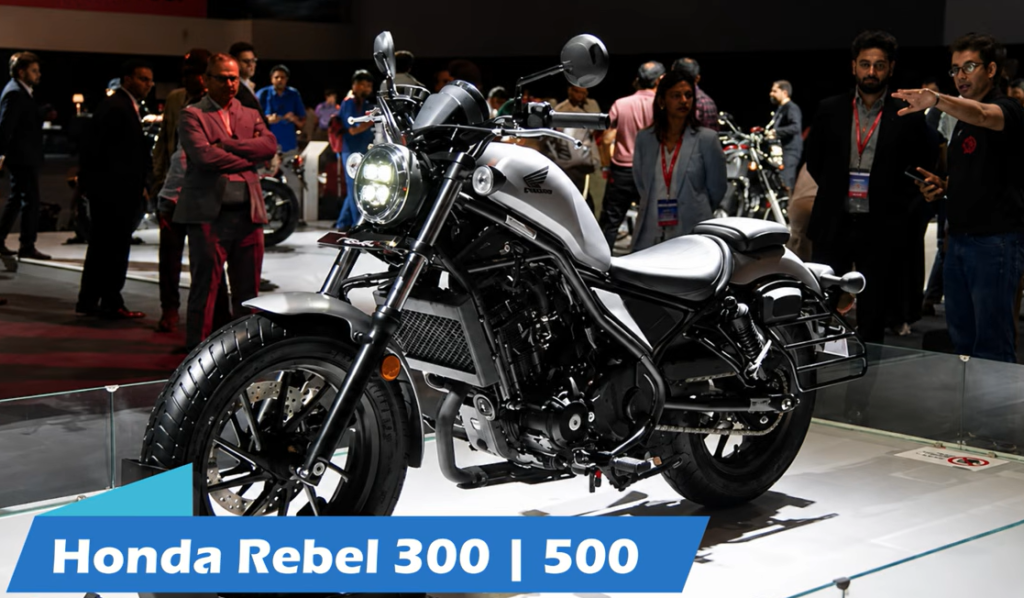
Why the Rebel 300 Could Be Important
The Indian premium motorcycle market has become increasingly lifestyle-driven.
Cruisers are not necessarily purchased only for performance. Buyers often consider design, road presence, comfort and individuality.
The Rebel 300 could give Honda a more youthful and internationally styled alternative within its cruiser portfolio.
Its success, however, will depend heavily on pricing and localisation. Indian buyers are highly value-conscious, even in premium segments.
4. Honda Rebel 500: More Power for Long-Distance Riders
The Honda Rebel 500 takes the cruiser concept further.
With a larger engine than the Rebel 300, the Rebel 500 is likely to target riders looking for additional performance and stronger highway capability.
The inclusion of both Rebel models is strategically interesting. Instead of relying on a single cruiser, Honda can potentially address different rider groups.
The Rebel 300 could appeal to those upgrading from smaller motorcycles, while the Rebel 500 may attract experienced riders who want a more substantial touring-oriented cruiser.
The reported availability of E-Clutch technology adds another layer of differentiation.
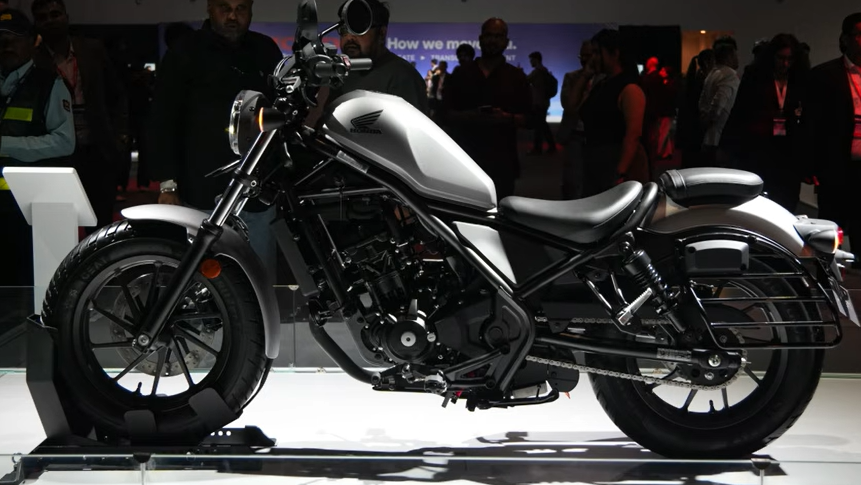
Rebel 500: A Premium Lifestyle Proposition
The Rebel 500 could become a motorcycle for buyers who value:
- Long-distance riding
- Premium cruiser styling
- Higher engine capacity
- Relaxed ergonomics
- Modern technology
- Honda’s global motorcycle identity
The motorcycle could also strengthen Honda’s presence among enthusiasts who want to move beyond the 350cc segment.
5. Honda XR300L: Dual-Purpose Adventure Capability
The Honda XR300L introduces another important dimension to the new portfolio: dual-purpose motorcycling.
Adventure and dual-sport motorcycles have gained attention in India as riders increasingly explore touring routes, mountain roads and off-road trails.
The XR300L is positioned around the idea of combining road usability with off-road capability.
That could make it attractive to riders who want one motorcycle capable of handling:
- City commuting
- Highway travel
- Rough roads
- Gravel tracks
- Light off-road riding
- Weekend adventures
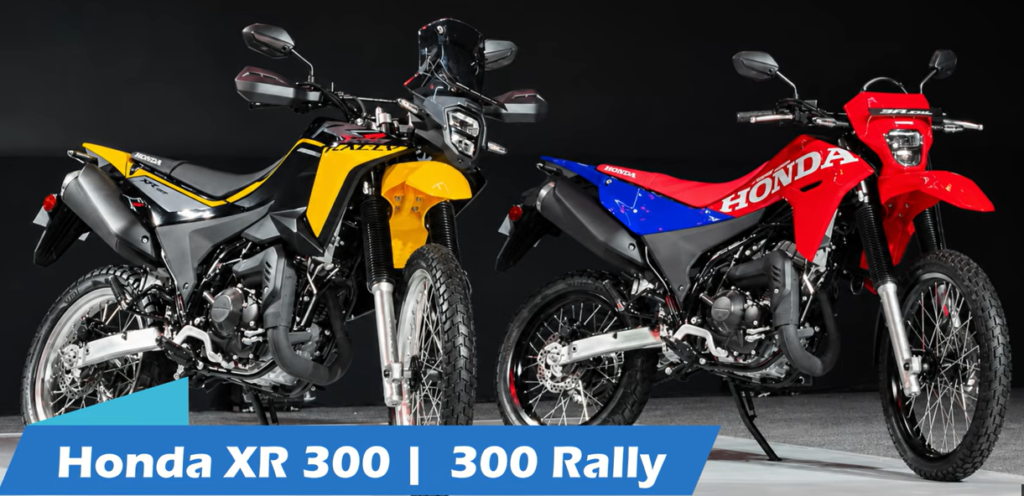
The XR300L also expands Honda’s product portfolio beyond conventional street motorcycles.
For an Indian market with diverse road conditions, a dual-purpose motorcycle can have a strong practical argument.
However, the bike’s success will depend on suspension setup, ground clearance, weight, service support and pricing.
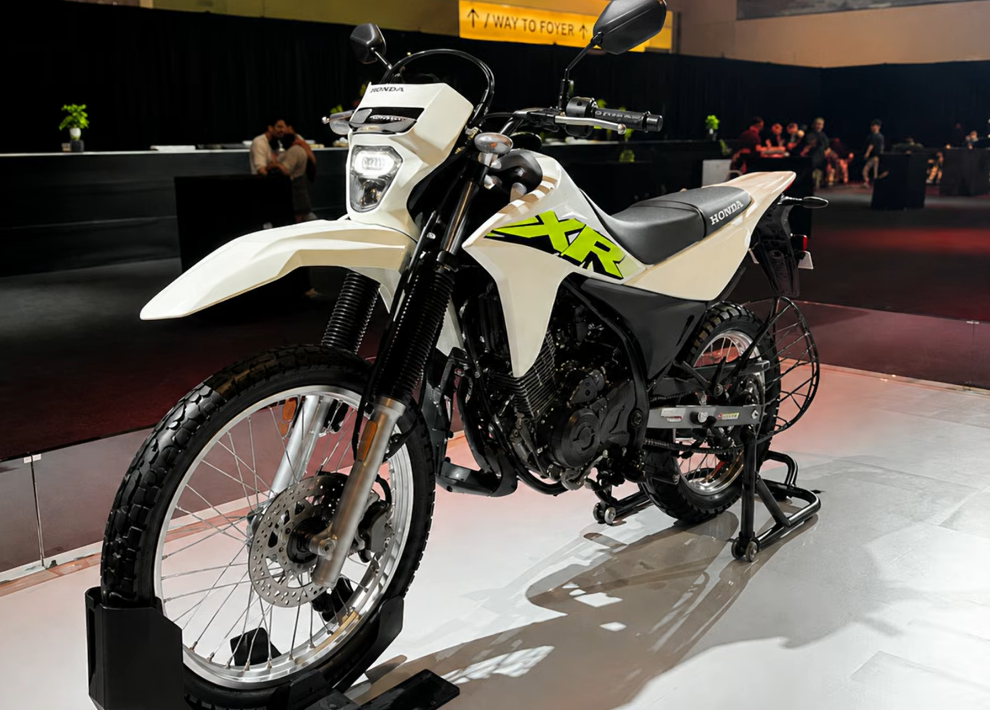
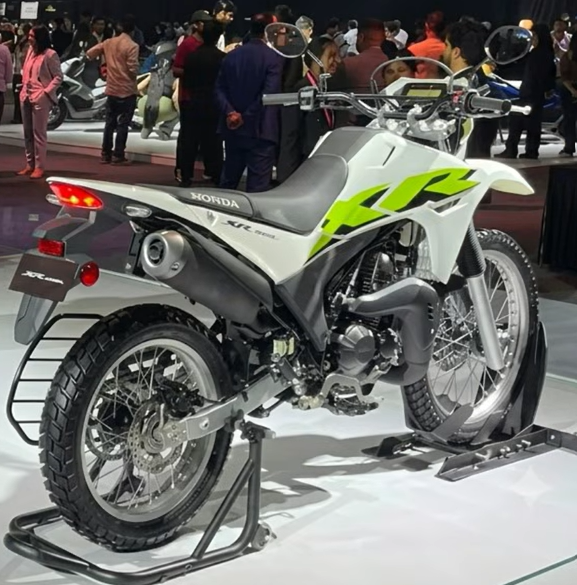
6. Honda XR300 Rally: Built Around the Adventure Lifestyle
The Honda XR300 Rally is another major product in the seven-model expansion.
As its name suggests, the motorcycle is designed around rally-inspired adventure riding.
The XR300 Rally could appeal to riders who want:
- Long-distance touring
- Adventure travel
- Rough-road capability
- Rally-inspired styling
- Greater versatility than a standard road motorcycle
The Indian adventure segment is becoming increasingly competitive, and riders are looking beyond conventional motorcycles.
XR300 Rally vs Conventional Motorcycles
The biggest strength of a rally-style motorcycle is versatility.
A conventional street bike may be comfortable on highways but less suitable for rough terrain. A dedicated off-road motorcycle, meanwhile, can be challenging for daily urban use.
A rally-style motorcycle attempts to find a middle ground.
Honda’s challenge will be to ensure that the XR300 Rally delivers genuine adventure capability without becoming too expensive or too specialised for the Indian market.
7. Honda QC3: A New Electric Scooter for India’s EV Future
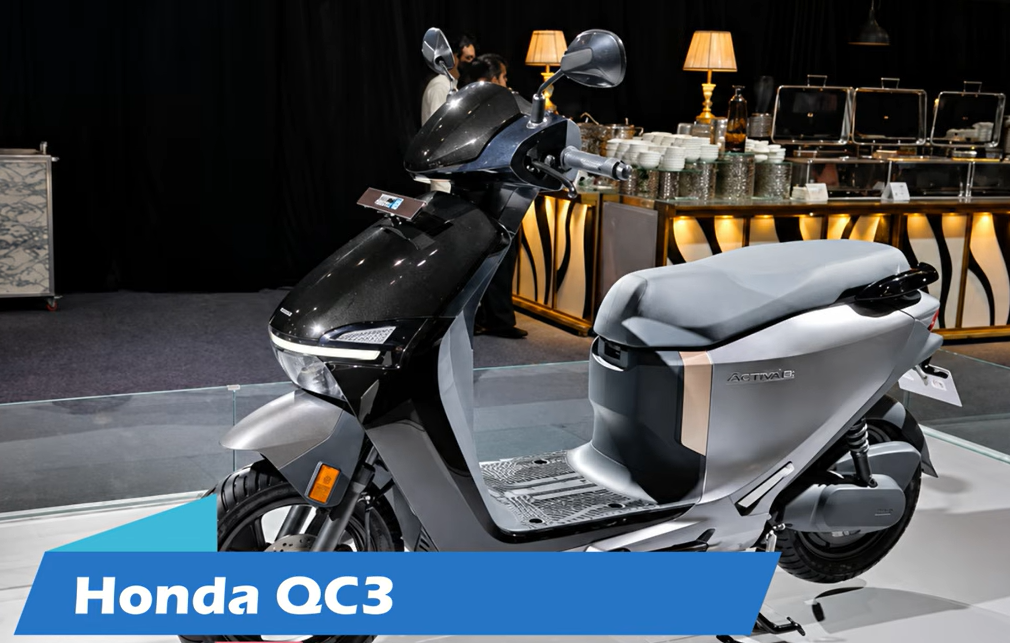
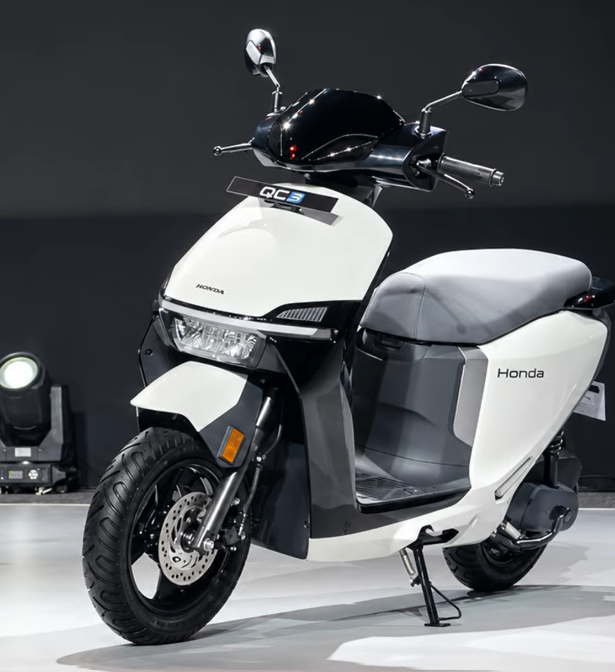
The Honda QC3 is perhaps the most important product in the new portfolio from an electric-mobility perspective.
Honda has been expanding its electric two-wheeler presence in India, and the QC3 becomes another part of that strategy. Recent reporting describes the QC3 as Honda’s third electric two-wheeler offering in India following the Activa e: and QC1.
The reported range figure is up to 145 km on a single charge, although buyers should verify final certified specifications and variant details when the scooter reaches the market.
The QC3 could be particularly significant because the Indian electric scooter market is moving beyond early adopters.
Consumers are increasingly evaluating electric scooters based on:
- Real-world range
- Charging convenience
- Battery warranty
- Running cost
- Connected technology
- Service network
- Battery durability
- Overall ownership cost
Why the QC3 Could Strengthen Honda’s EV Strategy
Honda’s biggest advantage in the electric market could be its established brand and extensive two-wheeler ecosystem.
The company already has experience with high-volume scooters and motorcycles. Expanding its EV range allows Honda to leverage that market knowledge while developing a broader electric portfolio.
The QC3 could also help Honda address consumers who want an electric scooter with a stronger focus on range and premium usability.
Honda 10-Model India Portfolio: ICE, EV and Flex-Fuel Strategy
The most important message from the Honda 10-Model India Portfolio: 7 New Bikes & Scooters is not simply the number of products.
It is the technology diversity.
Honda’s strategy brings together three major technology pathways:
1. Internal Combustion Engines
ICE motorcycles remain extremely important in India.
The country’s two-wheeler market is geographically diverse, and petrol-powered motorcycles continue to serve millions of daily commuters.
Honda’s new motorcycles ensure that the company continues to invest in conventional powertrains.
2. Electric Mobility
The QC3 represents Honda’s continued push into electric scooters.
Electric mobility is becoming increasingly relevant in urban India, especially as consumers look for lower running costs and cleaner transportation options.
3. Flex-Fuel Technology
The ADV160’s association with E85 capability adds another dimension to Honda’s strategy.
Flex-fuel vehicles can potentially operate using gasoline blended with a high percentage of ethanol, depending on the vehicle’s certified compatibility.
India has been encouraging greater ethanol blending as part of its energy-security and alternative-fuel strategy.
Honda’s multi-pathway approach recognises that India’s transition to cleaner mobility may not happen through one technology alone. The company itself has emphasised the need for different solutions for different market requirements.
Why Honda Is Expanding Its India Portfolio
The Indian two-wheeler market is changing rapidly.
Consumers are moving across multiple segments. A commuter rider may eventually upgrade to a premium motorcycle. A scooter owner may shift toward an electric model. Adventure touring is attracting a new generation of enthusiasts.
Honda’s 10-model portfolio appears designed to respond to these changing preferences.
The company is effectively trying to create a broader product ladder.
A customer could potentially enter Honda’s ecosystem through a commuter motorcycle or scooter, upgrade to a premium roadster, move into a cruiser or choose an adventure motorcycle.
At the same time, EV and flex-fuel models give the company exposure to future mobility trends.
This broad approach could reduce Honda’s dependence on any single product category.
Localisation: A Key Part of Honda’s India Strategy
Local manufacturing will be critical to the success of this portfolio.
The company’s India operations already have significant production capabilities, and Honda has announced plans to expand motorcycle production capacity at its Tapukara plant in Rajasthan. The additional production line is scheduled to become operational in 2028, with annual capacity of 670,000 units, taking the plant’s total capacity to 2.01 million units.
This expansion is important because a wider product portfolio requires more manufacturing flexibility.
Localisation can potentially help Honda:
- Control costs
- Improve supply-chain efficiency
- Increase production flexibility
- Support exports
- Reduce dependence on imports
- Make premium models more competitive
For Indian customers, localisation could ultimately influence pricing.
The more components Honda can source and manufacture locally, the greater the possibility of competitive pricing for new models.
How the 10-Model Portfolio Could Change Honda’s Market Position
Honda has traditionally enjoyed a strong reputation in India’s scooter and commuter motorcycle markets.
However, the premium motorcycle space has become increasingly competitive.
Brands across India are now competing for customers in categories such as:
- Modern retro motorcycles
- Middleweight roadsters
- Cruisers
- Adventure motorcycles
- Electric scooters
- Premium urban mobility
Honda’s new portfolio directly addresses many of these categories.
The strategy could therefore help the company build a stronger premium identity.
The key question is whether Honda can convert product diversity into market share.
Launching a motorcycle is only the first step.
Success will depend on:
- Competitive pricing
- Local manufacturing
- Dealer availability
- Service infrastructure
- Spare-parts supply
- Customer experience
- Strong marketing
- Timely deliveries
Honda already has a substantial dealer and service ecosystem in India, which could become a significant advantage when expanding the portfolio.
Honda 10-Model India Portfolio: What Buyers Should Expect Next
For buyers, the most important information still to watch is pricing and rollout.
The July 2026 unveiling establishes the direction of the portfolio, but product-specific details will determine the real market impact.
Potential buyers should watch for:
Pricing Announcements
Price will be crucial, particularly for the CB500, Rebel 300, Rebel 500 and XR-series motorcycles.
Launch Timelines
The seven new products may not necessarily arrive simultaneously. Honda can stagger launches according to production readiness and market demand.
Variant Details
Final variants may differ in equipment, technology and features.
Localisation Levels
The extent of local manufacturing will influence prices and availability.
E85 Infrastructure
For flex-fuel products, the development of suitable fuel infrastructure will remain an important consideration.
EV Charging Ecosystem
For the QC3, charging accessibility and battery ownership policies will influence consumer confidence.
Expected Impact on Indian Two-Wheeler Buyers
The new portfolio could benefit Indian consumers in several ways.
First, it increases choice.
A rider looking for a premium Honda motorcycle will have more options across different categories.
Second, it increases technology diversity.
Consumers can choose between conventional ICE powertrains, electric mobility and flex-fuel technology.
Third, it could increase competition.
When established manufacturers introduce new products, competitors may respond with better features, stronger pricing and new technology.
Fourth, it could accelerate premiumisation.
As Honda expands its middleweight and adventure portfolio, more Indian riders may consider moving from commuter motorcycles to premium motorcycles.
Honda 10-Model India Portfolio: 7 New Bikes & Scooters:
The Biggest Strength of Honda’s New Strategy
The biggest strength of the Honda 10-Model India Portfolio: 7 New Bikes & Scooters is its diversity.
Instead of launching multiple versions of the same motorcycle, Honda is entering or strengthening several different categories.
The portfolio includes:
- Adventure scooters
- Retro roadsters
- Cruisers
- Dual-purpose motorcycles
- Rally-style adventure motorcycles
- Electric scooters
- Flex-fuel technology
That is a broad strategy for one product announcement.
Potential Challenges for Honda
Despite the excitement, the portfolio faces several challenges.
Pricing Pressure
Premium motorcycles are highly competitive in India. Even strong products can struggle if prices are significantly higher than rivals.
Brand Positioning
Honda must clearly communicate why each model is different.
The CB500, Rebel 300, Rebel 500 and XR300 models must have distinct identities.
EV Competition
The electric scooter segment is already crowded. The QC3 will need to offer convincing range, technology and ownership value.
Flex-Fuel Adoption
E85-compatible vehicles can only achieve their full potential if suitable fuel availability expands.
After-Sales Support
Premium buyers expect excellent service quality and readily available spare parts.
Product Timing
The timing of launches will matter. Delays could reduce consumer excitement and give competitors an opportunity to strengthen their own products.
Honda 10-Model India Portfolio: 7 New Bikes & Scooters — FAQs
1. What is the Honda 10-Model India Portfolio?
The Honda 10-Model India Portfolio is a new product strategy unveiled by Honda Motorcycle & Scooter India featuring 10 products, including seven all-new models and three refreshed motorcycles.
2. How many new bikes and scooters has Honda unveiled?
Honda has unveiled seven all-new two-wheelers, alongside three refreshed models. The seven new products include motorcycles and scooters covering multiple segments.
3. Which are the seven new Honda models?
The seven highlighted new products are the ADV160, CB500, Rebel 300, Rebel 500, XR300L, XR300 Rally and QC3 electric scooter.
4. What is the Honda ADV160?
The Honda ADV160 is an adventure-oriented scooter designed to combine urban practicality with rugged styling. Reports surrounding the unveiling associate it with a 160cc engine and E85 flex-fuel capability.
5. What is the Honda CB500?
The Honda CB500 is a retro-styled roadster unveiled as part of the new portfolio. Reports describe it as using a 501cc single-cylinder engine.
6. Are the Honda Rebel 300 and Rebel 500 coming to India?
Both the Rebel 300 and Rebel 500 were included among Honda’s seven new products unveiled for the Indian market. Reports also highlight E-Clutch technology as part of their positioning.
7. What are the Honda XR300L and XR300 Rally?
The XR300L and XR300 Rally are dual-purpose and adventure-focused motorcycles designed to expand Honda’s presence in India’s growing adventure riding segment.
8. What is the Honda QC3?
The QC3 is a new Honda electric scooter unveiled for India. Recent reports describe it as Honda’s third electric two-wheeler offering in the country and cite a claimed range of up to 145 km on a single charge. Final specifications should be confirmed with Honda.
9. Does Honda’s new portfolio include electric and flex-fuel vehicles?
Yes. The portfolio demonstrates Honda’s multi-pathway approach, combining conventional ICE products with electric mobility and flex-fuel technology.
10. When will the new Honda motorcycles and scooters launch?
Honda has unveiled the portfolio, but product-specific launch schedules, prices and availability may vary. Buyers should follow official Honda announcements for confirmed rollout information.
11. Will the new Honda models be made in India?
Honda has described the new portfolio as a Made-in-India product initiative, while the company is also expanding manufacturing capacity in India.
12. Why is the Honda 10-model portfolio important?
The portfolio is important because it significantly broadens Honda’s presence across adventure scooters, premium roadsters, cruisers, dual-purpose motorcycles, adventure bikes and electric mobility while supporting a multi-pathway technology strategy.
Honda 10-Model India Portfolio: 7 New Bikes & Scooters
Final Takeaway
The Honda 10-Model India Portfolio: 7 New Bikes & Scooters could represent a major shift in Honda’s Indian two-wheeler strategy. With seven all-new products and three refreshed models, the company is targeting a much wider range of riders than before.
From the adventure-focused ADV160 and XR300 Rally to the retro CB500, cruiser twins Rebel 300 and Rebel 500, dual-purpose XR300L and electric QC3, the portfolio reflects Honda’s ambition to compete across multiple segments.
The bigger story, however, is the technology mix. Honda is not choosing between petrol, electric and alternative fuels. Instead, it is pursuing multiple pathways simultaneously.
For Indian consumers, that could mean more choices, stronger competition and a wider selection of Honda motorcycles and scooters in the years ahead.
In short, the new portfolio is not just a product expansion—it is Honda’s attempt to redefine its position in India’s next generation of two-wheeler mobility.
MY VIEW:
Honda’s 10-model India portfolio is a bold and positive move that shows the company’s multi-pathway approach to India’s evolving two-wheeler market. By combining ICE, EV and Flex-Fuel technologies, Honda is targeting a wider range of consumer’s while strengthening its presence in premium, adventure and electric segments. The ADV160 Flex-Fuel, QC3 electric scooter and new premium motorcycles could significantly expand Honda’s market share. The biggest challenge will be competiitve pricing, timely launches and strong localisation. Overall, this portfolio signals Honda’s renewed ambition to lead India’s next phase of two-wheeler mobility.