
Global Fintech Fest 2026: Modi’s Bold Vision For Inclusive Finance
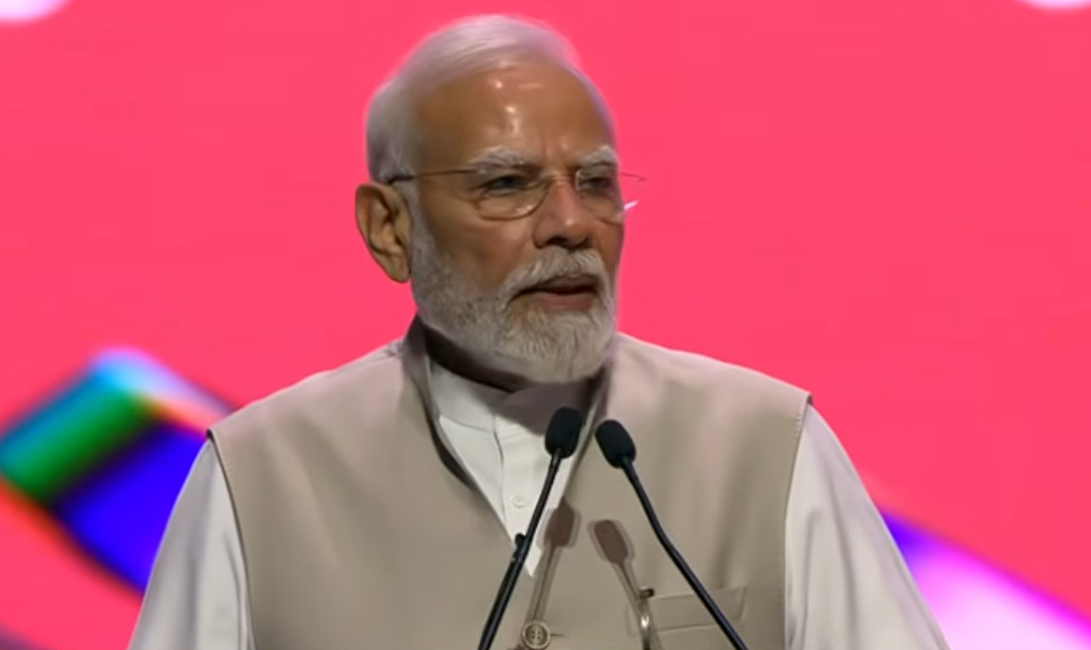
Global Fintech Fest 2026: Modi’s Bold Vision For Inclusive Finance took centre stage in Mumbai as Prime Minister Narendra Modi inaugurated the major global fintech gathering on September 8, 2026. The Prime Minister used the platform to highlight India’s remarkable digital-finance journey, the global success of UPI and the next phase of financial innovation driven by Agentic AI, tokenisation and quantum technologies.
The four-day Global Fintech Fest 2026 is being held from September 8 to 11 at the Jio World Centre and Trident BKC in Mumbai. The event brings together policymakers, regulators, central bankers, financial institutions, technology companies, fintech entrepreneurs, investors and academics to discuss how technology can reshape the future of finance.
The central theme of this year’s event is “Potential to Impact: Agentic AI / Tokenisation / Quantum-Trusted, Connected, Global Systems for Inclusive Finance.” The theme reflects a major shift in the financial-technology debate: from simply creating new digital products to building trusted, secure and accessible financial systems that can operate at global scale.
Global Fintech Fest 2026: Why Modi’s Address Matters
PM Modi’s appearance at the event comes at a crucial point in India’s fintech evolution.
India’s digital financial ecosystem has moved far beyond basic internet banking and card payments. Real-time digital payments, mobile banking, digital identity infrastructure, account aggregation and technology-enabled financial services have changed how millions of people interact with money.
At GFF 2026, Modi argued that this transformation must now enter a new phase.
The Prime Minister highlighted UPI as a major champion of India’s fintech story and called for expanding its global footprint. He also urged the fintech sector to move beyond payments and expand into credit, insurance, savings, investments and pensions.
That message is important because payments represent only one part of the financial ecosystem.
A person may be able to make an instant digital payment, but financial inclusion is incomplete if that same person cannot easily access affordable credit, insurance, investment products or retirement savings.
The broader vision, therefore, is to make financial services as accessible and convenient as digital payments.
This could become one of the most important directions for India’s next fintech growth cycle.
Global Fintech Fest 2026 Puts Inclusive Finance at the Centre
The idea of inclusive finance is central to the GFF 2026 agenda.
Financial inclusion traditionally focuses on ensuring that individuals and businesses can access appropriate financial products and services. Digital technology has significantly reduced some of the barriers associated with distance, paperwork and transaction costs.
However, the next challenge is more complex.
It is not enough to simply provide an account or payment facility. Financial systems need to deliver products that are affordable, understandable, secure and useful.
The official GFF 2026 agenda includes areas such as rural finance and economic empowerment, reflecting the importance of reaching underserved communities and strengthening digital financial solutions outside major urban centres.
For India, this could have significant implications.
Small businesses need working capital. Farmers need reliable financial services. Young people need savings and investment products. Families need insurance. Older citizens need pension and retirement solutions.
Fintech can potentially connect these needs with digital infrastructure.
From Digital Payments to a Full Financial Ecosystem
India’s payment revolution created the foundation.
The next phase is about building on that foundation.
A consumer who can instantly send money through a QR code could eventually access other financial services through similarly simple digital interfaces.
That could include:
- Digital credit applications
- Insurance purchases
- Investment accounts
- Pension contributions
- Savings products
- Cross-border remittances
- Personalised financial guidance
- Small-business financial services
This broader approach could transform fintech from a payment-focused industry into a comprehensive financial-access ecosystem.

Modi’s UPI Vision Goes Global
One of the strongest messages from the Prime Minister’s address was the need to expand UPI’s global footprint.
India’s real-time payment infrastructure has become one of the country’s most visible fintech success stories. At GFF 2026, Modi called for further international expansion of this digital-payment model.
The global opportunity is larger than simply exporting a payment application.
Interoperable payment systems can make international transactions easier for consumers, tourists, workers, businesses and the Indian diaspora.
For small businesses, faster digital settlement can potentially improve cash flow. For consumers, cross-border payment interoperability can reduce friction. For remittance corridors, improved digital infrastructure could make transfers more convenient.
India’s experience also offers a model for countries looking to build large-scale digital public infrastructure.
Why Cross-Border Payments Matter
International payments remain more complicated than domestic transactions.
Different currencies, payment networks, compliance requirements and settlement systems can create friction.
Greater interoperability could reduce some of those barriers.
The GFF 2026 discussion therefore connects directly with a larger global trend: financial infrastructure is becoming increasingly digital, real-time and interconnected.
India’s experience with UPI gives the country an opportunity to participate actively in this transformation.
Global Fintech Fest 2026 Highlights Agentic AI
Another major pillar of the event is Agentic AI.
Traditional software generally waits for instructions from users. Agentic AI is designed to perform more complex sequences of tasks, make decisions within defined parameters and coordinate workflows.
According to the official GFF 2026 theme, Agentic AI could enable autonomous orchestration of financial workflows, personalised services and continuous risk monitoring, while operating within appropriate governance frameworks.
For financial institutions, the implications could be significant.
Imagine a financial system that can analyse customer information, identify a relevant financial product, assess risk, monitor transactions and alert a human decision-maker when intervention is necessary.
Such systems could potentially reduce administrative workloads and improve customer experiences.
But financial services are also highly sensitive.
AI systems must deal with privacy, bias, explainability, cybersecurity and accountability.
That is why the Prime Minister’s call for ethical data protection and stronger cybersecurity is particularly relevant to the AI-driven financial future.
AI Must Serve Consumers
The biggest test for Agentic AI will not be how advanced the technology becomes.
It will be whether ordinary consumers benefit from it.
AI could potentially help a small entrepreneur understand financing options, help a family compare insurance products or help investors receive personalised information.
However, these systems must remain transparent.
Consumers need to understand why important financial decisions are being recommended or made.
The future of fintech will therefore require a balance between automation and human accountability.
Tokenisation Could Reshape Financial Markets
Tokenisation is the second major technology highlighted by Global Fintech Fest 2026.
At its simplest, tokenisation involves representing an asset or value digitally so that it can potentially become programmable, divisible and transferable through digital infrastructure.
The official GFF theme describes tokenisation as a way of making public, private, physical and digital assets programmable and transferable across global infrastructure.
The implications could extend across financial markets.
Tokenisation could potentially support:
- Fractional ownership
- Faster settlement
- Digital securities
- Programmable financial assets
- Cross-border transactions
- New investment structures
- Greater liquidity
For investors, one potentially important benefit is fractional ownership.
If assets can be divided into smaller digital units, access to certain investment opportunities could potentially become broader.
However, tokenisation also raises regulatory questions.
Authorities must determine how digital representations of assets are legally defined, transferred and protected.
That makes regulatory innovation a critical component of the fintech ecosystem.

Quantum Technology Enters the Fintech Conversation
The third pillar of GFF 2026 is quantum technology.
Quantum computing remains an emerging field, but its potential impact on financial services could be significant over the longer term.
The GFF 2026 theme identifies areas including security, optimisation and advanced computation as important potential applications.
Financial institutions process enormous amounts of information.
They constantly evaluate risk, optimise portfolios, detect unusual transactions and manage complex financial systems.
Advanced computational technologies could eventually improve some of these processes.
Quantum-safe cybersecurity is another important consideration.
As computing capabilities evolve, financial institutions need to ensure that today’s security infrastructure can withstand tomorrow’s threats.
This makes the quantum discussion relevant not only to future computing but also to the long-term resilience of financial infrastructure.
Modi Calls for Stronger Cybersecurity and Data Protection
The rapid growth of fintech also creates new risks.
Every digital transaction creates data. Every financial application creates potential entry points for fraud or cyberattacks.
At GFF 2026, PM Modi called for collective efforts around top-notch cybersecurity and ethical data protection standards. He also advocated a stronger regulator-industry innovation ecosystem and a fintech consumer protection index.
These priorities show that India’s fintech strategy is not focused solely on innovation.
Trust is becoming equally important.
Why Cybersecurity Is Critical
A financial ecosystem can only become widely adopted if consumers trust it.
Cybersecurity threats can damage that trust.
Potential risks include:
- Digital payment fraud
- Identity theft
- Account takeover
- Data breaches
- AI-enabled scams
- Phishing
- Malware
- Financial misinformation
As AI becomes more sophisticated, criminals can also potentially use technology to create more convincing scams.
Financial institutions therefore need stronger security systems, while consumers need better awareness and protection mechanisms.
Global Fintech Fest 2026 and the Consumer Protection Agenda
One of the notable proposals from the Prime Minister was the idea of a fintech consumer protection index.
The proposal reflects an important shift in how fintech success could be measured.
Traditionally, companies may focus on transaction volumes, user numbers, downloads or revenue.
But consumers also need to know whether a financial service is reliable, transparent and responsible.
A consumer-oriented framework could potentially encourage fintech firms to compete not only on convenience but also on trust.
Important factors could include:
- Transparency
- Complaint resolution
- Data protection
- Security
- Responsible lending
- Pricing clarity
- Customer support
- Fair treatment
The fintech industry could benefit from stronger trust because confidence encourages wider adoption.
India’s Regulatory Innovation Challenge
Innovation and regulation are sometimes portrayed as opposing forces.
However, GFF 2026 presents a different approach.
The Prime Minister called for a stronger regulator-industry innovation ecosystem, suggesting that policymakers and technology companies need to work together to understand emerging technologies and their risks.
This is particularly important because AI, tokenisation and quantum technologies are evolving faster than traditional regulatory frameworks.
Regulators need to understand new business models without unnecessarily slowing useful innovation.
At the same time, fintech companies need clear rules that protect consumers and maintain financial stability.
The objective is therefore not regulation versus innovation.
It is responsible innovation.

Rural Finance Gets a Bigger Role
The inclusive-finance agenda cannot succeed if fintech remains concentrated in large cities.
India has a huge rural economy, and technology can potentially reduce geographical barriers to financial services.
The official GFF agenda specifically identifies Rural Finance & Economic Empowerment as a track, focusing on digital solutions for underserved rural economies.
This is significant because rural consumers and small businesses may face different challenges from urban users.
Connectivity, financial literacy, income volatility and access to formal credit can all influence financial behaviour.
Fintech solutions need to be designed around these realities.
Fintech for MSMEs
Small and medium businesses are another major opportunity.
Traditional lending can require extensive documentation and established credit histories.
Technology-enabled lending can potentially use alternative data and digital financial records to assess businesses more efficiently.
If implemented responsibly, this could improve access to working capital.
But responsible lending remains essential.
Digital access to credit should not become digital access to excessive debt.
Global Fintech Fest 2026 Builds a Global Innovation Platform
GFF has evolved into a major international fintech platform.
According to the organisers, the event attracts participation from more than 80 countries and brings together policymakers, regulators, central bankers, financial institutions, technology leaders, entrepreneurs, investors and academics.
The 2026 event also includes product demonstrations, innovation challenges, investment pitch sessions, market-access programmes, reports and networking opportunities.
This gives the event significance beyond speeches.
It creates a marketplace for ideas.
Startups can meet investors. Financial institutions can discover technologies. Regulators can engage with innovators. International participants can explore partnerships.
That ecosystem can accelerate the movement of ideas from experimentation to implementation.
Global Fintech Fest 2026: From Potential to Real-World Impact
The phrase “Potential to Impact” in the GFF 2026 theme captures the central challenge facing the fintech industry.
Technology is no longer the biggest question.
The question is how technology can create measurable value.
Agentic AI may be powerful, but can it improve financial access?
Tokenisation may create new possibilities, but can it make markets more efficient and inclusive?
Quantum computing may eventually transform financial systems, but can institutions prepare for its security implications?
These questions connect technology with outcomes.
The event’s broader message is that innovation should ultimately serve consumers, businesses and economies.
What Modi’s Fintech Vision Means for India
PM Modi’s address points toward a broader financial strategy for India.
The first major phase of digital finance focused heavily on access and payments.
The next phase could focus on depth, intelligence and global connectivity.
That means expanding from payments to:
- Credit
- Insurance
- Savings
- Investments
- Pensions
- Cross-border financial services
- AI-powered financial products
- Digital asset infrastructure
This could significantly expand the addressable market for Indian fintech companies.
It could also create new opportunities for banks, insurers, NBFCs, payment companies, technology providers and startups.
But the scale of opportunity will depend on trust.
Without security, privacy and consumer protection, digital adoption can become fragile.
India’s Opportunity to Become a Global Fintech Hub
India has several advantages in the global fintech race.
The country has a large digital consumer base, a growing startup ecosystem, established payment infrastructure and extensive experience with digital public infrastructure.
The Global Fintech Fest provides a platform for India to showcase these capabilities while also learning from international markets.
The organisers describe GFF as a platform for policy dialogue, innovation, cross-border partnerships and collaboration between finance, technology and public policy.
This international dimension matters.
The future of finance will not be confined to national borders.
Payment systems, digital assets, cloud infrastructure, AI models and cybersecurity threats increasingly operate globally.
India therefore needs both domestic innovation and international cooperation.

Challenges That India Must Address
The fintech opportunity is enormous, but challenges remain.
Digital Divide
Not everyone has the same access to smartphones, reliable internet or digital financial literacy.
Cybersecurity
More digital transactions create more potential targets for cybercriminals.
Data Privacy
AI-driven financial services require access to data, creating important privacy questions.
Algorithmic Bias
Automated financial decisions could potentially reproduce or amplify existing biases.
Consumer Awareness
Complex financial products can be difficult for consumers to understand.
Regulatory Complexity
New technologies can challenge existing definitions and regulatory frameworks.
India’s success will depend on how effectively these challenges are addressed.
The Road Ahead After Global Fintech Fest 2026
The most important question after the Mumbai event will be implementation.
Will UPI expand into additional international markets?
Will fintech companies successfully move into insurance, investments and pensions?
Will Agentic AI become a mainstream financial-services technology?
Will tokenisation move from experimentation toward regulated market applications?
Will India develop stronger frameworks for AI-driven financial services?
The answers will determine whether the vision presented at GFF 2026 becomes a long-term transformation.
The event has already provided a clear direction.
The future of fintech should be digital, intelligent, secure, connected and inclusive.
Global Fintech Fest 2026: Key Takeaways
Here are the most important points from the event:
- Prime Minister Narendra Modi inaugurated GFF 2026 in Mumbai on September 8.
- The event runs from September 8 to 11, 2026.
- The venue is the Jio World Centre and Trident BKC in Mumbai.
- The central theme is “Potential to Impact.”
- Agentic AI, tokenisation and quantum are the three major technology pillars.
- PM Modi called for expanding UPI’s global footprint.
- He urged the fintech industry to move beyond payments.
- Credit, insurance, savings, investments and pensions were identified as important areas.
- Cybersecurity and ethical data protection were highlighted.
- A fintech consumer protection index was proposed.
- Rural finance and economic empowerment are part of the event agenda.
- GFF brings together participants from more than 80 countries.
- India is positioning itself as a major global fintech innovation hub.
FAQ: Global Fintech Fest 2026
What is Global Fintech Fest 2026?
Global Fintech Fest 2026 is a major international fintech event bringing together policymakers, regulators, financial institutions, technology companies, startups, investors and other stakeholders to discuss the future of financial services. It is being held in Mumbai from September 8 to 11, 2026.
When did PM Modi inaugurate Global Fintech Fest 2026?
Prime Minister Narendra Modi inaugurated the event in Mumbai on September 8, 2026. The Prime Minister’s Office confirmed the inauguration and highlighted his focus on UPI, fintech inclusion and emerging technologies.
What is the theme of Global Fintech Fest 2026?
The theme is “Potential to Impact: Agentic AI | Tokenisation | Quantum – Trusted, Connected, Global Systems for Inclusive Finance.”
What did PM Modi say about UPI at GFF 2026?
PM Modi described UPI as a major champion of India’s fintech story and called for expanding its global footprint. He also encouraged the fintech industry to move beyond payments into credit, insurance, savings, investments and pensions.
Why is Agentic AI important for fintech?
Agentic AI could enable financial systems to automate complex workflows, personalise services, continuously monitor risks and support decision-making. GFF 2026 places strong emphasis on deploying such technology with appropriate governance and safeguards.
What is tokenisation in financial services?
Tokenisation involves representing assets or value as digital units that can potentially be programmable, divisible and transferable through digital infrastructure. It could influence areas such as securities, payments, investment and settlement.
Why is quantum technology being discussed at a fintech event?
Quantum technologies could eventually influence financial optimisation, advanced computation and cybersecurity. GFF 2026 highlights quantum as one of the technologies that could shape the future financial infrastructure.
How does GFF 2026 support financial inclusion?
The event focuses on building trusted and connected financial systems while addressing areas such as rural finance, digital services and broader access to financial products.
What are PM Modi’s fintech priorities?
The Prime Minister highlighted four broad priorities: strong cybersecurity, ethical data protection, a stronger regulator-industry innovation ecosystem and a fintech consumer protection index.
Where is Global Fintech Fest 2026 being held?
GFF 2026 is being held at the Jio World Centre and Trident BKC in Mumbai, India, from September 8 to 11, 2026.
Conclusion: A New Chapter for India’s Fintech Revolution
Global Fintech Fest 2026: Modi’s Bold Vision for Inclusive Finance reflects a significant evolution in India’s fintech story.
The country has already demonstrated how digital infrastructure can transform payments at enormous scale. The next challenge is to take that success into every major area of finance.
PM Modi’s message at the Mumbai event was clear: fintech must go beyond transactions.
The future should connect people with credit, insurance, savings, investments and pensions, while emerging technologies such as Agentic AI, tokenisation and quantum computing create new possibilities.
But innovation cannot succeed without trust.
Cybersecurity, ethical data protection, consumer safeguards and responsible regulation will determine whether the next generation of fintech delivers sustainable benefits.
The opportunity is therefore much bigger than another technology cycle.
If India can combine its digital public infrastructure, entrepreneurial ecosystem and regulatory capabilities with responsible adoption of emerging technologies, the country could strengthen its position as one of the world’s leading fintech innovation hubs.
The real test begins after the conference ends: turning fintech potential into measurable, inclusive and trusted financial impact for millions of people in India and beyond.