
BRICS 2026: India’s Big Diplomatic Win with Declaration
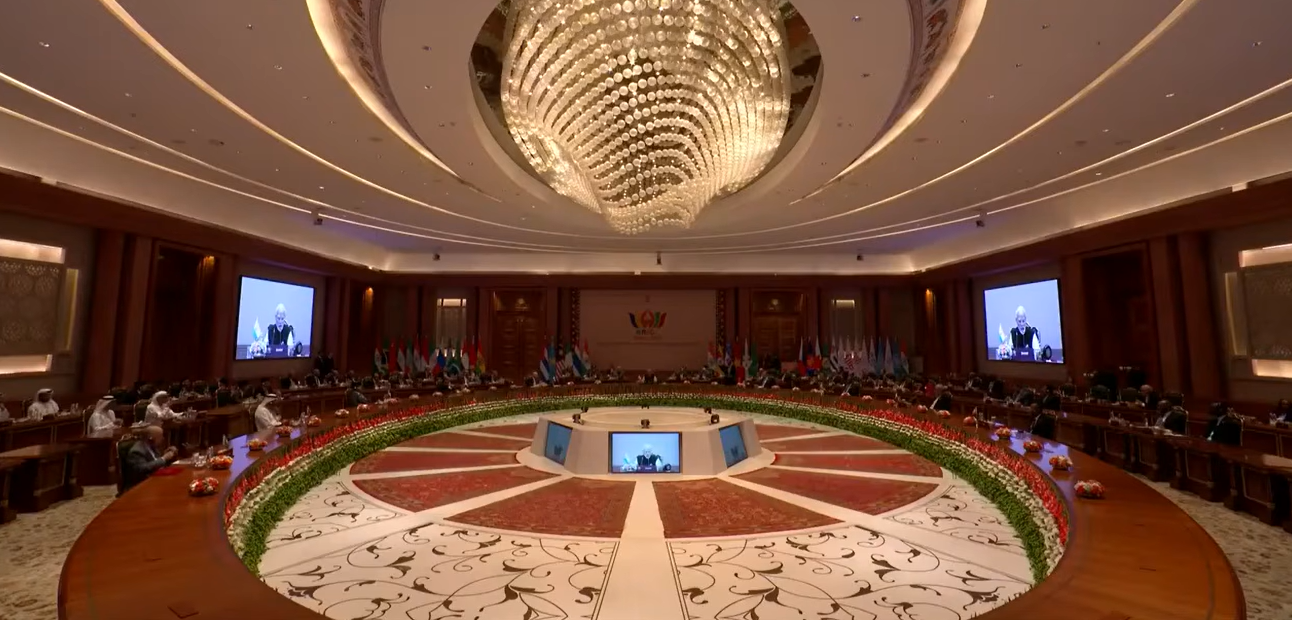
BRICS 2026: India’s Big Diplomatic Win with Declaration has emerged as a major foreign-policy achievement for New Delhi after BRICS leaders unanimously adopted the New Delhi Declaration at the 18th BRICS Summit in New Delhi on September 12, 2026. The agreement is particularly significant because negotiations continued for several days amid sharp differences over the Middle East conflict, trade restrictions, global governance and other geopolitical issues.
The declaration contains 140 points and sets out an extensive agenda covering global governance, international security, trade, economic cooperation, energy, sustainable development and the interests of the Global South.
For India, the successful conclusion of the summit represents more than the adoption of another multilateral statement. It demonstrates New Delhi’s ability to bring together countries with very different strategic interests and find common ground at a time of significant global instability.
India assumed the BRICS chairship on January 1, 2026, for the fourth time. Its chairship has been guided by the theme “Building for Resilience, Innovation, Cooperation and Sustainability“, with an emphasis on a people-centric approach and “Humanity First.”
BRICS 2026: India’s Big Diplomatic Win with Declaration Explained
The biggest story surrounding BRICS 2026: India’s Big Diplomatic Win with Declaration is not simply that a document was signed. It is that consensus was achieved despite serious disagreements between member countries.
Today’s BRICS is considerably more diverse than the original grouping. The 11-member organization comprises Brazil, China, Egypt, Ethiopia, India, Indonesia, Iran, Russia, Saudi Arabia, South Africa and the UAE. Collectively, these countries account for approximately 49.5% of the world’s population, 40% of global GDP and 26% of global trade, according to India’s government.
That diversity makes consensus difficult.
India had to navigate relationships involving China, Russia, Iran, Gulf countries, African economies and Latin American partners while simultaneously addressing issues affecting the wider international system.
The challenge became particularly visible during negotiations over the West Asia conflict. Reports said BRICS Sherpas worked for more than four days before overcoming disagreements and reaching consensus on the leaders’ declaration.
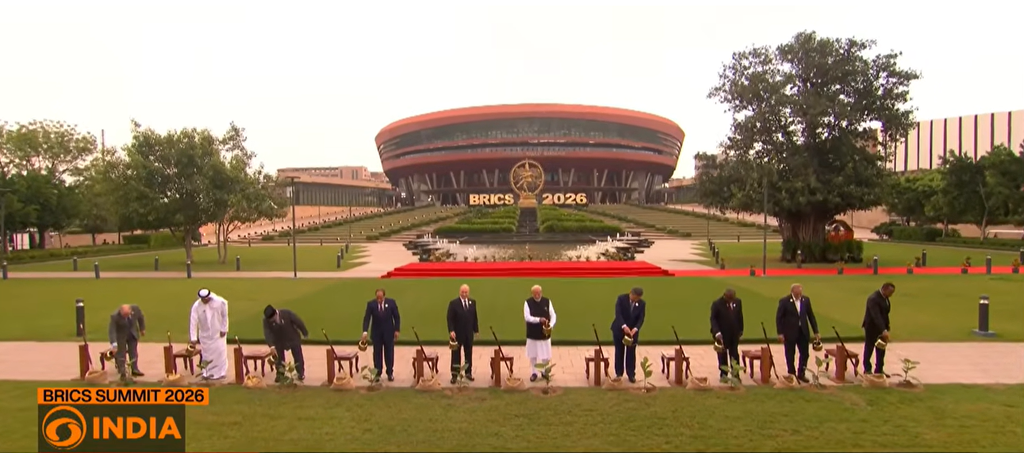
The eventual agreement therefore gives India a significant diplomatic achievement to showcase.
Why BRICS 2026: India’s Big Diplomatic Win with Declaration Matters
The 2026 summit comes at a critical point in international relations.
The world is dealing with multiple conflicts, rising protectionism, economic fragmentation, energy-security concerns and growing competition between major powers.
Against this background, India has attempted to position BRICS as a constructive platform for dialogue rather than an anti-Western alliance.
The declaration reflects that approach.
The joint statement emphasizes dialogue, consultation and diplomacy in resolving conflicts while also highlighting sovereignty, territorial integrity and the protection of civilians.
Prime Minister Narendra Modi has also emphasized that BRICS should provide a stronger voice to the Global South while remaining an inclusive platform rather than becoming an exclusive geopolitical bloc.
For New Delhi, this is strategically important.
India wants stronger relations with the United States and Europe while simultaneously maintaining close relationships with Russia, Gulf countries, Iran and other emerging economies.
BRICS gives India another platform to pursue that strategy of strategic autonomy.
BRICS 2026: India’s Big Diplomatic Win with Declaration on Global South Leadership
One of India’s biggest achievements is the strengthening of its position as a leading voice for the Global South.
For years, New Delhi has argued that global institutions need to better reflect the economic and demographic importance of developing countries.
The BRICS platform provides India with an important mechanism to advance that argument.
The New Delhi Declaration emphasizes strengthening the role and influence of developing countries in international affairs and supports efforts toward a more equitable global governance system.
This directly connects with India’s broader diplomatic agenda.
India wants a bigger voice for developing countries
India’s argument is straightforward: the international system established decades ago does not fully reflect today’s economic realities.
Emerging economies have become major contributors to global growth, trade, technology and energy markets.
Yet developing countries continue to seek greater representation in institutions such as:
- The United Nations Security Council
- International Monetary Fund
- World Bank
- Global financial institutions
- International trade organizations
At the BRICS Summit, Modi proposed developing 10 governance-reform proposals that could eventually form a BRICS Reform Roadmap. He called for moving the Global South from being a “rule-taker” to becoming a “rule-shaper.”
That proposal could become one of the longer-term diplomatic outcomes of India’s 2026 BRICS presidency.
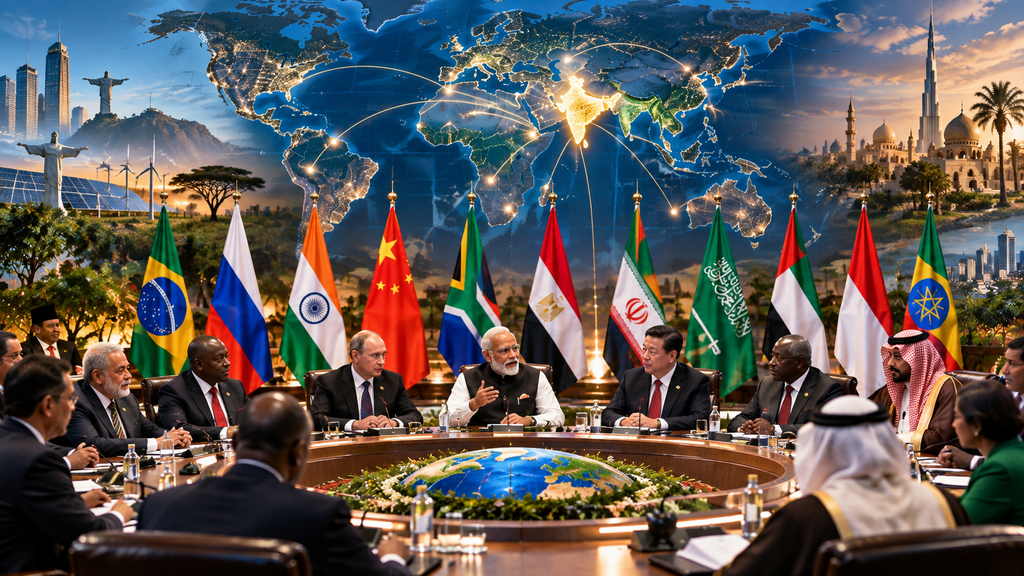
BRICS 2026: India’s Big Diplomatic Win with Declaration on Global Governance
Global governance reform is another area where India has made significant diplomatic progress.
The declaration’s emphasis on greater representation for developing economies supports New Delhi’s long-standing campaign for reforms in international institutions.
India has consistently advocated reform of the UN Security Council and greater representation for developing countries.
The BRICS platform allows India to build broader support for that objective.
This does not mean BRICS members have identical positions on every aspect of UN reform. However, consensus around the broader principle of making global institutions more representative gives India additional diplomatic momentum.
Why this is important for India’s foreign policy
India’s economic and geopolitical influence has expanded considerably over the past two decades.
The country is now:
- One of the world’s largest economies
- A major technology and services hub
- A major pharmaceutical producer
- A growing manufacturing centre
- A significant energy consumer
- An important Indo-Pacific power
- A major voice among developing economies
New Delhi therefore wants its institutional representation to reflect this changing position.
BRICS provides a platform where India can build coalitions around that objective.
A Major Challenge: Bringing Iran, Gulf States, China and Russia Together
The success of BRICS 2026: India’s Big Diplomatic Win with Declaration becomes even more significant when the internal diversity of the organization is considered.
BRICS includes countries with competing regional interests.
Iran is a major player in West Asian geopolitics. Saudi Arabia and the UAE maintain strong relationships with Western countries. Russia remains involved in the Ukraine conflict and faces extensive Western sanctions. China and India cooperate through BRICS while also competing strategically in Asia.
Getting these countries to approve a common declaration requires careful diplomacy.
The West Asia conflict presented perhaps the biggest challenge.
Reuters reported that BRICS leaders expressed deep concern about escalating Middle East tensions and called for maximum restraint, dialogue, consultation and diplomacy.
The fact that the expanded group reached a common position is therefore a major achievement for the Indian chair.
BRICS 2026: India’s Big Diplomatic Win with Declaration on Peace and Security
Security issues form another important component of the declaration.
BRICS members emphasized the importance of resolving disputes peacefully and respecting international law and the UN Charter.
The declaration also calls attention to the protection of civilians and civilian infrastructure amid armed conflicts.
For India, this approach is consistent with its long-standing emphasis on dialogue and diplomacy.
New Delhi has sought to maintain communication with multiple sides during major international crises.
This diplomatic flexibility has become an important element of India’s foreign policy.
India’s message: dialogue over confrontation
India’s BRICS chairship has attempted to create space for discussion even when member states disagree.
That is especially important in an organization where geopolitical differences are unavoidable.
The goal is not necessarily to make every member agree on every conflict.
Instead, India is attempting to establish areas where common principles can be maintained.
That makes BRICS more useful as a diplomatic forum.
Counter-Terrorism: Another Important Indian Priority
Counter-terrorism remains a major Indian priority within BRICS.
Ahead of the summit, Indian officials had highlighted the importance of an unequivocal condemnation of terrorism and stronger cooperation against terrorism in all its forms.
The wider BRICS agenda has continued to treat terrorism and security cooperation as important areas of collaboration.
For India, this is strategically significant.
New Delhi has consistently argued that international cooperation against terrorism should not be weakened by geopolitical differences.
It has also advocated stronger action against terrorist financing and networks.
A common BRICS position provides India with another multilateral platform to push these priorities.
However, the effectiveness of such commitments will ultimately depend on implementation.
Joint declarations establish political principles, but intelligence sharing, financial monitoring and law-enforcement cooperation are necessary to produce practical results.
BRICS 2026: India’s Big Diplomatic Win with Declaration on Trade
Trade is another area where the declaration could have long-term importance for India.
The BRICS statement criticized unilateral tariff and non-tariff measures that disrupt global trade and emphasized the importance of international economic cooperation.
This comes as global trade faces increasing uncertainty.
Businesses are dealing with:
- Tariff changes
- Supply-chain disruptions
- Export restrictions
- Geopolitical risks
- Sanctions
- Rising transportation costs
- Critical-mineral competition
India wants to use this environment to expand its manufacturing and export capabilities.
The government has also been pushing BRICS members to open markets, simplify regulatory procedures, connect payment systems and promote trade in local currencies.
That could create new opportunities for Indian companies.
India’s Export Opportunity
Indian businesses could potentially benefit from greater access to BRICS markets in sectors including:
- Pharmaceuticals
- Engineering goods
- Electronics
- Automobiles
- Electric vehicles
- Chemicals
- Textiles
- Agricultural products
- Digital services
- Startups
- Emerging technologies
Commerce Minister Piyush Goyal has specifically highlighted engineering goods and electronics as important areas of India’s manufacturing exports while identifying BRICS as an important market for Indian products and services.
This makes economic cooperation one of the most practical dimensions of India’s BRICS strategy.
Energy Security Becomes a Strategic BRICS Priority
Energy is another major area of cooperation.
The declaration calls for stronger energy security through diversified supplies, resilient infrastructure and stable energy markets. It also recognizes that fossil fuels will continue to play an important role in the energy mix of emerging and developing economies.
For India, this approach is particularly relevant.
India’s economy requires large quantities of affordable energy while the country is simultaneously expanding renewable energy.
This creates a dual challenge:
Energy security today + clean-energy transition tomorrow.
BRICS cooperation could help India pursue both objectives.
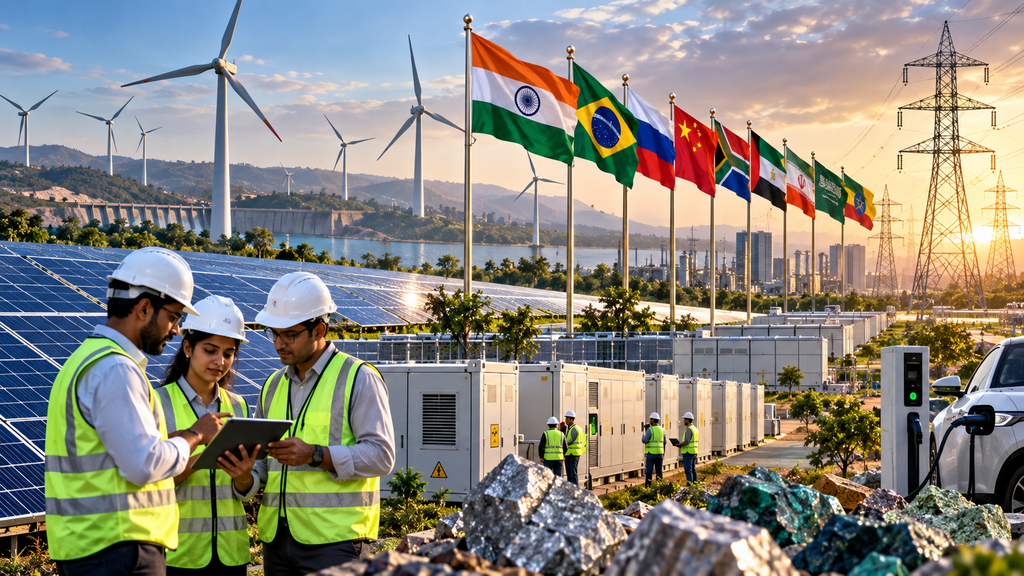
Critical minerals
The energy transition is creating intense competition for lithium, nickel, cobalt, rare earth elements and other critical minerals.
These materials are essential for:
- Electric vehicles
- Batteries
- Solar panels
- Wind turbines
- Electronics
- Grid storage
- Advanced manufacturing
Greater BRICS cooperation could eventually help countries diversify their critical-mineral supply chains.
That could become strategically valuable for India.
BRICS 2026 and India’s Strategic Autonomy
The declaration also reinforces a fundamental principle of India’s foreign policy: strategic autonomy.
India does not want to become dependent on a single geopolitical bloc.
New Delhi participates in the Quad and maintains extensive economic and strategic relations with Western countries.
At the same time, India remains deeply engaged with BRICS, the Shanghai Cooperation Organisation and other multilateral institutions.
This multi-alignment strategy allows India to maintain relationships with countries that may not have good relations with each other.
The BRICS summit is a powerful example.
India hosted leaders from China, Russia, Iran, Gulf countries, Africa and Latin America while simultaneously maintaining strong relations with Western economies.
That gives New Delhi diplomatic flexibility.
BRICS 2026: India’s Big Diplomatic Win with Declaration and Economic Cooperation
India’s 2026 BRICS chairship was not limited to the leaders’ summit.
According to the Indian government, more than 350 meetings and high-level engagements were held across more than 25 Indian cities during the chairship.
These engagements covered the three traditional BRICS pillars:
- Political and security cooperation
- Economic and financial cooperation
- Cultural and people-to-people exchanges
The chairship also generated practical outcomes in areas such as agriculture, digital technology, health, science and innovation.
India’s government has highlighted more than 50 practical outcomes emerging from the chairship across the themes of resilience, innovation, cooperation and sustainability.
This broader record matters because the declaration should not be viewed in isolation.
The declaration is the political umbrella for a much wider year-long program of cooperation.
Agriculture, Technology and Innovation: The Practical Side of BRICS 2026
One of the less discussed but potentially important outcomes of India’s BRICS chairship is cooperation in agriculture.
The Indian government has highlighted initiatives involving agro-ecology, digital agriculture and agricultural inputs.
A proposed BRICS Network on Digital Agriculture aims to encourage cooperation involving AI-based decision-support systems, geospatial intelligence, IoT monitoring and advanced data analytics.
For India, this is an important opportunity.
Indian agriculture faces challenges involving:
- Climate change
- Water availability
- Productivity
- Smallholder incomes
- Supply-chain efficiency
- Market access
Digital technology can help address some of these challenges.
Cooperation with other BRICS economies could help India exchange knowledge and technologies while also opening markets for Indian agricultural technology companies.
India’s Technology and Digital Opportunity
Technology is becoming increasingly central to BRICS cooperation.
India has a strong position in digital public infrastructure, payments, software services and technology startups.
The government wants greater cooperation among BRICS countries in emerging technologies and digital systems.
This could create opportunities for Indian companies working in:
- Artificial intelligence
- Fintech
- Cybersecurity
- Digital payments
- Cloud computing
- Semiconductor technology
- Blockchain
- Advanced manufacturing
- Health technology
The potential market is enormous because BRICS represents nearly half of the world’s population.
India’s challenge will be converting diplomatic agreements into commercial opportunities.
BRICS 2026: India’s Big Diplomatic Win with Declaration – Five Key Takeaways
The summit can be summarized through five major takeaways for India.
1. India demonstrated diplomatic leadership
New Delhi successfully brought diverse countries together around a common declaration despite serious geopolitical disagreements.
2. Global South leadership received a boost
India strengthened its role as a major voice for developing economies seeking greater representation in global institutions.
3. Trade cooperation gained momentum
BRICS members highlighted the importance of predictable global trade and opposed unilateral measures that disrupt economic activity.
4. Energy security became a stronger area of cooperation
The declaration recognized diversified energy supplies, resilient infrastructure and the continuing importance of energy security for developing economies.
5. India’s strategic autonomy was reinforced
India demonstrated that it can work simultaneously with competing geopolitical centres while protecting its own national interests.
What Does the BRICS Declaration Mean for India’s Future?
The most important question now is implementation.
A declaration can establish principles, but its economic and geopolitical value depends on what happens next.
India will need to work with other BRICS members on concrete projects involving:
- Trade
- Investment
- Energy
- Critical minerals
- Digital technology
- Financial cooperation
- Infrastructure
- Agriculture
- Healthcare
- Education
- Counter-terrorism
If those initiatives produce measurable outcomes, the 2026 BRICS presidency could have a lasting impact.
If implementation remains slow, the declaration may remain primarily a diplomatic statement.
India therefore faces an important second phase: turning consensus into results.
Challenges for India After the Summit
Despite the diplomatic success, several challenges remain.
China-India Competition
China and India have overlapping interests in BRICS but also compete strategically.
Maintaining cooperation without allowing bilateral disputes to dominate the BRICS agenda will remain difficult.
Different Positions on Global Conflicts
BRICS members do not have identical views on Ukraine, Iran, West Asia or relations with Western powers.
Future declarations could therefore face similar negotiations.
Economic Competition
India and China compete in manufacturing, technology and global supply chains.
BRICS cooperation will not eliminate that competition.
Implementation
The biggest challenge is turning broad declarations into practical agreements.
Maintaining BRICS Unity
The larger BRICS becomes, the more difficult consensus may become.
India’s ability to manage that diversity will determine the long-term diplomatic value of its 2026 chairship.
BRICS 2026: India’s Big Diplomatic Win with Declaration – What Comes Next?
The New Delhi Summit could mark an important stage in BRICS’ transformation.
The organization is no longer simply a group of four emerging economies.
It has become a much larger platform involving major economies across four continents.
India’s government describes the expanded BRICS as a key forum for coordinating economic policy and advancing Global South interests in global institutions.
That expansion creates both opportunities and risks.
India wants BRICS to remain practical and solutions-oriented.
The next stage will therefore depend on whether member countries can build institutions and mechanisms that deliver tangible benefits.
For India, the priority areas are likely to remain:
Trade + technology + energy + finance + security + Global South diplomacy.
Frequently Asked Questions
What is BRICS 2026?
BRICS 2026 refers to India’s fourth chairship of the BRICS grouping and the 18th BRICS Summit held in New Delhi on September 12–13, 2026.
What is the New Delhi Declaration?
The New Delhi Declaration is the joint statement adopted by BRICS leaders at the 2026 summit. It contains 140 points covering geopolitical, economic, trade, energy, security and Global South issues.
Why is the BRICS declaration a diplomatic win for India?
It is considered a diplomatic win because India helped achieve consensus among an expanded and geopolitically diverse BRICS membership despite disagreements over sensitive international issues.
How many countries are currently members of BRICS?
BRICS currently comprises 11 members: Brazil, China, Egypt, Ethiopia, India, Indonesia, Iran, Russia, Saudi Arabia, South Africa and the UAE, according to the Indian government.
What is India’s BRICS 2026 theme?
India’s BRICS 2026 theme is “Building for Resilience, Innovation, Cooperation and Sustainability.”
What does BRICS represent globally?
According to India’s government, the 11 BRICS members collectively represent approximately 49.5% of global population, 40% of global GDP and 26% of global trade.
Did BRICS discuss the Middle East conflict?
Yes. BRICS leaders expressed deep concern over escalating Middle East tensions and called for maximum restraint, dialogue, consultation and diplomacy.
Did BRICS discuss global trade?
Yes. The declaration criticized unilateral tariff and non-tariff measures that can disrupt global trade and emphasized cooperation and more predictable economic relations.
What does the declaration say about energy?
The declaration supports stronger energy security through diversified supplies, resilient infrastructure and stable energy markets. It also recognizes the continuing role of fossil fuels in emerging and developing economies.
What is India’s biggest opportunity after BRICS 2026?
India’s biggest opportunity is to turn diplomatic consensus into practical economic and strategic cooperation, especially in trade, technology, energy, critical minerals, finance and Global South initiatives.
Conclusion
BRICS 2026: India’s Big Diplomatic Win with Declaration captures a significant moment in India’s evolving role in global diplomacy.
The unanimous adoption of the New Delhi Declaration demonstrates that India can help bridge differences among a diverse group of emerging economies even during a period of intense geopolitical instability. The 140-point document provides a common framework covering global governance, international security, trade, energy, sustainable development and Global South cooperation.
The diplomatic achievement is particularly important because BRICS has expanded considerably and now represents nearly half of the world’s population and around 40% of global GDP.
For India, the summit strengthens several strategic priorities: a larger Global South voice, reform of global institutions, stronger counter-terrorism cooperation, resilient trade, diversified energy security and strategic autonomy.
But the declaration is not the final destination.
The real test begins now.
India will have to convert diplomatic consensus into practical outcomes that benefit businesses, workers, consumers and developing countries. If New Delhi can transform the agreements and initiatives developed during its chairship into lasting institutions and partnerships, the 2026 BRICS presidency could become an important milestone in India’s rise as a rule-shaping global power.
In that sense, the biggest achievement of BRICS 2026 may not be the declaration itself. It may be India’s demonstration that diplomacy, dialogue and strategic flexibility can bring competing powers together around areas of common interest.