
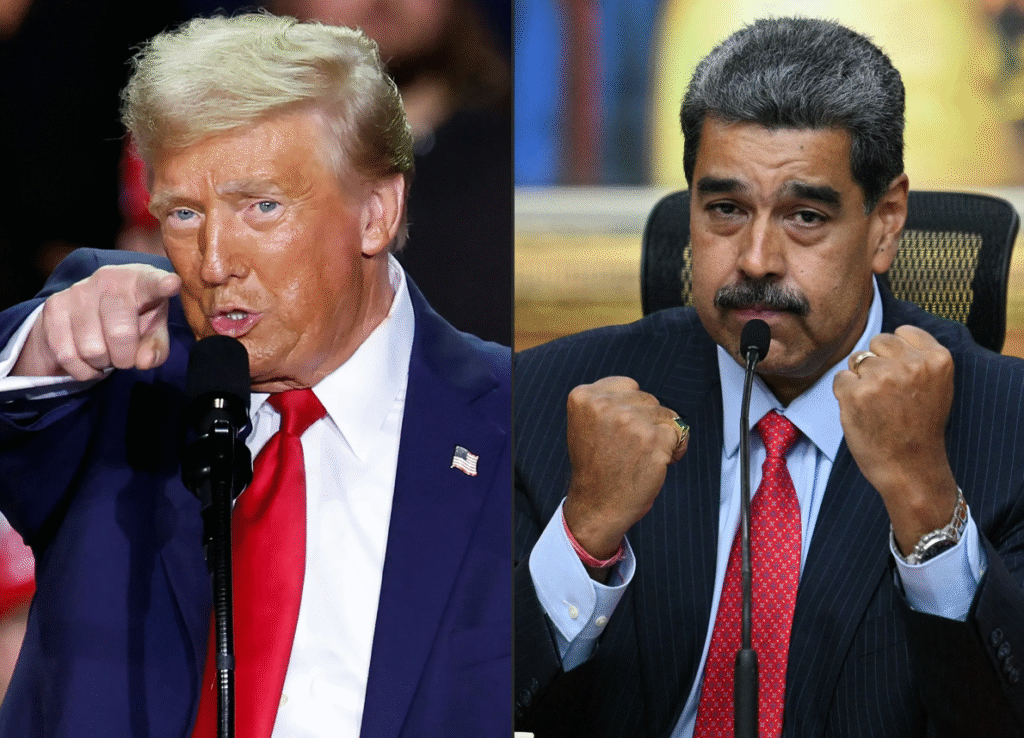
November 2025 — Relations between the United States and Venezuela have entered a dangerous new phase, with warnings of possible military confrontation and disruptions already affecting civilian air travel across the region.
Rising Concerns in the Skies
The first signs of escalation came when the The U.S. Federal Aviation Administration (FAA) released a notice cautioning airlines about dangerous conditions in Venezuelan airspace. The advisory cited heightened military activity and the risk of miscalculation. In response, at least six major carriers — including Iberia, TAP, LATAM, Avianca, GOL, and Caribbean Airlines — suspended flights to Venezuela, leaving thousands of passengers stranded and highlighting the seriousness of the situation.
Washington’s Moves
Reports indicate that the Trump administration is preparing a new phase of operations against Venezuela. More than 10,000 U.S. personnel have been deployed across the southern Caribbean, supported by naval assets such as the USS Gerald R. Ford. Officially, Washington describes these maneuvers as part of counter-narcotics and regional security missions. Yet analysts warn that the scale of the buildup suggests preparations for something more direct. Alongside military activity, the U.S. has intensified sanctions and cyber operations targeting Venezuelan institutions, tightening pressure on President Nicolás Maduro’s government.
Caracas Responds
Venezuelan President Nicolás Maduro charged that Washington is inventing false justifications to provoke conflict. His government has organized mass rallies in Caracas, portraying U.S. actions as attempts at regime change. Officials insist Venezuela is prepared to defend its sovereignty, while state media frames the confrontation as another chapter in the country’s long struggle against foreign interference.
Regional and Global Implications
The conflict has already disrupted civilian air travel, but the risks extend far beyond aviation. Neighboring countries fear instability spilling across borders, while international observers raise concerns about the legality of U.S. actions under international law. Critics warn that escalation could destabilize Latin America, a region already grappling with economic challenges and political divisions.
The Road Ahead
Whether this standoff remains a tense display of force or escalates into open confrontation will depend on decisions made in Washington and Caracas in the coming weeks. For now, the suspension of flights and deployment of U.S. forces serve as stark reminders that the U.S.–Venezuela conflict is no longer confined to rhetoric — it is unfolding in the skies, seas, and streets of the region.