
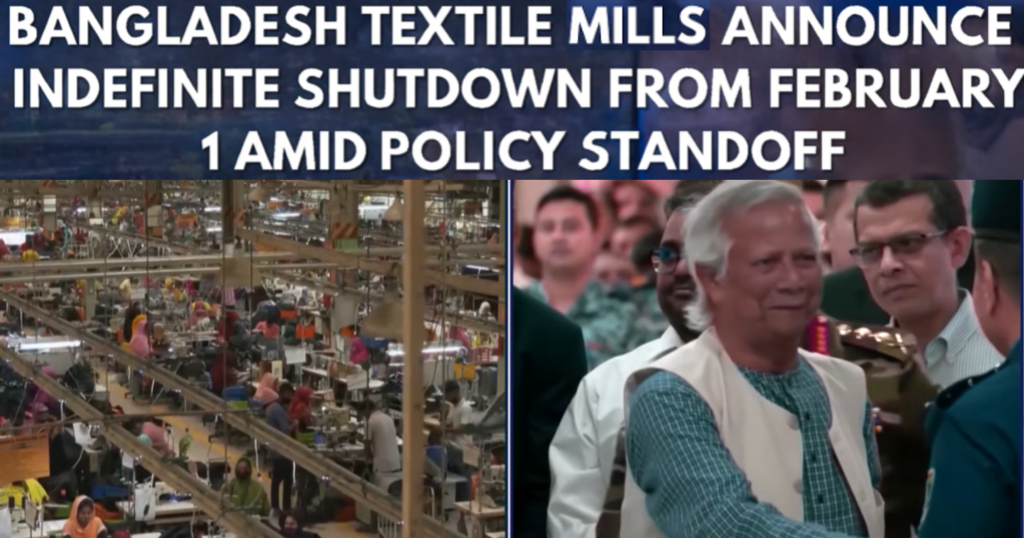
In a major blow to the country’s industrial backbone, Bangladesh textile mills are set to begin an indefinite shutdown starting February 1, 2026. The announcement was made by the Bangladesh Textile Mills Association (BTMA) during an urgent press briefing in Dhaka, citing unresolved policy issues and mounting financial pressure. This move threatens to disrupt the entire textile supply chain, which contributes over 80% of Bangladesh’s export earnings.
Why Bangladesh Textile Mills Are Shutting Down Indefinitely
The indefinite shutdown of Bangladesh textile mills stems from the government’s failure to implement a key recommendation by the Ministry of Commerce. The BTMA had urged the withdrawal of bonded warehouse facilities for the import of 10–30 count yarn, a category that local spinning mills can produce efficiently.
However, the continued import of this yarn under bonded privileges has created an uneven playing field. Local producers are unable to compete with cheaper imported yarn, leading to idle machinery, unsold inventory, and rising debt.
“We are forced into this indefinite shutdown. If the government doesn’t act, the consequences will be severe,” said BTMA President Showkat Aziz Russell.
Impact of Indefinite Shutdown on Bangladesh’s Textile Industry

The Bangladesh textile mills’ indefinite shutdown will have far-reaching consequences across the garment sector. Spinning mills supply yarn to fabric manufacturers, who in turn support the country’s massive ready-made garment (RMG) export industry.
Key impacts include:
- Disruption in yarn supply for garment factories
- Delays in export orders and contract fulfillment
- Loss of buyer confidence in Bangladesh’s reliability
- Potential shift of orders to competing nations like India and Vietnam
The BTMA warns that without immediate intervention, the indefinite shutdown of textile mills could trigger a domino effect across the economy.
Financial Fallout from Bangladesh Textile Mills Shutdown
The indefinite shutdown of Bangladesh textile mills is not just an industrial crisis—it’s a financial emergency. Many mills are already struggling to repay bank loans, and a prolonged closure could lead to:
- Increased non-performing loans (NPLs) in the banking sector
- Reduced foreign exchange inflows from textile exports
- Loss of investor confidence in Bangladesh’s manufacturing sector
- Widespread unemployment in mill-dependent regions
BTMA leaders have called on the government to recognize the urgency and take corrective action before the damage becomes irreversible.
BTMA’s Demands and Government Inaction
The Bangladesh Textile Mills Association (BTMA) has repeatedly urged the government to withdraw bonded warehouse privileges for yarns that local mills can produce. The Ministry of Commerce had supported this move, but the interim government has yet to implement the recommendation.
BTMA’s demands include:
- Immediate withdrawal of bonded facilities for 10–30 count yarn
- Protective policies to support domestic spinning mills
- Financial relief packages for mills facing insolvency
Without these measures, the indefinite shutdown of Bangladesh textile mills will continue, with no timeline for reopening.
Human Cost of the Textile Mills Shutdown
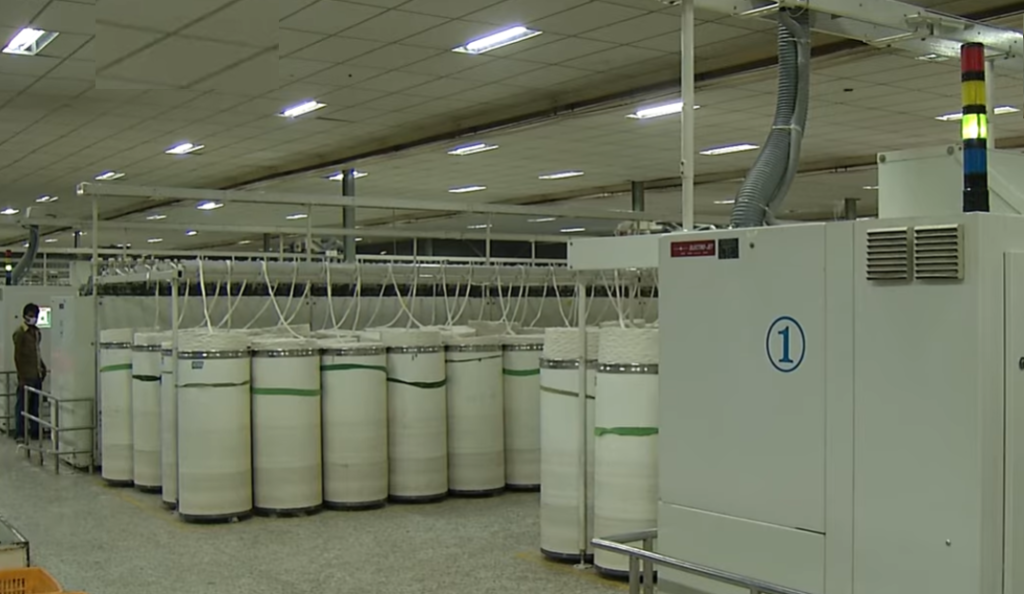
The indefinite shutdown of Bangladesh textile mills will have a devastating impact on workers. The textile sector employs millions, many of whom are low-income earners with limited alternatives.
Consequences include:
- Mass layoffs and wage losses
- Disruption of livelihoods in mill-dependent communities
- Increased poverty and social unrest
BTMA has urged policymakers to consider the human cost and act swiftly to prevent a humanitarian crisis.
Industry Reactions to Bangladesh Textile Mills Shutdown
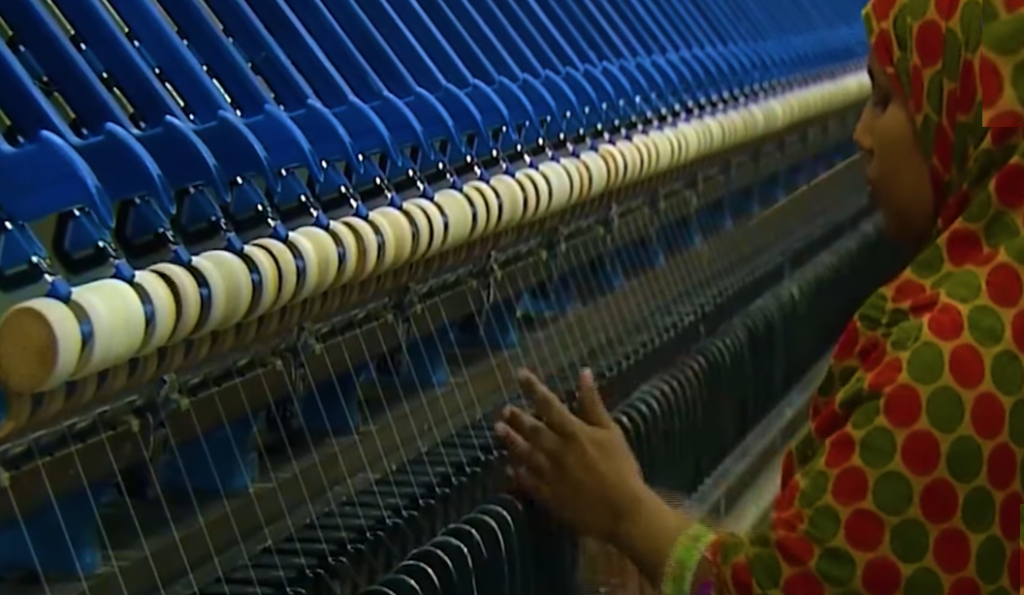
Industry stakeholders have expressed deep concern over the indefinite shutdown of Bangladesh textile mills. Exporters fear delays in order fulfillment, while international buyers may shift sourcing to other countries.
Some analysts believe the shutdown is a pressure tactic to force policy changes, but BTMA insists the decision is final unless the government intervenes.
“We are not bluffing. The mills will shut down. We simply cannot survive under current conditions,” Russell reiterated.
Summary Table: Bangladesh Textile Mills Shutdown
| Aspect | Details |
|---|---|
| Shutdown Date | February 1, 2026 |
| Announced By | Bangladesh Textile Mills Association (BTMA) |
| Reason | Unfair competition from imported yarn |
| Affected Sector | Spinning mills across Bangladesh |
| Economic Impact | Loan defaults, export losses, unemployment |
| Government Action Needed | Policy reform, financial support |
| Human Impact | Job losses, wage cuts, social instability |
Conclusion: Bangladesh Textile Mills Face Uncertain Future
The indefinite shutdown of Bangladesh textile mills marks a critical moment for the country’s industrial and economic future. Unless the government acts decisively to protect domestic yarn producers, the consequences could be catastrophic—economically, socially, and reputationally.
As February 1 approaches, the textile industry stands on the brink. The BTMA’s call for policy reform is not just a plea—it’s a warning. The fate of Bangladesh’s textile mills, and the millions who depend on them, now rests in the hands of policymakers.