
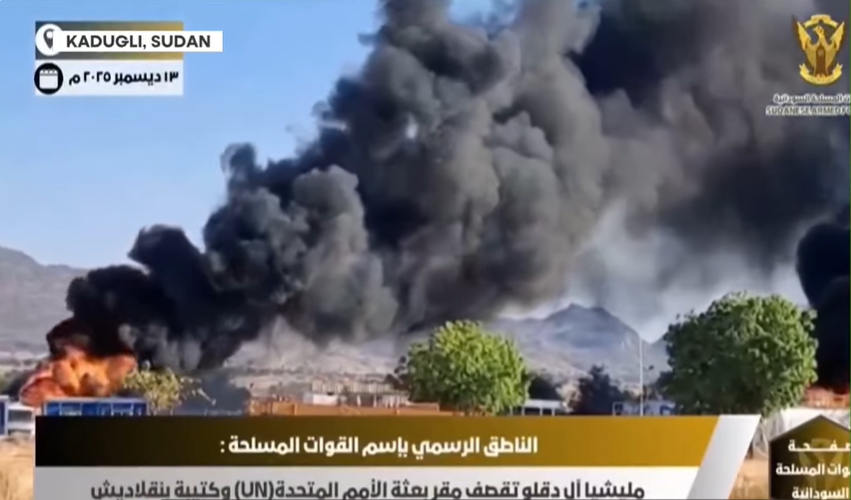
The Sudan war has taken a deadly turn with a drone attack in South Kordofan that killed six UN peacekeepers and injured several others. The victims, Bangladeshi soldiers serving under the United Nations Interim Security Force for Abyei (UNISFA), were stationed at a logistics base in Kadugli when the strike occurred. This tragic incident underscores the escalating brutality of the conflict between the Sudanese Armed Forces (SAF) and the Rapid Support Forces (RSF), and raises urgent questions about the safety of international missions in Sudan.
Deadly Drone Strike in Sudan
According to Sudanese officials, the drone attack in Sudan struck a UN logistics camp on December 13, 2025. The strike killed six Bangladeshi UN peacekeepers and wounded at least eight others. Witnesses reported that the drone targeted the base during heightened clashes between SAF and RSF forces. The use of drones in the Sudan war signals a dangerous escalation, introducing advanced weaponry into a conflict already marked by indiscriminate violence.
UN Secretary-General Antonio Guterres condemned the attack, calling it “an unacceptable assault on peacekeepers that may constitute a war crime.” He stressed that targeting UN personnel undermines international law and jeopardizes global efforts to stabilize Sudan.
Responsibility and Escalation
The Sudanese Armed Forces quickly blamed the Rapid Support Forces for orchestrating the drone strike, describing it as a “terrorist act.” The RSF denied responsibility, but analysts argue that the attack reflects the growing sophistication of armed groups in Sudan. The Sudan war has increasingly seen the use of drones, artillery, and foreign-supplied weapons, raising fears of further escalation and regional destabilization.
Human Cost of Sudan’s War
The deaths of six UN peacekeepers in Sudan have sparked grief in Bangladesh, where the soldiers hailed from. The Bangladeshi government condemned the “horrific drone attack” and reaffirmed its commitment to UN missions despite the risks. Families of the fallen are receiving support from both the UN and Bangladeshi authorities.
For civilians in Sudan, the war between SAF and RSF has already created catastrophic conditions. Millions have been displaced, famine-like shortages are spreading, and humanitarian aid convoys struggle to reach conflict zones. The drone attack on UN peacekeepers threatens to further weaken international relief efforts, leaving vulnerable populations at even greater risk.
Global and Regional Implications
The Sudan war has destabilized not only the country but also its neighbors. Refugees continue to pour into South Sudan, Chad, and Ethiopia, straining fragile economies. The targeting of UN peacekeepers in Sudan raises fears that humanitarian missions may withdraw, leaving civilians exposed to unchecked violence.
International observers warn that if peacekeepers themselves become deliberate targets, the credibility of UN operations could be undermined worldwide. The drone attack in Sudan highlights the urgent need for stronger international intervention, whether through sanctions, diplomatic pressure, or enhanced peacekeeping protection.
Conclusion
The killing of six UN peacekeepers in Sudan’s drone attack is a grim reminder of the escalating brutality of the Sudan war. As the conflict intensifies between the Sudanese Armed Forces and the Rapid Support Forces, the international community faces mounting pressure to act. The UN has vowed to continue its mission, but the attack raises urgent questions about the future of peacekeeping in Sudan and the broader struggle to protect civilians in one of the world’s most volatile war zones.