Delcy Rodríguez Becomes Venezuela’s President
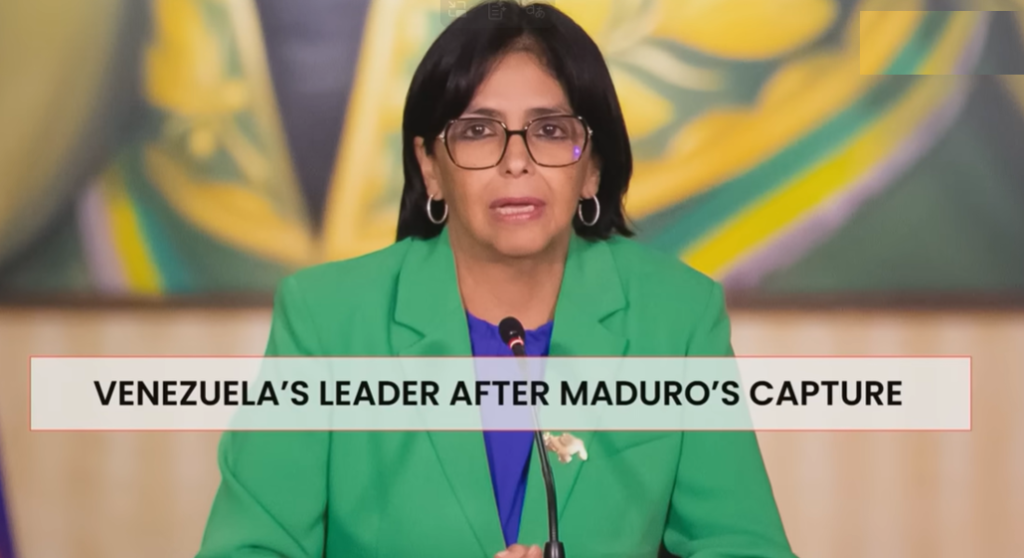
Delcy Rodríguez has officially been sworn in as Venezuela’s president, pledging unity and stability during a turbulent political transition. Her rise to power follows the dramatic capture of Nicolás Maduro by U.S. forces, an event that shook the nation and left Venezuelans searching for continuity in leadership.
Rodríguez, a longtime ally of Maduro and a central figure in Venezuelan politics, now faces the challenge of guiding the country through economic hardship, international pressure, and domestic uncertainty.
Inauguration Ceremony Highlights

At the National Assembly in Caracas, Rodríguez took the oath of office on January 5, 2026. The ceremony was overseen by her brother Jorge Rodríguez, president of the legislature, underscoring the family’s strong political influence.
In her inaugural speech, Rodríguez condemned the U.S. operation that removed Maduro, calling it a violation of sovereignty. She emphasized that Venezuela’s strength lies in its resilience and collective will, urging citizens to remain united in the face of external pressure.
Unity and Stability as Core Promises
The new Venezuelan president framed her leadership around two central themes: unity and stability. She reassured the military and political establishment that her government would safeguard national sovereignty while working to stabilize the fragile economy.
Her message resonated with many Venezuelans who have endured years of inflation, shortages, and migration crises. By pledging stability, Rodríguez sought to calm fears of further upheaval and present herself as a steady hand in uncertain times.
Political Background of Delcy Rodríguez
Delcy Rodríguez’s political journey began during the era of Hugo Chávez, whose socialist revolution she has consistently defended. She has served as foreign minister, president of the Constitutional Assembly, and vice president since 2018.
Her father, Jorge Antonio Rodríguez, was a Marxist activist who died in detention decades ago, shaping her worldview and commitment to socialist ideals. With her brother Jorge Rodríguez holding a powerful legislative role, the family now occupies a central position in Venezuelan governance.
International Reactions to Rodríguez’s Presidency
Global responses to Rodríguez’s swearing-in have been mixed.
- United States: Washington has warned that her government will be closely monitored, particularly on human rights and democratic reforms.
- Russia and China: Both nations are expected to support Rodríguez, condemning the U.S. intervention as a dangerous precedent.
- Latin America: Regional governments remain divided, with some denouncing the U.S. operation and others cautiously welcoming the possibility of change in Caracas.
This geopolitical split highlights the challenges Rodríguez faces in balancing domestic legitimacy with international diplomacy.
Challenges Ahead for Venezuela
Rodríguez inherits a nation struggling with:
- Economic crisis: Hyperinflation, declining oil revenues, and shortages of basic goods.
- Migration pressures: Millions of Venezuelans have fled abroad in recent years.
- Sanctions: Ongoing restrictions from the U.S. and European Union.
- Political ambiguity: Rodríguez insists Maduro remains Venezuela’s legitimate leader, complicating her own authority.
Her ability to navigate these issues will define her presidency. Analysts suggest she must balance loyalty to Maduro’s legacy with pragmatic governance to restore confidence at home and abroad.
The Road Forward
Despite the uncertainty, Rodríguez’s vow of unity and stability offers hope to Venezuelans weary of political turmoil. Whether she can deliver on these promises remains to be seen.
Her presidency begins under extraordinary circumstances, with the world watching closely. For Venezuelans, the immediate question is whether Rodríguez can transform crisis into opportunity and lead the nation toward a more stable future.