
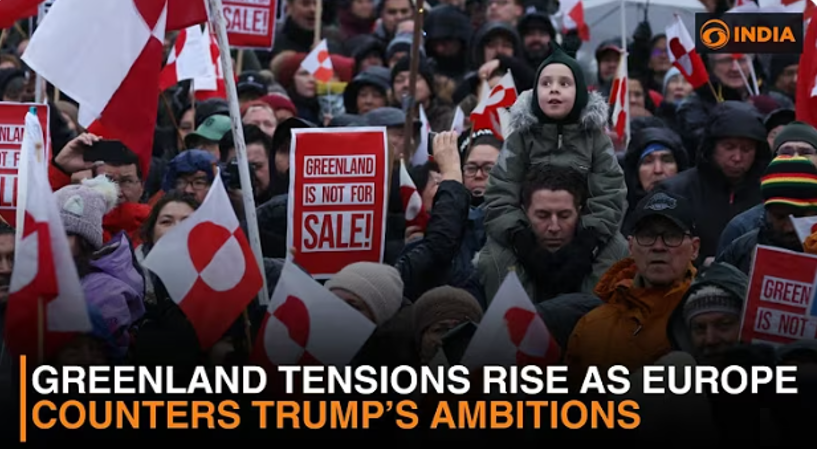
Europe pushes back as Trump presses Greenland claim has become one of the most contentious geopolitical stories of 2026. The renewed push by U.S. President Donald Trump to acquire Greenland, a semiautonomous territory of Denmark, has triggered strong opposition across Europe. With tariff threats, military maneuvers, and diplomatic tensions, the dispute underscores the fragile state of transatlantic relations and the strategic importance of the Arctic.
Europe Pushes Back as Trump Presses Greenland Claim: Background
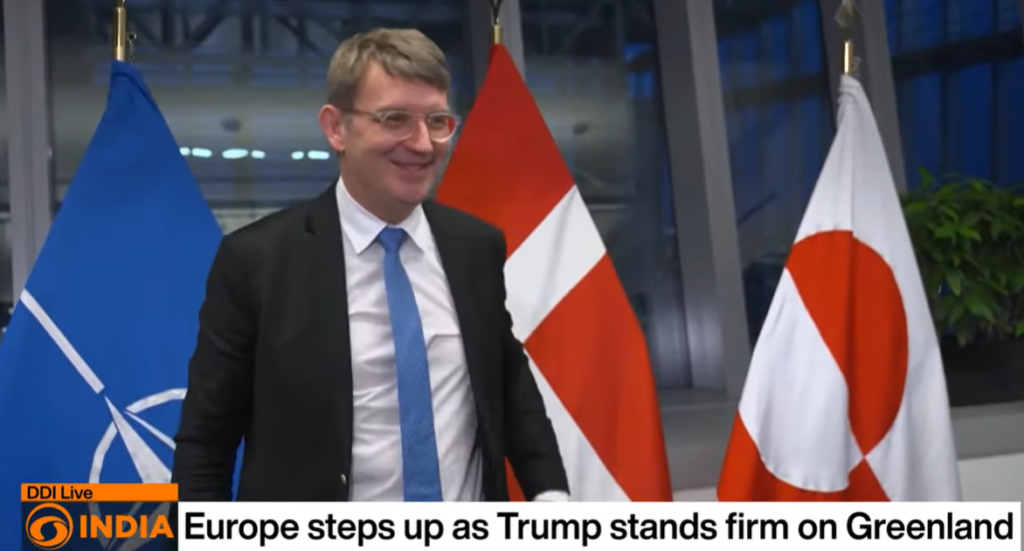
The idea of the United States purchasing Greenland is not new. Trump first floated the notion in 2019, drawing ridicule worldwide. Yet in 2026, the proposal has resurfaced with far greater intensity. Trump argues that Greenland’s location is critical for U.S. defense and energy exploration, framing the acquisition as a matter of national security. His insistence has sparked a diplomatic storm, with Europe united in opposition.
Trump’s Renewed Greenland Push
- Tariff Threats: Trump announced a 10% tariff on goods from several European nations opposing his Greenland bid. He warned of further penalties if the EU continued to resist.
- Military Presence: U.S. military aircraft have been deployed to Greenland under what Washington describes as “long-planned activities,” raising concerns in Copenhagen and Brussels.
- Strategic Rationale: Trump insists Greenland’s geography offers unmatched advantages for Arctic defense and resource exploration.
This aggressive approach has made the issue far more serious than in 2019, forcing Europe to respond decisively.
Europe Pushes Back as Trump Presses Greenland Claim: EU Response
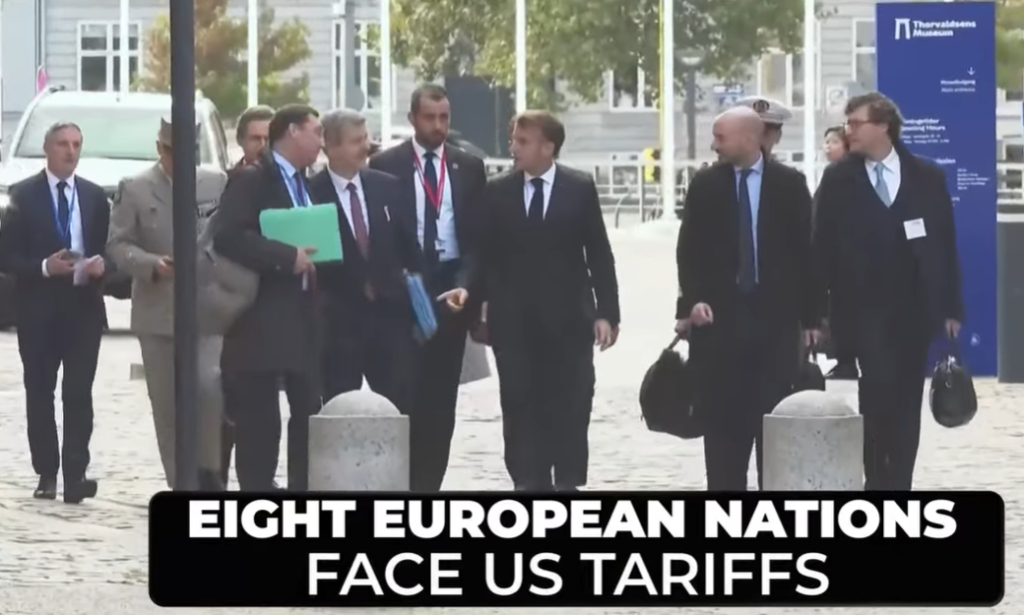
European leaders have reacted with rare unity:
- Extraordinary EU Meeting: The European Council convened an emergency session to coordinate a collective response.
- Public Protests: Demonstrations erupted in major European cities, denouncing what many see as an imperialist move.
- Diplomatic Pushback: EU officials emphasized Greenland’s sovereignty under Denmark and rejected any notion of a U.S. purchase.
- Economic Countermeasures: Discussions are underway about retaliatory tariffs or sanctions should Trump escalate further.
Europe’s pushback highlights its determination to defend sovereignty and resist unilateral U.S. actions.
Denmark’s Position
As Greenland’s sovereign authority, Denmark has firmly rejected Trump’s overtures.
- Sovereignty Concerns: Danish leaders insist Greenland is not for sale and that its people must decide their future.
- Support from EU Allies: Denmark has received strong backing from fellow EU members, reinforcing its stance.
- Greenland’s Autonomy: Greenland itself enjoys significant self-rule, and local leaders have opposed being treated as a commodity.
Denmark’s firm position has become the centerpiece of Europe’s resistance.
Strategic Stakes in the Arctic
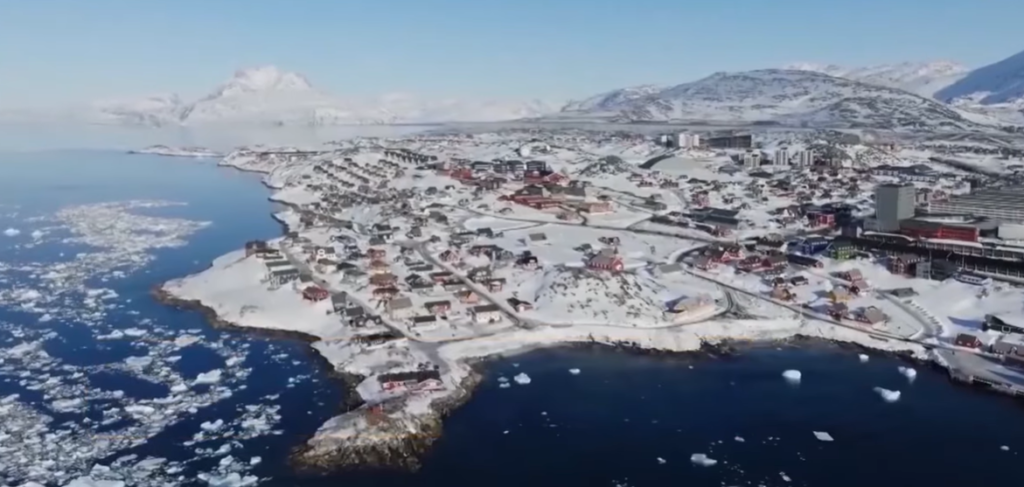
Greenland’s importance lies in its geography and resources:
- Military Positioning: The island offers a critical vantage point for monitoring the Arctic and North Atlantic.
- Natural Resources: Greenland is rich in rare earth minerals, oil, and gas, making it attractive for global powers.
- Climate Change: Melting ice is opening new shipping routes, increasing the Arctic’s geopolitical value.
Trump’s push reflects broader U.S. ambitions to secure dominance in this evolving theater.
Transatlantic Strains
The Greenland dispute has added to existing tensions between Washington and Brussels:
- Trade Wars: Trump’s tariff threats echo earlier disputes over steel, aluminum, and digital taxation.
- NATO Concerns: European leaders worry that unilateral U.S. actions undermine alliance cohesion.
- Global Perception: The dispute risks portraying the West as divided at a time of rising competition from China and Russia.
Europe pushes back as Trump presses Greenland claim, and the fallout could reshape NATO and global alliances.
Public Opinion
- In Europe: Citizens view Trump’s Greenland push as aggressive and destabilizing. Protests highlight fears of economic fallout and erosion of sovereignty.
- In the U.S.: Trump’s supporters frame the acquisition as bold leadership, while critics see it as impractical and diplomatically damaging.
- In Greenland: Local leaders emphasize self-determination, rejecting the idea of being bought or sold.
Public opinion has intensified the political stakes on both sides of the Atlantic.
What Comes Next?
The standoff is likely to intensify:
- EU Retaliation: Europe may impose counter-tariffs or restrict U.S. access to Arctic cooperation.
- Diplomatic Channels: Negotiations at forums like the World Economic Forum in Davos could provide opportunities for dialogue.
- Greenland’s Future: The island’s autonomy and resource potential ensure it will remain central to global geopolitics.
Europe pushes back as Trump presses Greenland claim, and the next steps will determine whether diplomacy prevails or confrontation deepens.
Conclusion
The clash over Greenland underscores the fragility of transatlantic relations in 2026. Trump’s insistence on acquiring the territory, coupled with tariff threats, has galvanized Europe into rare unity. Denmark, backed by the EU, has made clear that Greenland is not for sale. Yet the island’s strategic value ensures the dispute will not fade quickly.
Europe pushes back as Trump presses Greenland claim — and the world watches to see if Trump’s Arctic ambitions will reshape global geopolitics or fracture Western unity.