
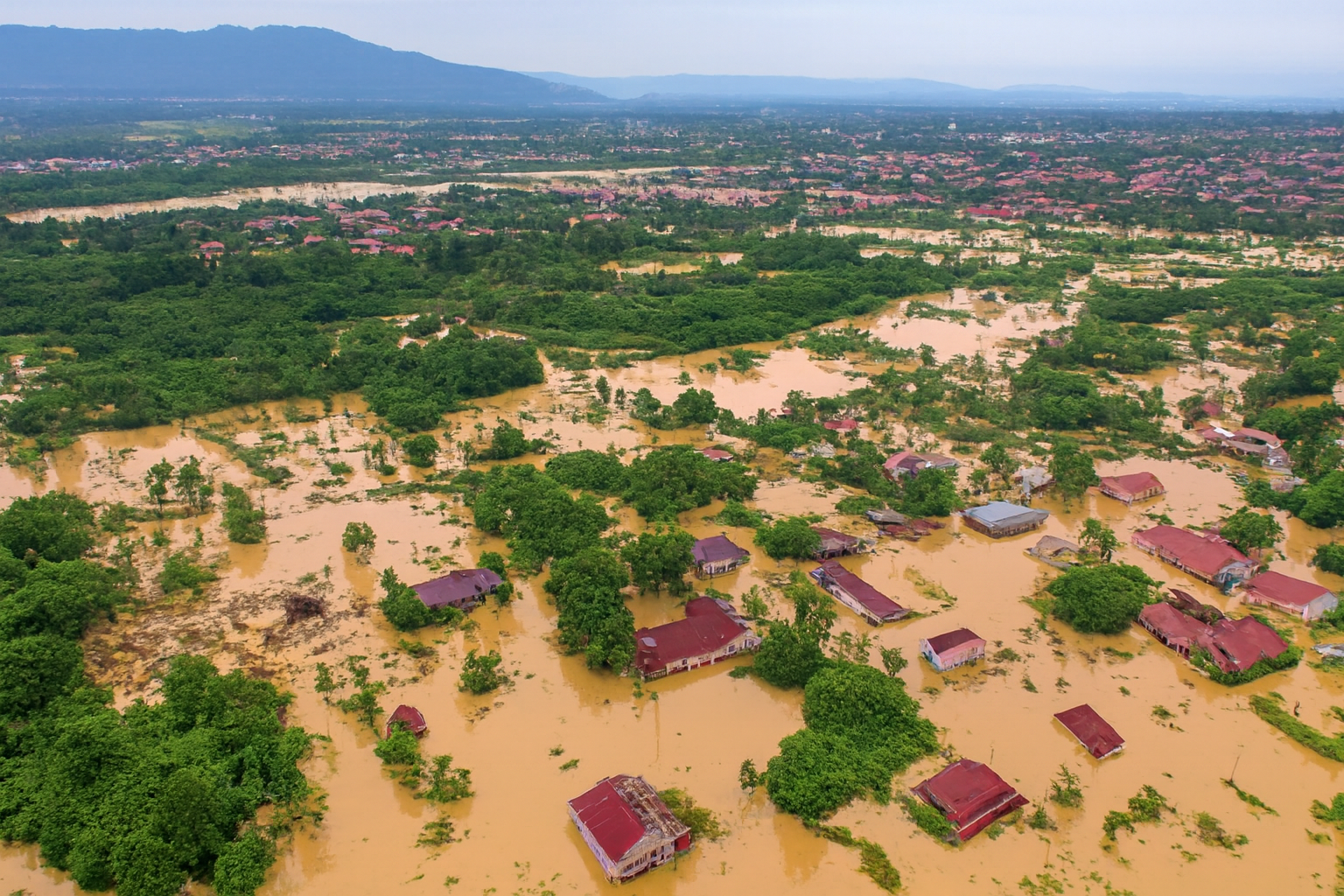
Southeast Asia is reeling from one of the deadliest flood disasters in recent years. Relentless monsoon rains, intensified by tropical cyclones, have triggered widespread flooding and landslides across Indonesia, Sri Lanka, and Thailand, leaving hundreds dead and millions displaced.
Human Toll
- Indonesia: At least 744 deaths, with Sumatra provinces hardest hit
- Sri Lanka: Around 410 fatalities, with entire neighborhoods buried under mudslides
- Thailand: 181 deaths, mostly in southern provinces
- Malaysia: 3 deaths reported
- Missing persons: Nearly 900 people unaccounted for across the region
- Displacement: More than 4 million people forced from their homes
Causes
- Monsoon rains: Days of torrential downpours overwhelmed rivers and dams
- Cyclonic activity: Two tropical cyclones intensified rainfall in Sumatra and Sri Lanka
- Climate change factor: Warmer oceans and atmosphere are producing more intense rainfall events, turning seasonal floods into catastrophic disasters
Emergency Response
- Indonesia: Military deployed for rescue operations and aerial food drops; government has not requested foreign aid
- Sri Lanka: Military mobilized; President Anura Kumara Dissanayake warned the toll may rise further
- Thailand: Emergency crews racing to reach stranded communities in remote areas
- International aid agencies: Delivering supplies, but collapsed infrastructure is slowing relief efforts
Economic & Social Impact
- Indonesia: Estimated losses of Rp 86.9 trillion ($5.2 billion)
- Sri Lanka & Thailand: Widespread destruction of homes, roads, and farmland
- Regional livelihoods: Agriculture and tourism severely disrupted, threatening long-term recovery
Analysis
This disaster highlights three urgent realities:
- Regional vulnerability: Southeast Asia’s geography makes it highly exposed to monsoon and cyclone systems.
- Climate intensification: Rising global temperatures are amplifying rainfall and storm severity, turning seasonal floods into humanitarian crises.
- Preparedness gap: Despite strong local responses, the scale of displacement and infrastructure collapse shows a need for better early warning systems, resilient housing, and international cooperation.
Conclusion
The floods in Indonesia, Sri Lanka, and Thailand are not isolated tragedies but part of a larger climate-driven pattern. With more than 1,300 lives lost and millions displaced, the crisis underscores the urgent need for regional climate adaptation strategies and stronger disaster preparedness.