
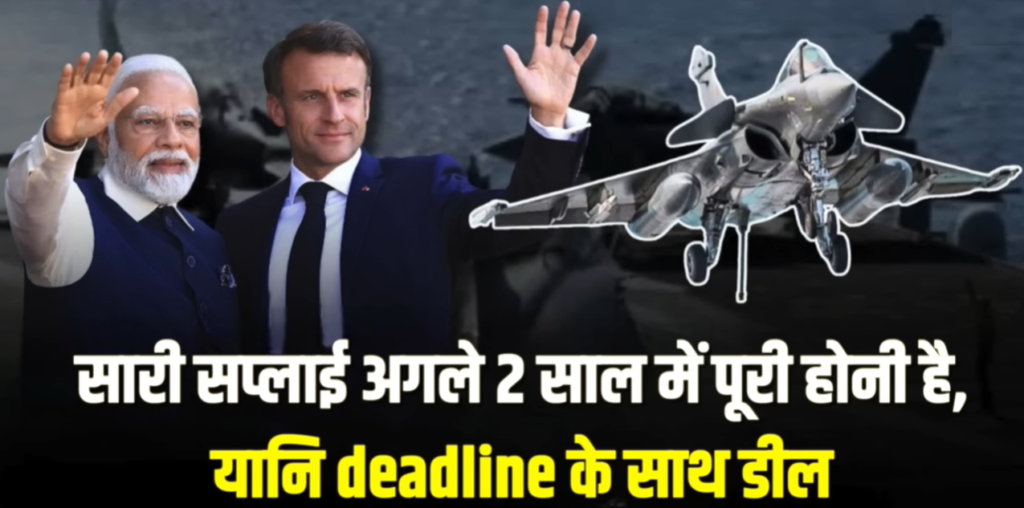
India Rafale Deal – Local Manufacturing Breakthrough
The India Rafale Deal with France has reached a historic milestone, as New Delhi successfully negotiated that 80% of Rafale fighter jets will be made in India. This landmark agreement under the India-France Defense Agreement not only strengthens the Indian Air Force but also accelerates India’s ambition of becoming self-reliant in defense manufacturing.
By insisting on local manufacturing of Rafale jets, India has showcased how strategic negotiation can secure advanced technology while boosting domestic industry. The deal, valued at over ₹3.25 lakh crore, is the largest defense procurement in India’s history.
Rafale Jets Made in India – Key Highlights
- 80% Local Production: Out of 114 Rafale jets, nearly 90 will be manufactured in India.
- Technology Transfer: Dassault Aviation will partner with Indian firms to ensure genuine transfer of technology.
- MRO Facility in India: A dedicated Maintenance, Repair, and Overhaul (MRO) hub will be set up domestically.
- Boost to Aerospace Industry: Indian suppliers will contribute to avionics, composites, and defense electronics.
This ensures that the Rafale jets made in India are not just assembled but integrated into the country’s defense ecosystem.
India-France Defense Agreement – Strategic Importance

The India-France Defense Agreement reflects deepening ties between the two nations. France, keen to secure the massive contract, agreed to relocate parts of its manufacturing ecosystem to India. This strengthens bilateral relations and positions India as a regional hub for advanced aerospace technology.
For India, the deal is more than just about fighter jets—it is about defense self-reliance, industrial growth, and geopolitical leverage.
Why Local Manufacturing of Rafale Jets Matters
Strengthening the Indian Air Force
The Indian Air Force (IAF) faces squadron shortages, and the Rafale has proven to be one of the most reliable aircraft globally. With serviceability rates around 90%, higher than competitors like the F-35, the Rafale ensures operational readiness in critical missions.
Boosting Domestic Industry
The local manufacturing of Rafale jets will create thousands of jobs in aerospace engineering, manufacturing, and maintenance. It also encourages Indian companies to develop advanced capabilities in avionics, composites, and defense electronics.
Reducing Costs and Dependence
By setting up an MRO facility in India, operational costs will be reduced, and dependence on foreign servicing will decline. This enhances India’s autonomy in defense operations.
India Rafale Deal – Negotiation Strategy
India’s negotiation strategy reflects its broader defense procurement policy: “Buy Global, Make Local.” The government has consistently pushed for technology transfer and domestic assembly in major defense deals.
In the India Rafale Deal, New Delhi leveraged its position as one of the world’s largest defense markets. France, eager to secure the contract, agreed to India’s demand for 80% local production. This shows how India is balancing strategic partnerships with national interests.
Challenges in Rafale Jets Made in India
While the deal is promising, challenges remain:
- Cost Negotiations: France has proposed inflation-linked pricing, which India is still negotiating.
- Technology Transfer: Ensuring genuine transfer of high-end technology, not just assembly, is critical.
- Execution Capacity: Indian industry must scale up quickly to meet production standards and timelines.
Broader Implications of India-France Defense Agreement
The India-France Defense Agreement has implications beyond defense:
- Geopolitical Significance: Strengthens India-France ties and positions France as a long-term partner in Asia.
- Industrial Growth: Accelerates India’s ambition to become a global aerospace hub.
- Defense Self-Reliance: Aligns with India’s Atmanirbhar Bharat vision, reducing dependence on imports.
Conclusion – India Rafale Deal as a Blueprint
The India Rafale Deal is more than a defense contract—it is a blueprint for future negotiations. By securing 80% local manufacturing of Rafale jets, India has shown how to negotiate strategically, balancing national security with industrial growth.
If executed effectively, the India-France Defense Agreement will mark a milestone in India’s journey toward defense self-reliance and global aerospace leadership.