
Introduction
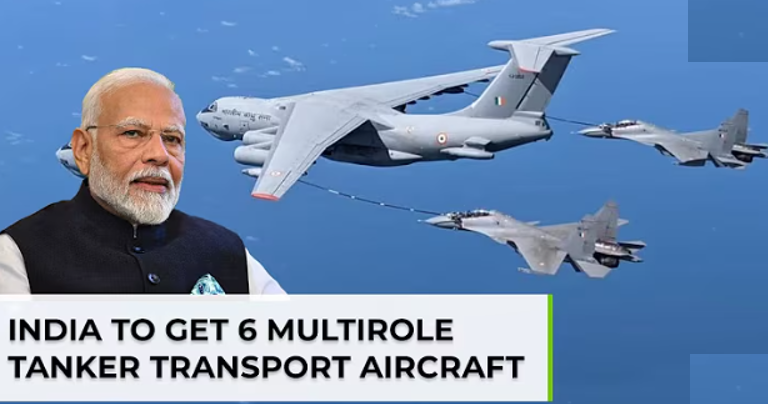
India to buy 6 multi-role tanker aircraft from Israel in a landmark defence deal that will significantly enhance the Indian Air Force’s (IAF) aerial refuelling and transport capabilities. The acquisition, valued at nearly $900 million, involves Boeing 767 airframes converted into Multi-Mission Tanker Transport (MMTT) aircraft by Israel Aerospace Industries (IAI). This strategic procurement marks a decisive step in modernizing India’s air power and replacing its ageing fleet of Russian-origin Il-78 refuellers.
Why India Needs Modern Tankers
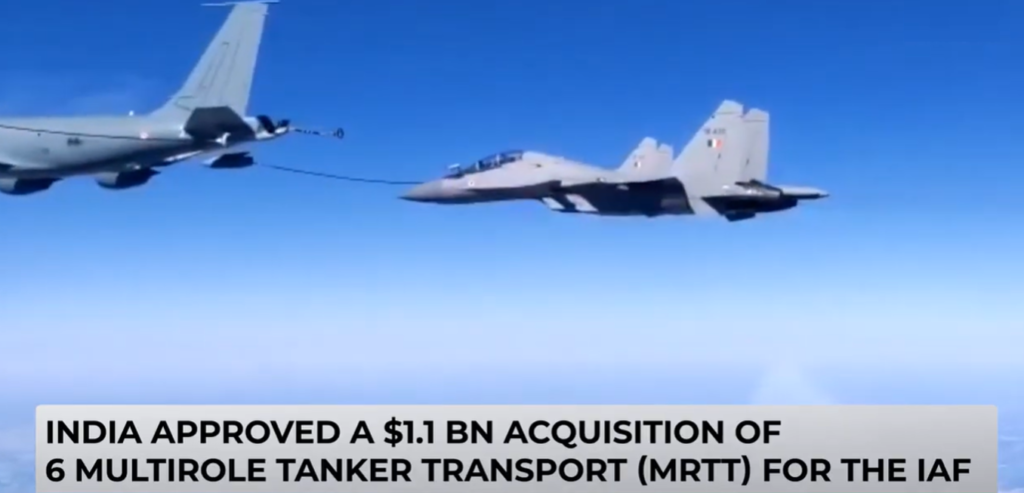
The decision for India to buy 6 multi-role tanker aircraft from Israel stems from the urgent need to replace the IAF’s Il-78 MKI fleet, which has faced persistent serviceability issues. These aircraft, inducted in the early 2000s, often suffer from maintenance delays and spare parts shortages. With frontline fighters such as Rafale, Su-30MKI, and Mirage-2000 requiring reliable mid-air refuelling, modern tankers are essential to extend operational range and sustain missions across the Indian Ocean Region (IOR).
The Aircraft: Boeing 767 MMTT
The six aircraft will be converted from pre-owned Boeing 767 commercial airframes into advanced multi-role tanker aircraft by IAI, in collaboration with Hindustan Aeronautics Limited (HAL).
Key Features:
- Dual Refuelling Systems: Equipped with both boom and probe-and-drogue systems, ensuring compatibility with diverse aircraft.
- Multi-Mission Capability: Beyond refuelling, the aircraft can transport troops, cargo, and conduct medical evacuations.
- Advanced Sensors: Electro-optical systems for all-weather operations.
- Delivery Timeline: Phased induction expected by 2029.
This flexibility makes the MMTT a force multiplier, capable of supporting combat operations, humanitarian missions, and strategic deployments.
Strategic Importance for India
Extending Operational Reach
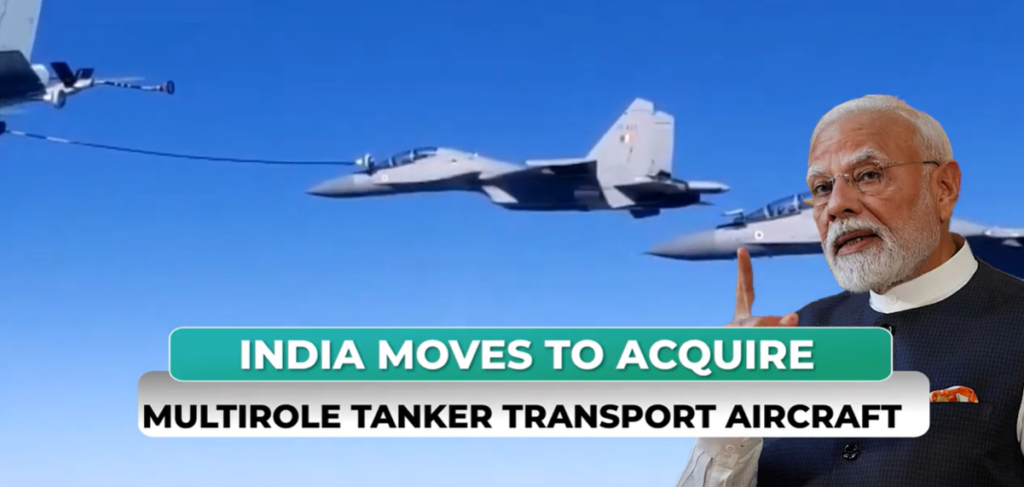
The deal for India to buy 6 multi-role tanker aircraft from Israel will allow the IAF to project power far beyond its borders. Fighters can now conduct long-range missions over the Indian Ocean, South China Sea, and continental Asia without relying on forward bases.
Enhancing Deterrence
Aerial refuelling ensures that India’s frontline fighters can remain airborne longer, carry heavier payloads, and respond rapidly to threats. The acquisition strengthens deterrence against regional adversaries and enhances India’s readiness in multi-domain operations.
Deepening Defence Ties with Israel
India and Israel have steadily expanded defence cooperation over the past three decades. From missile defence systems to UAVs, Israel has been a reliable partner. This deal further cements the strategic partnership, showcasing trust in Israeli technology and India’s willingness to collaborate on high-value projects.
Partnership with HAL
A notable aspect of the deal is the involvement of Hindustan Aeronautics Limited (HAL). HAL will work alongside IAI to carry out modifications and long-term maintenance, ensuring technology transfer and domestic capability building. This aligns with the government’s Atmanirbhar Bharat (Self-Reliant India) initiative, reducing dependence on foreign vendors and strengthening India’s aerospace ecosystem.
Global Context
The decision for India to buy 6 multi-role tanker aircraft from Israel comes at a time when aerial refuelling is becoming a critical capability for modern air forces.
| Country | Tanker Aircraft | Fleet Size | Notes |
|---|---|---|---|
| USA | KC-135, KC-46 Pegasus | 400+ | Largest tanker fleet globally. |
| UK | Airbus A330 MRTT | 14 | Supports NATO operations. |
| China | Il-78, Y-20U | ~20 | Expanding rapidly for Indo-Pacific reach. |
| India | Boeing 767 MMTT (IAI) | 6 (by 2029) | First modern tanker acquisition in years. |
By inducting these aircraft, India joins the ranks of nations with modern, multi-role tanker fleets, enhancing interoperability with allies and partners.
Challenges Ahead
While the deal is a major step forward, challenges remain:
- Delivery Timeline: With induction expected only by 2029, the IAF must continue relying on its ageing Il-78 fleet for several more years.
- Maintenance Ecosystem: Ensuring HAL develops robust maintenance capabilities will be critical to avoid past serviceability issues.
- Budgetary Pressures: At $900 million, the deal is significant, and balancing defence spending with other priorities will be essential.
Conclusion
The decision for India to buy 6 multi-role tanker aircraft from Israel marks a turning point in India’s air power strategy. By replacing outdated Il-78s with advanced Boeing 767 MMTTs, the IAF will gain the ability to sustain long-range missions, enhance deterrence, and support multi-domain operations.
Beyond the technical upgrade, the deal underscores India’s commitment to self-reliance, strategic partnerships, and regional security. As the aircraft enter service by 2029, they will not only extend the IAF’s operational reach but also symbolize India’s growing stature as a modern air power in the Indo-Pacific.