
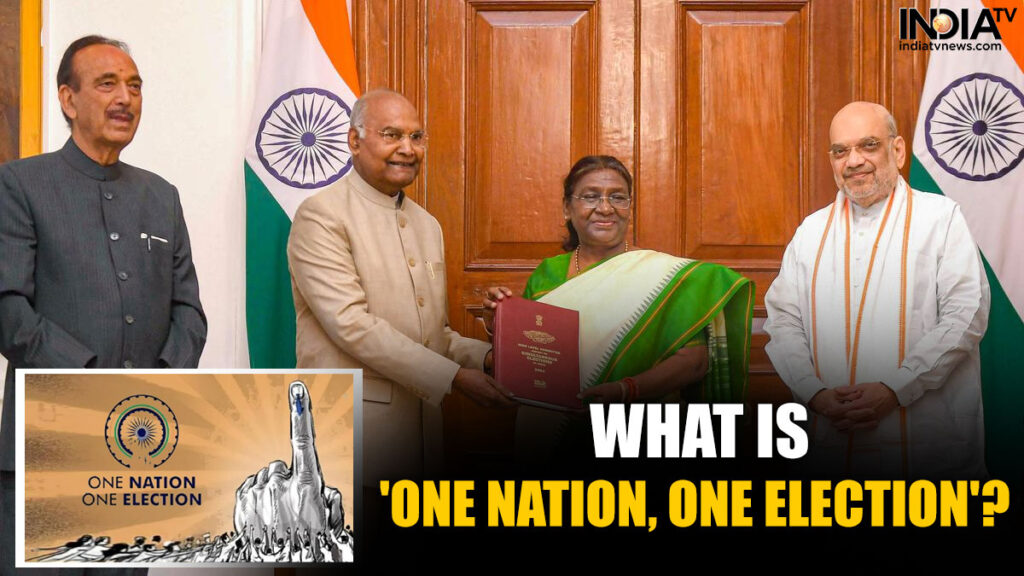
India’s electoral system is one of the largest and most complex in the world. With Lok Sabha, State Assemblies, and local bodies often voting at different times, the country is in a near‑constant election cycle. This has raised concerns about rising costs, governance disruptions, and prolonged enforcement of the Model Code of Conduct. To address these issues, the government has revived the idea of “One Nation, One Election” (ONOE) — a proposal to synchronize elections nationwide under the supervision of the Election Commission of India (ECI).
What the Proposal Envisions
- Unified Election Cycle: Lok Sabha and State Assembly elections held simultaneously, possibly in phases.
- Single Supervisory Authority: The ECI would oversee synchronized polls, ensuring uniformity in process and standards.
- Constitutional Amendments: Articles 83 and 172, which fix five‑year terms for Parliament and Assemblies, may need changes to align terms.
- Efficiency Gains: Reduced election costs, shorter deployment of security forces, and fewer interruptions to governance.
Current Developments
- A Joint Parliamentary Committee (JPC) is consulting political parties, constitutional experts, and former judges.
- On December 4, 2025, top ECI officials, including the Chief Election Commissioner, are scheduled to depose before the committee.
- The 23rd Law Commission has supported the idea, noting that legislative terms can be modified through constitutional amendments.
- Historically, India did hold simultaneous elections until 1967, when premature dissolutions of Assemblies broke the cycle.
Arguments in Favor
- Cost Savings: Billions of rupees spent on repeated elections could be reduced.
- Governance Stability: Governments would face fewer interruptions from the Model Code of Conduct.
- Voter Convenience: Citizens could cast votes for both national and state representatives at the same time.
Challenges and Concerns
- Federal Autonomy: States fear losing control over their election cycles.
- Logistical Scale: Conducting simultaneous polls for over 900 million voters is a massive challenge.
- Political Balance: Critics argue synchronized elections may favor larger national parties over regional ones.
- Legal Complexity: Requires constitutional amendments and changes to the Representation of the People Act.
Conclusion
The idea of One Nation, One Election Commission is bold and transformative. It promises efficiency and stability but raises serious questions about federalism, representation, and feasibility. The coming months — especially the JPC hearings and Law Commission’s recommendations — will determine whether India takes this historic leap toward synchronized elections or continues with its fragmented electoral calendar.