
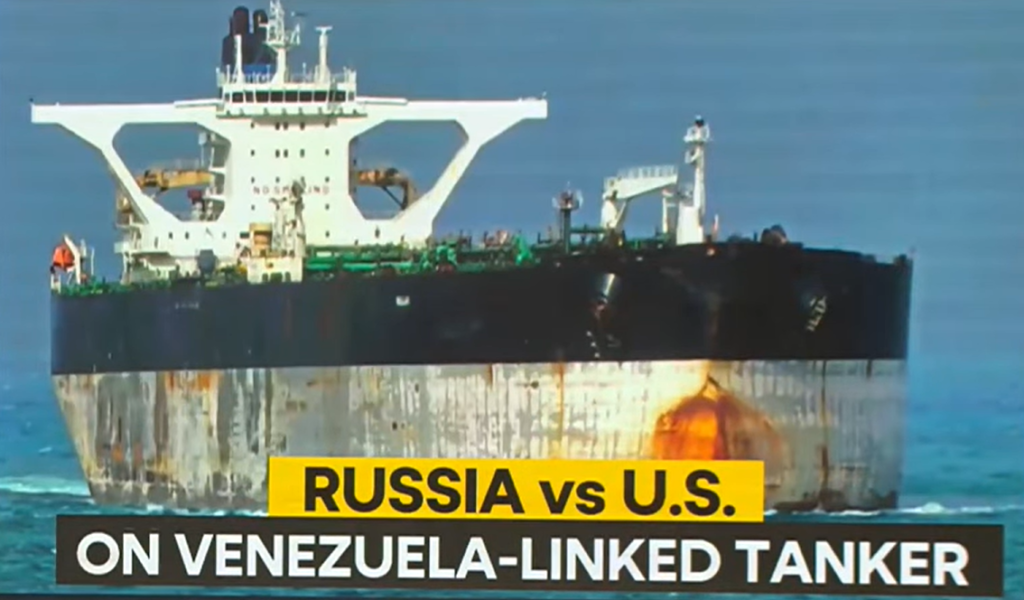
Painted Flag: The Start of a Maritime Thriller
The phrase Painted Flag became symbolic in January 2026 when an aging Venezuelan oil tanker, Bella 1, attempted to disguise itself mid‑voyage. By painting a Russian flag on its hull and renaming itself Marinera, the crew hoped to deter interception by the U.S. Coast Guard. This act of deception marked the beginning of an extraordinary 18‑Day Chase Across the Atlantic, a pursuit that tested endurance, diplomacy, and international law.
Russian Bluff: A Desperate Gambit
The Russian Bluff was a calculated move. By flying Moscow’s colors, the tanker’s operators sought to invoke Russian protection, daring Washington to risk confrontation. Yet the bluff was quickly exposed. The White House declared the vessel “stateless,” arguing that its sudden change of identity violated maritime law. This ruling stripped the ship of diplomatic cover and gave U.S. forces the legal authority to act.
18‑Day Chase Across the Atlantic: Persistence vs. Deception
The 18‑Day Chase Across the Atlantic unfolded like a high‑stakes thriller. From the Caribbean, the tanker pushed northward, weaving through winter seas. The U.S. Coast Guard cutter Munro shadowed it relentlessly, refusing to be shaken off.
The crew of the Marinera tried multiple evasive tactics:
- Renaming the vessel to obscure its identity.
- Flying a Russian flag to deter interception.
- Altering its course repeatedly to confuse trackers.
Despite these maneuvers, the Coast Guard remained steadfast. The chase became a symbol of Washington’s determination to enforce sanctions against Venezuela’s shadow fleet.
Painted Flag and Shadow Fleet Sanctions
The Painted Flag incident highlights the broader challenge of enforcing sanctions. Venezuela’s shadow fleet has long relied on deception—false flags, renamed ships, and disabled tracking systems—to move crude oil across the globe. For Caracas, these clandestine voyages are a lifeline. For Washington, they are a direct challenge to international order.
By painting a Russian flag, the Bella 1 attempted to exploit geopolitical tensions. Yet the U.S. response demonstrated that cosmetic changes cannot override international law.
Russian Bluff Collapses Under Pressure
The Russian Bluff collapsed when U.S. officials declared the tanker stateless. This bold stance carried risks: Moscow condemned the seizure, accusing Washington of piracy. Yet the U.S. maintained that the vessel’s actions were illegitimate.
The collapse of the bluff sent a clear message: painted flags and false identities would not shield violators of sanctions. It also underscored Washington’s willingness to confront Russia indirectly on the high seas.
18‑Day Chase Across the Atlantic Ends in Seizure
On January 7, 2026, the 18‑Day Chase Across the Atlantic reached its climax. U.S. special forces rappelled from helicopters onto the deck of the Marinera, securing the vessel after nearly three weeks of pursuit. The operation was swift and decisive, marking a turning point in America’s campaign against the shadow fleet.
The seizure symbolized persistence triumphing over deception. It reinforced the principle that international law cannot be manipulated by painted flags or sudden name changes.
Diplomatic Fallout: Painted Flag vs. Piracy Claims
The Painted Flag incident triggered immediate diplomatic fallout:
- Russia condemned the seizure, calling it unlawful aggression.
- The U.S. defended its actions, insisting the vessel was stateless.
- Venezuela vowed to continue exporting oil despite sanctions.
This confrontation highlighted the fragile balance of global energy politics. It also showed how sanctions enforcement has shifted from financial institutions to the high seas, where painted flags and bluffs are the tools of defiance.
Symbolism of the Russian Bluff and the Chase
The Russian Bluff and the 18‑Day Chase Across the Atlantic carried symbolic weight:
- Persistence vs. deception: the Coast Guard’s endurance contrasted with the tanker’s desperate gambit.
- Law vs. lawlessness: the seizure reinforced the principle that international law cannot be manipulated.
- Global stakes: the chase illustrated how energy politics, sanctions, and maritime law intersect dramatically.
This was not merely a chase—it was a statement about credibility, sovereignty, and the enforcement of sanctions.
Broader Implications of the Painted Flag Incident
The Painted Flag saga raises pressing questions:
- Can sanctions truly be enforced in a world of shadow fleets?
- Will Russia and Venezuela escalate their defiance or recalibrate strategies?
- How will other nations respond to Washington’s willingness to chase and seize ships across oceans?
For Washington, the operation was a victory but also a precedent. By boarding a vessel claiming Russian identity, the U.S. signaled it was willing to risk diplomatic fallout to uphold sanctions. For Moscow and Caracas, the incident was a reminder that bluffs can be called—even on the high seas.
Conclusion: Painted Flag, Russian Bluff, and 18‑Day Chase Across the Atlantic
The saga of the Bella 1, reborn as Marinera, is more than a maritime thriller. It is a story of Painted Flags and Russian Bluffs, of endurance and pursuit, of law and defiance. The 18‑Day Chase Across the Atlantic revealed the lengths to which nations will go to protect their interests—and the determination of others to enforce international rules.
In the end, the painted flag could not shield the tanker from capture. The bluff was exposed, and the chase became a defining moment in the ongoing struggle over Venezuelan oil and global maritime order.