
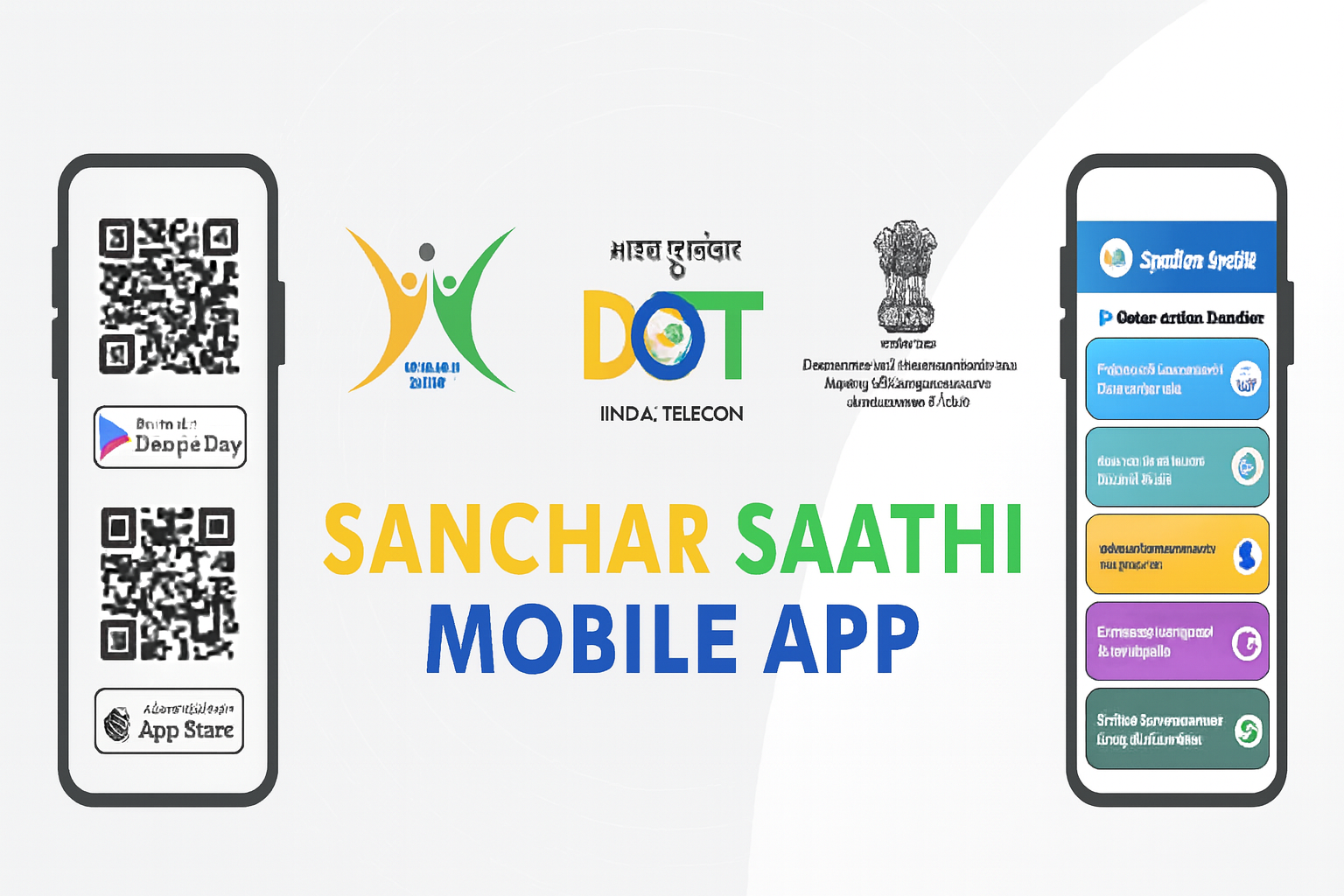
The Indian government’s push toward digital empowerment has often been accompanied by concerns about privacy and surveillance. One of the most debated initiatives in recent months has been the Sanchar Saathi app, developed by the Department of Telecommunications (DoT). Launched as part of the Telecom Cyber Security Rules, 2024, the app is designed to protect citizens from mobile-related fraud, identity misuse, and cybercrime. While its objectives are laudable, the controversy surrounding its mandatory installation directive in late November 2025 has sparked a nationwide debate on the balance between digital safety and personal freedom.
What the App Does
At its core, Sanchar Saathi is a citizen-centric tool that empowers users to monitor and secure their mobile connections. Its key features include:
- SIM card tracking: Users can check how many SIM cards have been issued against their identity documents. This helps detect fraudulent or unauthorized connections.
- Lost phone reporting: The app allows individuals to block stolen or misplaced devices by deactivating their IMEI numbers, reducing misuse.
- Fraud complaint filing: Citizens can directly report suspicious activity or cyber fraud incidents, streamlining the grievance process.
- Duplicate IMEI detection: By flagging cloned devices, the app helps curb grey-market sales and counterfeit handsets.
These functions are particularly relevant in a country like India, where mobile penetration is vast, and fraud cases are rising. According to official figures, over 2,000 cyber-fraud incidents are reported daily, and by late 2025, the app had already crossed 1.4 crore downloads.
The Controversy
On November 28, 2025, the government issued a directive requiring smartphone manufacturers to pre-install Sanchar Saathi on all new devices from March 2026. More controversially, the order stated that the app could not be deleted or disabled.
This triggered immediate backlash:
- Privacy concerns: Critics argued that forcing a government app onto every device could open the door to surveillance, even if the app itself was benign.
- Political opposition: Parties across the spectrum compared the move to earlier controversies like Pegasus spyware, warning of potential misuse.
- Civil society pushback: Digital rights groups emphasized that mandatory installation violated the principle of user consent.
Within 48 hours, the government rolled back the directive, citing public interest and the app’s already strong voluntary adoption.
Government’s Clarification
Telecom Minister Jyotiraditya Scindia addressed Parliament on December 2, 2025, clarifying that:
- The app remains voluntary. Citizens can install or uninstall it at will.
- The government’s intention was to strengthen cybersecurity, not to monitor individuals.
- The rollback demonstrated responsiveness to public concerns, showing that policy can adapt to feedback.
Officials continue to stress that Sanchar Saathi is a safety tool, not a surveillance mechanism.
Benefits of the App
Despite the controversy, the app offers tangible benefits:
- Fraud prevention: By exposing unauthorized SIMs, it reduces identity theft.
- Consumer empowerment: Citizens gain direct control over their telecom footprint.
- Law enforcement support: Easier reporting channels help authorities track fraud patterns.
- Digital trust: If widely adopted, the app could strengthen confidence in India’s telecom ecosystem.
Risks and Challenges
However, challenges remain:
- Perception problem: The mandatory directive damaged trust, and rebuilding credibility will take time.
- Awareness gap: Many citizens remain unaware of the app’s features or how to use them effectively.
- Data security: Even voluntary apps must ensure robust safeguards against misuse of sensitive information.
- Balancing act: The government must walk a fine line between digital safety and individual privacy rights.
The Road Ahead
Going forward, the success of Sanchar Saathi will depend on:
- Public awareness campaigns to educate citizens about its benefits.
- Transparency measures to reassure users that their data is secure.
- Voluntary adoption strategies rather than coercion.
- Continuous updates to keep pace with evolving cyber threats.
If implemented responsibly, the app could become a cornerstone of India’s digital security framework, protecting millions from fraud while respecting democratic values.
Conclusion
The Sanchar Saathi app embodies the dual challenges of India’s digital journey: the need to protect citizens from cybercrime while safeguarding privacy and freedom. Its rollback from mandatory installation was a reminder that trust is as important as technology. For now, Sanchar Saathi remains a voluntary tool—one that can empower users, but only if adopted with confidence and transparency.