
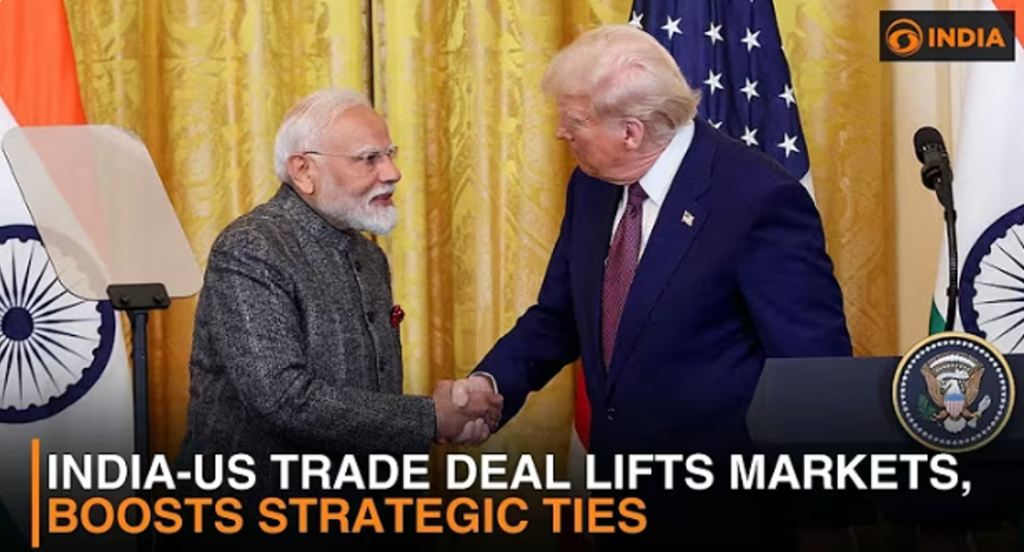
The United States has announced a significant reduction in tariffs on Indian goods, lowering them from 25% to 18%. This landmark decision marks a new chapter in USA–India trade relations, offering Indian exporters greater access to the American market while reinforcing India’s Atmanirbhar Bharat vision of self-reliance and global competitiveness.
USA Reduces Tariffs on Indian Goods: What It Means
The tariff reduction is expected to benefit a wide range of industries:
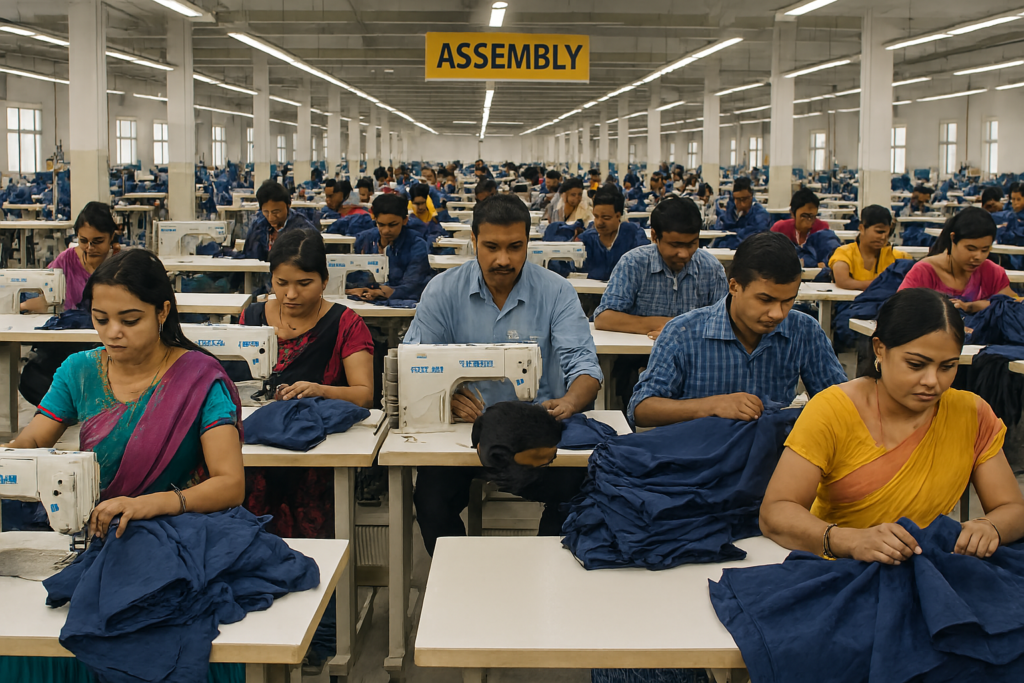
- Textiles and Apparel: Indian garments will now be more price-competitive in the US market.
- Pharmaceuticals: Lower tariffs will help Indian drug manufacturers expand their footprint.
- Agriculture and Food Products: Farmers and agribusinesses gain better margins on exports.
- Electronics and Auto Components: Indian manufacturers can scale production for global supply chains.
This move is widely seen as a trade boost that will accelerate India’s export growth and strengthen bilateral economic ties.
Impact on Indian Exporters
Increased Competitiveness
With tariffs reduced to 18%, Indian goods become more affordable for US buyers, improving competitiveness against other exporting nations.
Expansion of Market Share
Indian exporters are expected to capture a larger share of the US market, particularly in consumer goods, industrial products, and technology-driven sectors.
Support for SMEs
Small and medium enterprises (SMEs) stand to benefit significantly, as reduced tariffs lower entry barriers into the US market.
Alignment with Atmanirbhar Bharat Vision
The tariff cut directly supports India’s Atmanirbhar Bharat initiative:
- Encouraging Domestic Manufacturing: By making exports more profitable, Indian manufacturers are incentivized to expand production.
- Reducing Import Dependency: Stronger exports balance trade deficits and reduce reliance on foreign goods.
- Global Positioning: India strengthens its role as a reliable partner in global supply chains.
USA–India Trade Relations Strengthened
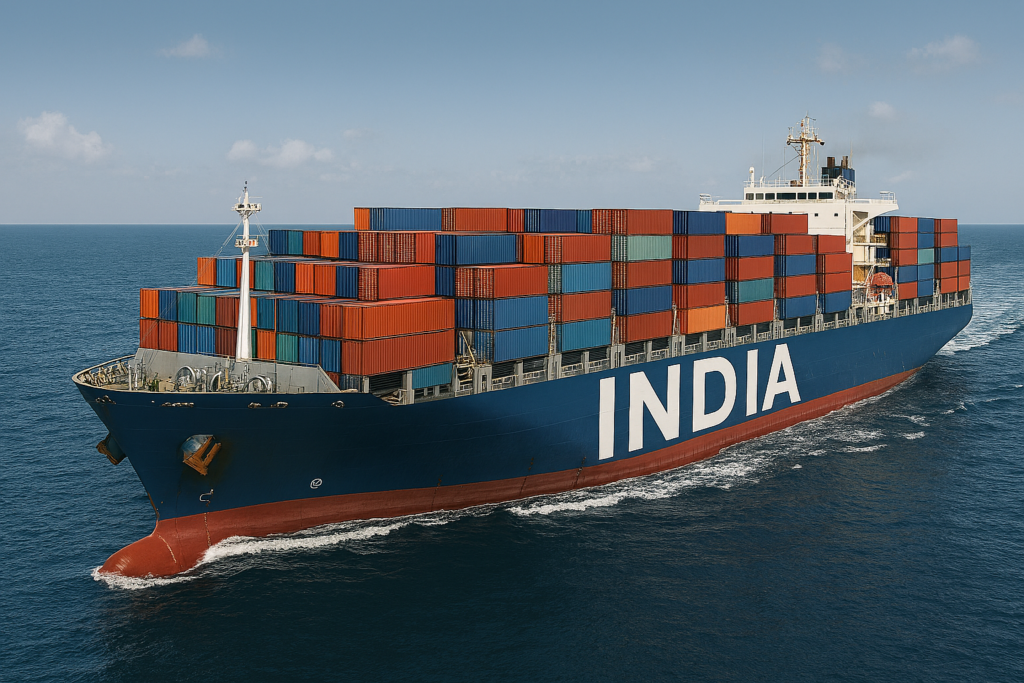
Bilateral Cooperation
The tariff reduction reflects growing cooperation between Washington and New Delhi, signaling a commitment to deeper economic ties.
Strategic Geopolitical Context
The move also aligns with broader geopolitical strategies, as India emerges as a trusted partner in the Indo-Pacific region.
Future Negotiations
This development opens the door for further discussions on digital trade, services, and investment flows, expanding the scope of bilateral trade.
Economic Benefits for India
- Job Creation: Increased exports will generate employment across manufacturing, logistics, and supply chains.
- Revenue Growth: Exporters anticipate a 10–15% rise in sales to the US over the next fiscal year.
- Foreign Exchange Earnings: Higher export volumes strengthen India’s currency reserves.
Challenges Ahead
While the tariff cut is a major win, exporters must navigate:
- Non-Tariff Barriers: Regulatory compliance and certification requirements remain hurdles.
- Infrastructure Gaps: India must improve port efficiency, warehousing, and customs processes.
- Global Competition: Competing with countries like Vietnam and Mexico requires sustained innovation and quality assurance.
Industry Reactions
- Confederation of Indian Industry (CII): Called the tariff cut a “game-changer” for export-led growth.
- Federation of Indian Export Organisations (FIEO): Projects a sharp rise in exports to the US.
- Textile Exporters: Expect a surge in orders due to improved price competitiveness.
Conclusion: A Milestone in USA–India Trade Boost
The USA–India trade boost through tariff reduction to 18% is more than an economic adjustment—it is a strategic milestone. It strengthens bilateral relations, empowers Indian exporters, and supports the nation’s Atmanirbhar Bharat vision.