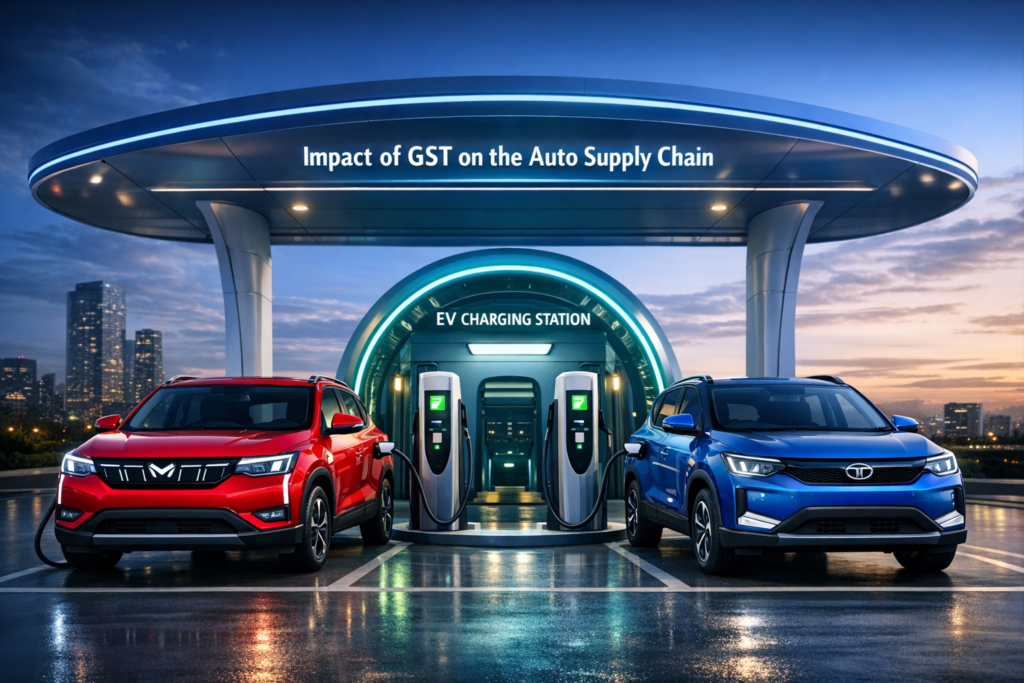

India Auto Sales FY26 Soar: Mahindra Tops Tata, EVs Surge — this defining phrase captures a landmark year for India’s automobile industry. Passenger vehicle sales reached a record 4.7 million units, driven by GST reforms, electrification, and evolving consumer demand. FY26 will be remembered as the year India’s auto sector accelerated into a new era of growth and competition.
India Auto Sales FY26 Soar: Mahindra Tops Tata
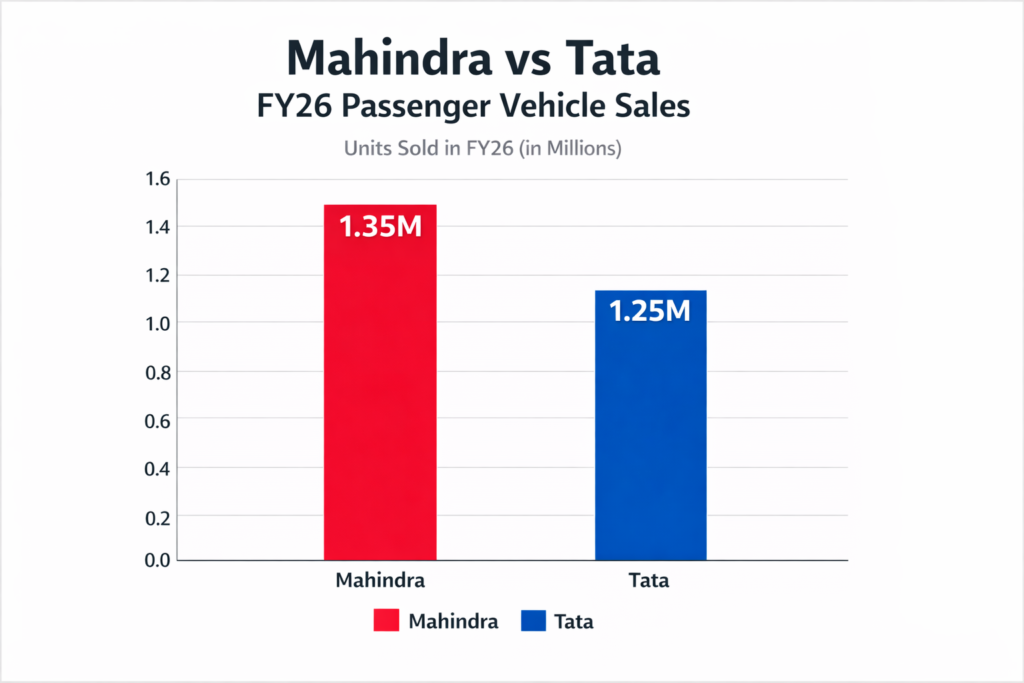
FY26 witnessed a dramatic shift in industry rankings as Mahindra & Mahindra overtook Tata Motors in passenger vehicle sales. Mahindra’s success stemmed from its aggressive EV strategy and refreshed SUV portfolio, including the Scorpio and XUV series.
Tata Motors, which had previously dominated with its Nexon EV and safety‑focused lineup, faced stiff competition as Mahindra’s Born Electric range captured urban and semi‑urban buyers. This reshuffling underscores how innovation and sustainability now define leadership in India’s auto market.
India Auto Sales FY26 Soar: EVs Surge Across Segments
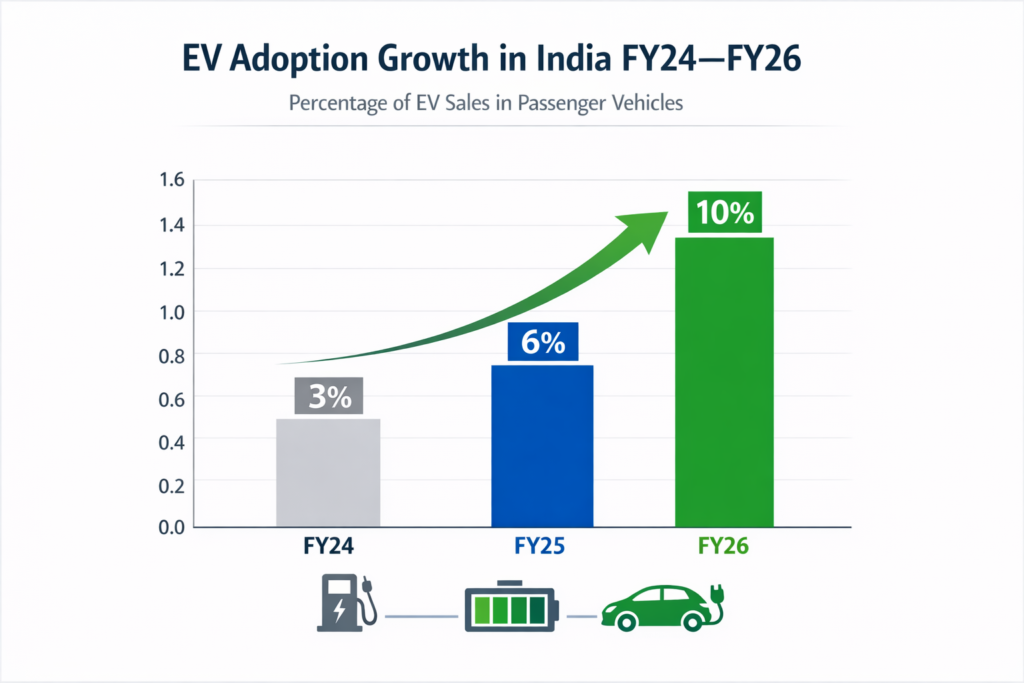
The electric vehicle boom was a cornerstone of FY26. EV penetration rose to nearly 10% of total passenger vehicle sales, up from 3% two years earlier. Falling battery costs, expanding charging infrastructure, and government incentives under FAME II accelerated adoption.
Mahindra’s Born Electric SUVs, Tata’s Nexon EV, and MG’s ZS EV led the surge, proving Indian buyers are ready for sustainable mobility.
India Auto Sales FY26 Soar: GST & Policy Tailwinds
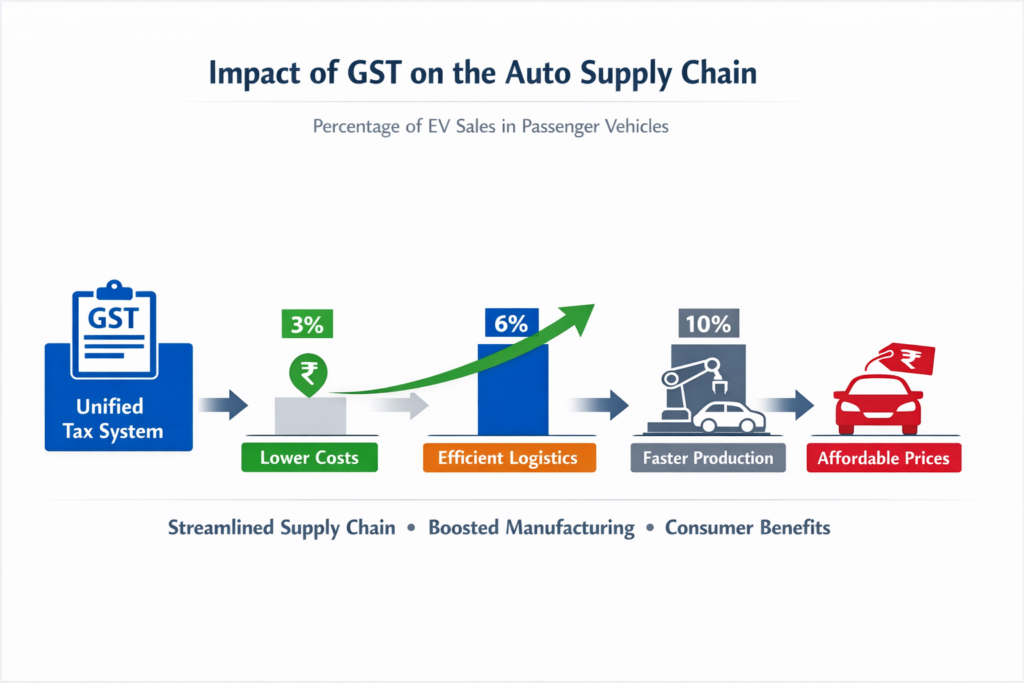
The GST regime simplified taxation, reduced cascading costs, and streamlined supply chains. Transparent pricing boosted consumer confidence, while subsidies and state‑level incentives made EVs more affordable. Together, these reforms ensured FY26 was not just a cyclical upswing but a structural leap forward.
India Auto Sales FY26 Soar: Export Momentum
India’s auto boom extended beyond domestic markets. Passenger vehicle exports rose 15% year‑on‑year, with Africa, Latin America, and Southeast Asia emerging as strong destinations. Mahindra’s SUVs and Tata’s compact cars gained traction abroad, reinforcing India’s role as a global hub for affordable yet advanced vehicles.
Industry Dynamics in FY26
- Maruti Suzuki retained leadership with hybrid models and compact cars.
- Hyundai and Kia thrived in premium hatchbacks and SUVs.
- Toyota gained ground with hybrids, appealing to cautious buyers.
Challenges remain: rising input costs, semiconductor supply fluctuations, and the need for faster charging infrastructure expansion.
Consumer Trends Driving India Auto Sales FY26 Soar
- SUV dominance: SUVs accounted for nearly 50% of sales.
- Urban EV adoption: Metro buyers led the surge, tier‑2 cities followed.
- Safety & tech focus: Buyers prioritized crash ratings, ADAS, and connected features.
These trends highlight a shift from price sensitivity to value consciousness, with buyers willing to pay more for safety and sustainability.
Outlook: India Auto Sales FY27
Analysts project sales could cross 5 million units in FY27, driven by:
- Wider EV adoption.
- Entry of new global players.
- Policy continuity supporting green mobility.
- Rising disposable incomes and urbanization.
Mahindra’s ascendancy signals a new competitive era, while Tata, Maruti, and Hyundai are expected to intensify their EV strategies.
India Auto Sales FY26 Soar: Mahindra Tops Tata, EVs Surge – Industry Outlook
Looking ahead, the Indian auto industry is poised for sustained growth. Key trends to watch include:
- Continued rise of EV adoption
- Entry of global EV players into India
- Increasing focus on hybrid vehicles
- Technological advancements like connected cars and autonomous features
Experts believe that India could become one of the top three auto markets globally within the next decade.
Conclusion
India Auto Sales FY26 Soar: Mahindra Tops Tata, EVs Surge — this phrase encapsulates a watershed year. With record sales, policy‑driven transformation, and reshuffling of competitive hierarchies, India’s auto industry has entered a new phase of growth. The EV surge and Mahindra’s rise highlight how innovation and sustainability are redefining leadership in the world’s fastest‑growing auto market.