
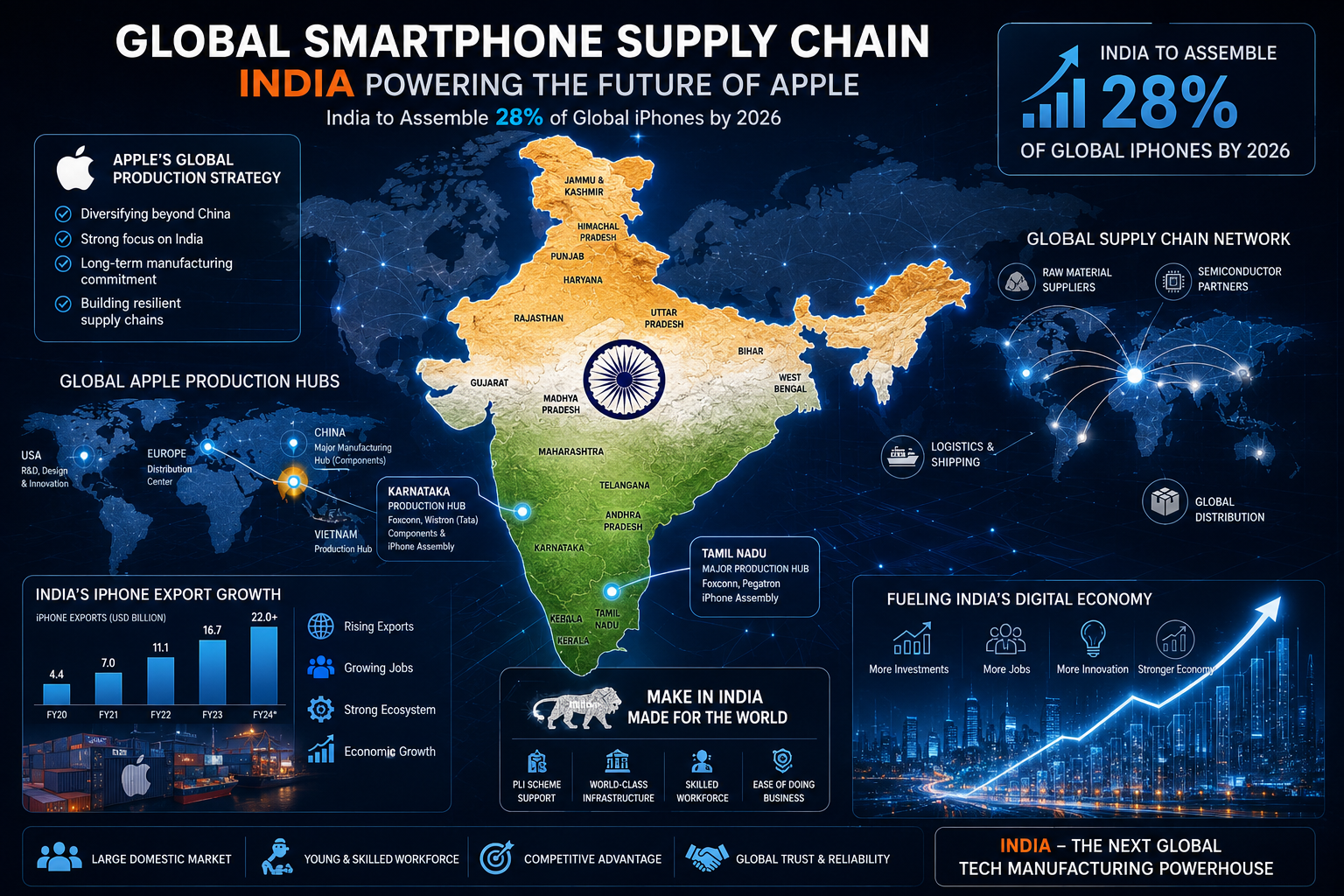
India to Assemble 28% of Global iPhones by 2026
India to Assemble 28% of Global iPhones by 2026 is emerging as one of the biggest shifts in the global electronics manufacturing industry. Apple’s growing dependence on India highlights the country’s rapid rise as a global smartphone production hub. As supply chain diversification accelerates and geopolitical risks reshape manufacturing strategies, India is becoming central to Apple’s long-term expansion plans.
Industry analysts believe India could account for nearly 28% of worldwide iPhone assembly by 2026, compared to single-digit levels just a few years ago. This dramatic transformation is driven by government incentives, rising exports, skilled labor availability, and Apple’s effort to reduce its reliance on China.
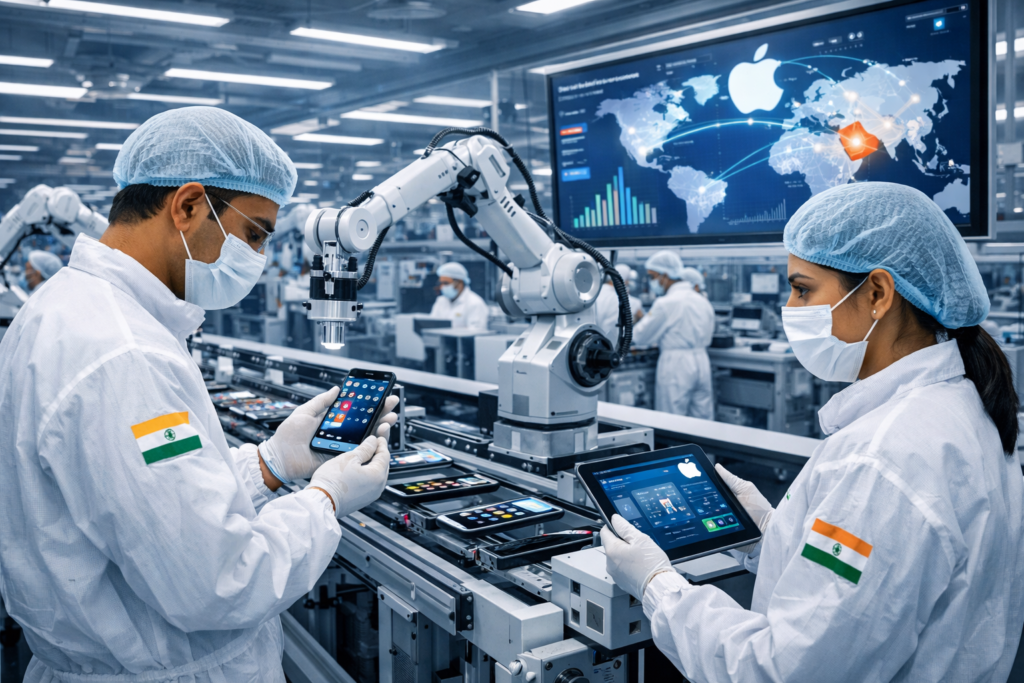
Why India to Assemble 28% of Global iPhones by 2026 Matters
The announcement that India to Assemble 28% of Global iPhones by 2026 represents a historic milestone for the Indian economy. Apple’s manufacturing expansion signals global confidence in India’s industrial ecosystem.
Several factors are contributing to this shift:
- Rising geopolitical tensions affecting global supply chains
- China-plus-one manufacturing strategy
- India’s Production Linked Incentive (PLI) scheme
- Increasing domestic electronics demand
- Competitive labor and operational costs
- Growing export infrastructure
Apple suppliers including Foxconn, Pegatron, and Tata Electronics are aggressively expanding manufacturing operations across India. Tamil Nadu and Karnataka have become major production centers for iPhones and related components.
India to Assemble 28% of Global iPhones by 2026 Boosts Exports
One of the biggest impacts of India to Assemble 28% of Global iPhones by 2026 will be a sharp increase in electronics exports. Smartphones have already become one of India’s top export categories.
India’s iPhone exports have surged dramatically over the past two years as Apple shifted more production capacity to the country. With more high-end models expected to be assembled locally, export revenues could rise significantly by 2026.
Key Export Benefits
1. Higher Foreign Exchange Earnings
Large-scale iPhone exports can strengthen India’s forex reserves and improve trade performance.
2. Stronger Electronics Ecosystem
Local suppliers, logistics providers, and semiconductor support industries are expected to grow rapidly.
3. Increased Global Market Share
India could become one of the world’s top smartphone manufacturing nations.

How Apple Is Expanding Manufacturing in India
India to Assemble 28% of Global iPhones by 2026 reflects Apple’s long-term manufacturing diversification strategy. Apple is investing heavily through supplier partnerships and expanding local sourcing networks.
Foxconn Expansion
Foxconn remains Apple’s largest manufacturing partner in India. The company has expanded operations in Tamil Nadu and Karnataka with billions of dollars in investments.
Tata Electronics Enters the Apple Supply Chain
Tata Group’s growing role in Apple manufacturing is another major development. Tata acquired Wistron’s India operations and is rapidly scaling assembly capabilities.
Pegatron Strengthens Presence
Pegatron is also increasing production capacity to support Apple’s global demand for iPhones.
These investments are helping India move from basic assembly to higher-value manufacturing and component integration.
India to Assemble 28% of Global iPhones by 2026 Creates Massive Employment
The growth of Apple manufacturing in India is expected to generate hundreds of thousands of direct and indirect jobs.
Employment Opportunities Include:
- Factory workers
- Engineers and technicians
- Supply chain professionals
- Logistics and export specialists
- Automation and robotics experts
The electronics manufacturing boom is also creating opportunities for small and medium enterprises supplying components and services.
This employment growth aligns with India’s broader vision of becoming a global manufacturing powerhouse under the “Make in India” initiative.
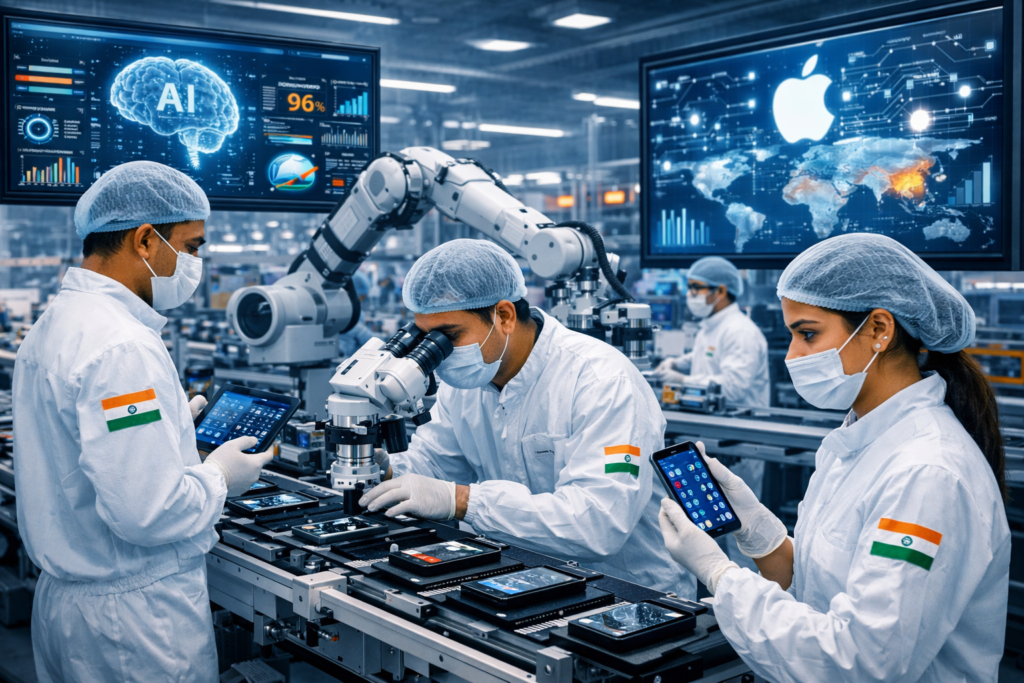
India to Assemble 28% of Global iPhones by 2026 Strengthens Make in India
The Make in India initiative has played a major role in attracting global electronics giants. Apple’s manufacturing expansion validates India’s policy push toward becoming a high-tech industrial economy.
Government Support Measures
Production Linked Incentive (PLI) Scheme
The PLI scheme has encouraged global manufacturers to increase domestic production.
Infrastructure Improvements
India has improved ports, highways, industrial parks, and logistics systems to support exports.
Ease of Doing Business
Regulatory reforms have helped attract foreign investment into manufacturing sectors.
These reforms are making India increasingly competitive compared to other Asian manufacturing destinations.
Challenges India Must Overcome
Although India to Assemble 28% of Global iPhones by 2026 is a major opportunity, several challenges remain.
Supply Chain Dependency
India still imports many high-value smartphone components.
Infrastructure Gaps
Further improvements are needed in transportation and power reliability.
Skilled Workforce Demand
Rapid industrial expansion requires continuous workforce training and technical education.
Competition From Vietnam and China
India faces intense competition from established manufacturing ecosystems.
However, analysts believe India’s scale, domestic market size, and policy support provide strong long-term advantages.
Global Impact of India’s iPhone Manufacturing Rise
India to Assemble 28% of Global iPhones by 2026 could reshape the global electronics industry.
Major Global Implications
- Reduced dependence on China for smartphone production
- Diversified global supply chains
- Greater investment flows into India
- Expansion of semiconductor ecosystems
- Increased geopolitical importance for India
This transition may also encourage other global technology companies to increase manufacturing investments in India.

Future Outlook for Apple Manufacturing in India
The long-term outlook remains highly positive. Analysts expect Apple to continue expanding production in India beyond 2026 as local ecosystems mature.
Future developments may include:
- More premium iPhone models assembled in India
- Increased component manufacturing
- Expansion into MacBook and iPad assembly
- Greater semiconductor investment
- AI-driven smart manufacturing facilities
India’s transformation into a global electronics manufacturing hub appears to be accelerating rapidly.
Conclusion
India to Assemble 28% of Global iPhones by 2026 marks a defining moment for the country’s manufacturing ambitions. Apple’s growing commitment to India demonstrates the nation’s rising importance in global technology supply chains.
With strong government support, expanding industrial infrastructure, and increasing foreign investment, India is positioning itself as a major global electronics powerhouse. While challenges remain, the economic benefits in exports, jobs, and industrial growth could be enormous.
As Apple deepens its presence, India’s role in shaping the future of global smartphone manufacturing is expected to grow even stronger in the coming years.