
India’s 700 MWe Nuclear Steam Generator Triumph: A New Era for Clean Energy
India’s 700 MWe Nuclear Steam Generator Triumph
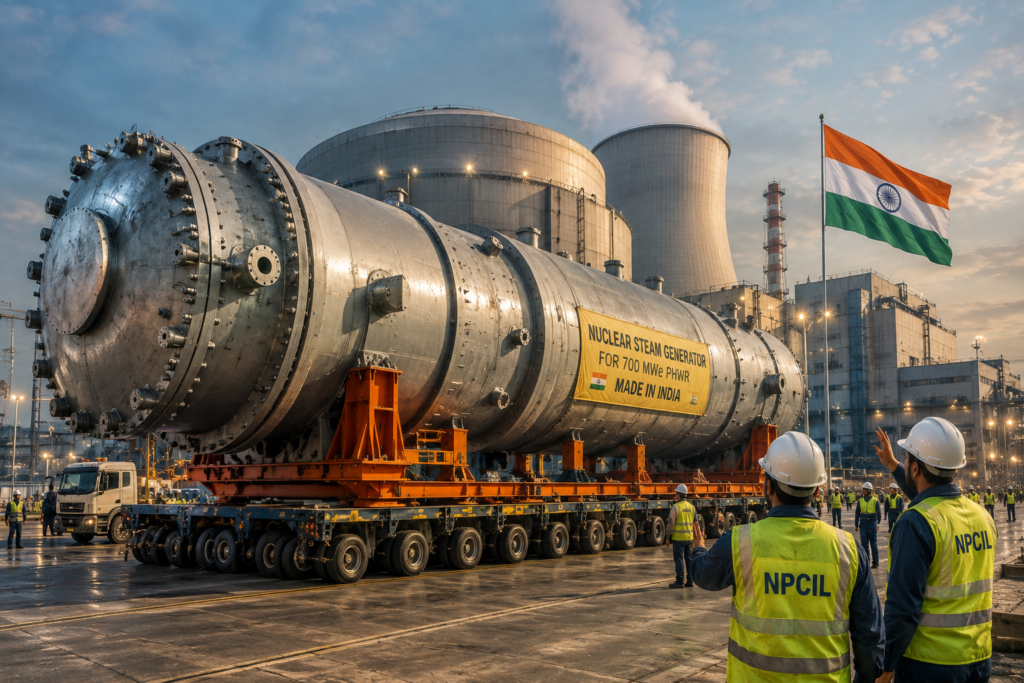
India has taken another giant leap toward energy independence and technological excellence. India’s 700 MWe Nuclear Steam Generator Triumph represents a landmark achievement in the country’s nuclear power journey, showcasing indigenous engineering capabilities, manufacturing excellence, and the vision of becoming a global clean-energy leader.
For decades, India has worked tirelessly to strengthen its nuclear infrastructure while reducing dependence on imported technologies. The successful manufacturing and deployment of advanced 700 MWe nuclear steam generators demonstrates how far the nation has progressed in high-end engineering and heavy industrial capabilities.
As someone who has closely followed India’s energy transformation for years, I believe India’s 700 MWe Nuclear Steam Generator Triumph is more than an industrial success story. It is a strategic milestone that can redefine India’s future energy security, economic growth, and climate commitments.
What Is a Nuclear Steam Generator?
A nuclear steam generator is one of the most critical components inside a pressurized heavy water reactor (PHWR).
Its primary role is to transfer heat generated inside the reactor core to water, producing steam that drives turbines and generates electricity.
The steam generator acts as a bridge between:
- Nuclear heat production
- Steam generation
- Electricity generation
Without efficient steam generators, nuclear plants cannot operate at optimal efficiency.
The success of India’s 700 MWe Nuclear Steam Generator Triumph highlights India’s capability to design and manufacture these highly sophisticated components domestically.
Why the 700 MWe Reactor Matters
India’s 700 MWe reactors are significantly more powerful than earlier 220 MWe and 540 MWe designs.
Key advantages include:
Higher Electricity Generation
A single 700 MWe reactor can supply power to millions of households while maintaining low carbon emissions.
Better Efficiency
Modern reactor designs improve fuel utilization and operational performance.
Reduced Carbon Footprint
Nuclear energy produces near-zero greenhouse gas emissions during operation.
Long-Term Energy Security
The success of India’s 700 MWe Nuclear Steam Generator Triumph supports India’s goal of reducing dependence on fossil fuels.
India’s Journey Toward Nuclear Self-Reliance
India’s nuclear program has evolved steadily despite technological restrictions and international sanctions in earlier decades.
The nation adopted a strategy focused on:
- Indigenous research
- Domestic manufacturing
- Local supply chains
- Advanced engineering development
Today, India’s 700 MWe Nuclear Steam Generator Triumph symbolizes the maturity of this long-term strategy.
Indian engineers, scientists, and manufacturers have demonstrated that world-class nuclear components can be produced domestically without relying heavily on foreign technology.
Engineering Excellence Behind the Achievement
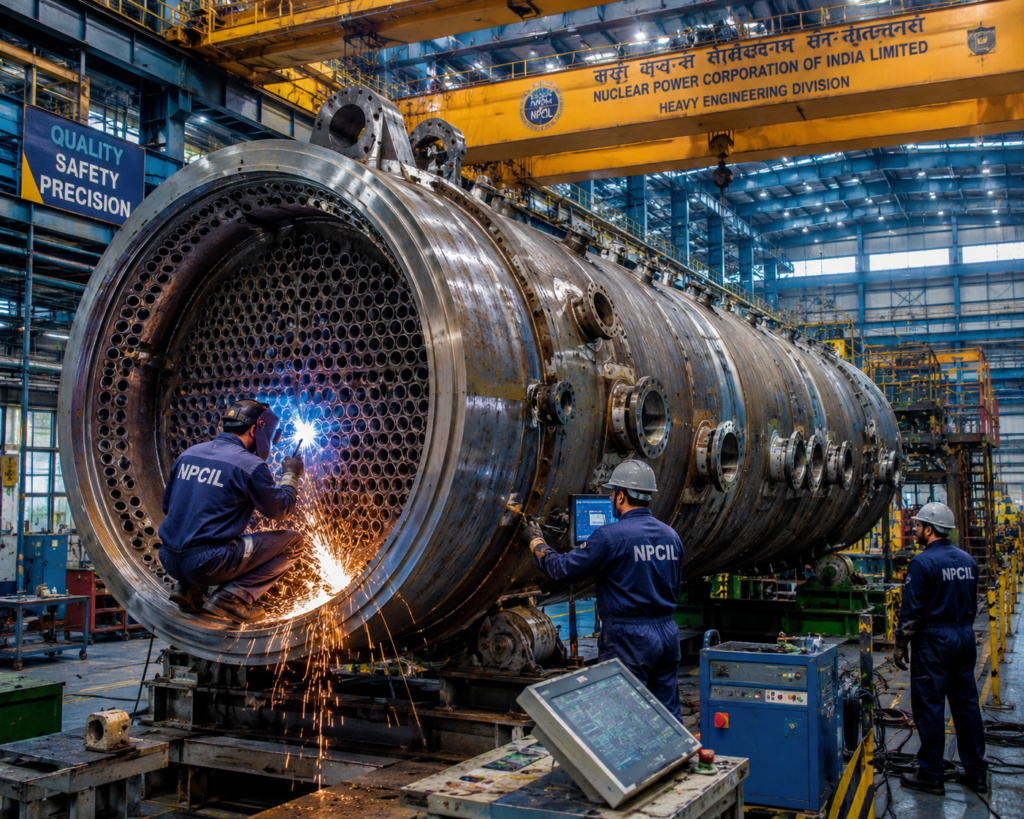
Manufacturing a 700 MWe nuclear steam generator is an extraordinary engineering challenge.
These massive structures:
- Weigh hundreds of tonnes
- Operate under extreme temperatures
- Withstand high pressure conditions
- Require exceptional precision
Even a minor manufacturing defect can impact plant performance.
The success of India’s 700 MWe Nuclear Steam Generator Triumph reflects years of research, testing, quality assurance, and technological innovation.
Engineers must ensure:
- Structural integrity
- Thermal efficiency
- Corrosion resistance
- Long operational life
Achieving all these standards simultaneously is a remarkable accomplishment.
Boosting India’s Clean Energy Goals
India has committed to ambitious climate and renewable energy targets.
However, renewable sources such as:
- Solar power
- Wind energy
face intermittency challenges.
Nuclear energy offers:
- Continuous power generation
- Grid stability
- Low emissions
This makes India’s 700 MWe Nuclear Steam Generator Triumph especially significant.
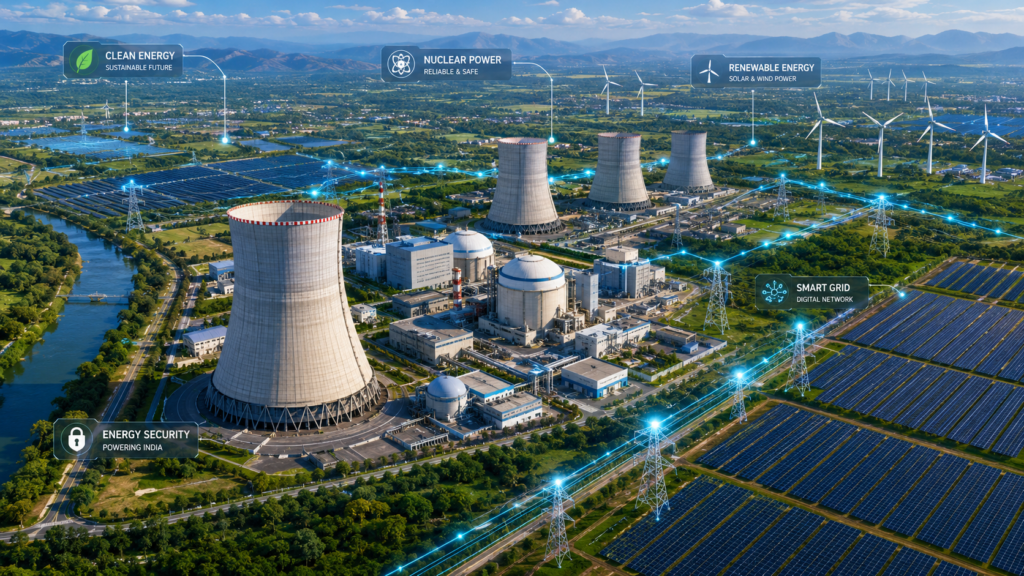
A stronger nuclear sector can complement renewable energy and help India meet growing electricity demand sustainably.
Strategic Importance for Energy Security
India imports large quantities of crude oil, natural gas, and coal.
Reducing dependence on imported fuels is a major national priority.
The achievement represented by India’s 700 MWe Nuclear Steam Generator Triumph supports this objective by enabling greater domestic power generation capacity.
Benefits include:
Lower Fuel Import Dependence
Domestic nuclear energy reduces exposure to global fuel price volatility.
Reliable Base-Load Power
Unlike weather-dependent energy sources, nuclear reactors operate continuously.
Strengthened National Infrastructure
A robust nuclear sector improves overall energy resilience.
Economic Impact of India’s 700 MWe Nuclear Steam Generator Triumph
The economic implications are substantial.
Job Creation
Large nuclear projects generate employment across multiple sectors:
- Engineering
- Manufacturing
- Construction
- Logistics
- Research
Supply Chain Growth
Thousands of domestic suppliers contribute to reactor projects.
Industrial Development
Advanced manufacturing capabilities spill over into other industries.
Technology Advancement
The expertise gained through India’s 700 MWe Nuclear Steam Generator Triumph can support future high-tech projects beyond nuclear power.
Supporting the Make in India Mission
One of the most important aspects of India’s 700 MWe Nuclear Steam Generator Triumph is its alignment with the Make in India initiative.
Domestic manufacturing delivers:
- Reduced import bills
- Enhanced industrial capacity
- Increased exports potential
- Stronger technological independence
The ability to manufacture highly specialized nuclear equipment demonstrates India’s emergence as a global engineering powerhouse.
How Nuclear Energy Supports India’s Net-Zero Goals
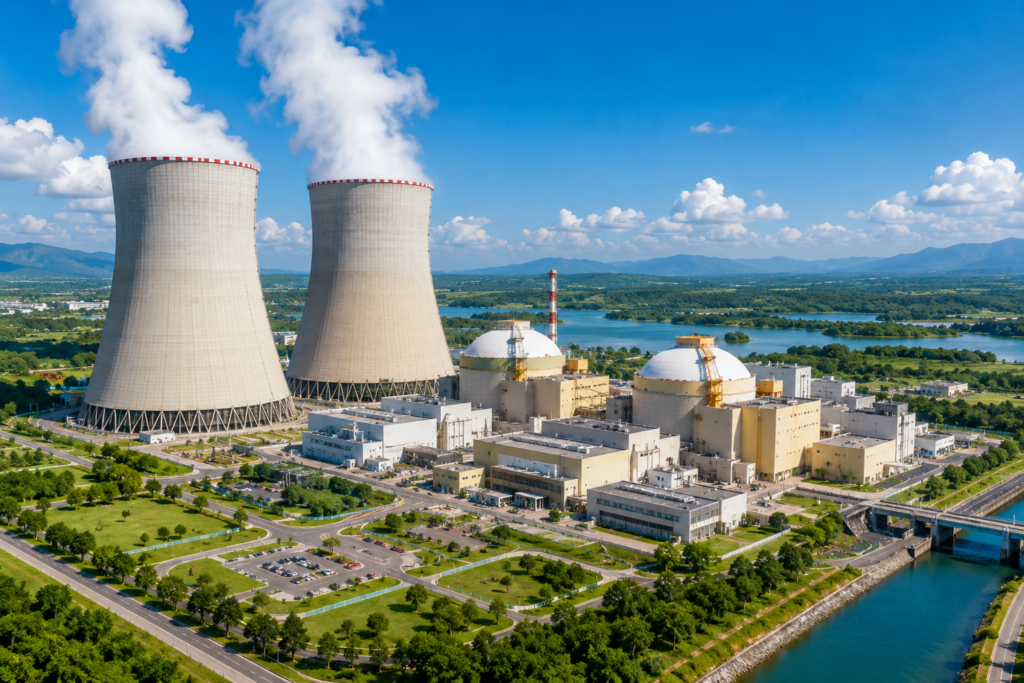
India aims to achieve significant emissions reductions while sustaining economic growth.
This creates a challenging balance.
The country needs:
- More electricity
- Cleaner electricity
- Affordable electricity
Nuclear power helps address all three objectives.
Through India’s 700 MWe Nuclear Steam Generator Triumph, India is expanding its ability to deploy low-carbon energy at scale.
Nuclear plants can operate for decades, providing stable clean electricity that supports industrial growth and urban development.
Technological Innovations Involved
The achievement involves multiple advanced technologies.
Precision Metallurgy
High-performance alloys ensure durability under extreme operating conditions.
Advanced Welding Systems
Specialized welding techniques maintain structural integrity.
Quality Assurance Protocols
Extensive testing ensures safety and performance.
Digital Manufacturing
Modern design and simulation tools improve production accuracy.
The success of India’s 700 MWe Nuclear Steam Generator Triumph reflects excellence across all these domains.
Global Significance of the Achievement
Many nations are reconsidering nuclear energy as part of their clean-energy transition.
India’s success sends a powerful message to the global community.
The country is demonstrating:
- Indigenous innovation
- Industrial capability
- Large-scale manufacturing expertise
As a result, India’s 700 MWe Nuclear Steam Generator Triumph may enhance India’s reputation as a reliable partner in advanced energy technologies.
Future Expansion of India’s Nuclear Program
The government has outlined ambitious plans for nuclear expansion.
Future objectives include:
Additional 700 MWe Reactors
Several units are planned or under construction.
Expanded Nuclear Capacity
Growing electricity demand will require more clean-energy sources.
Advanced Reactor Technologies
Research continues into next-generation nuclear systems.
Export Opportunities
Indian expertise may eventually support international projects.
The foundation established through India’s 700 MWe Nuclear Steam Generator Triumph will play a crucial role in these future developments.
Challenges Ahead
While the achievement is remarkable, challenges remain.
High Capital Costs
Nuclear projects require significant upfront investment.
Long Development Timelines
Construction and regulatory processes can take years.
Public Awareness
Education about nuclear safety remains important.
Infrastructure Requirements
Large-scale nuclear expansion demands continuous investment.
Nevertheless, India’s 700 MWe Nuclear Steam Generator Triumph demonstrates that the nation has the capability to overcome complex technological challenges.
Why This Achievement Matters to Every Indian
Many people may view nuclear technology as a distant industrial topic.
In reality, its impact reaches everyday life.
The success of India’s 700 MWe Nuclear Steam Generator Triumph contributes to:
- More reliable electricity
- Stronger economic growth
- Cleaner air
- Energy independence
- Industrial development
These benefits ultimately improve living standards and support national progress.
Expert Perspective
Having analyzed India’s energy sector for many years, I view India’s 700 MWe Nuclear Steam Generator Triumph as one of the most important industrial achievements in recent times.
This accomplishment combines:
- Scientific excellence
- Manufacturing strength
- Strategic planning
- Environmental responsibility
Few projects embody all these elements simultaneously.
The achievement proves that India can compete globally in some of the world’s most technologically demanding industries.
Conclusion
India’s 700 MWe Nuclear Steam Generator Triumph marks a defining moment in the country’s clean-energy journey. It reflects decades of investment in research, engineering, and industrial development. Beyond the technical achievement, it strengthens India’s energy security, supports climate goals, creates economic opportunities, and advances the vision of technological self-reliance.
As India continues expanding its nuclear capacity, this milestone will likely be remembered as a turning point that accelerated the nation’s rise as a global leader in advanced energy infrastructure. The significance of India’s 700 MWe Nuclear Steam Generator Triumph extends far beyond a single component—it represents confidence, capability, and the future of India’s energy transformation.
Frequently Asked Questions (FAQs)
1. What is India’s 700 MWe Nuclear Steam Generator Triumph?
It refers to India’s successful indigenous manufacturing and deployment of advanced steam generators for 700 MWe nuclear reactors, showcasing major progress in nuclear engineering and self-reliance.
2. Why are steam generators important in nuclear reactors?
Steam generators transfer heat from the reactor system to produce steam that drives turbines and generates electricity.
3. What does 700 MWe mean?
700 MWe stands for 700 megawatts electric output, indicating the amount of electricity a reactor can generate.
4. How does India’s 700 MWe Nuclear Steam Generator Triumph help the environment?
It supports low-carbon electricity generation, helping reduce greenhouse gas emissions and dependence on fossil fuels.
5. How does this achievement support Make in India?
The project showcases India’s ability to manufacture highly sophisticated nuclear equipment domestically, reducing import dependence and strengthening industrial capabilities.
6. What are the economic benefits of this achievement?
Benefits include job creation, supply chain growth, technology development, infrastructure expansion, and increased energy security.
7. Can India export nuclear technology in the future?
As expertise grows, India could potentially export components, engineering services, and nuclear technologies to international markets.
8. Why is India investing in nuclear energy?
Nuclear energy provides reliable, large-scale, low-carbon electricity that supports economic growth and long-term energy security.