
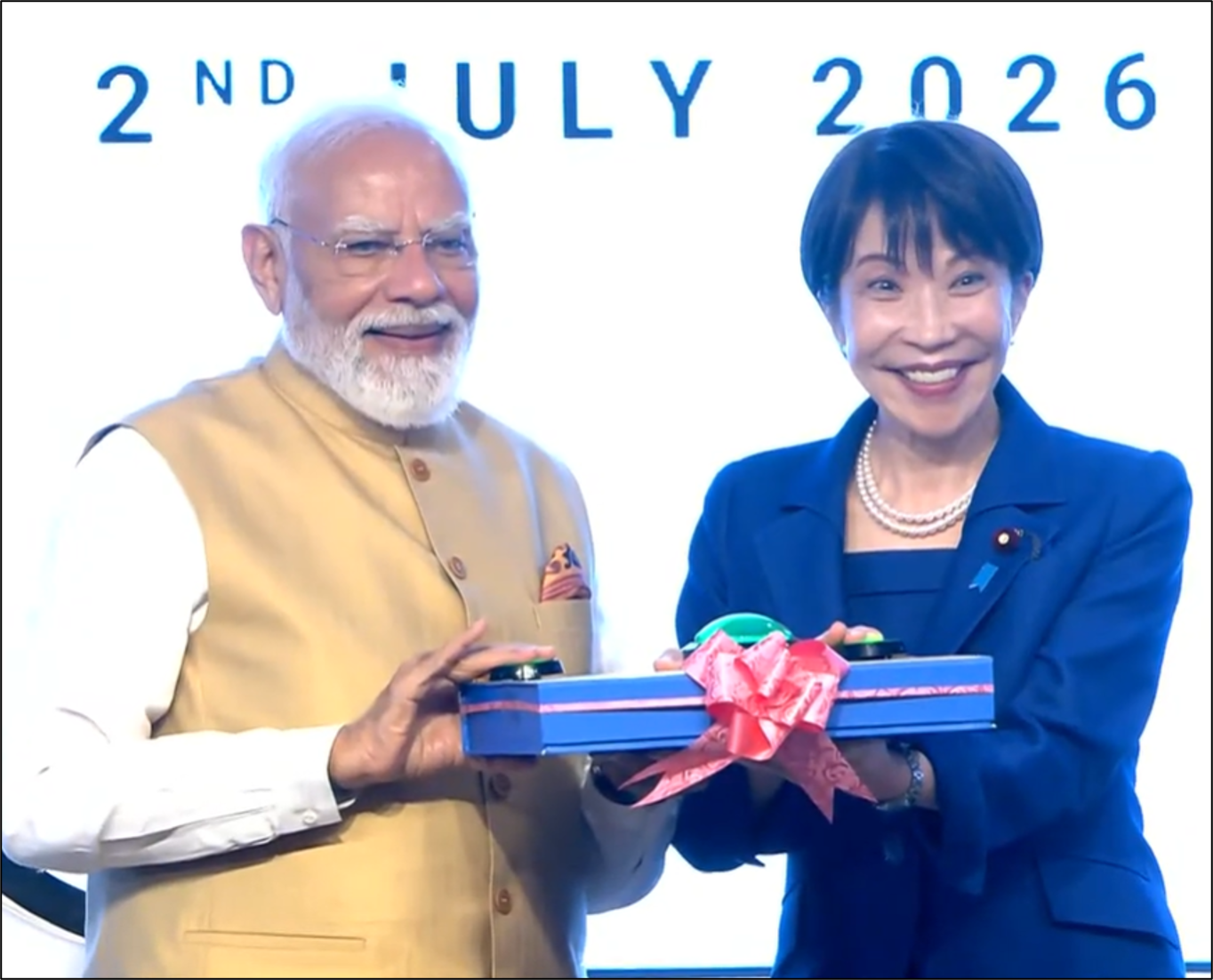
PM Modi and Japan PM Unveil Maruti’s ₹35,000 Crore Mega Car Plant: A New Era for India’s Automobile Industry
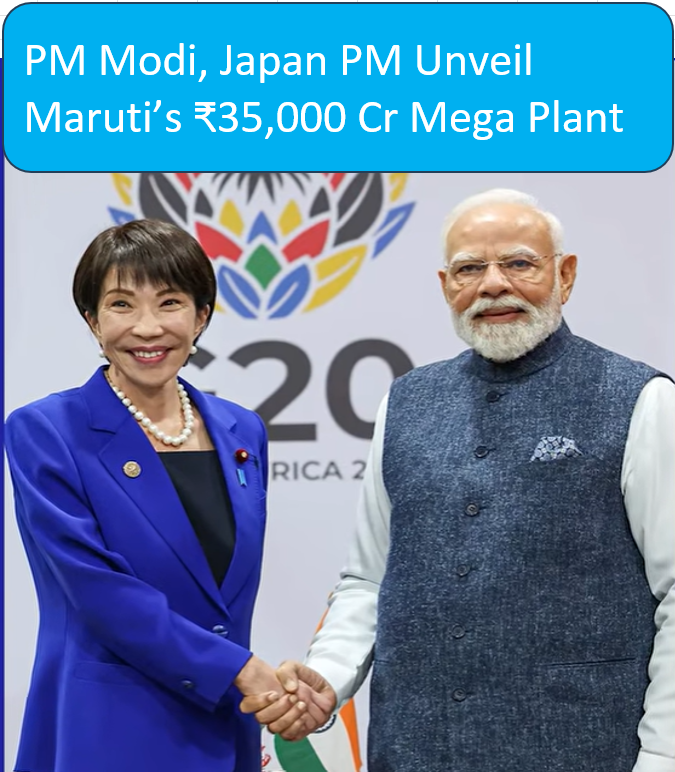
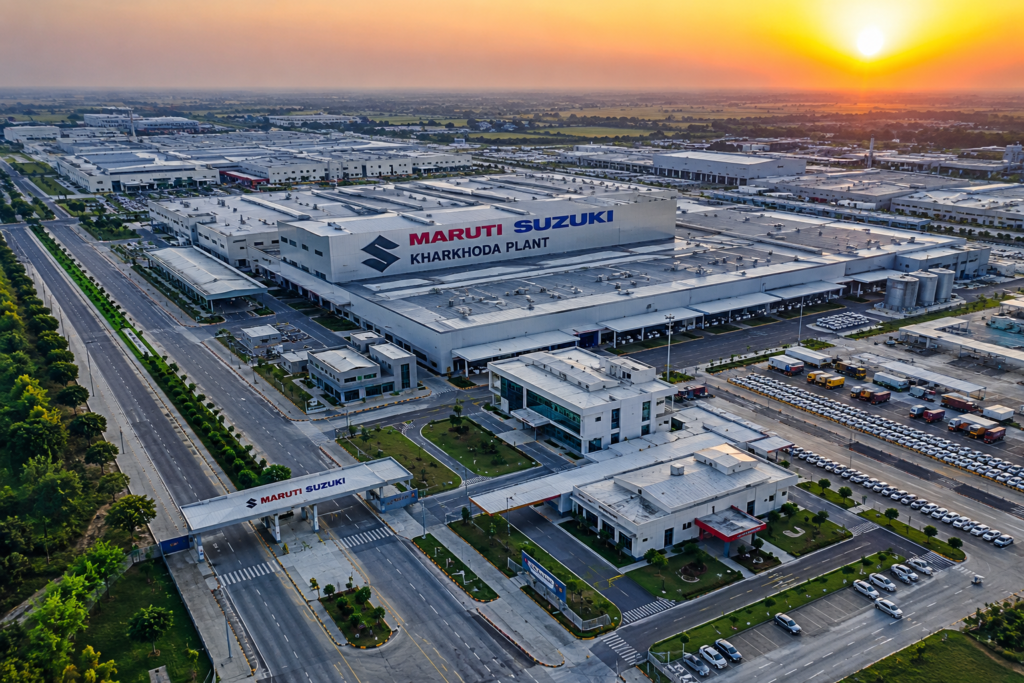
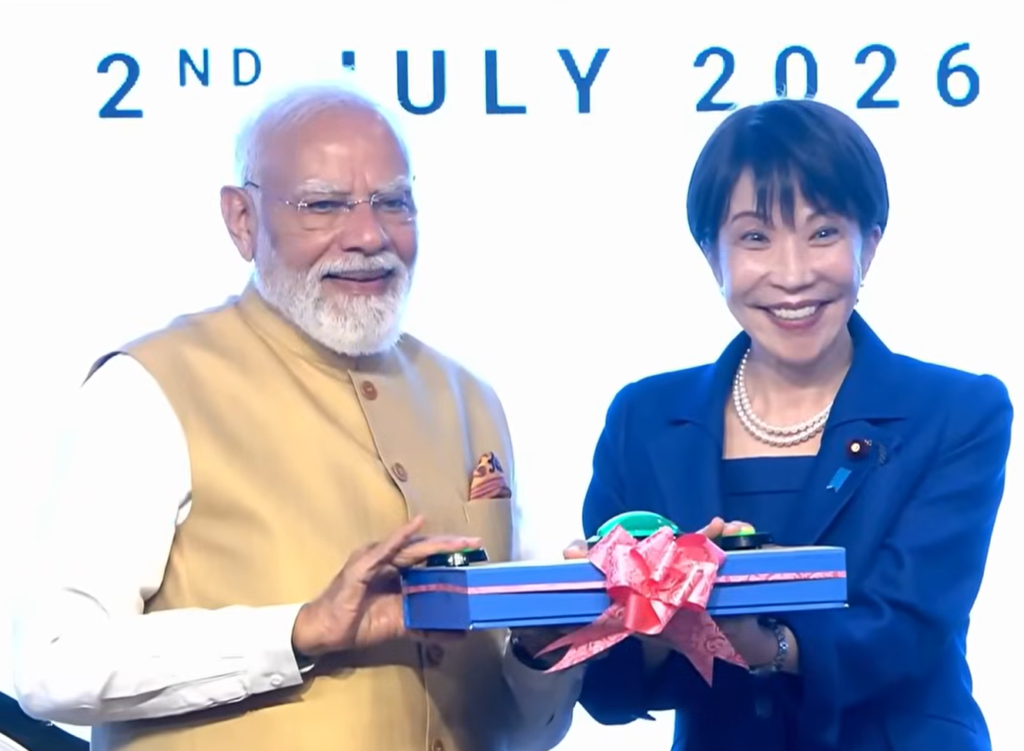
The announcement that PM Modi and Japan PM Unveil Maruti’s ₹35,000 Crore Mega Car Plant marks one of the most important milestones in India’s automotive manufacturing journey. The inaugaration of Maruti Suzuki India’s new manufacturing facility at Kharkhoda, Haryana, symbolizes not only a major industrial investment but also the growing strategic partnership between India and Japan. The project was jointly inaugurated by Prime Minister Narendra Modi and Japan Prime Minister Sanae Takaichi through video conferencing during the India – Japan Summit.
The planned investment of approximately ₹35,000 Crore, the mega manufacturing complex is expected to become one of the world’s largest automobile production sites. Once fully operational, then it has the capacity to manufacture 10 lakh vehicles annually, significantly increasing strength to Maruti Suzuki’s production capabilities while supporting India’s Make In India initiative and ambition to become a global automobile manufacturing powerhouse.
Key Highlights
- PM Modi and Japan PM Sanae Takaichi jointly inaugurated the Kharkhoda plant.
- Total investment is around ₹35,000 Crore, including the supplier ecosystem.
- The facility is located in Kharkhoda, Haryana.
- Annual production capacity will reach to 10 lakh vehicles.
- It will create more than 21,000 direct jobs.
- It will boost Indo – Japanese culture with cooperation.
- The project supports Make In India initiative and strengthens tie between India and Japan.
A Landmark Moment for Indian Manufacturing
The event where Prime Minister Modi and Japan PM unveils Maruti’s ₹35,000 Crore Mega Car Plant is very important than any other automobile factory. As it reflects India’s transformation into one of the world’s fastest growing automobile manufacturing industries.
Over the past decade, India emerging as a preferred investment destination for global automobile manufacturers due to its policy reforms, improved infrastructure, a skilled workforce and strong domestic demand. Maruti Suzuki, is India’s largest passenger vehicle manufacturer, continues to lead this transformation through continuous investments in manufacturing capacity and advanced production technologies.
The Kharkhoda facility is expected to play a vital role in meeting the rising demand for passenger vehicles which indirectly increase India’s export capabilities. As global automakers diversify their manufacturing bases, India is now becoming an increasingly attractive destination production hub, and this investment will work in that direction.
Why this ₹35,000 Crore Investment Matters
A ₹35,000 crore investment represents one of the largest capital commitments in India’s automobile sector in recent years.
The investment will cover:
- Manufacturing facilities
- Smart robotic assembly lines
- Supplier ecosystem
- Logistics infrastructure
- Advanced quality control systems
- Green manufacturing initiatives
Unlike conventional automobile plants, the Kharkhoda complex has been designed as an integrated automotive ecosystem. Suppliers will operate within the industrial campus, reducing logistics costs and improving production efficiency.
Industry experts believe that this integrated manufacturing model will enable Maruti Suzuki to remain highly competitive while improving production flexibility for future hybrid and electric vehicles.
Strengthening the India–Japan Partnership
The inauguration also highlights the deep economic partnership between India and Japan.
For over four decades, Suzuki Motor Corporation has played a central role in India’s passenger vehicle revolution. Maruti Suzuki has consistently invested in expanding its manufacturing footprint, localization efforts, and supplier development.
The presence of Prime Minister Modi and Prime Minister Sanae Takaichi at the inauguration underscores the strategic importance of industrial collaboration between the two nations. Beyond automobiles, India and Japan continue to cooperate in infrastructure, semiconductors, clean energy, and resilient supply chains.
This project serves as another example of Japanese companies placing long-term confidence in India’s manufacturing ecosystem.
Kharkhoda: India’s Next Automobile Manufacturing Hub
Kharkhoda in Haryana is rapidly emerging as one of India’s most important automobile manufacturing clusters.
The location offers several strategic advantages:
- Excellent connectivity to the National Capital Region (NCR)
- Proximity to existing Maruti Suzuki plants
- Strong road and freight infrastructure
- Availability of skilled manpower
- Integrated supplier network
Once fully developed, the Kharkhoda complex is expected to become one of Suzuki’s largest production hubs globally, capable of supporting both domestic sales and exports to international markets.
Massive Employment Opportunities
One of the biggest benefits of the project is employment generation.
According to company estimates, the project will create over 21,000 direct jobs, while indirect employment through component manufacturers, logistics providers, dealerships, maintenance services, and ancillary industries is expected to be significantly higher.
The expansion is likely to stimulate economic activity across Haryana by encouraging investments in housing, transportation, education, and local businesses that support the growing industrial workforce.
Manufacturing Capacity: A Game-Changer for Maruti Suzuki
The announcement that PM Modi, Japan PM Unveil Maruti’s ₹35,000 Cr Mega Car Plant represents far more than a ceremonial inauguration—it marks the beginning of a new manufacturing era for Maruti Suzuki India.
The Kharkhoda facility has been planned in multiple phases to meet India’s rapidly growing passenger vehicle demand. Once all phases are completed, the plant is expected to produce up to one million (10 lakh) vehicles annually, making it one of Suzuki’s largest automobile manufacturing facilities anywhere in the world.
Initially, the plant began operations with a production line capable of manufacturing around 250,000 vehicles per year. Future expansion phases will gradually increase production capacity, allowing Maruti Suzuki to respond to both domestic and export market demand.
This additional capacity comes at a crucial time. India’s passenger vehicle market continues to expand due to:
- Rising middle-class incomes
- Growing urbanization
- Improved highway infrastructure
- Easier access to vehicle financing
- Increasing demand for SUVs and premium hatchbacks
By expanding production, Maruti Suzuki can reduce waiting periods for customers while strengthening its leadership in India’s highly competitive automobile market.
Advanced Manufacturing Technology at Kharkhoda
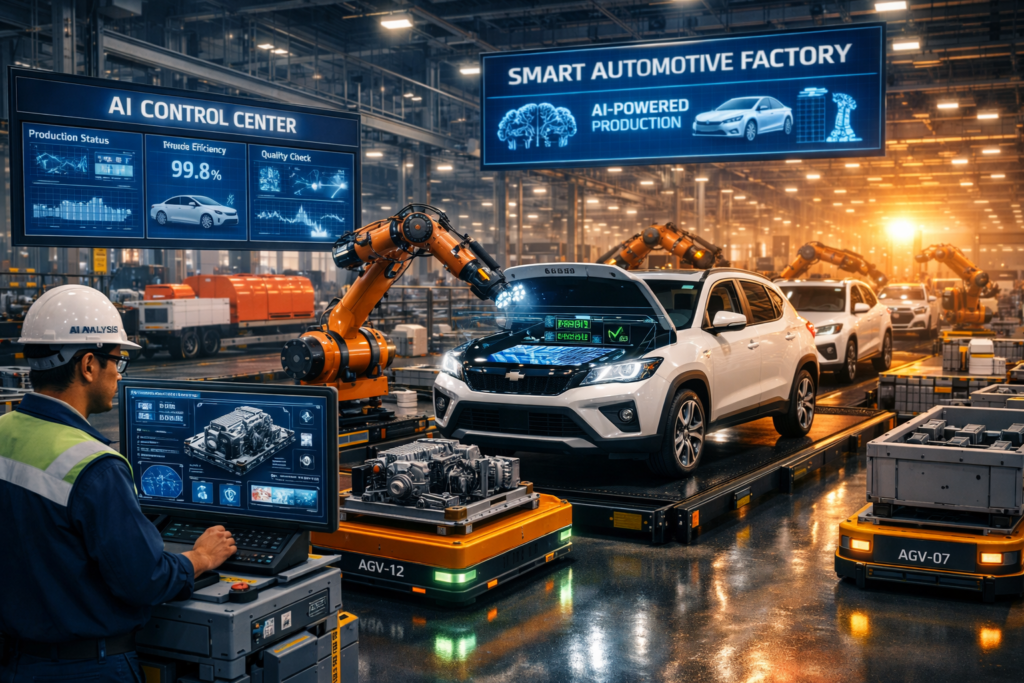
Unlike older automobile plants, the Kharkhoda facility has been designed around the principles of Industry 4.0.
The plant integrates advanced technologies such as:
- Artificial Intelligence-based quality inspection
- Robotic welding systems
- Automated painting facilities
- Digital production monitoring
- IoT-enabled machinery
- Predictive maintenance systems
- Automated material handling
- Smart warehouse management
These technologies improve production efficiency while maintaining consistently high product quality.
The use of automation does not eliminate jobs. Instead, it shifts workforce requirements toward highly skilled technicians, robotics specialists, software engineers, and manufacturing professionals who operate and maintain advanced production systems.
This transformation reflects the broader evolution of India’s manufacturing sector toward higher-value, technology-driven industrial production.
Supporting India’s Electric Vehicle Future
Although Maruti Suzuki remains a dominant player in petrol-powered passenger vehicles, the company is making significant investments in electric mobility.
The Kharkhoda plant has been developed with future flexibility in mind, allowing production lines to adapt to:
- Battery Electric Vehicles (BEVs)
- Hybrid Vehicles
- Strong Hybrid Models
- Flexible vehicle platforms
- Future clean mobility technologies
As India’s EV ecosystem expands through government incentives, charging infrastructure, and consumer demand, facilities like Kharkhoda will play a vital role in supporting next-generation vehicle production.
This flexibility also strengthens Maruti Suzuki’s long-term competitiveness in both domestic and international markets.
Boosting the Make in India Mission
One of the biggest reasons why PM Modi, Japan PM Unveil Maruti’s ₹35,000 Cr Mega Car Plant has attracted nationwide attention is its alignment with the Government of India’s Make in India initiative.
Launched to transform India into a global manufacturing hub, the Make in India program encourages:
- Domestic manufacturing
- Foreign direct investment (FDI)
- Technology transfer
- Employment generation
- Export-oriented production
- Supply chain localization
The Kharkhoda mega plant supports all of these objectives.
Rather than importing major vehicle components, Maruti Suzuki continues increasing the localization of parts through Indian suppliers. This strategy reduces import dependence while helping domestic component manufacturers expand their capabilities.
The result is a stronger, more resilient automotive ecosystem that benefits thousands of small and medium enterprises across the country.
Strengthening India’s Export Potential
India has steadily emerged as a major exporter of passenger vehicles.
Maruti Suzuki already exports vehicles to more than 100 countries, and the additional manufacturing capacity at Kharkhoda is expected to strengthen that position further.
Higher production capacity enables the company to:
- Meet rising export demand
- Reduce production bottlenecks
- Expand into emerging markets
- Improve delivery timelines
- Increase foreign exchange earnings
Exports are becoming an increasingly important growth driver for Indian automobile manufacturers.
With global companies seeking diversified manufacturing bases outside traditional production hubs, India has a unique opportunity to become a preferred export destination.
The Kharkhoda facility is expected to play an important role in achieving this objective.

Creating a Robust Supplier Ecosystem
Modern automobile manufacturing extends far beyond the assembly line.
Every passenger vehicle consists of thousands of individual components produced by hundreds of suppliers.
The ₹35,000 crore investment includes the development of a comprehensive supplier ecosystem around the Kharkhoda facility.
This integrated industrial cluster is expected to include manufacturers of:
- Engine components
- Transmission systems
- Electronic modules
- Seats and interiors
- Glass
- Tires
- Wiring harnesses
- Plastic components
- Metal stampings
- Batteries
Locating suppliers close to the main production plant offers several advantages:
- Lower transportation costs
- Faster component delivery
- Reduced inventory requirements
- Better production coordination
- Improved quality control
- Greater manufacturing flexibility
Such industrial clusters are recognized globally as a key factor in improving productivity and competitiveness.
Economic Impact on Haryana
The Kharkhoda mega plant is expected to become one of Haryana’s most significant industrial investments in recent years.
Beyond direct employment, the project is likely to stimulate growth across multiple sectors, including:
- Real estate and housing
- Retail and commercial development
- Transportation and logistics
- Hospitality services
- Healthcare facilities
- Educational institutions
- Skill development centers
As industrial activity increases, local businesses are expected to benefit from higher demand for goods and services, contributing to broader regional economic development.
Infrastructure Development Around the Plant
Large-scale manufacturing facilities often act as catalysts for infrastructure improvements.
To support operations at Kharkhoda, investments are expected in:
- Wider road networks
- Dedicated freight corridors
- Improved rail connectivity
- Power distribution infrastructure
- Water management systems
- Digital connectivity
- Industrial townships
These improvements not only benefit the manufacturing sector but also enhance the quality of life for surrounding communities.
India’s Growing Appeal to Global Investors
The inauguration of the Kharkhoda facility sends a strong signal to international investors about India’s manufacturing potential.
Several factors continue to make India an attractive destination for global investment:
- Stable policy environment
- Expanding consumer market
- Competitive labor costs
- Improving ease of doing business
- Modern industrial infrastructure
- Government support for manufacturing
- Strategic geographic location
Major investments by established companies like Maruti Suzuki reinforce confidence among other multinational corporations considering expansion in India.
Environmental Sustainability and Green Manufacturing
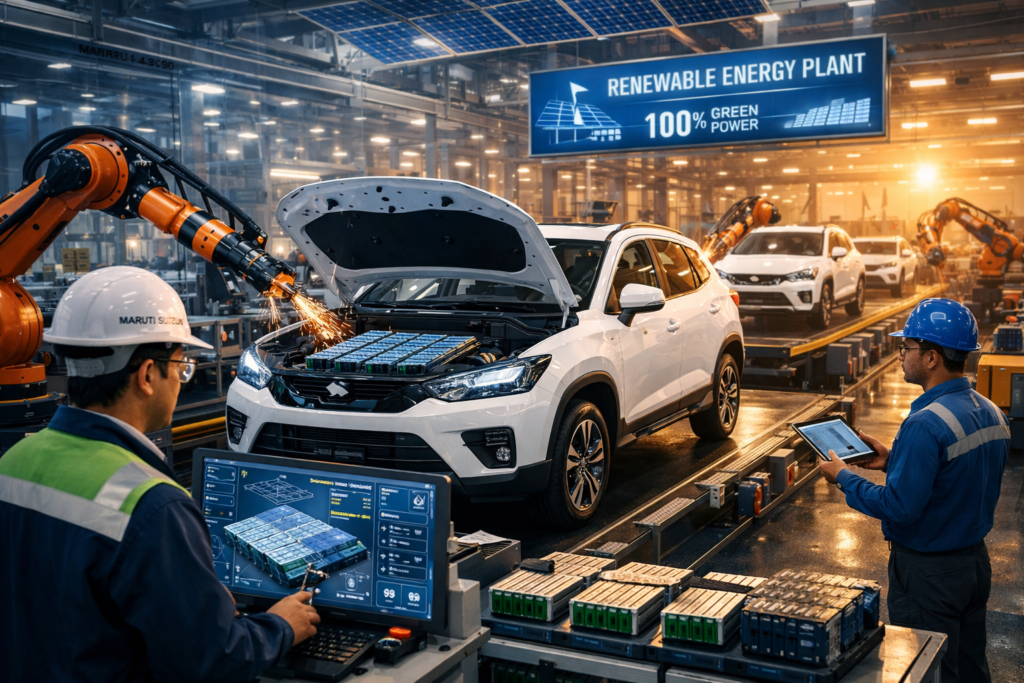
Modern automobile plants are increasingly designed with sustainability in mind, and the Kharkhoda facility is expected to incorporate several environmentally responsible practices.
These include:
- Energy-efficient production systems
- Water recycling and conservation
- Waste reduction initiatives
- Renewable energy integration where feasible
- Environment-friendly manufacturing processes
- Advanced emission-control technologies
Such measures align with India’s broader sustainability goals while helping manufacturers reduce operating costs over the long term.
Expert Analysis: Why This Mega Plant Is a Landmark Investment
The inauguration of Maruti Suzuki’s ₹35,000 crore mega car plant is not just another industrial project—it represents a strategic investment in India’s long-term manufacturing capabilities. Industry analysts believe the facility will strengthen India’s position as a global automobile production hub while supporting domestic demand and export growth.
Several factors make this investment particularly significant:
1. Increased Production Capacity
As India’s passenger vehicle market continues to expand, additional manufacturing capacity will help reduce delivery timelines and meet growing consumer demand.
2. Stronger Supply Chain
The integrated supplier ecosystem around the Kharkhoda plant is expected to reduce logistics costs, improve efficiency, and increase localization of automobile components.
3. Technology Transfer
Maruti Suzuki’s collaboration with Suzuki Motor Corporation brings advanced Japanese manufacturing practices, automation, and quality control systems to India, benefiting the broader automotive ecosystem.
4. Enhanced Global Competitiveness
The facility is expected to support exports to international markets, reinforcing India’s reputation as a reliable manufacturing base for high-quality passenger vehicles.

Future Outlook for Maruti Suzuki
Looking ahead, the Kharkhoda plant is expected to play a pivotal role in Maruti Suzuki’s growth strategy.
Key future developments may include:
- Expansion of annual production capacity in phases.
- Introduction of new SUV and crossover models.
- Increased production of hybrid and electric vehicles.
- Greater export volumes to emerging and developed markets.
- Enhanced use of AI, robotics, and digital manufacturing technologies.
As consumer preferences evolve and the automotive industry transitions toward cleaner mobility solutions, flexible manufacturing facilities like Kharkhoda will be critical in supporting future vehicle platforms.
Impact on India’s Automobile Industry
The automobile sector contributes significantly to India’s economy through manufacturing, exports, employment, and technological innovation.
The new mega plant is expected to generate positive ripple effects across the industry by:
- Encouraging further investments from global automakers.
- Strengthening India’s auto-component manufacturing sector.
- Promoting advanced manufacturing technologies.
- Supporting skill development and workforce training.
- Increasing India’s share in global automobile exports.
The project also aligns with India’s vision of becoming a leading manufacturing destination under initiatives such as Make in India and Atmanirbhar Bharat.
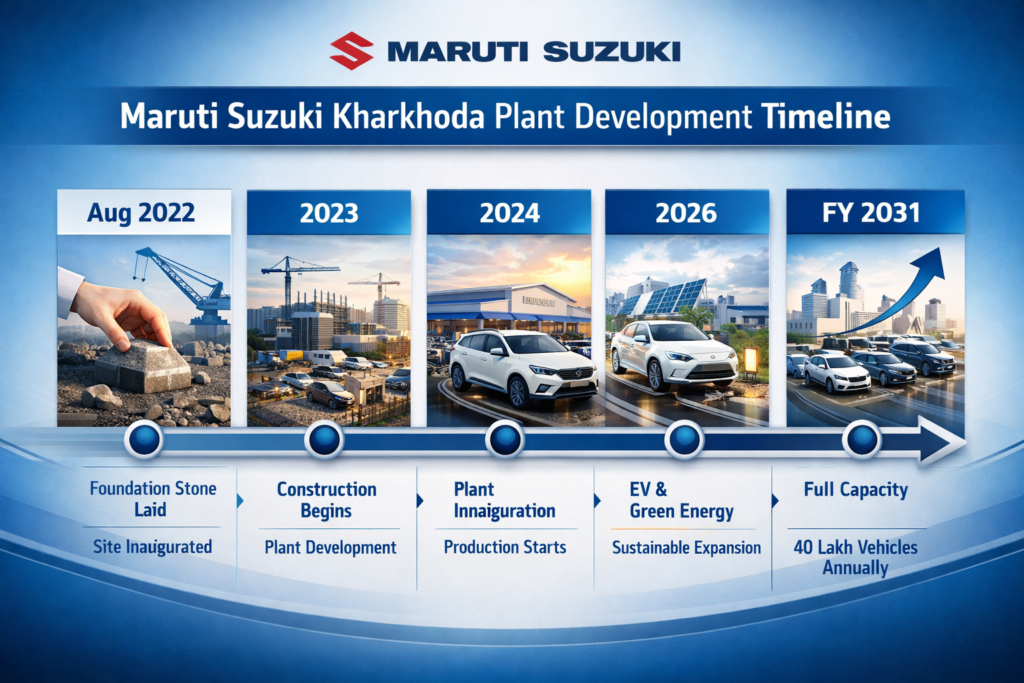
Project Timeline
| Year | Milestone |
|---|---|
| 2022 | Foundation stone laid for the Kharkhoda manufacturing facility. |
| 2024 | Initial production activities commence at the first phase of the plant. |
| 2025–2026 | Capacity expansion and supplier ecosystem development continue. |
| 2026 | High-profile inauguration event highlighting India–Japan industrial cooperation. |
| Future | Planned expansion to an annual production capacity of up to 10 lakh vehicles. |
Frequently Asked Questions (FAQs)
1. Where is Maruti Suzuki’s ₹35,000 crore mega car plant located?
The mega manufacturing facility is located in Kharkhoda, Sonipat district, Haryana, strategically positioned near the National Capital Region (NCR).
2. What is the total investment in the project?
The overall investment associated with the project is estimated at around ₹35,000 crore, including manufacturing infrastructure and the supplier ecosystem.
3. What will be the plant’s annual production capacity?
Once fully developed, the facility is expected to have an annual production capacity of up to 10 lakh (1 million) passenger vehicles.
4. How many jobs will the project create?
The project is expected to generate over 21,000 direct jobs, with many more indirect employment opportunities through suppliers, logistics, and ancillary industries.
5. Why is the Kharkhoda plant important?
The plant strengthens India’s automobile manufacturing capacity, supports exports, encourages localization, and contributes to economic growth.
6. Will the plant manufacture electric vehicles?
The facility has been designed with future-ready manufacturing systems that can support hybrid and electric vehicle production as demand grows.
7. How does this project benefit Haryana?
The project is expected to boost industrial development, improve infrastructure, attract additional investments, and create employment opportunities across the region.
8. How does the plant support Make in India?
By increasing domestic manufacturing, promoting local sourcing, encouraging technology transfer, and generating employment, the project aligns closely with the Make in India initiative.
9. Will vehicles from the plant be exported?
Yes. The expanded production capacity is expected to support exports to multiple international markets while also meeting domestic demand.
10. Why is India attracting such large automobile investments?
India offers a large consumer market, skilled workforce, improving infrastructure, supportive government policies, and growing opportunities for exports, making it an attractive destination for global manufacturers.
Conclusion
The inauguration of Maruti Suzuki’s ₹35,000 crore mega car plant marks a significant milestone for India’s automotive manufacturing sector. The project reflects growing confidence in India’s industrial capabilities and highlights the long-standing collaboration between India and Japan in advancing manufacturing excellence.
Beyond expanding vehicle production, the facility is expected to generate employment, strengthen the supplier ecosystem, support exports, and encourage the adoption of advanced manufacturing technologies. As the plant scales up over the coming years, it has the potential to contribute meaningfully to India’s ambition of becoming a global automobile manufacturing and export hub.
For Maruti Suzuki, the investment represents a long-term commitment to innovation, efficiency, and sustainable growth. For India, it reinforces the country’s emergence as a preferred destination for global manufacturing investments and a key player in the future of the automotive industry.
“As per My knowledge investments in passenger vehicle manufacturing will boost not only domestic industries but also becoming India a global leader in Automobile manufacturing, this helps to create no of job opportunities direct and indirect thru supply chain at domestic market.“