
US-India Trade Deal: 3-Month Boost to Bilateral Trade Could Reshape Economic Ties
US-India Trade Deal: 3-Month Boost to Bilateral Trade has emerged as a major focus of global economic discussions as India and the United States move toward strengthening their trade relationship. A potential agreement within the next three to four months could provide fresh momentum to bilateral commerce, reduce trade uncertainties and create new opportunities for businesses in both countries.
The proposed trade understanding comes at a time when the global economy is undergoing significant changes. Supply-chain diversification, tariff negotiations, manufacturing relocation, technology partnerships and geopolitical realignments are increasingly influencing international trade decisions.
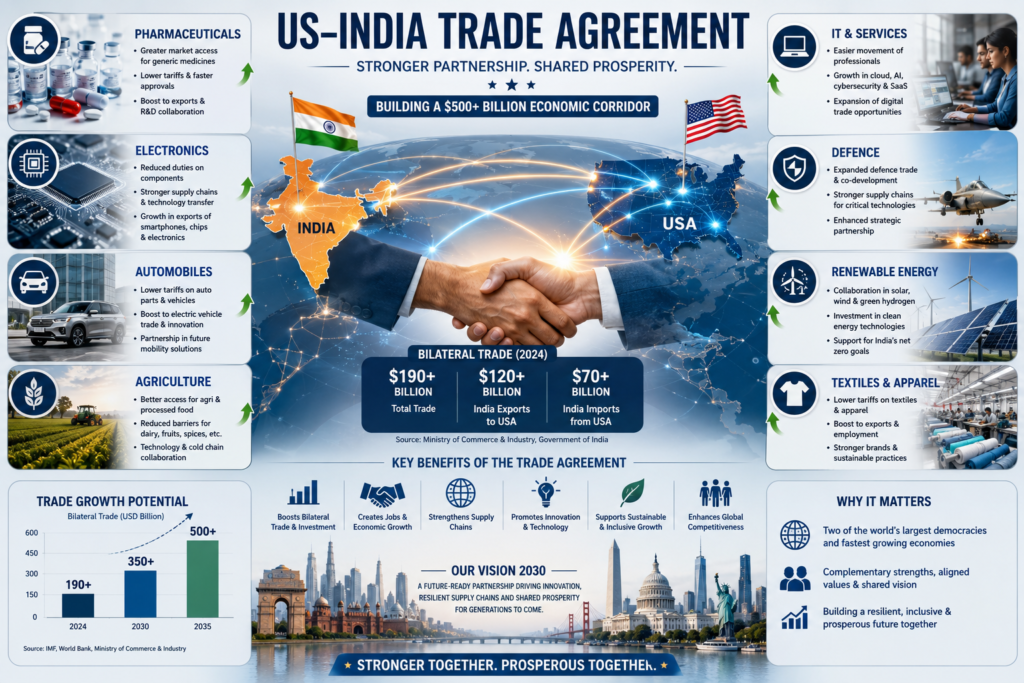
For India, deeper economic engagement with the United States could support export growth across sectors such as pharmaceuticals, electronics, textiles, engineering goods, automobiles, chemicals and information technology-enabled services. For the US, stronger access to India’s rapidly expanding consumer market could benefit American companies operating in technology, energy, financial services, manufacturing, healthcare and infrastructure.
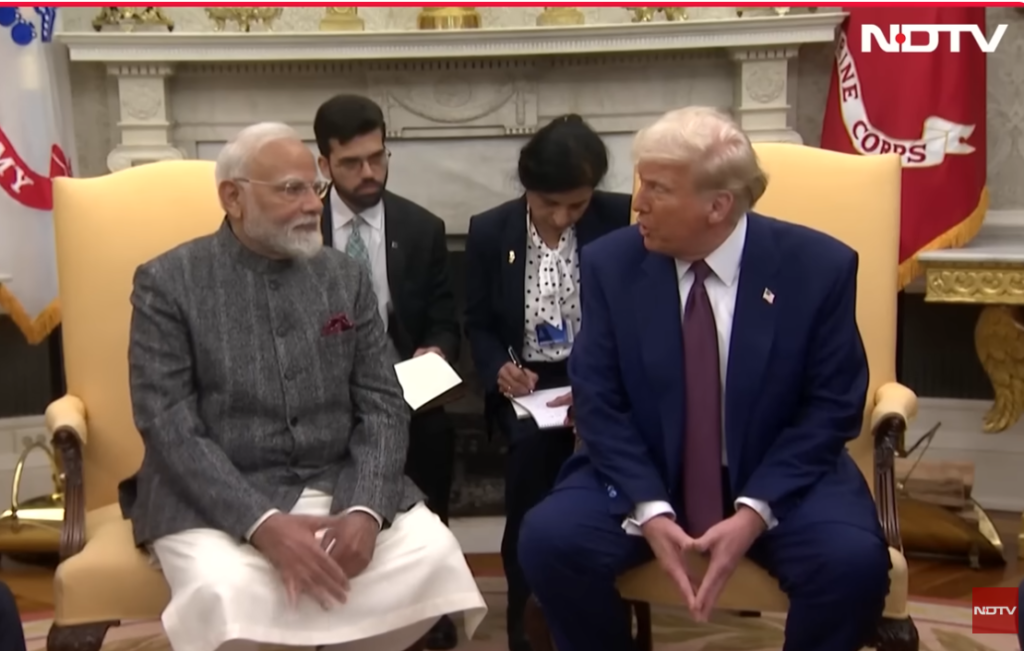
The importance of the US-India Trade Deal: 3-Month Boost to Bilateral Trade therefore extends beyond a simple reduction in tariffs. If successfully negotiated, the agreement could become part of a broader economic strategy aimed at improving market access, strengthening supply chains and encouraging greater investment.
What Is the US-India Trade Deal?
The US-India Trade Deal: 3-Month Boost to Bilateral Trade refers to ongoing efforts by India and the United States to reach a mutually beneficial trade arrangement that could improve economic cooperation between the two countries.
Trade negotiations between major economies are often complex because they involve multiple areas, including tariffs, market access, regulatory standards, intellectual property, agriculture, digital commerce and industrial policies.
India and the US have significantly expanded their economic relationship over the past two decades. The US has become one of India’s most important trading partners, while Indian companies have increased their presence in the American market.
A trade deal could potentially address several challenges that businesses currently face.
These may include:
- High tariffs on selected products
- Regulatory barriers
- Differences in product standards
- Market-access restrictions
- Supply-chain uncertainties
- Customs and logistics challenges
- Concerns regarding digital trade
- Agricultural and industrial trade disputes
The objective would be to establish a more predictable business environment that encourages companies to increase exports and investment.
The three-month timeline is particularly important because businesses generally require certainty when making investment and production decisions. If negotiations move forward quickly, companies could begin preparing for increased trade flows even before the full implementation of an agreement.
Why the US-India Trade Deal Matters for Bilateral Trade
The potential economic impact of the US-India Trade Deal: 3-Month Boost to Bilateral Trade could be substantial because India and the US have complementary economic strengths.
India is increasingly becoming a major manufacturing and services hub. Its large workforce, growing domestic market and expanding digital economy make it an attractive destination for international investment.
The United States, meanwhile, remains one of the world’s largest consumer markets and a global leader in advanced technology, finance, aerospace, energy and innovation.
A stronger trade partnership could connect these strengths more efficiently.
For example, Indian manufacturers could gain greater access to American consumers, while US companies could benefit from India’s expanding market and production ecosystem.
The agreement could also support India’s ambition to diversify exports and become a more important participant in global supply chains.
At the same time, American companies may see opportunities to expand their presence in India’s growing economy.
The potential benefits include:
- Increased merchandise exports
- Higher foreign investment
- Greater supply-chain integration
- Improved technology cooperation
- Expanded services trade
- Stronger manufacturing partnerships
- More predictable trade policies
These factors explain why negotiations are being closely watched by investors and businesses.
US-India Trade Deal: 3-Month Boost to Bilateral Trade Could Help Exporters
One of the most immediate potential benefits of the US-India Trade Deal: 3-Month Boost to Bilateral Trade could be increased opportunities for Indian exporters.
The United States is a major destination for Indian products. Indian businesses across multiple industries depend on access to the American market.
If trade barriers are reduced, Indian exporters could become more competitive.
Pharmaceuticals
India is one of the world’s major suppliers of generic medicines. Greater trade cooperation could improve opportunities for Indian pharmaceutical companies in the US market.
The sector could benefit from:
- Improved market access
- Greater regulatory cooperation
- Faster approvals
- Expansion of generic medicine exports
- Increased healthcare partnerships
However, pharmaceuticals remain a highly regulated industry, meaning any agreement would need to address regulatory and intellectual-property concerns carefully.
Textiles and Apparel
India’s textile industry employs millions of people and has significant export potential.
A trade agreement that improves tariff conditions could make Indian textiles more competitive against products from other manufacturing nations.
Potential beneficiaries could include:
- Garment manufacturers
- Home textile producers
- Cotton exporters
- Technical textile companies
- Handicraft businesses
Engineering and Manufacturing
India’s engineering exports could also receive a boost.
Products such as machinery, auto components, industrial equipment and electrical goods could find new opportunities in the US market if trade conditions become more favorable.
Electronics
Electronics could become one of the most strategically important areas of future India-US trade.
India is seeking to expand domestic electronics manufacturing and attract global companies to build production capacity in the country.
A stronger trade relationship with the US could help integrate Indian manufacturing into global technology supply chains.
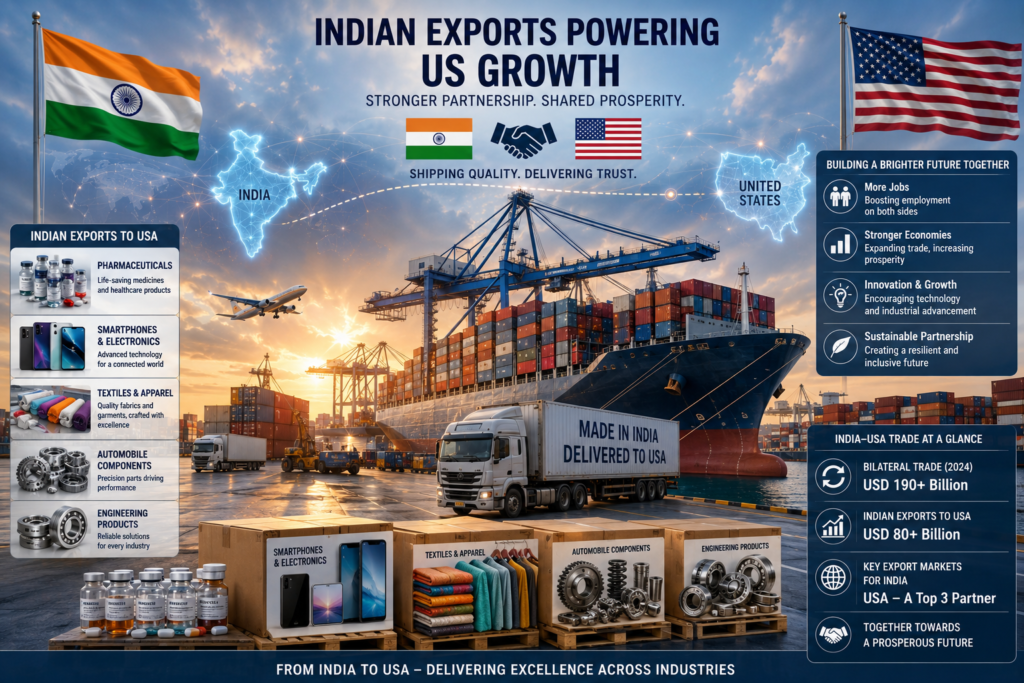
US-India Trade Deal Could Strengthen Supply Chains
The global supply-chain landscape has changed dramatically in recent years.
Companies are increasingly looking for diversified manufacturing locations rather than depending heavily on a single country.
This trend could create opportunities for India.
The US-India Trade Deal: 3-Month Boost to Bilateral Trade could accelerate India’s role as a preferred manufacturing and sourcing destination for global companies.
Industries such as electronics, semiconductors, renewable energy, pharmaceuticals and automotive manufacturing are already receiving increased attention.
India’s large domestic market provides an additional advantage. Companies that establish manufacturing operations in India can potentially serve both Indian consumers and international markets.
A more predictable trade relationship with the United States could encourage companies to increase investments in production facilities, logistics infrastructure and research and development.
This could generate a multiplier effect.
More investment could lead to:
Higher production → More exports → More jobs → Greater investment → Stronger supply chains
The resulting economic benefits could extend beyond large corporations to small and medium-sized enterprises that participate in supply chains.
How the US Could Benefit From the Trade Agreement
The potential benefits are not limited to India.
The US also has significant economic interests in strengthening its relationship with India.
India’s rapidly growing middle class represents a large consumer market for American products and services.
US companies could find opportunities in:
- Aircraft and aviation
- Energy
- Technology
- Semiconductors
- Financial services
- Healthcare
- Education
- Agriculture
- Defence manufacturing
- Artificial intelligence
- Cloud computing
American technology companies already have a substantial presence in India. A stronger trade framework could create opportunities for deeper investment and partnerships.
The US could also benefit from India’s role in global supply-chain diversification.
By expanding economic cooperation with India, American companies could reduce their dependence on concentrated manufacturing ecosystems and build more resilient supply networks.
US-India Trade Deal: 3-Month Boost to Bilateral Trade and Investment
Trade and investment are closely connected.
When businesses believe that trade policies will remain stable, they are more likely to invest in new factories, distribution centers and technology projects.
This is where the US-India Trade Deal: 3-Month Boost to Bilateral Trade could have a long-term impact.
A successful agreement could improve investor confidence by providing greater clarity about tariffs and market access.
Indian companies could potentially expand their operations in the US, while American firms could increase investment in India.
The investment relationship could become particularly important in strategic industries.
Semiconductor Manufacturing
India is building its semiconductor ecosystem with government support and private investment.
US technology companies and semiconductor firms could potentially play a larger role in this emerging ecosystem.
Clean Energy
India’s transition toward renewable energy could create opportunities for American companies specializing in solar technology, energy storage, smart grids and clean-energy infrastructure.
Defence and Aerospace
Defence and aerospace cooperation has become an increasingly important element of India-US strategic relations.
Greater economic cooperation could support manufacturing partnerships and technology collaboration.
Artificial Intelligence
AI is emerging as a major area of economic competition and cooperation.
India’s large technology workforce and expanding digital ecosystem could complement American leadership in advanced AI development.
The Three-Month Timeline: Why It Matters
The possibility of a trade agreement within approximately three to four months has attracted significant attention.
However, trade negotiations are rarely simple.
Even when political leaders agree on broad principles, detailed negotiations can take time.
The final agreement may require discussions about:
- Tariff structures
- Rules of origin
- Agricultural access
- Industrial goods
- Digital trade
- Services
- Intellectual property
- Data regulations
- Environmental standards
- Labour considerations
Therefore, the three-month timeline should be viewed as a potential negotiation window rather than a guarantee that every element of a comprehensive trade agreement will be finalized and implemented immediately.
Nevertheless, even an initial agreement or framework could have a positive impact on business sentiment.
Companies often respond to signals of improving trade relations before formal implementation.
Investors may increase exposure to sectors expected to benefit, while exporters could begin exploring new market opportunities.
What Could Be Included in the US-India Trade Deal?
Although the final terms would depend on negotiations, several areas could become central to the agreement.
1. Tariff Reduction
Reducing tariffs could make products more competitive in both markets.
This would potentially benefit exporters and consumers.
2. Market Access
Improved access to each other’s markets could help businesses expand their customer base.
3. Services Trade
India is a global leader in IT and business services. Greater cooperation could strengthen cross-border services.
4. Technology Cooperation
Technology partnerships could become an important component of the broader economic relationship.
5. Supply-Chain Resilience
Both countries could work toward building more diversified supply chains.
6. Investment Facilitation
Simplifying investment rules could encourage companies to establish new operations.
7. Digital Economy
Digital services, artificial intelligence and data-related regulations could become increasingly important.
US-India Trade Deal: 3-Month Boost to Bilateral Trade Could Transform Key Industries
The potential impact of the US-India Trade Deal: 3-Month Boost to Bilateral Trade could be measured not only in trade volumes but also through structural changes across key industries.
Automobile Sector
India’s automotive industry has expanded its global presence.
Improved access to the US market could create opportunities for vehicle manufacturers and component suppliers.
Electronics
The electronics industry could benefit from increased investment and integration into global supply chains.
Renewable Energy
The US and India could cooperate on solar energy, batteries and clean technologies.
Defence
Greater trade and technology cooperation could support India’s goal of increasing domestic defence manufacturing.
Agriculture
Agricultural trade could remain one of the more complicated areas of negotiation because both countries have domestic sensitivities around farming and food markets.
Information Technology
India’s IT sector could benefit from stronger economic ties, although immigration and skilled-worker policies remain separate issues that may influence the broader technology relationship.
Challenges That Could Delay the Trade Agreement
Despite the positive outlook, several challenges could affect negotiations.
Tariff Disagreements
Tariffs are often among the most sensitive subjects in international trade negotiations.
Both countries may seek better access for their exporters while protecting domestic industries.
Agricultural Concerns
Agriculture is politically sensitive in both India and the United States.
Differences over food standards, genetically modified products, dairy and market access could complicate negotiations.
Regulatory Differences
Businesses operating across borders must comply with different regulatory frameworks.
Harmonizing standards can take significant time.
Digital Trade
Data localization, privacy and digital taxation could become important areas of discussion.
Intellectual Property
Pharmaceuticals and technology industries often have different perspectives on intellectual-property protection.
These issues do not necessarily prevent an agreement, but they demonstrate why negotiations may require multiple rounds of discussion.
Impact on Indian Consumers and Businesses
A successful agreement could create benefits for Indian consumers through greater access to American goods and technologies.
Competition could increase in certain markets, potentially encouraging companies to improve quality and reduce costs.
Businesses could also benefit from greater access to advanced technologies, machinery and investment.
However, increased competition could also create challenges for domestic companies that are less competitive.
Small businesses may need to upgrade their technology and productivity to compete with international firms.
Therefore, the impact of a trade agreement would likely vary significantly across industries.
Impact on the Indian Rupee and Economy
Trade agreements can influence currency markets indirectly.
If exports increase significantly, India could benefit from stronger foreign-exchange earnings.
Higher foreign investment could also support capital inflows.
However, the impact on the rupee would depend on several other factors, including:
- Global oil prices
- US interest rates
- Foreign portfolio investment
- India’s current-account balance
- Global risk sentiment
- Domestic economic growth
Therefore, a trade agreement alone would not determine the future direction of the Indian rupee.
Nevertheless, stronger exports and investment could contribute positively to India’s external-sector stability over the long term.
What a Trade Deal Means for India’s Global Economic Ambitions
India has set ambitious goals for expanding its manufacturing and export capabilities.
A stronger trade relationship with the US could support these objectives.
The United States is not just a major trading partner. It is also an important source of investment, technology and innovation.
The potential agreement could therefore become part of India’s larger strategy to become a more competitive global manufacturing and services hub.
India’s economic priorities increasingly include:
- Expanding manufacturing
- Increasing merchandise exports
- Developing semiconductor capabilities
- Strengthening digital infrastructure
- Attracting global investment
- Creating high-skilled employment
- Building resilient supply chains
The US-India economic partnership could play a significant role in each of these areas.
US-India Trade Deal: 3-Month Boost to Bilateral Trade Could Create New Export Momentum
At the heart of the US-India Trade Deal: 3-Month Boost to Bilateral Trade story is the possibility of accelerating bilateral commerce at a time when both countries are seeking stronger economic partnerships.
For India, the opportunity is particularly important.
The country wants to increase its share of global manufacturing and expand exports.
The United States, meanwhile, is looking for reliable partners to strengthen supply-chain resilience and reduce strategic dependencies.
These objectives create a strong foundation for deeper cooperation.
If negotiations produce a meaningful agreement, the impact could extend beyond immediate trade growth.
It could encourage:
- New factories
- More foreign investment
- Technology transfers
- Higher export capacity
- New employment opportunities
- Stronger logistics networks
- Greater integration into global supply chains
This could create a positive cycle of economic growth.
Will the Trade Deal Boost Bilateral Trade Immediately?
The answer is likely to be gradual rather than immediate.
Even after an agreement is signed, businesses need time to adjust their supply chains, negotiate contracts and respond to new tariff structures.
Some sectors may react quickly, while others could take years.
For example, a reduction in tariffs on finished consumer goods may have an immediate impact on trade volumes.
However, establishing a new semiconductor plant or manufacturing facility can take several years.
Therefore, the three-month period is more significant as a potential deadline for reaching a framework or advancing negotiations than as a guarantee of an instant trade boom.
Long-Term Outlook for India-US Economic Relations
The broader economic relationship between India and the US appears positioned for continued growth.
Both countries have strong strategic reasons to deepen cooperation.
India wants access to advanced technology, capital and global markets.
The US wants stronger economic partnerships in the Indo-Pacific and greater supply-chain diversification.
These interests overlap significantly.
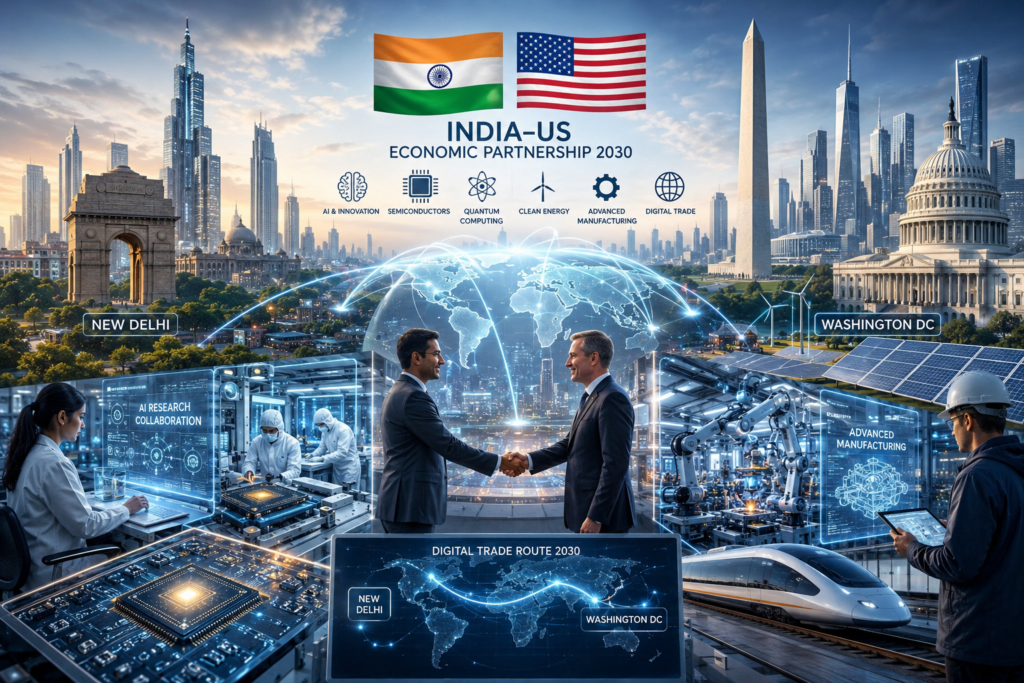
Future cooperation could expand into emerging areas such as:
- Artificial intelligence
- Quantum computing
- Semiconductors
- Space technology
- Biotechnology
- Clean energy
- Critical minerals
- Cybersecurity
- Advanced manufacturing
A trade agreement could provide a stronger economic foundation for cooperation in these areas.
Key Takeaways
The proposed US-India Trade Deal: 3-Month Boost to Bilateral Trade could become an important milestone in the economic relationship between the world’s largest democracy and the world’s largest economy.
The key takeaways are:
- A potential agreement could improve bilateral trade conditions.
- Indian exporters could gain opportunities in the US market.
- American companies could benefit from India’s growing consumer economy.
- Manufacturing and supply-chain cooperation could increase.
- Technology and investment partnerships could expand.
- Pharmaceuticals, electronics, textiles and engineering goods could benefit.
- Tariffs and market access are likely to remain central issues.
- Agriculture and regulatory differences could complicate negotiations.
- The three-month timeline represents an important negotiation window but does not guarantee immediate implementation.
- A successful agreement could support India’s long-term export and manufacturing ambitions.
Frequently Asked Questions (FAQ)
What is the US-India Trade Deal: 3-Month Boost to Bilateral Trade?
The US-India Trade Deal: 3-Month Boost to Bilateral Trade refers to efforts by India and the United States to advance a trade agreement that could improve market access, reduce trade barriers and strengthen economic cooperation.
When could the US-India trade agreement be finalized?
The negotiations are expected to focus on reaching an agreement or significant framework within a few months. However, the exact timing depends on the progress of discussions and the complexity of unresolved issues.
How could the US-India trade deal boost bilateral trade?
The agreement could potentially increase trade by reducing tariffs, improving market access, encouraging investment and making supply chains more efficient.
Which Indian sectors could benefit from the agreement?
Potential beneficiaries include pharmaceuticals, textiles, electronics, engineering goods, automobiles, chemicals, IT services and renewable energy.
Could Indian exporters benefit from lower US tariffs?
Yes. If tariffs are reduced on selected Indian products, exporters could become more competitive in the American market. The actual benefits would depend on the final terms of the agreement.
Could American companies benefit from the trade deal?
Yes. US companies could gain better opportunities to sell products and services in India’s large and expanding consumer market. They could also increase investment in Indian manufacturing and technology sectors.
Will the agreement immediately increase trade?
Not necessarily. Although businesses could respond quickly to improved trade conditions, major investments and supply-chain changes often take months or years to produce measurable results.
What are the biggest challenges to the trade agreement?
Key challenges could include tariff disagreements, agricultural market access, regulatory differences, digital trade policies, intellectual property and other market-access issues.
Why is India important to US supply-chain strategy?
India offers a large domestic market, an expanding manufacturing ecosystem, a skilled workforce and growing capabilities in technology and services. These factors make it an increasingly important supply-chain partner.
Could the trade agreement increase foreign investment in India?
A more predictable trade environment could encourage companies to invest in manufacturing, logistics, technology and other industries in India.
Is the three-month timeline guaranteed?
No. A projected timeline should not be interpreted as a guarantee. International trade negotiations can change depending on political, economic and regulatory developments.
Conclusion: A Potential New Chapter in India-US Trade
The US-India Trade Deal: 3-Month Boost to Bilateral Trade could represent a significant opportunity to deepen one of the world’s most important economic partnerships.
A successful agreement could help Indian exporters access the US market, encourage American investment in India and strengthen supply-chain cooperation between the two countries.
The biggest opportunity may extend beyond tariffs.
If India and the United States can establish a more predictable and transparent trade framework, businesses could gain greater confidence to invest, manufacture and expand across borders.
For India, this could support its ambitions to become a global manufacturing and export hub. For the US, closer economic ties with India could strengthen supply-chain resilience and provide access to one of the world’s fastest-growing major economies.
However, the path to an agreement will likely involve difficult negotiations. Tariffs, agriculture, regulations, digital trade and market access remain complex issues.
The coming months will therefore be crucial.
US-India Trade Deal: 3-Month Boost to Bilateral Trade
MY VIEW:
The upcoming US-India trade deal marks a defining moment in bilateral relations. It reflects mutual confidence and a shared vision for economic growth, technology exchange, and strategic cooperation. By easing tariffs and expanding market access, both nations stand to benefit- India gains through export diversification and US through strengthened supply chains. This breakthrough underscores how diplomacy and commerce can align to create prosperity.