
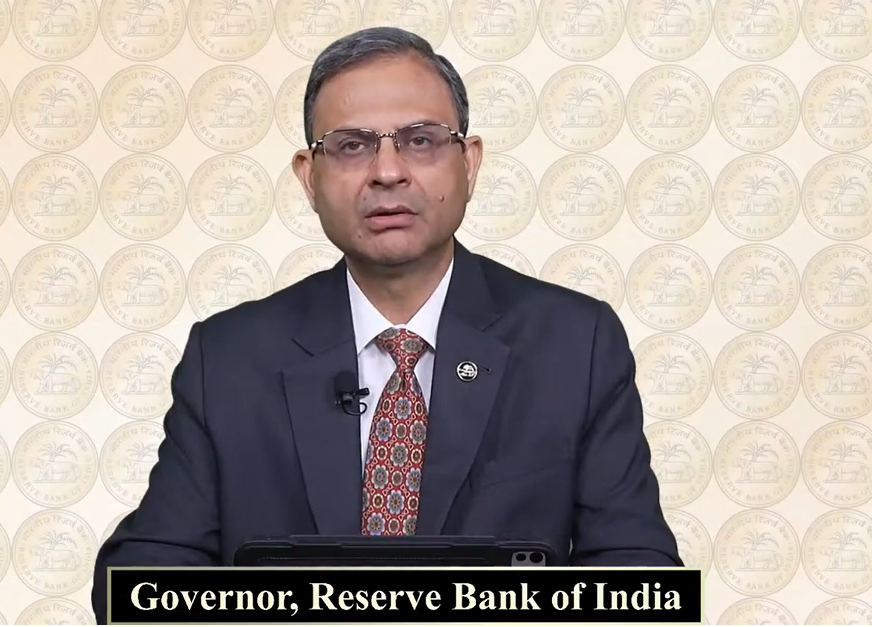
RBI Monetary Policy 2026: Repo Rate Hike Raises EMI Burden
The RBI Monetary Policy 2026: Repo Rate Hike Raises EMI Burden story has become a major concern for Indian borrowers after the Reserve Bank of India (RBI) raised its benchmark repo rate by 25 basis points to 5.50% on October 7, 2026.
The decision, announced by RBI Governor Sanjay Malhotra, marks the first increase in the policy repo rate in nearly four years. The six-member Monetary Policy Committee (MPC) unanimously supported the increase as inflationary risks intensified amid elevated crude oil prices, food-price pressures, geopolitical uncertainty and a weaker rupee.
The RBI also changed its policy stance from “neutral” to “calibrated tightening”, indicating that the central bank is prepared to take further action if inflation remains persistent.
For ordinary households, however, the immediate question is different: Will loan EMIs rise?
For borrowers with floating-rate home loans, vehicle loans and other credit linked to external benchmarks, the latest policy decision could translate into higher borrowing costs as banks and financial institutions transmit the rate increase.
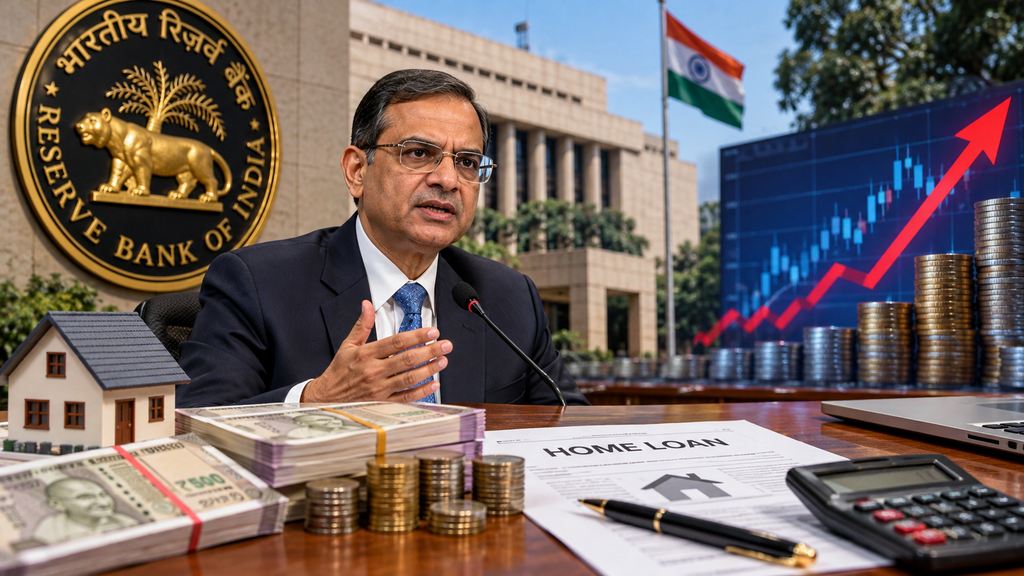
RBI Raises Repo Rate to 5.50%
The centerpiece of the October 2026 monetary policy announcement was the 25-basis-point repo rate increase, taking the rate from 5.25% to 5.50%.
The Standing Deposit Facility rate was adjusted to 5.25%, while the Marginal Standing Facility and Bank Rate moved to 5.75%. The Cash Reserve Ratio, meanwhile, remained unchanged at 3%.
The decision represents a significant change in the RBI’s recent monetary policy direction.
For several policy cycles, the central bank had been focused on balancing growth with inflation while maintaining a relatively supportive financial environment. The October decision signals that inflation risks have become important enough to justify higher borrowing costs.
The RBI’s decision also matters because the repo rate influences the broader cost of money in the financial system.
When the central bank raises the repo rate, banks can face higher marginal funding costs. Depending on the benchmark and transmission mechanism, lenders may subsequently adjust lending rates.
That is where households can feel the impact.
RBI Monetary Policy 2026: Repo Rate Hike Raises EMI Burden for Borrowers
The RBI Monetary Policy 2026: Repo Rate Hike Raises EMI Burden concern is particularly relevant for borrowers who have floating-rate loans.
A floating-rate loan does not necessarily remain at the same interest rate throughout its entire tenure. Its interest rate can change when the underlying benchmark changes.
Therefore, if a bank passes the RBI’s 25-basis-point increase to borrowers, customers could face either:
- Higher monthly EMIs
- A longer loan repayment period
- Or a combination of both
The exact impact depends on the loan amount, outstanding principal, remaining tenure, existing interest rate and the way the lender passes through the policy change.
Example: How a Repo Rate Hike Can Affect a Home Loan
Consider a borrower with a ₹50 lakh home loan and a long remaining repayment period.
Even a relatively small increase in the lending rate can have a meaningful impact over several years because interest is calculated on the outstanding principal.
For example, a borrower whose effective home-loan rate rises by 0.25 percentage points may see the lender increase the EMI or extend the repayment period.
The actual increase will vary from bank to bank, so borrowers should check their loan agreement and revised interest rate rather than assuming that every 25-basis-point RBI increase will produce an identical EMI increase.

Why Did the RBI Hike the Repo Rate?
The central bank’s decision was primarily linked to concerns over the inflation outlook.
According to the latest policy developments, consumer inflation had accelerated, while higher crude oil prices, food inflation risks and global geopolitical developments increased uncertainty.
Reuters reported that India’s August consumer inflation rose to 4.82%, remaining above the RBI’s medium-term 4% target for a third consecutive month. The central bank also raised its inflation forecast for the financial year to 5.2%, from its previous projection of 5%.
The inflation environment has become more complicated because several external factors are working simultaneously.
RBI Monetary Policy 2026: Repo Rate Hike Raises EMI Burden:
1. Higher Crude Oil Prices
India imports a large share of its crude oil requirements. Therefore, a sustained increase in global oil prices can raise domestic costs.
Higher crude prices can affect:
- Petrol and diesel prices
- Transportation costs
- Manufacturing expenses
- Logistics costs
- Airline operating costs
- Household expenditure
If businesses face higher input costs, some of those costs can eventually be passed on to consumers.
2. Food Inflation Risks
Food prices remain an important part of India’s inflation equation.
Weather conditions, monsoon performance, crop yields and reservoir levels can influence food supplies and prices.
The RBI has therefore remained alert to the possibility that temporary food-price pressures could become broader inflationary pressures.
3. Global Financial Conditions
Interest rates in major economies, bond yields, commodity prices and movements in the US dollar can influence India’s financial markets.
A weaker rupee can make imported goods and commodities more expensive, potentially adding to inflationary pressure.
RBI Keeps Growth Outlook Strong
RBI Monetary Policy 2026: Repo Rate Hike Raises EMI Burden:
The rate hike does not mean the RBI expects the Indian economy to weaken sharply.
In fact, the central bank raised its real GDP growth forecast for the current financial year to 7.1%, compared with its earlier projection of 6.7%. India’s April-June quarter GDP growth was reported at 7.8%, stronger than the RBI’s earlier expectation.
This gives the central bank more room to prioritize inflation control.
The policy challenge is therefore unusual: the economy remains relatively strong while inflation risks are increasing.
That combination makes a moderate rate increase easier for policymakers to justify.
The RBI’s message is effectively that price stability cannot be ignored simply because economic growth remains resilient.
RBI Monetary Policy 2026: What “Calibrated Tightening” Means
One of the most important changes in the October announcement was the shift in the policy stance from neutral to calibrated tightening.
This wording is significant because it indicates that the RBI is no longer positioning itself primarily for lower or stable interest rates.
Instead, the central bank is keeping the possibility of additional tightening open.
Governor Sanjay Malhotra emphasized that future action would depend on inflation and growth data rather than following a predetermined path. Reuters reported that the new stance represents a relatively measured form of tightening rather than an automatic commitment to repeated rate increases.
That means borrowers should not automatically assume that another rate hike is guaranteed.
However, the October policy does indicate that rate cuts are no longer the immediate policy expectation.
RBI Monetary Policy 2026: Repo Rate Hike Raises EMI Burden:
What Happens to Home Loan EMIs?
The impact on home-loan borrowers will depend largely on whether their loans are floating or fixed rate.
Floating-Rate Home Loans
Floating-rate borrowers are generally more exposed to changes in benchmark interest rates.
If the lending rate increases, the lender may adjust the EMI, loan tenure or both.
Borrowers should check:
- Current interest rate
- Benchmark used by the lender
- Outstanding principal
- Remaining tenure
- Reset frequency
- Revised EMI after the rate change
Fixed-Rate Loans
Borrowers with genuinely fixed-rate loans may be less immediately affected by the repo-rate increase.
However, the exact terms depend on the loan contract.
Customers should therefore avoid assuming that all loans respond identically to an RBI policy decision.
Will Personal and Vehicle Loans Become More Expensive?
The impact is not limited to home loans.
Consumers with floating-rate personal loans, auto loans or other benchmark-linked credit may also experience higher borrowing costs if lenders transmit the RBI’s decision.
For people planning to purchase a car or make a large financed purchase, the higher interest-rate environment could increase the overall cost of borrowing.
This could be particularly important for households already managing multiple EMIs.
A higher monthly financial commitment can reduce disposable income and encourage consumers to postpone discretionary purchases.
Impact on Businesses and the Indian Economy
The RBI Monetary Policy 2026: Repo Rate Hike Raises EMI Burden story also has an important business dimension.
Companies frequently rely on bank loans and other forms of debt to finance:
- Working capital
- New factories
- Machinery
- Expansion projects
- Inventory
- Commercial property
- Infrastructure investment
If borrowing costs rise, some companies may delay expansion plans or face higher interest expenses.
Rate-sensitive sectors such as real estate, automobiles and consumer-facing industries can be particularly sensitive to changes in borrowing costs. Indian equities also reacted negatively after the policy announcement, with rate-sensitive sectors among those facing pressure.
At the same time, banks can potentially benefit from improved lending margins if loan rates reprice faster than deposit costs.
Therefore, the impact is not uniformly negative across the economy.
RBI Monetary Policy 2026: Repo Rate Hike Raises EMI Burden:
What Does the RBI Decision Mean for Savers?
While borrowers may face pressure, savers could receive some benefit from a higher-rate environment.
Banks may eventually increase interest rates on certain deposits, fixed deposits and other savings products, although the extent and timing depend on individual institutions and market conditions.
For conservative investors, higher deposit rates can improve the attractiveness of fixed-income products.
However, savers should compare the after-tax return, inflation and lock-in period before making investment decisions.
RBI Monetary Policy 2026: Repo Rate Hike Raises EMI Burden for Middle-Class Families
For middle-class households, the key issue is the cumulative effect of higher borrowing costs.
A family may simultaneously have:
- A home loan
- A car loan
- Credit-card balances
- Education-related borrowing
- Personal loans
Even a modest increase in interest costs can affect monthly cash flow when several liabilities are involved.
The best response is not necessarily to panic or immediately refinance.
Instead, borrowers should review their entire debt portfolio.
If a borrower has sufficient savings, making a partial prepayment may reduce the outstanding principal and future interest burden. But prepayment decisions should consider emergency funds, tax implications, investment returns and applicable charges.
How Borrowers Can Reduce the EMI Impact
Borrowers facing a higher interest rate can consider several practical steps.
1. Compare Lending Rates
Check whether another lender offers a meaningfully lower interest rate.
2. Negotiate With Your Existing Bank
Long-standing customers with strong repayment records may be able to negotiate better terms or request a rate review.
3. Consider Partial Prepayment
If surplus funds are available after maintaining an adequate emergency reserve, partial repayment can reduce the outstanding principal.
4. Avoid Taking Unnecessary New Debt
In a tightening-rate environment, discretionary borrowing can become more expensive.
5. Review the Loan Tenure
A longer tenure can reduce monthly EMI pressure but increase total interest paid.
Conversely, increasing the EMI slightly can help repay the loan faster.
RBI Monetary Policy 2026: Repo Rate Hike Raises EMI Burden:
What Could Happen to Interest Rates Next?
The RBI’s October decision does not guarantee a series of immediate rate hikes.
However, the move to calibrated tightening means the possibility remains open.
Future policy decisions will likely depend on several factors, including:
- Consumer inflation
- Core inflation
- Crude oil prices
- Food prices
- Monsoon and agricultural conditions
- Economic growth
- Rupee movement
- Global interest rates
- Capital flows
- Domestic credit growth
Reuters reported that economists had differing views on the possible extent of additional tightening, with forecasts ranging from another limited increase to a substantially larger cumulative tightening cycle.
This uncertainty means borrowers should plan finances conservatively rather than assuming that interest rates will quickly return to previous lows.
RBI Monetary Policy 2026: Repo Rate Hike Raises EMI Burden — Key Takeaways
The October 7 policy announcement represents an important turning point for India’s interest-rate environment.
The 25-basis-point repo rate hike to 5.50% is the first increase in nearly four years. More importantly, the shift to calibrated tightening signals that the RBI is taking renewed inflation risks seriously.
For borrowers, the biggest concern is the potential transmission of higher rates into home-loan and other floating-rate EMIs.
For savers, higher interest rates could eventually provide better returns on some deposits.
For businesses, higher borrowing costs may create pressure, although strong domestic growth continues to provide support.
The central bank’s broader objective remains clear: prevent inflation from becoming entrenched while maintaining sustainable economic growth.
RBI Monetary Policy 2026: Repo Rate Hike Raises EMI Burden:
Frequently Asked Questions (FAQ)
1. What is the RBI repo rate after the October 2026 policy?
The RBI raised the repo rate by 25 basis points to 5.50% on October 7, 2026.
2. Why did the RBI increase the repo rate?
The RBI raised the rate amid increasing inflation risks linked to crude oil, food prices, global conditions and broader price pressures, while economic growth remained strong.
3. Will the RBI repo rate hike increase home-loan EMI?
It can increase borrowing costs for floating-rate and benchmark-linked home loans if banks transmit the policy-rate increase. The exact EMI impact depends on the lender, loan terms, outstanding balance and remaining tenure.
4. What does calibrated tightening mean?
It indicates that the RBI is adopting a more cautious tightening approach while keeping the possibility of further rate increases open depending on economic data.
5. Will fixed-rate home loans be affected?
A genuinely fixed-rate loan may not immediately change because of the repo-rate hike. Borrowers should check the specific terms of their loan agreement.
6. Is another RBI rate hike possible?
Yes. The October policy does not rule out another increase. Future decisions will depend on inflation, growth, commodity prices, global financial conditions and other economic indicators.
7. What should home-loan borrowers do now?
Borrowers should review their interest rate, benchmark, EMI, outstanding principal and remaining tenure. Comparing refinancing options or making a partial prepayment may be useful where financially appropriate.
8. Is the RBI worried about India’s economic growth?
The RBI continues to see strong growth. It raised its FY2026-27 real GDP growth forecast to 7.1%, suggesting that policymakers believe the economy has enough resilience to withstand moderate monetary tightening.
Conclusion
The RBI Monetary Policy 2026: Repo Rate Hike Raises EMI Burden development marks a major shift in India’s monetary-policy environment. The RBI’s decision to raise the repo rate to 5.50% and adopt a calibrated tightening stance shows that controlling inflation has become a higher priority.
For households, the immediate concern is higher borrowing costs, particularly for floating-rate home loans and other benchmark-linked credit. For the economy, the challenge will be maintaining strong growth while preventing inflationary pressures from becoming persistent.
The coming months will be crucial. If inflation remains elevated, further tightening could remain on the table. If price pressures ease, the RBI may have greater flexibility to pause.
For borrowers, the safest strategy is to prepare for a potentially higher interest-rate environment, review existing debt carefully and avoid assuming that borrowing costs will fall quickly.
In short, the October 2026 RBI policy is a warning for borrowers: the era of steadily falling interest rates may be over, at least for now.