
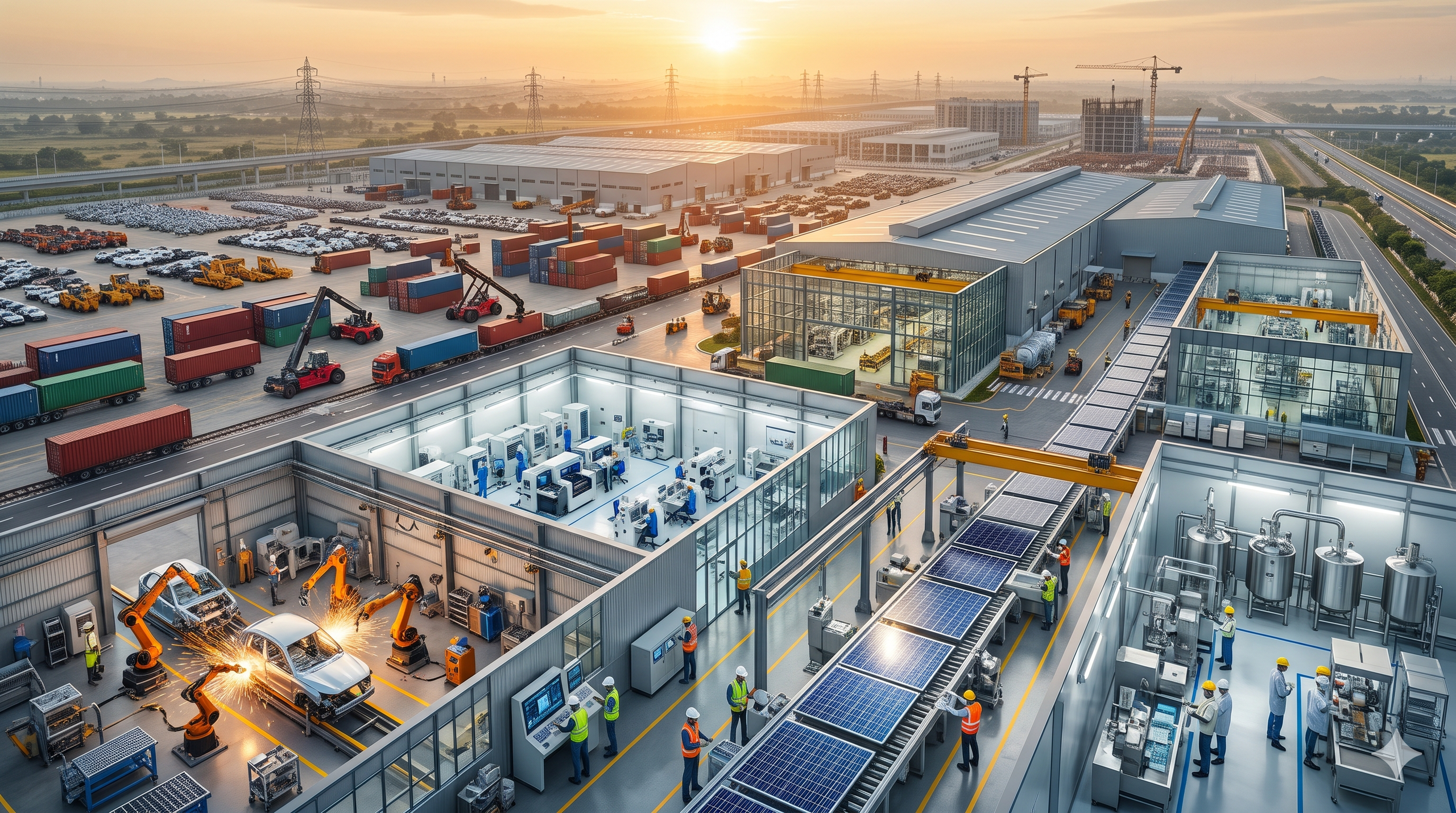
India’s Manufacturing Investment Boom: 46% Growth in 4 Years
India is witnessing a major transformation in its industrial and economic landscape as manufacturing investment continues to expand across the country. From electronics and automobiles to pharmaceuticals, steel, semiconductors and renewable energy, businesses are increasing their focus on domestic production and modern manufacturing facilities.
One of the most encouraging developments is the growth in invested capital across India’s registered manufacturing sector. According to the five-year trend presented in the Annual Survey of Industries (ASI), invested capital increased from ₹51.91 lakh crore in FY2020-21 to ₹75.56 lakh crore in FY2024-25. This represents an increase of approximately 45.56%, or nearly 46%, over four years.
This development highlights the growing importance of India’s manufacturing industry in the country’s long-term economic strategy. The expansion is supported by government initiatives, infrastructure development, technological improvements, domestic demand and opportunities in international supply chains.
India’s Manufacturing Investment Boom: 46% Growth in 4 Years is more than a headline about rising capital figures. It reflects the expansion of industrial capacity, investment in machinery, working capital requirements and the changing direction of India’s manufacturing ecosystem.
As India works towards becoming a globally competitive manufacturing destination, the country’s industrial progress is attracting attention from domestic businesses, international investors, policymakers and economic observers.
India’s Manufacturing Investment Boom: Understanding the 46% Growth
The latest five-year investment trend provides an important picture of how India’s manufacturing industry has developed.
The Annual Survey of Industries tracks several indicators, including fixed capital, working capital, industrial output, employment and gross value added. Its invested-capital measure combines fixed capital and physical working capital, offering a broader view of the capital employed by registered manufacturing establishments.
The figures shown in the investment chart are:
| Financial Year | Invested Capital |
|---|---|
| FY2020-21 | ₹51.91 lakh crore |
| FY2021-22 | ₹55.45 lakh crore |
| FY2022-23 | ₹61.39 lakh crore |
| FY2023-24 | ₹68.01 lakh crore |
| FY2024-25 | ₹75.56 lakh crore |
The increase from ₹51.91 lakh crore to ₹75.56 lakh crore represents approximately 45.56% growth.
The progression also indicates that invested capital increased in each of the five financial years shown. This is an encouraging sign of the expanding capital base of India’s registered manufacturing industry.
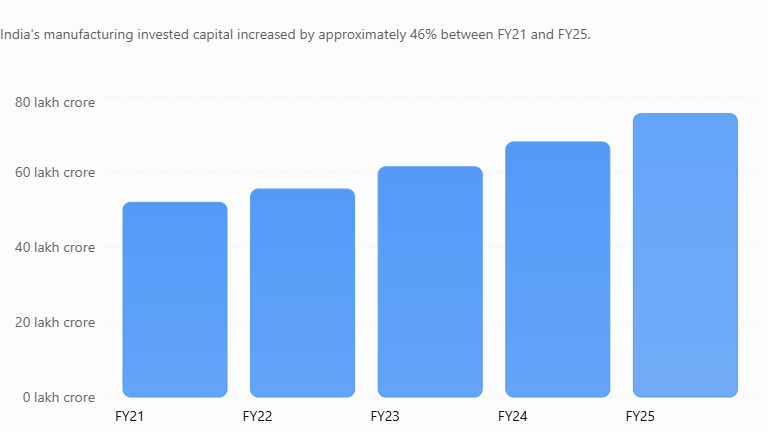
India’s manufacturing invested capital increased from ₹51.91 lakh crore in FY21 to ₹75.56 lakh crore in FY25, representing approximately 46% growth.
The latest ASI information published by the Ministry of Statistics and Programme Implementation (MoSPI) also highlights the importance of capital formation in understanding industrial development.
However, invested capital should not be confused with annual fresh investment or foreign direct investment. It represents the capital base measured under the survey methodology. This distinction is important when interpreting the numbers correctly.
India’s Manufacturing Investment Boom: Key Growth Drivers
Several economic and policy developments are contributing to India’s expanding manufacturing ecosystem. These factors are helping businesses increase production, improve operational efficiency and explore new investment opportunities.
1. Make in India Is Strengthening Domestic Production
The Make in India initiative, launched on 25 September 2014, was designed to establish India as a global manufacturing, design and innovation destination.
The programme encourages domestic and international businesses to establish manufacturing facilities, expand production and participate in India’s industrial development.
Over the years, the initiative has supported greater attention towards sectors such as electronics, automobiles, pharmaceuticals, defence equipment, textiles and industrial machinery.
Electronics manufacturing is a particularly important example. According to the Government of India, electronics production increased from approximately ₹1.9 lakh crore in 2014-15 to around ₹13.11 lakh crore in 2025-26.
Mobile phone manufacturing has also expanded considerably, with production increasing from approximately ₹18,900 crore in 2014-15 to around ₹6.3 lakh crore in 2025-26.
These developments demonstrate how India is gradually building manufacturing capabilities in industries that are important to modern technology and international trade.
The Make in India initiative is therefore an important part of India’s Manufacturing Investment Boom: 46% Growth in 4 Years, as it encourages companies to expand their domestic production capabilities.
2. Production Linked Incentive Schemes Encourage Industrial Expansion
The Production Linked Incentive (PLI) scheme is another important policy supporting India’s manufacturing ambitions.
The government introduced these incentives to encourage companies to increase domestic production, improve manufacturing competitiveness and develop stronger supply chains.
The PLI programme covers 14 strategic sectors, including:
- Large-scale electronics manufacturing
- Pharmaceuticals
- Telecommunications
- Automobiles and auto components
- Advanced chemistry cell batteries
- Solar photovoltaic modules
- Specialty steel
- Textiles
- Food processing
- Medical devices
The incentives are linked to eligible incremental production and other scheme-specific conditions.
By providing financial incentives to eligible manufacturers, the programme aims to encourage investment in new production facilities, advanced machinery and technology.
The initiative is also intended to attract global manufacturers that are considering diversifying their supply chains.
For domestic businesses, PLI opportunities can support expansion and encourage investment in higher-value products.
The long-term contribution of these schemes will depend on how effectively companies convert policy support into sustainable production, productivity improvements and competitive exports.
3. Foreign Direct Investment Is Supporting Manufacturing Opportunities
Foreign Direct Investment (FDI) is an important source of capital, technology and industrial expertise.
International companies investing in India can bring advanced machinery, modern manufacturing techniques, research capabilities and access to established global markets.
India offers opportunities for foreign manufacturers in electronics, automobiles, pharmaceuticals, chemicals, renewable energy and industrial equipment.
The country’s large domestic market is another important attraction. Manufacturers can develop production facilities to serve Indian consumers while also exploring opportunities to export products to international markets.
Foreign investment can also create business opportunities for Indian suppliers, logistics companies, component manufacturers and service providers.
However, it is important to distinguish between overall FDI inflows and manufacturing-specific investment. Total FDI statistics include several industries, including services, construction, telecommunications and financial activities.
The contribution of manufacturing-related FDI should therefore be assessed separately when evaluating the sector’s investment performance.
4. Infrastructure Development Is Improving Industrial Competitiveness
Manufacturing growth depends on more than factories and machinery. Businesses also require reliable roads, railways, ports, electricity, industrial land and efficient logistics facilities.
India’s infrastructure development programmes are designed to improve connectivity between manufacturing centres, suppliers, warehouses and export destinations.
PM GatiShakti is an important initiative in this area. It aims to improve coordination among infrastructure projects and support integrated planning across different transportation networks.
Industrial corridors and logistics infrastructure can also help businesses reduce transportation delays and improve supply-chain efficiency.
For example, manufacturers located near ports, highways and railway networks can benefit from improved access to raw materials and distribution markets.
Better infrastructure can reduce operating difficulties and make Indian manufacturing facilities more attractive to domestic and international investors.
This is an important factor behind India’s Manufacturing Investment Boom: 46% Growth in 4 Years, because long-term industrial investment requires dependable infrastructure.
5. Technology and Automation Are Changing Indian Factories
Modern manufacturing is increasingly dependent on technology, automation and digital systems.
Industrial robots, artificial intelligence, machine learning, Internet of Things devices and advanced quality-control systems are changing how factories operate.
These technologies can help businesses improve production accuracy, reduce wastage, monitor machinery performance and maintain consistent product quality.
Indian manufacturers are gradually adopting digital manufacturing solutions to improve operational efficiency.
The semiconductor industry is another important opportunity. Semiconductors are essential components in smartphones, computers, automobiles, medical devices, communication networks and industrial equipment.
Developing domestic semiconductor manufacturing and component ecosystems can strengthen India’s technological capabilities.
The shift towards advanced manufacturing can also create demand for skilled engineers, software professionals, automation specialists and technicians.
Which Industries Are Benefiting from India’s Manufacturing Investment Boom?
India’s manufacturing expansion is not limited to one industry. Several sectors are creating opportunities for new investment, production facilities and technological development.
Electronics and Semiconductor Manufacturing
Electronics manufacturing has become one of India’s most important industrial growth areas.
The expansion of mobile phone production, electronic components and semiconductor-related infrastructure is helping the country strengthen its position in global technology supply chains.
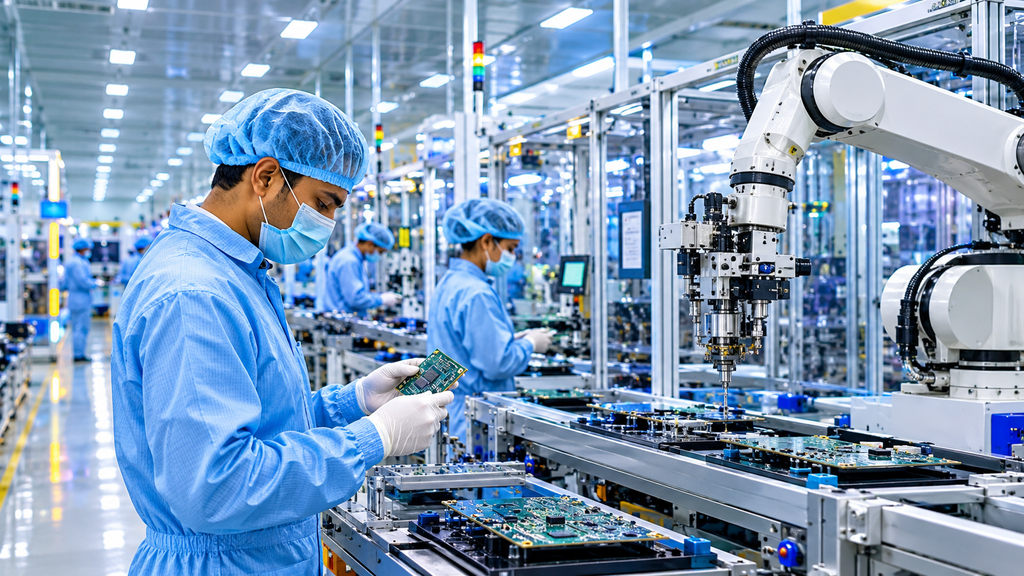
Manufacturers are exploring opportunities in printed circuit boards, electronic components, display technologies, semiconductor packaging and other advanced products.
ELECTRONICS AND SEMICONDUCTOR FACTORY
Automobile and Electric Vehicle Manufacturing
India has a well-developed automobile manufacturing ecosystem that includes passenger vehicles, commercial vehicles, two-wheelers and automotive components.
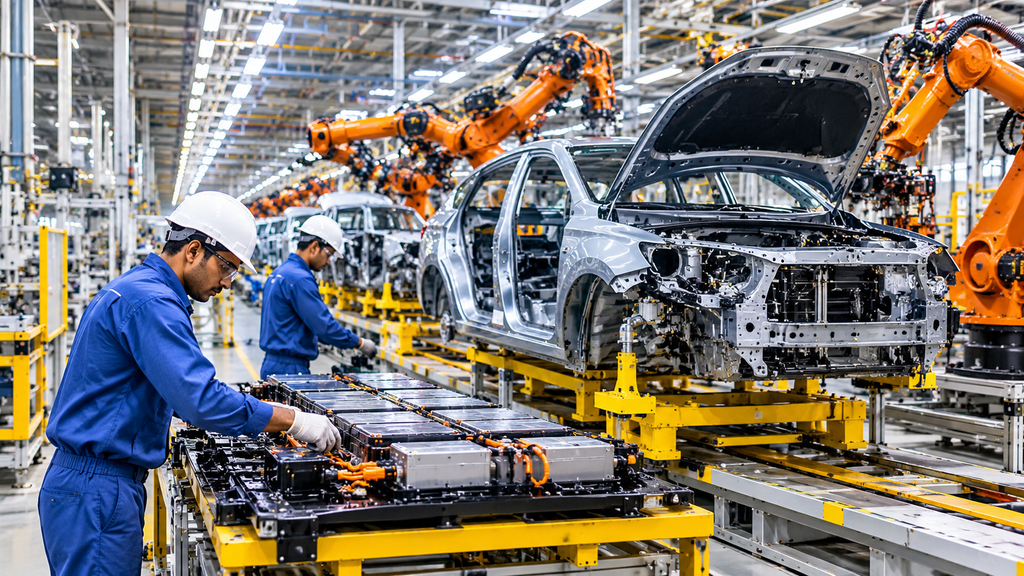
The transition towards electric mobility is creating new investment opportunities in battery production, electric motors, charging systems and power electronics.
According to the Government of India, vehicle production reached approximately 31.03 million units in FY2024-25, around 33% higher than in FY2014-15.
The growth of electric vehicles could create additional opportunities for Indian manufacturers while encouraging investment in advanced automotive technologies.
AUTOMOBILE AND EV MANUFACTURING
Pharmaceutical and Medical Device Manufacturing
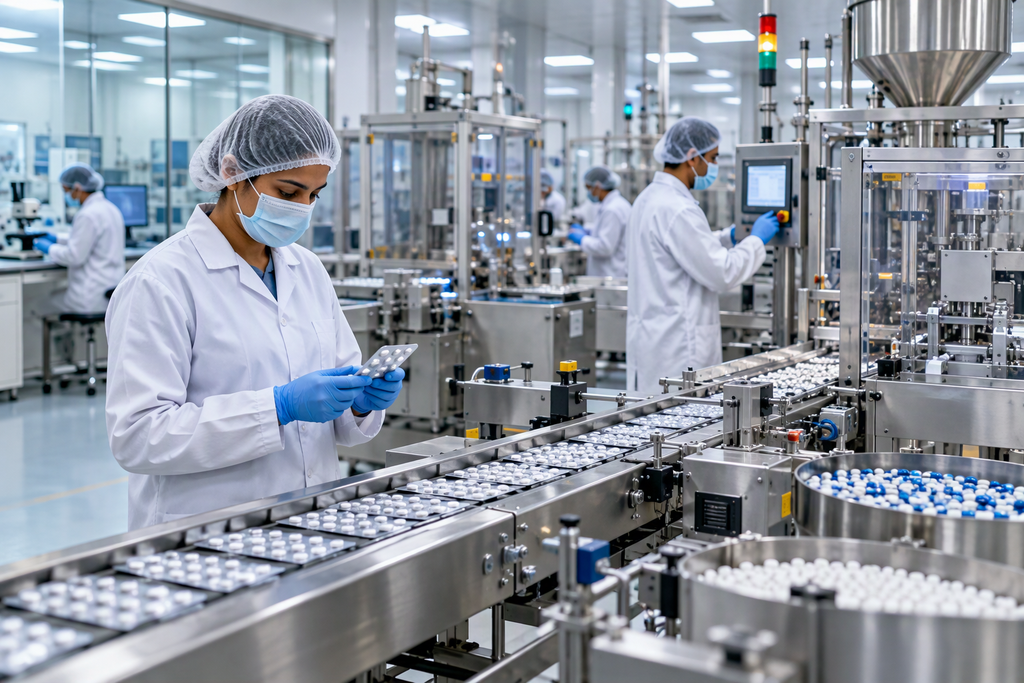
India has established itself as a major pharmaceutical manufacturing destination.
The pharmaceutical industry produces generic medicines, active pharmaceutical ingredients, vaccines and other healthcare products for domestic and international markets.
Investment in advanced pharmaceutical facilities, biotechnology and medical device manufacturing can improve domestic production capabilities.
The development of high-quality manufacturing infrastructure is also important for meeting international regulatory standards.
This sector offers opportunities to expand exports and strengthen India’s healthcare supply chains.
PHARMACEUTICAL MANUFACTURING
Steel and Heavy Engineering
Steel and heavy engineering are essential to India’s industrial development.
These industries supply materials and equipment for construction, infrastructure, automobiles, railways, defence and renewable energy projects.
India has significantly expanded its steel production capabilities over the past decade.
According to the Government of India, crude steel production increased from 81.7 million tonnes in FY2014-15 to approximately 170 million tonnes in FY2025-26.
Investment in modern steel plants, industrial machinery and engineering equipment can support the development of other manufacturing industries.
Renewable Energy Manufacturing
Renewable energy is creating new opportunities for industrial investment.
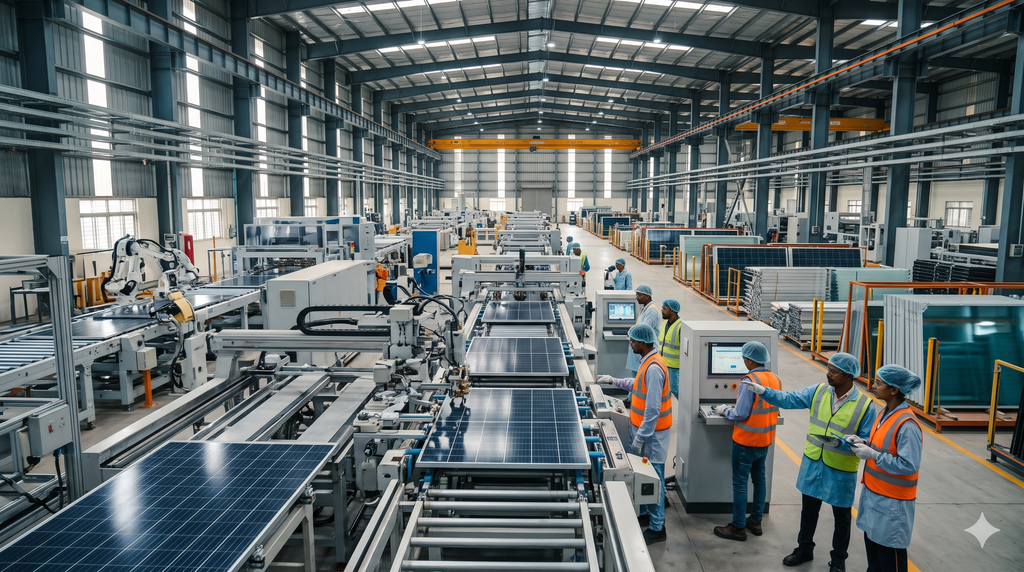
Solar panels, solar cells, wind-energy components, batteries and power electronics are important products for the clean-energy transition.
India’s expanding renewable energy capacity is creating demand for domestically manufactured equipment and supporting components.
The growth of solar manufacturing is particularly important because it can strengthen domestic supply chains and reduce dependence on imported products.
SOLAR PANEL MANUFACTURING FACILITY
How India’s Manufacturing Investment Boom Can Benefit the Economy
The expansion of manufacturing capital can generate benefits across multiple parts of the Indian economy.
Employment Generation and Skill Development
Manufacturing facilities require engineers, technicians, machine operators, quality-control specialists, production managers and logistics professionals.
As factories expand, they can create direct employment as well as opportunities for supporting businesses.
The development of advanced manufacturing will also increase demand for workers trained in automation, robotics, electronics, industrial software and precision engineering.
India’s education and skill-development ecosystem will play an important role in preparing workers for these changing requirements.
Growth of Small Businesses and MSMEs
Micro, Small and Medium Enterprises (MSMEs) are essential to India’s manufacturing ecosystem.
They supply industrial components, packaging materials, machinery, spare parts, maintenance services and transportation support to larger manufacturers.
When large manufacturing companies expand their operations, smaller suppliers can benefit from new business opportunities.
However, MSMEs need affordable financing, modern technology, reliable electricity and access to domestic and international markets to participate effectively.
Strengthening the MSME ecosystem can make India’s Manufacturing Investment Boom: 46% Growth in 4 Years more inclusive.
Higher Exports and Global Market Access
Manufacturing expansion can strengthen India’s ability to supply goods to international markets.
Electronics, pharmaceuticals, automobiles, chemicals, engineering goods and textiles offer important export opportunities.
To become a stronger global manufacturing destination, Indian businesses must maintain competitive prices, international quality standards and reliable delivery schedules.
Export growth can also help manufacturers increase production volumes and benefit from economies of scale.
Reduced Dependence on Imported Products
Domestic manufacturing can help India develop local capabilities in important products and components.
Industries such as semiconductors, electronics, defence equipment, medical devices and renewable energy technologies have strategic importance.
Developing domestic production capabilities can improve supply-chain resilience and reduce exposure to disruptions in international markets.
However, self-reliance does not mean avoiding international trade. A competitive manufacturing economy also needs access to global technology, raw materials and export markets.
India’s Manufacturing Investment Boom: Challenges That Cannot Be Ignored
Despite encouraging investment trends, India still faces several challenges that could affect its long-term manufacturing ambitions.
1. High Logistics and Production Costs
Transportation, electricity, raw materials and warehousing expenses can affect manufacturing competitiveness.
Improving infrastructure and logistics efficiency will be important for reducing operating costs.
2. Dependence on Imported Components
Several technology-intensive industries continue to depend on imported components, machinery and specialised materials.
Developing domestic supplier networks will be essential for increasing value addition within India.
3. Skilled Workforce Requirements
Modern factories require workers with technical knowledge of automation, robotics, digital systems and advanced industrial processes.
Skill development and industry-academia partnerships can help address this requirement.
4. Global Manufacturing Competition
India competes with established manufacturing economies that have developed advanced industrial ecosystems.
To attract long-term investment, India needs predictable policies, competitive production costs, reliable infrastructure and efficient business processes.
5. Access to Finance for Smaller Manufacturers
Smaller manufacturers may struggle to finance machinery upgrades, technology adoption and production expansion.
Improving credit availability and supporting MSME modernisation will be important for strengthening the broader industrial ecosystem.
Addressing these challenges will determine whether India’s Manufacturing Investment Boom: 46% Growth in 4 Years develops into sustained industrial competitiveness.
India’s Manufacturing Investment Boom: What Does the Future Look Like?
India’s manufacturing outlook will depend on how effectively the country converts its growing capital base into productive industrial capacity.
The next phase of development is likely to involve greater attention to semiconductors, electronics components, electric vehicles, renewable energy equipment, advanced pharmaceuticals, industrial automation and high-value engineering products.
Government programmes can support this transition, but the long-term success of manufacturing depends on private-sector investment, research and development, workforce skills and productivity.
Manufacturers must also focus on environmental sustainability. Energy-efficient machinery, renewable electricity, waste reduction and responsible resource management can help factories become more competitive and environmentally responsible.
Another important priority is increasing domestic value addition. Manufacturing finished products is important, but developing the components, materials and technologies used in those products can create deeper industrial capabilities.
India’s Manufacturing Investment Boom: 46% Growth in 4 Years provides an encouraging starting point, but future progress should also be measured through higher productivity, better wages, exports, innovation and sustainable employment.
If India can successfully address its infrastructure, technology and skill-related challenges, the manufacturing sector could become an increasingly important engine of long-term economic growth.
Conclusion: India’s Manufacturing Investment Boom Signals a Major Industrial Opportunity
India’s manufacturing industry is entering an important phase of expansion. The rise in invested capital from ₹51.91 lakh crore in FY2020-21 to ₹75.56 lakh crore in FY2024-25 highlights the growing capital base of the country’s registered manufacturing sector.
The approximately 46% increase over four years is an encouraging indicator of industrial development. It also reflects the importance of domestic production, infrastructure, technology and long-term business investment.
Government initiatives such as Make in India, Production Linked Incentive schemes and PM GatiShakti are supporting the broader manufacturing ecosystem.
At the same time, opportunities in electronics, semiconductors, automobiles, pharmaceuticals, steel and renewable energy are creating new possibilities for industrial expansion.
However, sustained progress will require more than increasing invested capital. India must improve manufacturing productivity, strengthen domestic supply chains, develop skilled workers and produce globally competitive goods.
The real success of India’s Manufacturing Investment Boom: 46% Growth in 4 Years will ultimately depend on how effectively the country converts investment into innovation, employment, exports and long-term industrial strength.
The journey towards becoming a leading global manufacturing destination is still developing, but the investment trend offers an encouraging picture of India’s industrial ambitions.
Frequently Asked Questions (FAQs)
1. What is India’s Manufacturing Investment Boom: 46% Growth in 4 Years?
It refers to the increase in invested capital in India’s registered manufacturing sector from ₹51.91 lakh crore in FY2020-21 to ₹75.56 lakh crore in FY2024-25, representing approximately 45.56% growth.
2. What was India’s manufacturing invested capital in FY2025?
According to the figures shown in the ASI five-year trend, India’s manufacturing invested capital reached ₹75.56 lakh crore in FY2024-25.
3. What does invested capital mean in the Annual Survey of Industries?
The ASI measure of invested capital is the combined value of fixed capital and physical working capital. It provides a broader indication of the capital employed in registered manufacturing establishments.
4. What are the major growth drivers of India’s manufacturing sector?
Important drivers include Make in India, PLI schemes, foreign direct investment, infrastructure development, domestic demand, automation and technological innovation.
5. Which manufacturing industries are growing in India?
Important industries include electronics, automobiles, pharmaceuticals, steel, textiles, semiconductors, medical devices and renewable energy equipment.
6. How does manufacturing investment benefit the Indian economy?
Manufacturing investment can support employment, improve production capacity, increase exports, strengthen domestic supply chains and encourage technological development.
7. What is the role of the Make in India initiative?
Make in India encourages domestic and international companies to establish production facilities in India, improve manufacturing capabilities and participate in global supply chains.
8. What are the biggest challenges facing Indian manufacturing?
Major challenges include logistics costs, imported component dependence, skill shortages, access to finance, technology gaps and international competition.
9. What is the future of manufacturing investment in India?
Future opportunities are expected across semiconductors, electronics, electric vehicles, pharmaceuticals, renewable energy, advanced machinery and high-value engineering.
10. Why is India becoming an attractive manufacturing destination?
India offers a large domestic market, a growing industrial workforce, infrastructure development, policy support and opportunities to participate in global supply chains.
External authoritative sources
- Government of India – Annual Survey of Industries 2024-25: Read official ASI report. This is the most important source for your investment chart and industrial data.
- Government of India – Make in India: 12 Years of Make in India.
- NITI Aayog: Manufacturing sector analysis.
- Economic Survey 2025-26: Read Economic Survey.