
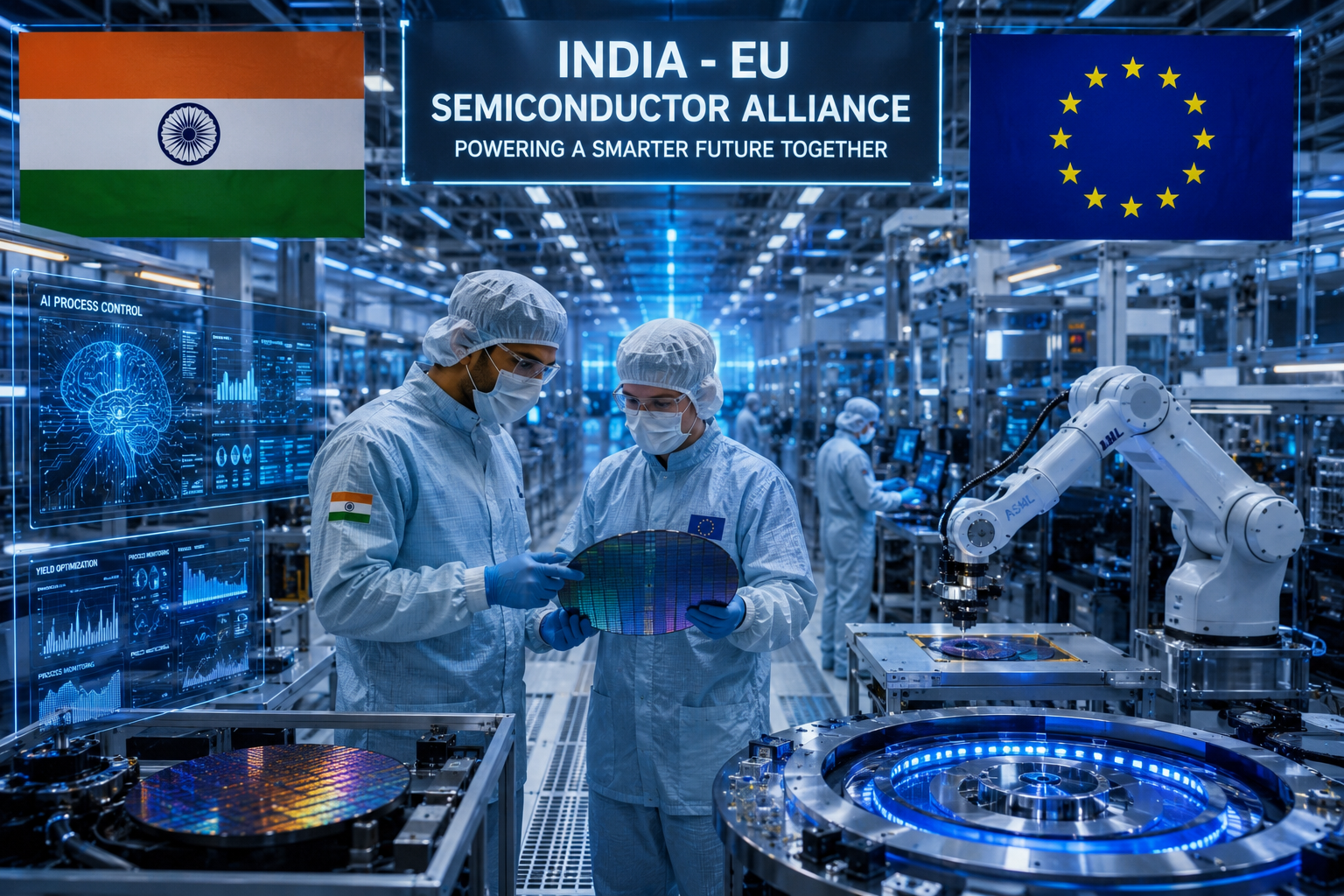
India-EU Semiconductor Alliance: 5 Power Moves Driving Growth

India-EU Semiconductor Alliance: Why This Partnership Matters
The India-EU Semiconductor Alliance is emerging as one of the most significant technology partnerships of this decade. As global demand for semiconductors continues to rise, India and the European Union are strengthening cooperation to develop resilient supply chains, promote advanced manufacturing, expand research collaborations, and reduce dependence on a handful of global chip producers.
Semiconductors have become the foundation of the modern digital economy. They power smartphones, electric vehicles, artificial intelligence, data centres, industrial automation, defence systems, healthcare equipment, and next-generation communication technologies. Recent global supply chain disruptions highlighted the strategic importance of domestic semiconductor capabilities, encouraging nations to diversify production and collaborate with trusted partners.
For India, the alliance complements the country’s Semiconductor Mission and ambition to become a global electronics manufacturing hub. For the European Union, it aligns with efforts to enhance technological sovereignty, diversify supply chains, and strengthen partnerships with democratic economies.
This collaboration goes far beyond trade. It represents a long-term strategic vision centred on innovation, investment, sustainability, and technological resilience.
Key Highlights
- India and the EU are expanding semiconductor cooperation across manufacturing and research.
- The partnership supports resilient global semiconductor supply chains.
- Joint investments can accelerate chip manufacturing capabilities.
- Research collaboration is expected to boost innovation in advanced semiconductor technologies.
- Skilled workforce development will become a major pillar of future cooperation.
- The alliance supports AI, electric vehicles, telecommunications, defence, and clean energy industries.
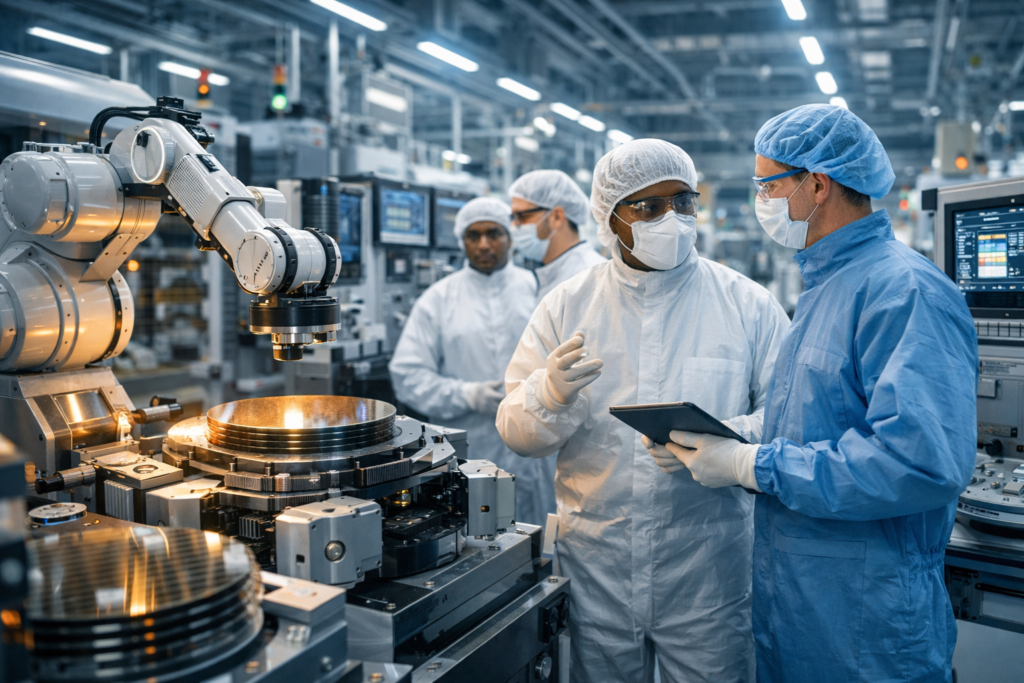
Understanding the India-EU Semiconductor Alliance
The India-EU Semiconductor Alliance represents an evolving framework of cooperation aimed at strengthening semiconductor ecosystems through policy coordination, research partnerships, industrial collaboration, talent development, and investment promotion.
Rather than competing individually against established semiconductor manufacturing regions, India and Europe recognise the value of building complementary strengths.
India offers:
- Rapidly growing electronics manufacturing
- Large engineering workforce
- Government incentives
- Expanding domestic demand
- Competitive manufacturing ecosystem
Meanwhile, the European Union contributes:
- Advanced semiconductor research
- World-leading equipment manufacturers
- Strong design capabilities
- Industrial automation expertise
- High-value manufacturing technologies
Together, these strengths create opportunities that benefit both economies.
Why the World Needs New Semiconductor Partnerships
The semiconductor shortage during recent years demonstrated how vulnerable global supply chains had become.
Several industries experienced disruptions, including:
- Automobile manufacturing
- Consumer electronics
- Medical equipment
- Telecommunications
- Aerospace
- Defence
- Industrial automation
Governments worldwide realised that relying on limited manufacturing locations posed significant economic and strategic risks.
The India-EU Semiconductor Alliance aims to address these challenges by encouraging diversified production networks, technology cooperation, and long-term resilience.
5 Power Moves Driving Growth
Power Move 1: Expanding Semiconductor Manufacturing Capacity
One of the most important objectives of the India-EU Semiconductor Alliance is expanding semiconductor manufacturing capabilities.
India has launched multiple initiatives to attract semiconductor investments through financial incentives, infrastructure development, and policy reforms. European companies, known for advanced semiconductor technologies and manufacturing expertise, can play a crucial role in accelerating these efforts.
Potential areas of collaboration include:
- Wafer fabrication facilities
- Chip packaging
- Testing facilities
- Compound semiconductor manufacturing
- Specialty semiconductor production
- Equipment manufacturing
By combining India’s manufacturing ambitions with European technological expertise, both regions can reduce supply chain risks while creating new business opportunities.
Economic Benefits
Expanded manufacturing can lead to:
- Higher exports
- Technology transfer
- Employment generation
- Increased foreign investment
- Stronger industrial ecosystem
- Greater supply chain resilience
This represents one of the most transformative aspects of the India-EU Semiconductor Alliance.
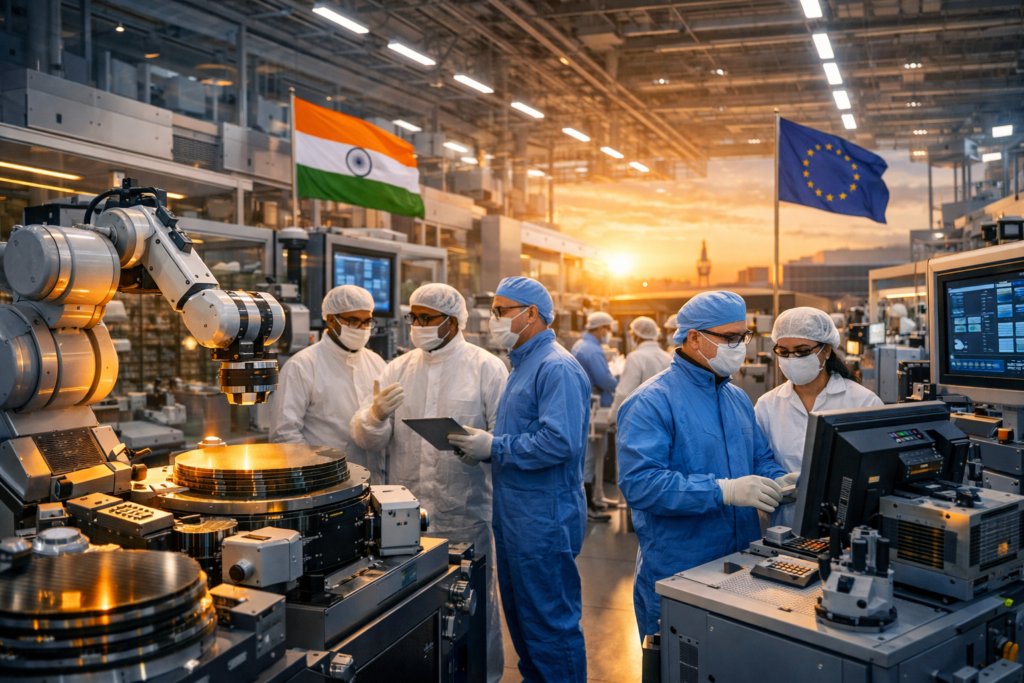
Power Move 2: Joint Research and Innovation
Innovation drives the semiconductor industry.
The India-EU Semiconductor Alliance has enormous potential to promote collaborative research involving universities, research laboratories, startups, and technology companies.
Future cooperation may include:
Artificial Intelligence Chips
AI processors require cutting-edge semiconductor technologies.
Joint research can accelerate development of:
- AI accelerators
- Edge computing chips
- Data centre processors
- Machine learning hardware
Automotive Semiconductors
Europe has strong automotive expertise, while India is rapidly expanding electric vehicle manufacturing.
Collaboration could improve:
- EV power electronics
- Battery management chips
- Autonomous driving technologies
- Smart mobility systems
Advanced Packaging
Packaging technologies are becoming increasingly important as chip performance improves.
Research areas include:
- 3D chip stacking
- Chiplets
- Advanced packaging materials
- Thermal management
Sustainable Manufacturing
Future semiconductor production must become environmentally sustainable.
Possible research priorities include:
- Green manufacturing
- Energy-efficient fabs
- Water recycling
- Carbon reduction
- Circular economy practices
Innovation partnerships under the India-EU Semiconductor Alliance can strengthen competitiveness while supporting sustainable industrial growth.
Why This Matters for India
India is already one of the world’s fastest-growing digital economies.
Demand for semiconductors continues to increase because of:
- Smartphone manufacturing
- Electric vehicles
- Digital payments
- Artificial intelligence
- 5G deployment
- Data centres
- Smart cities
- Defence modernisation
- Consumer electronics
By collaborating with Europe, India can accelerate technology development while reducing dependence on imported semiconductor components.
The partnership also aligns with India’s long-term objective of becoming a trusted global manufacturing destination for high-value electronics.
Expert Perspective
The semiconductor industry is no longer viewed solely as a commercial sector—it has become a strategic pillar of national economic security. Partnerships such as the India-EU Semiconductor Alliance reflect a broader shift toward building trusted technology ecosystems, encouraging diversified production, and fostering innovation through international collaboration. If sustained with investment, policy support, and industry participation, such cooperation can contribute to a more resilient global semiconductor supply chain while creating opportunities for both established companies and emerging startups.
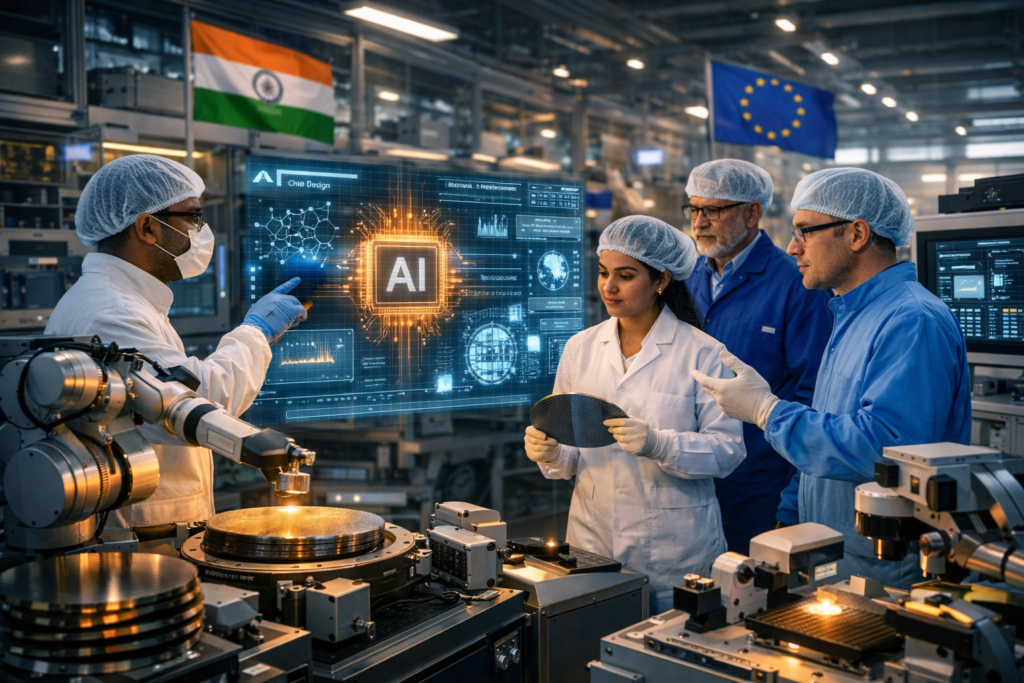
India-EU Semiconductor Alliance: 5 Power Moves Driving Growth
Power Move 3: Building a Resilient Semiconductor Supply Chain
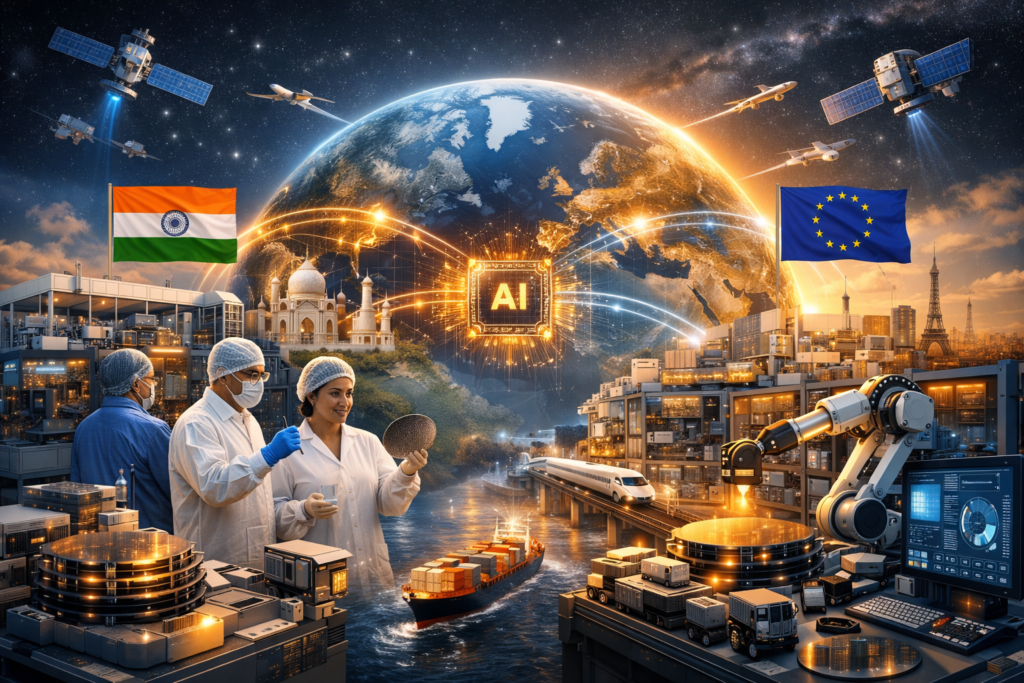
The India-EU Semiconductor Alliance is designed to create a more diversified and resilient semiconductor supply chain. The COVID-19 pandemic, geopolitical tensions, and global chip shortages demonstrated the risks of relying on a concentrated manufacturing base. Both India and the European Union now view semiconductor security as a strategic priority.
A stronger supply chain can deliver several advantages:
- Reduced dependence on a few manufacturing hubs
- Faster delivery of semiconductor components
- Better risk management during global disruptions
- Increased supply chain transparency
- Improved resilience for critical industries
India can contribute through expanding manufacturing capacity, assembly, testing, packaging, and a growing electronics ecosystem. The EU brings advanced manufacturing equipment, design expertise, research institutions, and industrial automation technologies.
Together, the India-EU Semiconductor Alliance aims to build trusted supply networks that support long-term industrial growth.
Why Supply Chain Diversification Matters
Semiconductors are used in almost every modern technology, including:
| Industry | Semiconductor Applications |
|---|---|
| Automotive | Electric vehicles, ADAS, battery management |
| Healthcare | MRI scanners, wearable devices, diagnostics |
| Defence | Radar, satellites, communication systems |
| Telecommunications | 5G, optical networking, routers |
| Consumer Electronics | Smartphones, laptops, gaming devices |
| Artificial Intelligence | AI accelerators, GPUs, data centres |
| Renewable Energy | Smart grids, solar inverters, wind turbines |
Any disruption in chip supplies can affect production across these sectors. By promoting diversified sourcing and manufacturing, the alliance enhances economic resilience.

Power Move 4: Boosting Investment and Industrial Collaboration
Investment is central to the success of the India-EU Semiconductor Alliance. Semiconductor manufacturing requires significant capital, advanced equipment, and long-term policy stability. Collaboration between Indian and European companies can accelerate investment across the semiconductor value chain.
Key Areas for Investment
- Wafer fabrication plants (fabs)
- Semiconductor packaging and testing facilities
- Electronic component manufacturing
- Research and development centres
- Design and verification hubs
- Semiconductor equipment manufacturing
- Specialty materials production
These investments can strengthen domestic capabilities while creating new opportunities for technology transfer and industrial growth.
Benefits for India
- Increased foreign direct investment (FDI)
- Job creation in high-value manufacturing
- Enhanced export potential
- Development of local supplier networks
- Growth of advanced manufacturing clusters
Benefits for the European Union
- Access to India’s expanding electronics market
- Diversified manufacturing footprint
- Stronger partnerships with trusted economies
- Opportunities for innovation and commercialization
India’s Semiconductor Ecosystem Is Expanding
India’s semiconductor ecosystem is evolving rapidly with support from government initiatives, private investment, and international partnerships.
Major Growth Drivers
- Production Linked Incentive (PLI) schemes
- India Semiconductor Mission
- Growing electronics manufacturing
- Rising domestic demand
- Skilled engineering workforce
- Digital transformation
- Expansion of AI and data centres
The India-EU Semiconductor Alliance complements these initiatives by encouraging international collaboration and technology exchange.
Power Move 5: Developing Talent and Future Skills
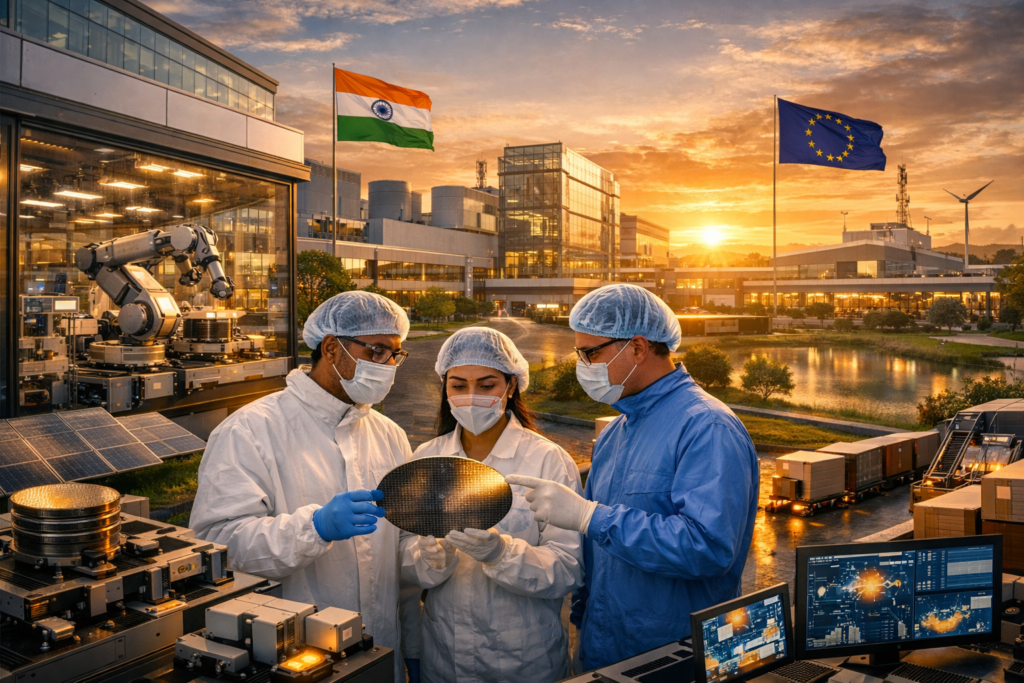
The semiconductor industry depends not only on infrastructure but also on skilled professionals. One of the most impactful aspects of the India-EU Semiconductor Alliance is its potential to strengthen education, training, and workforce development.
Priority Areas
- Semiconductor design
- Chip architecture
- Materials science
- Nanoelectronics
- AI hardware
- Embedded systems
- Advanced manufacturing
- Process engineering
Collaborative Initiatives
- Joint university programs
- Student exchange initiatives
- Industry internships
- Research fellowships
- Faculty collaborations
- Startup incubation
- Technical certification programs
A highly skilled workforce will help both India and Europe remain competitive in the global semiconductor industry.
Economic Impact of the India-EU Semiconductor Alliance
The alliance has the potential to generate broad economic benefits.
For India
- Expansion of semiconductor manufacturing
- Growth in exports
- Increased high-skilled employment
- Development of electronics clusters
- Enhanced technological capabilities
For the European Union
- Improved supply chain resilience
- Access to skilled talent
- New business opportunities
- Expanded research partnerships
- Greater market diversification
Opportunities for Indian Startups
Indian startups can benefit from the India-EU Semiconductor Alliance through:
- Access to European research networks
- Venture capital opportunities
- Technology licensing
- Joint product development
- Participation in global supply chains
Emerging companies in chip design, AI hardware, IoT devices, and semiconductor software stand to gain significantly from increased collaboration.
Comparative Strengths of India and the European Union
| Area | India | European Union |
|---|---|---|
| Engineering Talent | Excellent | Excellent |
| Semiconductor Research | Growing | Highly Advanced |
| Manufacturing Costs | Competitive | Higher |
| Electronics Market | Rapidly Expanding | Mature |
| Industrial Automation | Developing | Global Leader |
| Chip Design | Strong Growth | Highly Advanced |
| Equipment Manufacturing | Emerging | Established |
| Innovation Ecosystem | Fast Growing | Mature |
| Government Incentives | Strong | Strong |
| Export Potential | High | High |
This complementary relationship is one of the biggest strengths of the India-EU Semiconductor Alliance.
Strategic Importance in a Changing World
The semiconductor industry has become central to economic competitiveness and national security. As countries seek trusted technology partners, alliances that promote open markets, innovation, and resilient supply chains gain greater significance.
The India-EU Semiconductor Alliance reflects this broader trend. By combining India’s manufacturing ambitions with Europe’s technological capabilities, the partnership can contribute to a more balanced global semiconductor ecosystem.
India-EU Semiconductor Alliance: 5 Power Moves Driving Growth:
Challenges Facing the India-EU Semiconductor Alliance
While the India-EU Semiconductor Alliance presents significant opportunities, achieving long-term success will require addressing several practical challenges.
1. High Capital Requirements
Semiconductor fabrication plants (fabs) are among the most expensive industrial projects in the world. Building and operating them requires billions of dollars in investment, advanced equipment, and a highly skilled workforce.
2. Technology Transfer
Collaborative projects often involve intellectual property (IP) protection and technology licensing. Establishing clear legal frameworks and trust between partners is essential for successful knowledge sharing.
3. Talent Shortages
Demand for semiconductor engineers, materials scientists, and process specialists is increasing globally. Expanding education, vocational training, and industry partnerships will help bridge this skills gap.
4. Infrastructure Readiness
Reliable electricity, ultra-pure water, logistics, and specialized industrial infrastructure are critical for semiconductor manufacturing. Continued investment in these areas will support future growth.
5. Global Competition
India and the EU are strengthening their semiconductor ecosystems alongside other major economies. Sustained innovation, investment, and policy support will be important to remain competitive.
India-EU Semiconductor Alliance: 5 Power Moves Driving Growth
Future Outlook: What Could the Next Decade Bring?
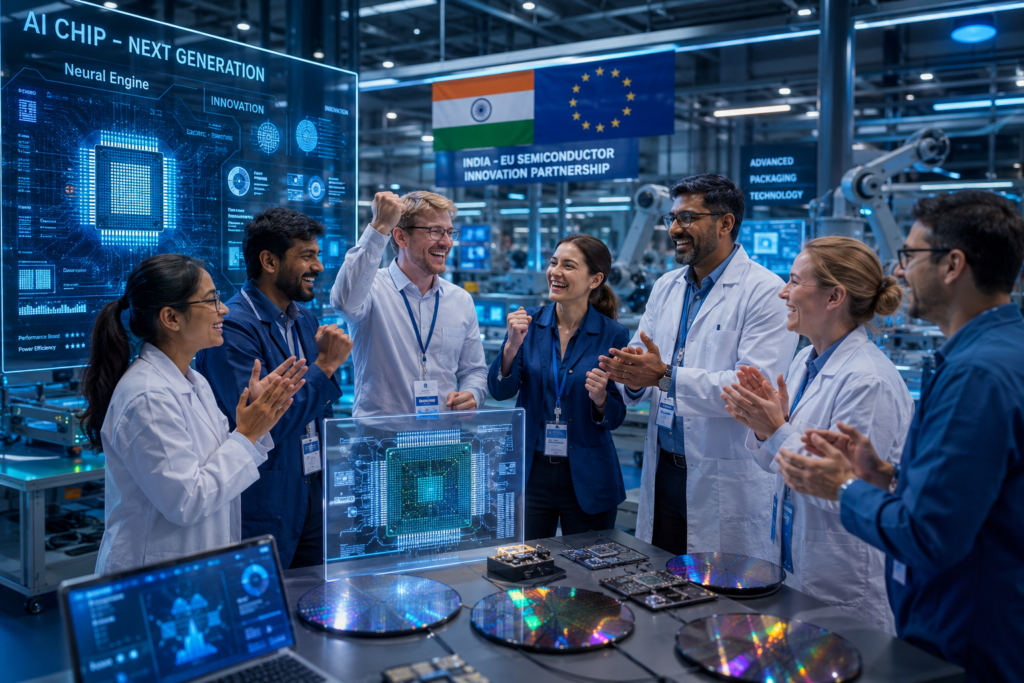
The India-EU Semiconductor Alliance has the potential to evolve into a long-term strategic technology partnership that supports innovation, manufacturing, and supply chain resilience.
Possible areas of future collaboration include:
- Advanced semiconductor manufacturing
- Semiconductor equipment development
- AI accelerator chips
- Automotive semiconductors
- Quantum computing hardware
- Space-grade electronics
- Defence technologies
- 6G communication systems
- Sustainable semiconductor manufacturing
- Joint startup accelerators
If these initiatives continue to expand, the alliance could contribute to a more diversified and resilient global semiconductor ecosystem.
Expert Analysis
India-EU Semiconductor Alliance: 5 Power Moves Driving Growth
The semiconductor industry is no longer driven solely by market demand—it is increasingly shaped by economic security, technological leadership, and trusted international partnerships.
From an industry perspective, the India-EU Semiconductor Alliance stands out because it combines complementary strengths rather than duplicating capabilities. India brings a rapidly growing electronics manufacturing ecosystem, competitive engineering talent, and a large domestic market. The European Union contributes advanced research, precision manufacturing expertise, semiconductor equipment technologies, and established industrial networks.
If supported by sustained policy coordination, private-sector investment, and collaborative research, the alliance can:
- Encourage innovation across the semiconductor value chain.
- Strengthen trusted supply chains.
- Create high-skilled employment opportunities.
- Support emerging technologies such as AI, electric vehicles, and advanced telecommunications.
Key Takeaways
- The India-EU Semiconductor Alliance supports stronger semiconductor cooperation between two major economic regions.
- Manufacturing, research, investment, and workforce development are expected to be central pillars of the partnership.
- Diversified semiconductor supply chains can improve resilience against future disruptions.
- Collaboration can accelerate innovation in AI, automotive, healthcare, telecommunications, and defence.
- Long-term success will depend on sustained investment, infrastructure development, and skilled talent.
India-EU Semiconductor Alliance: 5 Power Moves Driving Growth
Frequently Asked Questions (FAQs)
1. What is the India-EU Semiconductor Alliance?
It refers to cooperation between India and the European Union to strengthen semiconductor manufacturing, research, innovation, investment, and supply chain resilience.
2. Why are semiconductors strategically important?
Semiconductors power modern technologies such as smartphones, electric vehicles, AI systems, medical devices, industrial automation, telecommunications, and defence equipment.
3. How does the alliance benefit India?
It can support technology collaboration, manufacturing growth, investment, skill development, and stronger participation in global semiconductor supply chains.
4. How does the alliance benefit the European Union?
The EU can diversify supply chains, expand research partnerships, access India’s growing market, and strengthen industrial cooperation.
5. Which industries benefit the most?
Automotive, consumer electronics, healthcare, AI, telecommunications, renewable energy, aerospace, and defence.
6. Why is semiconductor supply chain resilience important?
Diversified supply chains reduce the risk of disruptions caused by geopolitical tensions, natural disasters, or manufacturing bottlenecks.
7. What role can startups play?
Startups can contribute through chip design, AI hardware, semiconductor software, embedded systems, and innovative manufacturing solutions.
8. How can universities contribute?
Universities can support research, talent development, joint innovation programs, and industry collaboration.
9. Will the alliance create jobs?
Expanding semiconductor manufacturing and research can create high-skilled employment across engineering, manufacturing, design, and R&D.
10. What are the biggest challenges?
High investment costs, infrastructure requirements, technology transfer, talent availability, and global competition.
Conclusion
The India-EU Semiconductor Alliance reflects a shared commitment to strengthening semiconductor capabilities through collaboration rather than competition. As semiconductors become increasingly important for digital transformation, artificial intelligence, mobility, healthcare, defence, and clean energy, partnerships that encourage innovation and resilient supply chains will play a larger role in the global economy.
India’s expanding manufacturing ecosystem and engineering talent, combined with Europe’s advanced research and industrial expertise, create a strong foundation for long-term cooperation. While challenges such as infrastructure, investment, and workforce development remain, continued collaboration can unlock new opportunities for businesses, researchers, and technology innovators.
For policymakers, industry leaders, and investors alike, the alliance represents more than a trade initiative—it is part of a broader effort to build a trusted, diversified, and future-ready semiconductor ecosystem.
MY VIEW:
The India-EU Semiconductor Alliance marks a strategic partnership to strengthen global chip supply chains through collaboration in research, development, manufacturing, and innovation. The alliance focuses on joint R & D, Startup cooperation, AI Integration, and sustainable technology development, aligning with India’s Semicon Mission 2.0 and the EU’s Chips Act 2.0
India will benefit by using Skilled Workforce Utilization, Technology Transfer, Investment Boost, Startup Growth, Supply Chain Resilience, Sustainability and Green Technology, Global Recognition.