
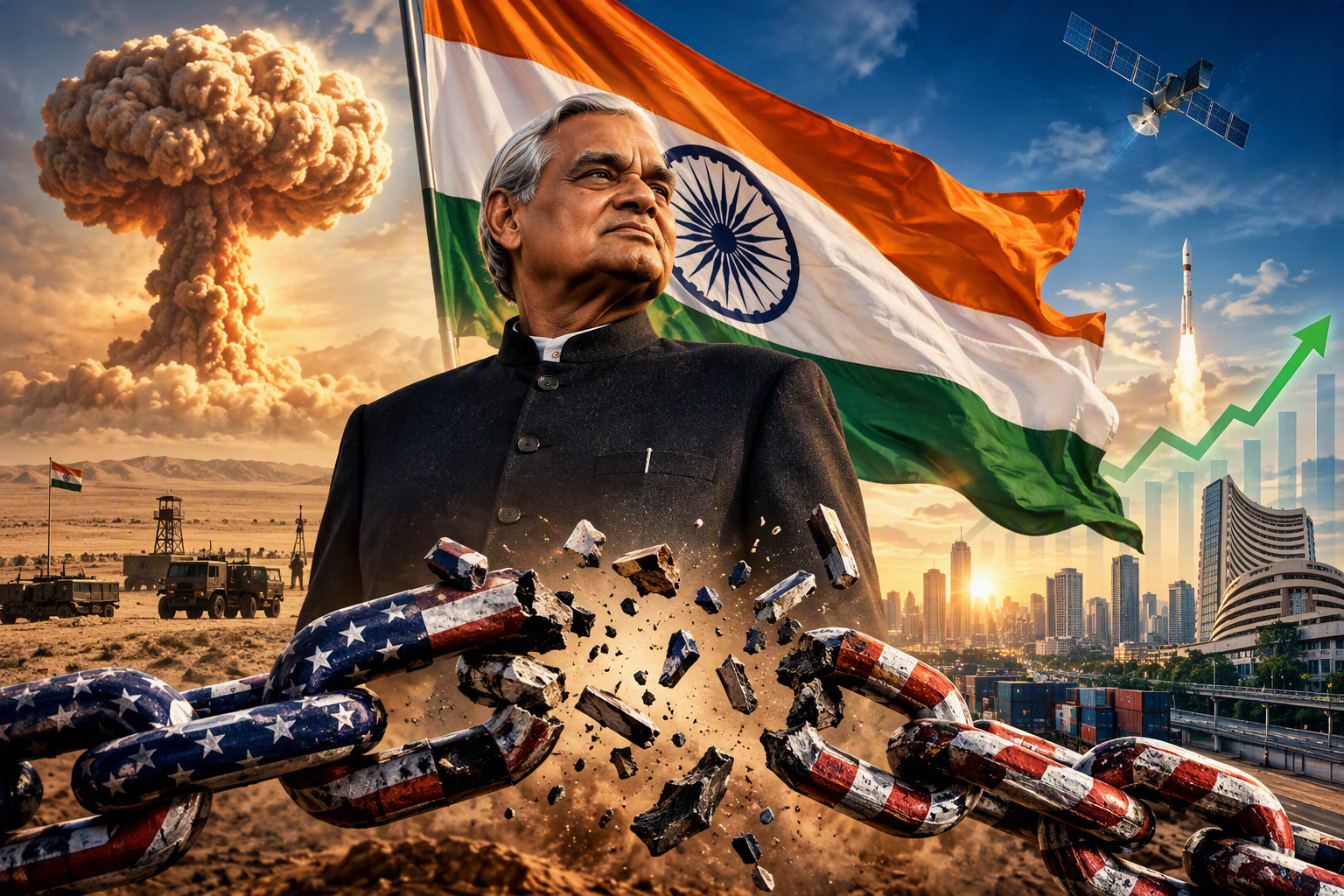
India US Sanctions: 5 Powerful Lessons From 2001.
India US Sanctions: 5 Powerful Lessons From 2001 is a story about nuclear diplomacy, economic pressure, strategic autonomy and one of the most important turning points in modern India-US relations.
In May 1998, India conducted a series of nuclear tests at Pokhran. The tests triggered sanctions from the United States under the Glenn Amendment, creating a serious diplomatic and economic challenge for New Delhi. Washington restricted a wide range of assistance, financing, defence related transactions and technology exports.
Yet the sanctions did not permanently isolate India or reverse its nuclear policy.
Over the following three years, the restrictions were progressively relaxed, diplomatic engagement continued and the strategic relationship between New Delhi and Washington began to change. On September 22, 2001, President George W. Bush waived the major Glenn Amendment sanctions against India. The US State Department’s September 28 fact sheet confirmed that restrictions covering foreign assistance, US government credit, certain financial assistance, defence sales, military financing and specified export controls were waived.
This offers five important lessons about how sanctions work, why economic pressure can have limits, and how strategic interests can eventually reshape foreign policy.
India US Sanctions: 5 Powerful Lessons From 2001
How the 1998 Crisis Began-
To understand the significance of India US Sanctions: 5 Powerful Lessons from 2001, it is necessary to go back to May 1998.
India conducted nuclear tests at Pokhran on May 11 and May 13, 1998. The United States responded under Section 102 of the Arms Export Control Act, commonly known as the Glenn Amendment.
The American response was extensive.
According to the US State Department’s historical record, the sanctions included termination of many forms of US assistance, restrictions on defense sales and services, termination of foreign military financing, restrictions on US government credit and guarantees, opposition to certain international financial institution assistance, restrictions on loans from US banks to the Indian government and controls on specified exports and technologies.
The sanctions were therefore much broader than a simple trade restriction.
They were designed to create economic, technological and diplomatic pressure on India.
Washington wanted India to reconsider aspects of its nuclear policy and move toward broader non-proliferation objectives.
At the time, US officials openly acknowledged that sanctions were intended to influence behavior rather than simply punish India.
A June 1998 statement from the US State Department said sanctions would impose a price but emphasized that the purpose was to influence the behavior of India and Pakistan while maintaining communication with both countries.
That distinction is important.
The United States was attempting to use economic pressure as a diplomatic tool.
India, however, continued to defend its strategic position.
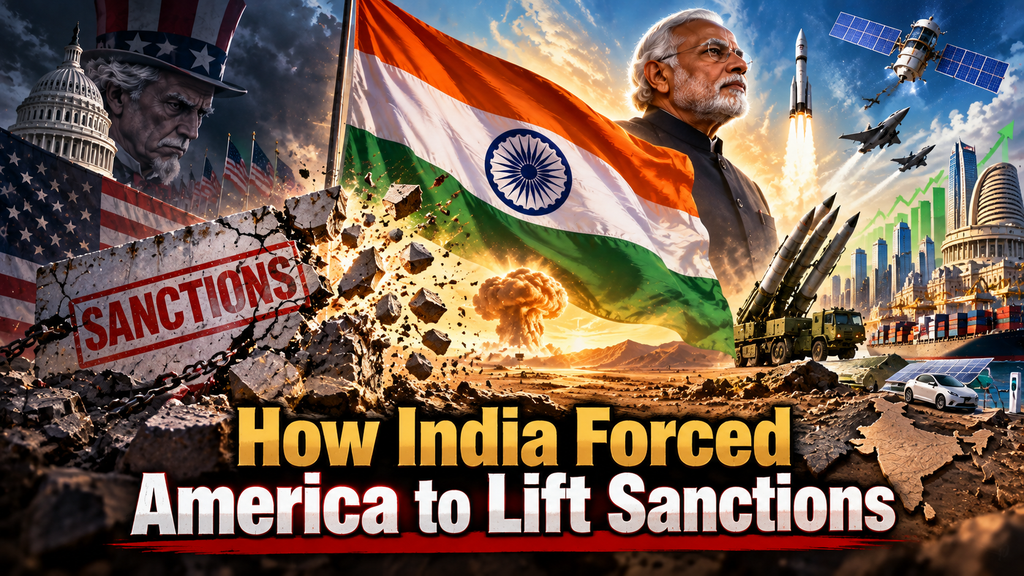
1. India US Sanctions Lesson: Sanctions Do Not Automatically Change Strategic Policy
The first major lesson from India US Sanctions: 5 Powerful Lessons from 2001 is that economic pressure does not automatically produce political compliance.
India faced restrictions on important areas of cooperation with the United States, including defense, financing and technology.
But the central issue behind the sanctions was India’s nuclear policy.
The sanctions did not lead India to abandon its nuclear weapons capability.
Instead, India continued to develop its strategic doctrine while engaging diplomatically with the United States and other major powers.
This illustrates a fundamental challenge with sanctions.
Economic pressure can increase costs, but whether those costs produce a change in national policy depends on how important the targeted policy is to the government concerned.
For India, national security and strategic autonomy were closely connected to the nuclear decision.
Therefore, changing that policy would have required more than economic pressure.
Sanctions Can Create Costs Without Producing Compliance
Sanctions are often expected to work through a straightforward chain:
Pressure → Economic cost → Political pressure → Policy change
But international relations are rarely that simple.
Governments may decide that maintaining a strategic policy is more important than avoiding the economic costs associated with sanctions.
This is particularly relevant when a country has a large domestic economy, alternative international relationships and the ability to develop indigenous capabilities.
The US itself acknowledged some of these limitations.
In September 1998, then-Under Secretary of State Thomas Pickering noted that unilateral sanctions historically often failed to change the conduct of targeted countries and could impose costs on US interests as well.
That observation provides useful context for India’s experience.
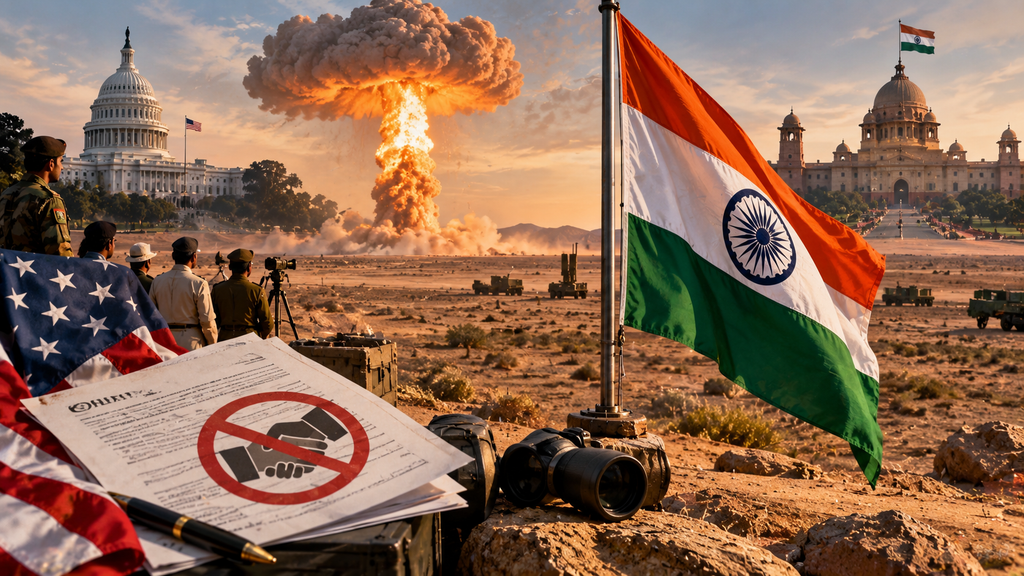
2. India US Sanctions Lesson: Strategic Autonomy Can Reduce External Pressure
The second lesson from India US Sanctions: 5 Powerful Lessons from 2001 concerns India’s long-standing concept of strategic autonomy.
India did not want its foreign policy to be dictated by any single major power.
This approach had historical roots in India’s post-independence foreign policy, including non-alignment and the desire to maintain freedom of decision-making.
After the 1998 tests, that principle became particularly important.
India faced pressure from Washington and other governments, but it continued to engage with multiple international partners.
This meant the United States was not the only external relationship available to India.
India’s relations with Russia, Europe, Japan and other countries remained important. Its economic integration with the wider world also meant that US restrictions did not equal complete international isolation.
Domestic Capability Matters
Another component of strategic autonomy is domestic capability.
Technology restrictions can be particularly effective when a country is heavily dependent on one external supplier.
However, restrictions can also encourage governments to invest more heavily in domestic research and development.
India had already developed significant scientific and technological institutions before 1998.
The nuclear program itself was evidence of India’s ability to build strategic capabilities despite technology restrictions.
The sanctions therefore created difficulties, but they did not eliminate India’s ability to pursue an independent strategic policy.
This is one reason the history of India US Sanctions: 5 Powerful Lessons from 2001 remains relevant today.
The episode demonstrates why economic and technology restrictions should not automatically be interpreted as capable of forcing a large country to abandon a core national-security objective.
3. India US Sanctions Lesson: Diplomacy Can Continue During a Sanctions Crisis
The third lesson is perhaps the most important.
Sanctions did not completely shut down India-US diplomacy.
Instead, the two governments continued talking.
One of the most significant diplomatic channels was the dialogue between Indian External Affairs Minister Jaswant Singh and US Deputy Secretary of State Strobe Talbott.
The talks addressed nuclear issues, non-proliferation, missile technology, the Comprehensive Nuclear-Test-Ban Treaty and broader bilateral relations.
This was significant because both countries were trying to manage a serious disagreement without allowing the disagreement to permanently destroy the relationship.
Engagement Created Room for Compromise
The US government had imposed sanctions, but American officials also recognized the importance of maintaining communication with India.
A June 1998 State Department statement emphasized that Washington wanted to keep communication channels open and remain engaged with India and Pakistan.
That approach gradually created room for discussions beyond the immediate nuclear crisis.
India, meanwhile, did not simply reject dialogue.
It continued diplomatic engagement while maintaining its position on strategic issues.
This combination — firmness on core interests and continued diplomacy — became an important feature of the relationship.
The Sanctions Were Already Being Relaxed Before 2001
One of the most overlooked parts of the story is that the sanctions did not remain unchanged from 1998 until 2001.
They were gradually modified.
In October 1999, the US government used new waiver authority to relax several restrictions affecting India.
The State Department recorded waivers involving areas such as Overseas Private Investment Corporation activities, Trade and Development Agency programs, Export-Import Bank programs, International Military Education and Training and certain commercial lending and agricultural credit programs.
This matters because the history was not simply:
1998 — sanctions imposed
followed by
2001 — sanctions suddenly removed.
Instead, the process involved several stages.
Restrictions were adjusted as Washington reassessed the costs and usefulness of its policy.
That gradual evolution provides an important lesson for understanding sanctions policy generally.
4. India US Sanctions Lesson: Sanctions Can Become Less Useful When Strategic Interests Change
The fourth lesson from India US Sanctions: 5 Powerful Lessons from 2001 is that sanctions policies are not permanent.
Governments reassess policies when their strategic priorities change.
Between 1998 and 2001, the geopolitical environment changed significantly.
The United States increasingly saw India as an important country in South Asia and as a potential partner on broader strategic issues.
The relationship began moving beyond the immediate dispute over India’s nuclear tests.
Defense dialogue, counterterrorism, technology and regional security became increasingly important areas of discussion.
The September 2001 terrorist attacks further transformed US foreign-policy priorities.
Against that background, Washington had additional reasons to strengthen cooperation with India.
September 22, 2001: The Major Waiver
The key date was September 22, 2001.
President George W. Bush signed a determination waiving the major Glenn Amendment sanctions against India and Pakistan.
The US State Department subsequently listed the measures that had been waived.
For India, these included restrictions involving foreign assistance, US government credit, credit guarantees, other financial assistance, certain international financial institution assistance, specified export licenses and government defense sales and military financing.
The waiver represented a major shift from the sanctions policy adopted after India’s nuclear tests.
Secretary of State Colin Powell later said that the waiver allowed the United States and India to move forward with broader cooperation.
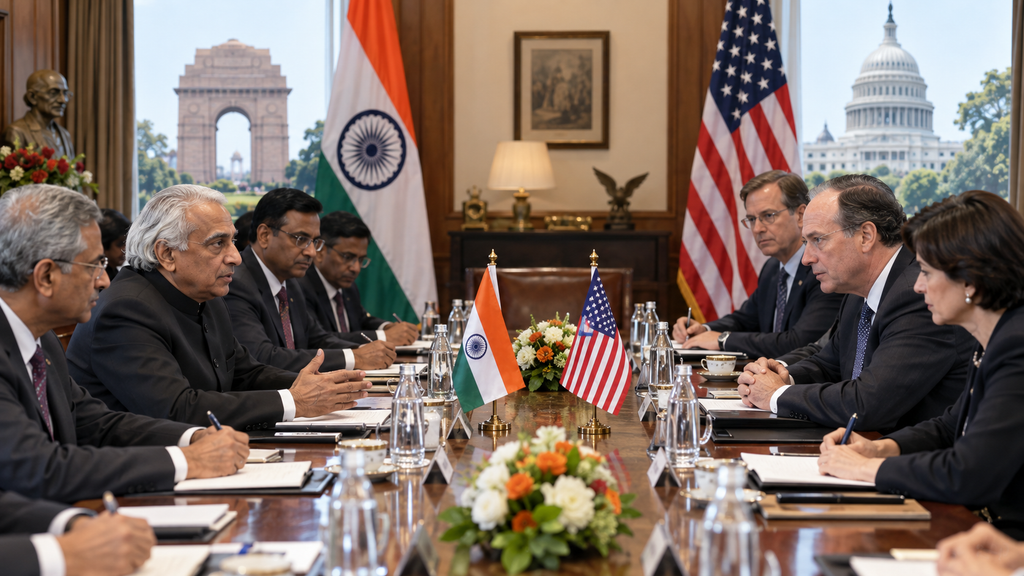
What Actually Happened in 2001?
The phrase India US Sanctions: 5 Powerful Lessons from 2001 can sometimes create the impression that India directly forced Washington to remove sanctions.
The historical record is more nuanced.
India did not have the legal authority to cancel US sanctions.
The United States itself controlled the waiver mechanism.
Therefore, the September 2001 decision was formally an American policy decision.
At the same time, India’s continued strategic position, economic resilience, diplomatic engagement and growing importance contributed to a broader environment in which continued sanctions became less useful to Washington.
This distinction is important for accurate journalism.
It would be misleading to describe the episode simply as India defeating the United States.
It is more accurate to describe it as a gradual policy shift in which India’s position remained intact while US strategic calculations changed.
5. India US Sanctions Lesson: Economic Pressure Can Also Push Countries Toward New Partnerships
The fifth lesson from India US Sanctions: 5 Powerful Lessons from 2001 is that sanctions can sometimes produce unintended strategic consequences.
When access to a particular market, technology or financing channel becomes restricted, governments may look for alternatives.
This can encourage:
- Domestic technological development
- New international partnerships
- Diversification of trade
- Alternative financing channels
- Greater emphasis on strategic self-reliance
For India, the sanctions period reinforced the importance of maintaining multiple international relationships.
India’s approach was not based on complete separation from the global economy.
Instead, it continued participating in international institutions while protecting its strategic interests.
This helped create a model in which India could engage with major powers without becoming completely dependent on any one of them.
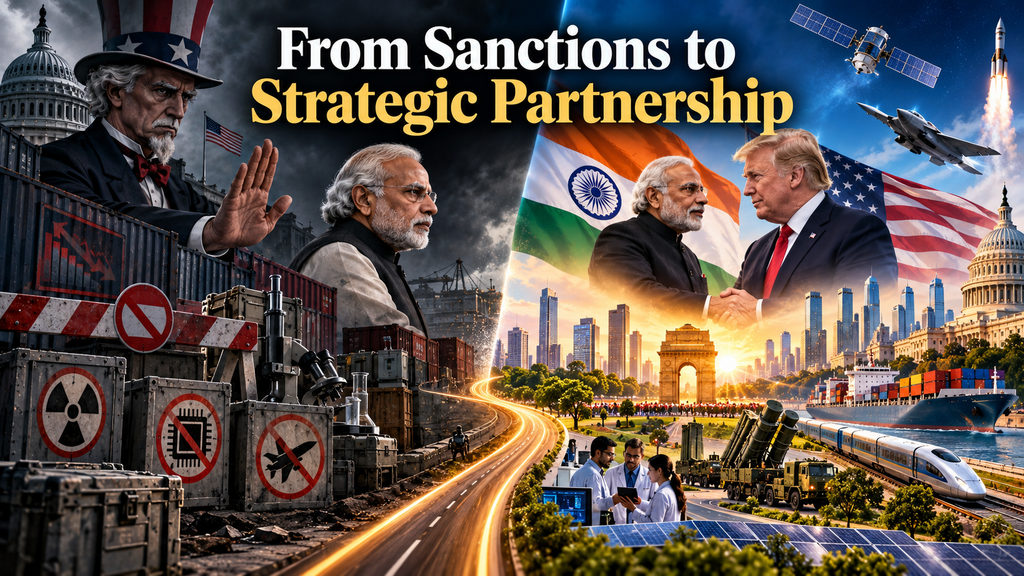
From Sanctions to Strategic Partnership
The biggest irony of the period is what happened after the sanctions were lifted.
Instead of returning to a permanently distant relationship, India and the United States began expanding cooperation.
In 2004, the two countries launched the Next Steps in Strategic Partnership, covering areas including civilian nuclear activities, space cooperation and high-technology trade.
A 2003 US State Department account described the relationship as moving rapidly toward greater cooperation, including military exercises, high-technology trade, civil space activity and civilian nuclear power discussions.
The transformation continued during the following years.
In 2005, India and the United States announced a framework for expanded civil nuclear cooperation.
In 2008, the Nuclear Suppliers Group agreed to an India-specific waiver that opened the way for broader civilian nuclear commerce.
Thus, the relationship moved from nuclear-related sanctions to cooperation in strategic technology and civilian nuclear energy.
That transformation is one of the strongest reasons the period remains important in the history of Indian foreign policy.
Why the 2001 Sanctions Withdrawal Matters Today
The lessons from India US Sanctions: 5 Powerful Lessons from 2001 are not limited to history.
They remain relevant to modern debates about economic sanctions, technology controls and strategic competition.
Today’s global economy is deeply interconnected.
Major powers increasingly use:
- Export controls
- Financial restrictions
- Investment restrictions
- Technology controls
- Entity lists
- Secondary sanctions
- Trade restrictions
as foreign-policy instruments.
But India’s experience shows that the effectiveness of such measures depends on the target country’s circumstances.
A Large Economy Is Different From a Small Economy
The impact of sanctions can vary dramatically according to the size and structure of the targeted economy.
A small country that depends heavily on a particular source of financing or imports may face immediate and severe pressure.
A large economy with diversified trade and domestic capabilities may have more options.
This does not mean sanctions have no impact.
The 1998 restrictions clearly affected specific areas of India’s relationship with the United States.
But the difference between imposing economic costs and achieving strategic objectives is crucial.
India US Sanctions and the Importance of Timing
Another important lesson is timing.
The sanctions were imposed in 1998.
The major waiver came in 2001.
During those three years, the international environment changed considerably.
The United States reassessed its relationship with India.
India continued its diplomatic engagement.
The two countries discovered areas where their interests overlapped.
And the September 2001 terrorist attacks fundamentally changed America’s global security priorities.
Therefore, the sanctions cannot be understood separately from the broader geopolitical environment.
Foreign-policy tools operate within changing circumstances.
A policy that appears useful at one moment can become less attractive several years later.
Did the Sanctions Completely Fail?
It would be inaccurate to say the sanctions had absolutely no effect.
They created restrictions on US government assistance, defense transactions, financing and technology.
They also contributed to a period of tension in bilateral relations.
American officials at the time expected economic and political costs from the measures.
However, there is an important difference between having an economic impact and achieving the desired strategic outcome.
The sanctions imposed costs.
But they did not result in India abandoning its nuclear capability.
And they did not prevent the eventual expansion of India-US relations.
This distinction is essential when evaluating the episode.
What India Learned From the Sanctions Era
The sanctions period reinforced several principles in India’s foreign-policy thinking.
Strategic autonomy matters
India sought to preserve freedom of decision-making in national-security matters.
Domestic capability matters
Technology restrictions highlighted the importance of indigenous scientific and industrial capacity.
Multiple partnerships matter
Maintaining relationships with different major powers reduces dependence on one external partner.
Diplomacy matters
Even during serious disagreements, communication can prevent disputes from becoming permanent.
Economic resilience matters
A diversified economy has more options when facing external pressure.
These principles continue to influence India’s approach to international relations.

India US Sanctions: 5 Powerful Lessons from 2001 — The Bigger Picture
The story ultimately goes beyond sanctions.
It is about how international relationships evolve.
In 1998, Washington and New Delhi were sharply divided over India’s nuclear tests.
Three years later, the United States had waived the major Glenn Amendment sanctions.
Within a few more years, the two countries were discussing civilian nuclear cooperation, high technology, defense and strategic partnership.
This does not mean that every disagreement disappeared.
India and the United States continued to have differences on trade, nuclear policy, regional security and other issues.
But the overall direction of the relationship had changed.
The sanctions episode therefore became part of a much larger transformation.
Five Powerful Lessons at a Glance
1. Economic pressure does not guarantee policy change
Sanctions can impose costs without necessarily changing a country’s core strategic decisions.
2. Strategic autonomy creates negotiating space
India maintained the ability to pursue its national-security policy while continuing international engagement.
3. Diplomacy remains important during crises
The Singh-Talbott dialogue showed that sanctions and diplomacy can operate simultaneously.
4. Strategic interests can change sanctions policy
Washington’s priorities evolved, eventually making broader engagement with India more valuable.
5. A crisis can eventually produce a stronger relationship
The sanctions era was followed by expanding India-US cooperation in defense, technology, space and civilian nuclear affairs.
A Historical Turning Point in India-US Relations
The most important takeaway from India US Sanctions: 5 Powerful Lessons from 2001 is not that sanctions are always ineffective.
Rather, the episode shows that sanctions have limits.
Their impact depends on the target country’s economic strength, domestic capabilities, international relationships and the strategic importance of the issue involved.
In India’s case, the nuclear question was closely connected to national security and strategic autonomy.
That made it difficult for economic pressure alone to produce the outcome Washington initially sought.
At the same time, diplomacy provided a mechanism for both countries to keep communicating.
As US strategic priorities changed, the relationship began moving toward cooperation.
The September 2001 waiver was therefore more than an administrative decision.
It was a visible sign that Washington was moving away from the post-1998 sanctions approach.
Conclusion: The Real Legacy of India US Sanctions
The history of India US Sanctions: 5 Powerful Lessons from 2001 demonstrates how quickly international relations can change.
India’s 1998 nuclear tests triggered broad US sanctions under the Glenn Amendment. Washington restricted assistance, financing, defense cooperation and selected technology exports.
But the restrictions were gradually relaxed.
Diplomatic engagement continued.
India maintained its strategic position.
And by September 2001, President George W. Bush had waived the major Glenn Amendment sanctions against India.
The subsequent transformation of the bilateral relationship was even more significant.
Instead of remaining locked in a sanctions-driven confrontation, India and the United States moved toward deeper cooperation in defense, technology, space, counterterrorism and civilian nuclear affairs.
The story therefore offers a broader lesson for understanding economic statecraft.
Sanctions can create pressure, but pressure alone does not determine outcomes. Strategic interests, economic resilience, diplomacy and changing geopolitical conditions can ultimately reshape the relationship between countries.
For India, the period from 1998 to 2001 became an important demonstration of strategic autonomy.
For the United States, it became part of a broader reassessment of how Washington should engage with a rising India.
And for the global foreign-policy community, the episode remains a useful case study in the opportunities and limitations of sanctions.
Frequently Asked Questions
What were the US sanctions on India in 1998?
The United States imposed sanctions on India after its May 1998 nuclear tests under the Glenn Amendment. The measures covered areas including foreign assistance, defense sales, military financing, US government credit, certain financial assistance, international financial institution lending and specified technology exports.
Why did the US impose sanctions on India?
The sanctions were triggered by India’s nuclear tests. Washington was concerned about nuclear proliferation and sought to influence India’s nuclear and non-proliferation policies.
When did the US lift sanctions on India?
President George W. Bush signed a determination on September 22, 2001, waiving the major Glenn Amendment sanctions against India. The US State Department published details of the waiver on September 28, 2001.
Did the sanctions change India’s nuclear policy?
The sanctions did not cause India to abandon its nuclear weapons capability. India continued to pursue its strategic policy while engaging in diplomatic discussions with Washington and other countries.
What was the Glenn Amendment?
The Glenn Amendment was a US law that required sanctions following certain nuclear tests by countries that met the law’s criteria. The 1998 Indian nuclear tests triggered its application.
Were all restrictions removed in September 2001?
The major Glenn Amendment sanctions were waived, but some separate export-control and entity-list restrictions continued. The State Department specifically noted that the status of certain entities on the Entity List was not affected by the September 2001 waiver.
What happened to India-US relations after the sanctions were lifted?
Relations expanded significantly. The two countries increased cooperation in defense, technology, space, counterterrorism and eventually civilian nuclear cooperation. US officials described the sanctions waiver as enabling broader bilateral cooperation.
What is the main lesson from India’s sanctions experience?
The central lesson is that sanctions can impose economic and technological costs without necessarily changing a country’s core strategic policy. Diplomacy, domestic capabilities, international partnerships and changing geopolitical interests can strongly influence the final outcome.
Why is the 2001 sanctions episode still important?
The episode helps explain the transformation of India-US relations from a period of major disagreement over nuclear policy to a broader strategic partnership. It also provides a historical case study of the strengths and limitations of sanctions as a foreign-policy instrument.