

India’s $38B Battery Revolution Powers Local Growth marks a transformative step in the nation’s clean energy and industrial journey. With the government unveiling an ambitious plan to create an Approved List of Battery Manufacturers (ALBM), the initiative aims to prioritize domestic suppliers, reduce import dependence, and build a robust energy storage ecosystem. This move is not just about technology—it’s about securing India’s energy future, empowering local industries, and positioning the country as a global leader in battery innovation.
India’s $38B Battery Revolution Powers Local Growth: Why It Matters
Battery storage is the backbone of modern energy systems. As India accelerates its renewable energy adoption, batteries will play a critical role in stabilizing the grid, powering electric vehicles (EVs), and supporting consumer electronics. The $38 billion investment is designed to deploy 47 GW of battery storage capacity by 2047, ensuring that India’s clean energy ambitions are backed by reliable infrastructure.
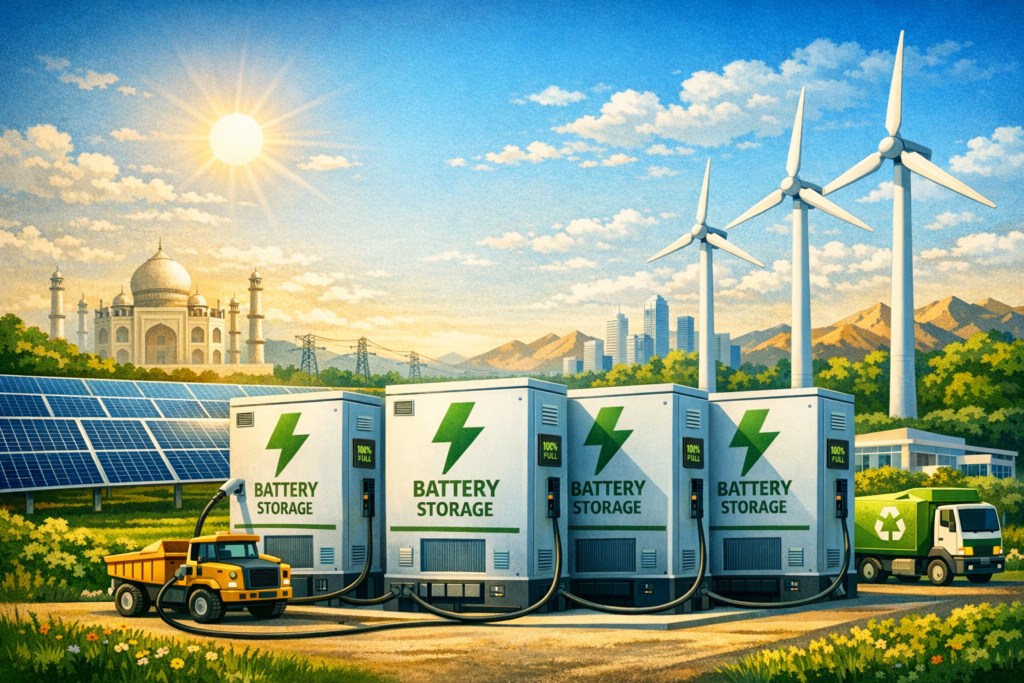
India’s $38B Battery Revolution Powers Local Growth Through ALBM
The Approved List of Battery Manufacturers (ALBM) is modeled after India’s solar sector framework. Only vendors on this list will qualify for government-backed projects, ensuring preference for local manufacturers. This policy tool is expected to:
- Encourage domestic production of advanced battery technologies.
- Mandate phased localization of components, from raw materials to recycling.
- Strengthen energy security by reducing reliance on imports, particularly from China.
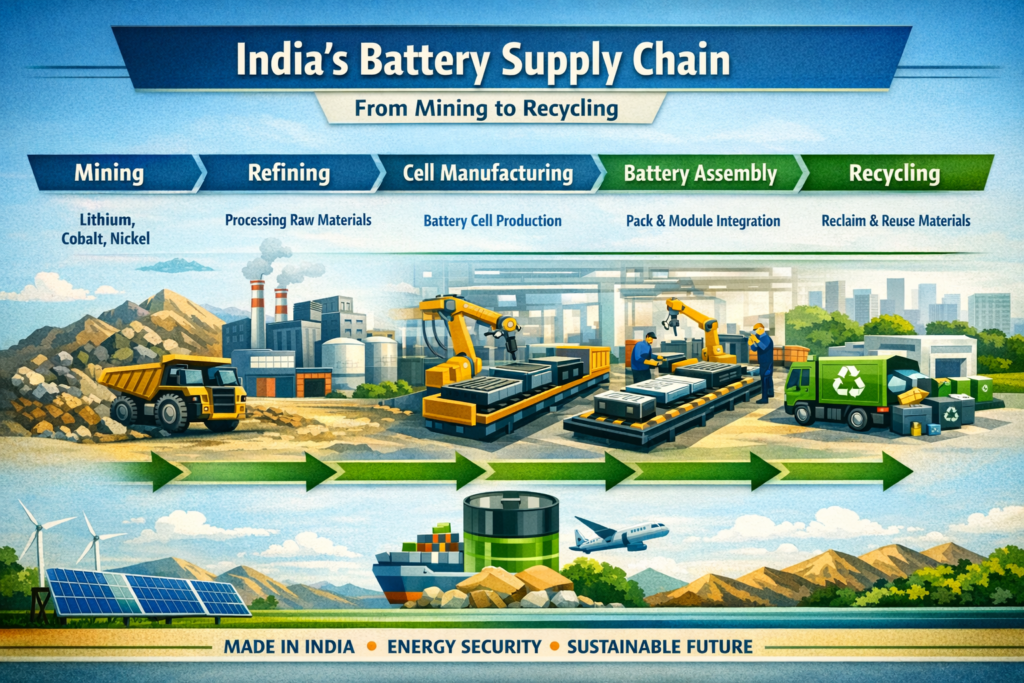
India’s $38B Battery Revolution Powers Local Growth in Mobility
Electric mobility is central to India’s climate goals. By fostering local battery production, the government aims to lower EV costs, improve adoption rates, and reduce dependence on imported lithium-ion cells. This revolution will:
- Support EV manufacturers with reliable, cost-effective batteries.
- Enable faster rollout of charging infrastructure.
- Drive innovation in solid-state and next-gen battery chemistries.
India’s $38B Battery Revolution Powers Local Growth in Industry
Beyond mobility, batteries are vital for industrial automation, backup power, and consumer electronics. The initiative will empower sectors such as:
- Manufacturing: Reliable energy storage for factories.
- Telecom & IT: Backup systems for data centers.
- Electronics: Locally produced batteries for smartphones and laptops.
This diversification ensures that India’s battery revolution benefits multiple industries simultaneously.
Challenges in India’s $38B Battery Revolution Powers Local Growth
While the vision is bold, challenges remain:
- Technology Gaps: India must catch up in advanced chemistries like lithium-sulfur and solid-state batteries.
- Raw Material Access: Securing lithium, cobalt, and nickel requires global partnerships.
- Cost Competitiveness: Domestic production must match global benchmarks.
- Recycling Infrastructure: Large-scale battery recycling is still in its infancy.
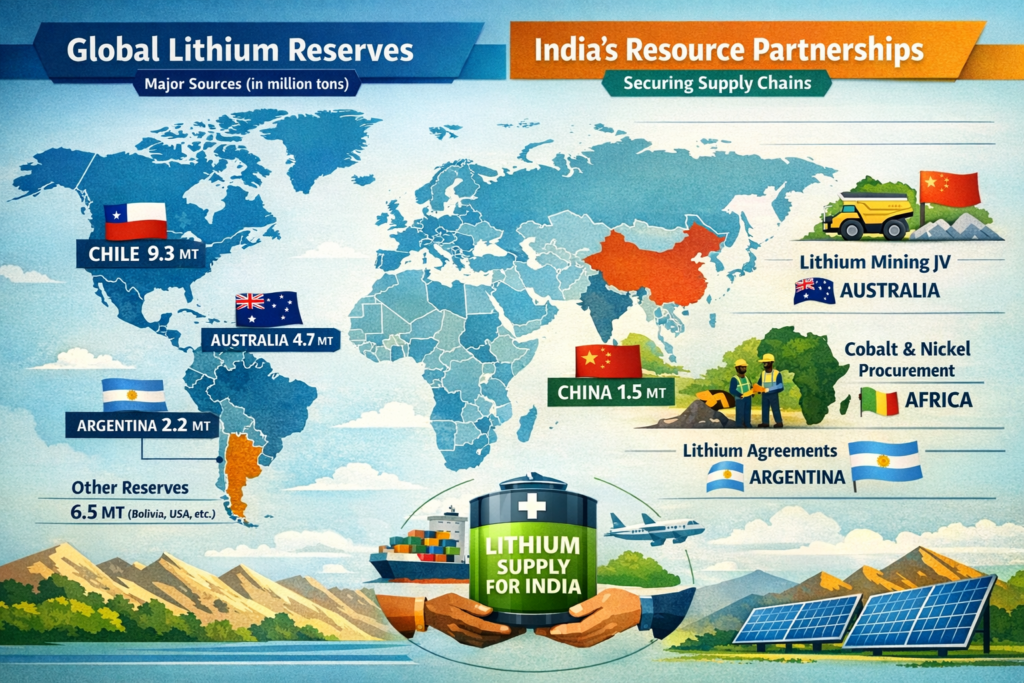
Global Context: India’s $38B Battery Revolution Powers Local Growth
Globally, China dominates battery manufacturing with over 70% market share. The US and EU are investing heavily to localize supply chains. India’s $38B battery revolution positions the country as a rising competitor, aiming to create a “battery moat” that secures its energy independence while contributing to global sustainability.
Future Outlook: India’s Battery-Powered Growth Story
Looking ahead, India’s $38B Battery Revolution Powers Local Growth is expected to redefine multiple sectors, from transportation to energy and manufacturing. With continued investment and policy support, India could emerge as a global leader in battery technology.
The convergence of EV adoption, renewable energy expansion, and technological innovation creates a powerful growth engine. As infrastructure improves and costs decline, the benefits will ripple across the economy.
Conclusion: India’s $38B Battery Revolution Powers Local Growth
India’s $38B Battery Revolution Powers Local Growth is more than an industrial policy—it is a strategic energy security initiative. By creating the ALBM, India is signaling its commitment to clean energy, local manufacturing, and reduced reliance on imports. If executed effectively, this plan could transform India into a global hub for battery technology, powering its renewable energy ambitions and electric mobility revolution.